


Find out your A1C level
See your months-long A1C average beside a single-moment glucose reading
- CLIA-certified labs
- HIPAA compliant
- Personalized health protocol
How an A1C test at home works
An A1C test at home uses a finger-prick sample you collect yourself to measure hemoglobin A1C. Hemoglobin A1C reflects your average blood glucose over the past 2 to 3 months. Lab reports also list the marker as A1C, HbA1c, or glycated hemoglobin.
A home glucose meter and an A1C test answer different questions. The meter shows your blood glucose at a single time, while hemoglobin A1C folds months of those moments into one percentage.
Getting that months-long average no longer depends on a clinic appointment.
Three ways to check your A1C without a clinic visit
You can get an A1C result three ways without a clinic visit. They differ in who collects the blood and where it is measured.
- Instant finger-prick analyzer: a handheld device reads a drop of blood at home, and at least one is FDA-cleared for over-the-counter use.
- Mail-in kit: you put a few drops on a card or in a small tube and post the sample to a lab.
- Self-ordered lab draw: you order the test, and blood from your arm is drawn at a walk-in lab.
Every route returns one percentage, read against the same cut-offs.
What your A1C result means
An A1C result is read against fixed percentage cut-offs. Diabetes risk keeps climbing as the number rises, even inside the lower bands.
| Category | A1C result | What it indicates |
|---|---|---|
| Normal | Below 5.7% | No diabetes or prediabetes flagged |
| Prediabetes | 5.7% to 6.4% | Raised risk of type 2 diabetes, greatest at the upper end |
| Diabetes range | 6.5% or higher | Needs confirmation with a repeat lab test |
Normal is a population cut-off that marks the absence of diabetes or prediabetes, not a target for where your level should sit. A normal result can still land just under the prediabetes line. That close to a cut-off, a reading is only as useful as the test behind it.
How accurate at-home A1C tests are
At-home A1C tests are less consistent than lab tests, and they vary by product and collection method.
In three home tests used by people with diabetes, results landed within 5% of the lab value in 29% to 82% of samples. None met the lab-standard goal of at least 90%.
Lab methods share a standardization that has markedly improved accuracy and consistency, while finger-prick analyzers vary more. Even certified analyzers often fell short of the criteria on independent testing.
Dried card samples matched vein blood less closely than tube samples. Dried samples mailed from home agreed poorly with clinic blood draws in one study.
A well-collected sample can still mislead when a condition changes how A1C forms.
Conditions that can skew an A1C result
Some conditions skew any A1C reading, home or lab, because they alter red blood cells or the test itself.
- Iron-deficiency anemia: can make a result read falsely high
- Hemoglobin variants: inherited forms, more common with African, Mediterranean, or Southeast Asian descent, can interfere with some tests
- Kidney or liver disease: can throw off results
- Pregnancy: changes how A1C tracks your average glucose
- Recent blood loss or transfusion: pulls the result away from your true average
When A1C is unreliable, fructosamine can stand in, reflecting glucose control over roughly the past 2 weeks. Superpower's Glucose Regulation Add-on includes fructosamine. A skewed reading is one reason an out-of-range home result deserves a second look.
Get 100+ biomarkers tested
One blood draw a year. A full picture of your health, explained in plain language.
Get 100+ biomarkers tested
One blood draw a year. A full picture of your health, explained in plain language.
What to do after an out-of-range home result
An out-of-range home A1C result is a reason to follow up with a lab-drawn test. One home reading can flag a possible problem, but it cannot confirm diabetes on its own. Accuracy concerns weigh against relying on a device result alone.
Confirmation comes from a repeat lab A1C, which requires no fasting, or from a fasting glucose or oral glucose tolerance test.
Screening is advised for everyone from age 35, repeated at least every 3 years after a normal result and yearly with prediabetes. Adults 35 to 70 with overweight or obesity are specifically recommended for screening.
Beyond screening, A1C is most useful when tracked over time with the rest of your blood work.
Understand your A1C with Superpower
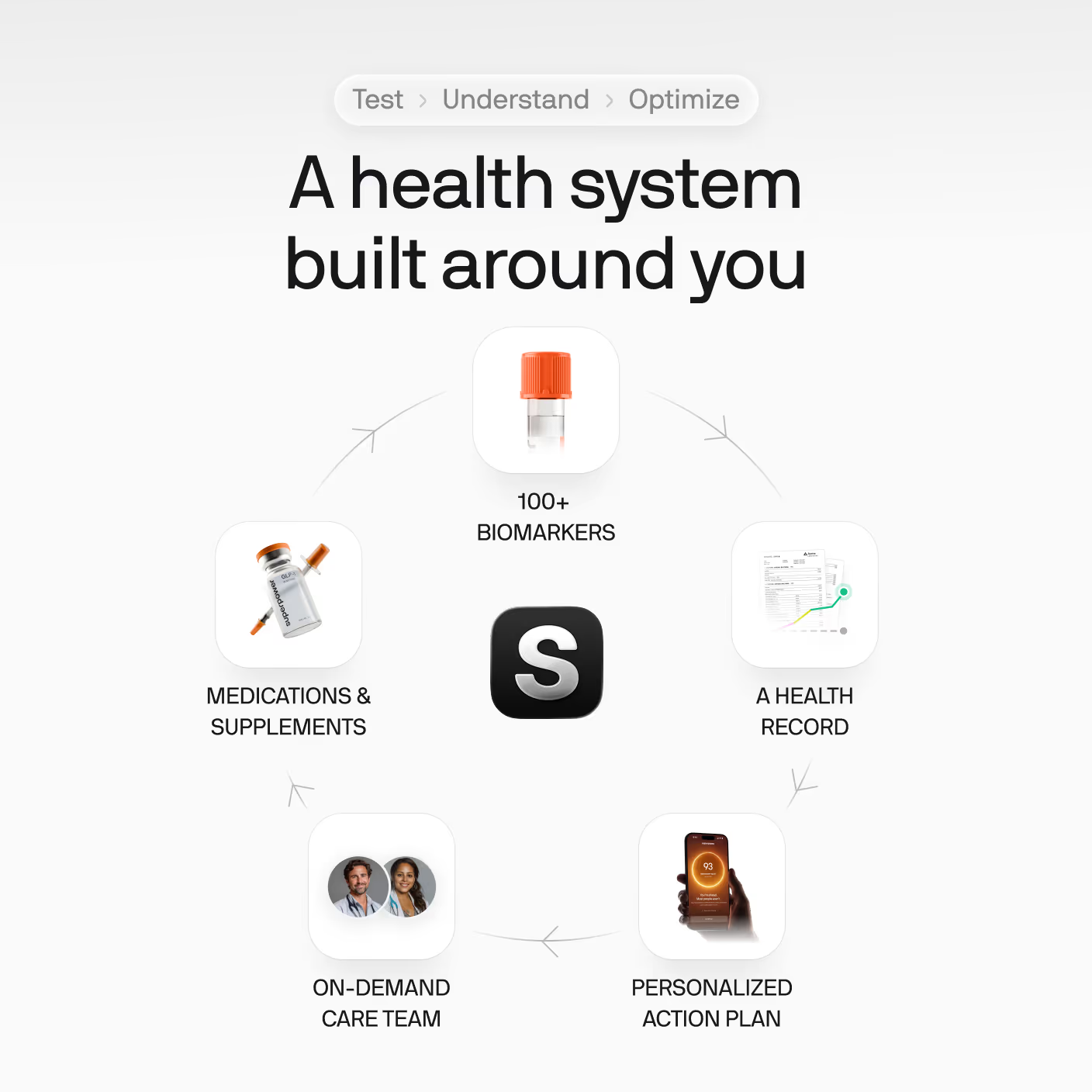
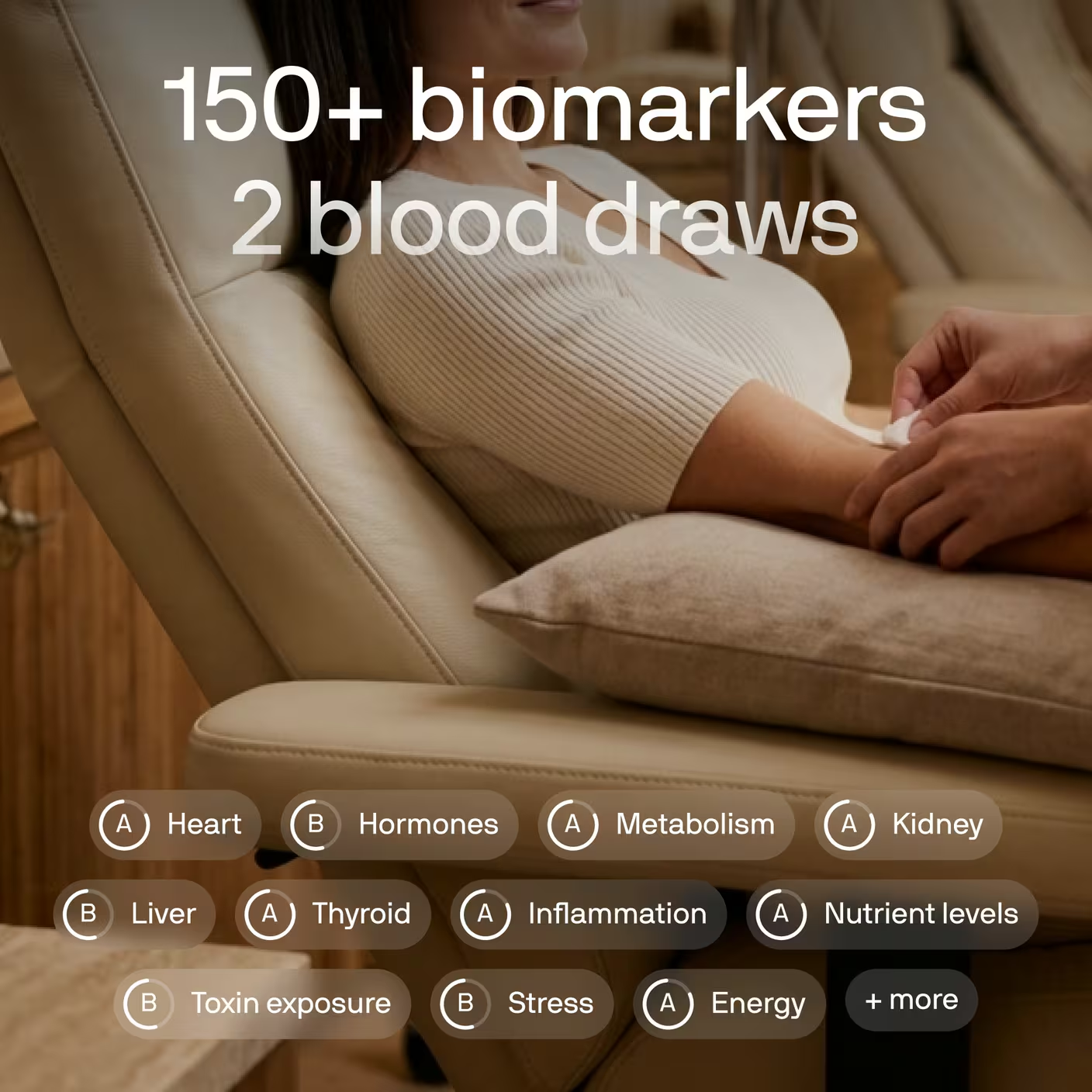
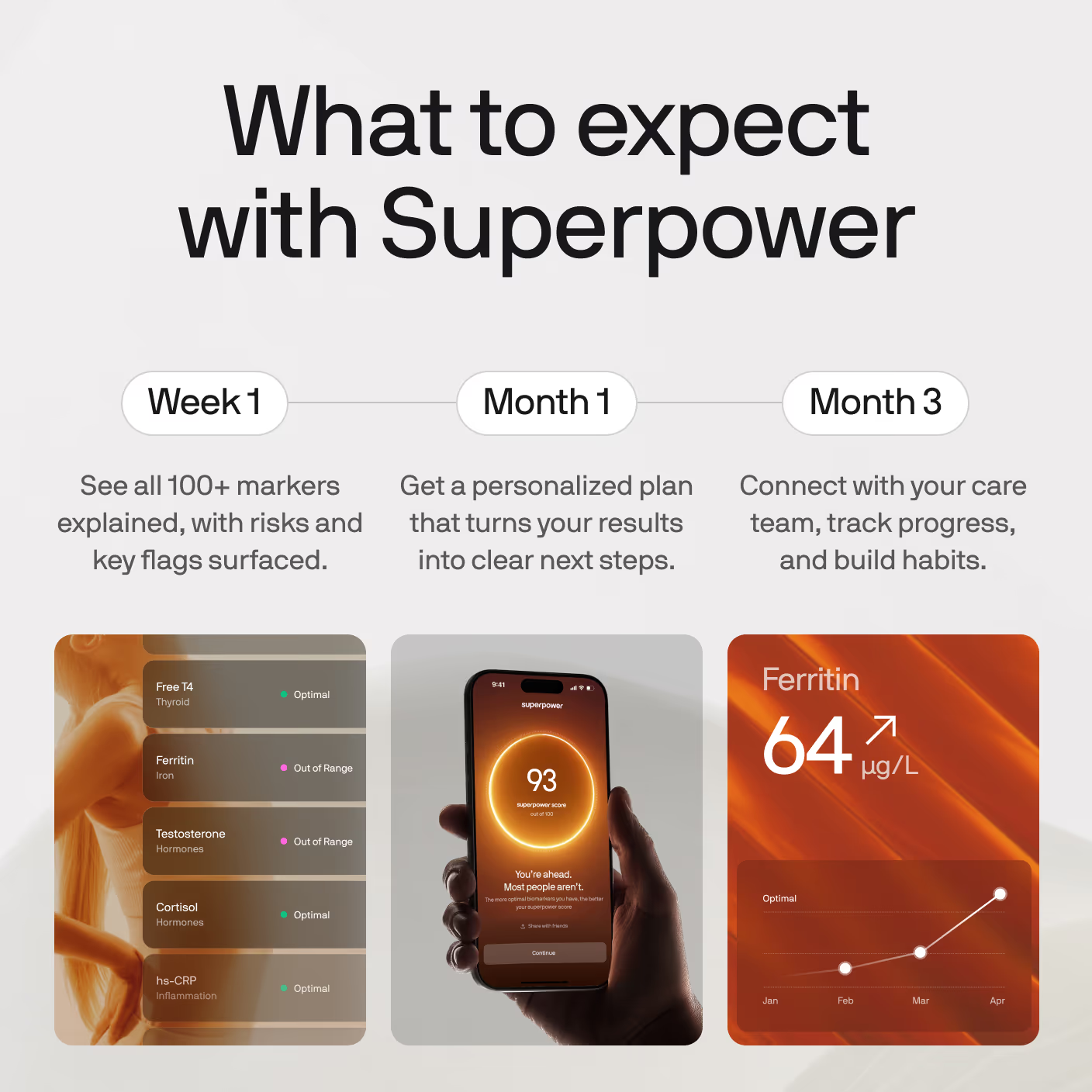
An A1C test at home is a starting point, and a comprehensive blood test shows where that number fits. A Superpower membership includes 100+ biomarkers in a single draw, hemoglobin A1C and glucose among them. Glucose shows a single moment, and A1C a months-long average. The draw happens at 2,000+ lab partner locations nationwide. Superpower is your home for health, measuring these markers and supporting you in improving them with a personalized protocol, plus AI and care team support.
It's time to take control of your health. Start your Superpower membership and get your baseline in one draw.
References
- Colley J, Dambha-Miller H, Stuart B, et al. Home monitoring of haemoglobin A1c in diabetes: a systematic review and narrative synthesis on accuracy, reliability and patient acceptability. *Diabet Med*. 2023;40(4):e15033. https://doi.org/10.1111/dme.15033
- MedlinePlus. Hemoglobin A1C (HbA1c) test. National Library of Medicine. Updated May 20, 2025. Accessed October 16, 2026. https://medlineplus.gov/lab-tests/hemoglobin-a1c-hba1c-test/
- National Institute of Diabetes and Digestive and Kidney Diseases. The A1C test & diabetes. Last reviewed April 2018. Accessed October 16, 2026. https://www.niddk.nih.gov/health-information/diagnostic-tests/a1c-test
- US Food and Drug Administration. 510(k) premarket notification K090413: A1CNow+ (professional use) and A1CNow Self Check (OTC use). Decision date May 14, 2009. Accessed October 16, 2026. https://www.accessdata.fda.gov/scripts/cdrh/cfdocs/cfpmn/pmn.cfm?ID=K090413
- Kalokairinou L, Choi R, Wei NY, Wexler A. Policies of US companies offering direct-to-consumer laboratory tests. *JAMA Intern Med*. 2023;183(11):1275-1278. https://doi.org/10.1001/jamainternmed.2023.4726
- American Diabetes Association Professional Practice Committee for Diabetes. 2. Diagnosis and classification of diabetes: Standards of Care in Diabetes—2026. *Diabetes Care*. 2026;49(Suppl 1):S27-S49. https://doi.org/10.2337/dc26-S002
- Jacobsen LM, Bocchino LE, Lum JW, et al. Accuracy of three commercial home-use hemoglobin A1c tests. *Diabetes Technol Ther*. 2022;24(11):789-796. https://doi.org/10.1089/dia.2022.0187
- Sacks DB, Kirkman MS, Little RR. Point-of-care HbA1c in clinical practice: caveats and considerations for optimal use. *Diabetes Care*. 2024;47(7):1104-1110. https://doi.org/10.2337/dci23-0040
- Lenters-Westra E, Singh P, Vetter B, English E. Challenges in Hb A1c point-of-care testing: only 5 of 19 Hb A1c point-of-care devices meet IFCC and NGSP certification criteria on independent evaluation. *Clin Chem*. 2025;71(7):775-788. https://doi.org/10.1093/clinchem/hvaf059
- Verougstraete N, Lapauw B, Van Aken S, Delanghe J, Stove C, Stove V. Volumetric absorptive microsampling at home as an alternative tool for the monitoring of HbA1c in diabetes patients. *Clin Chem Lab Med*. 2017;55(3):462-469. https://doi.org/10.1515/cclm-2016-0411
- Danese E, Montagnana M, Nouvenne A, Lippi G. Advantages and pitfalls of fructosamine and glycated albumin in the diagnosis and treatment of diabetes. *J Diabetes Sci Technol*. 2015;9(2):169-176. https://doi.org/10.1177/1932296814567227
- US Preventive Services Task Force; Davidson KW, Barry MJ, Mangione CM, et al. Screening for prediabetes and type 2 diabetes: US Preventive Services Task Force recommendation statement. *JAMA*. 2021;326(8):736-743. https://doi.org/10.1001/jama.2021.12531

















 Heart & Vascular Health
 Metabolic Health
 Energy
 Liver Health
 Kidney
 Sex Hormones
 Thyroid Health
 Nutrients
 Immune System
 Inflammation