

See where your metabolic health actually stands
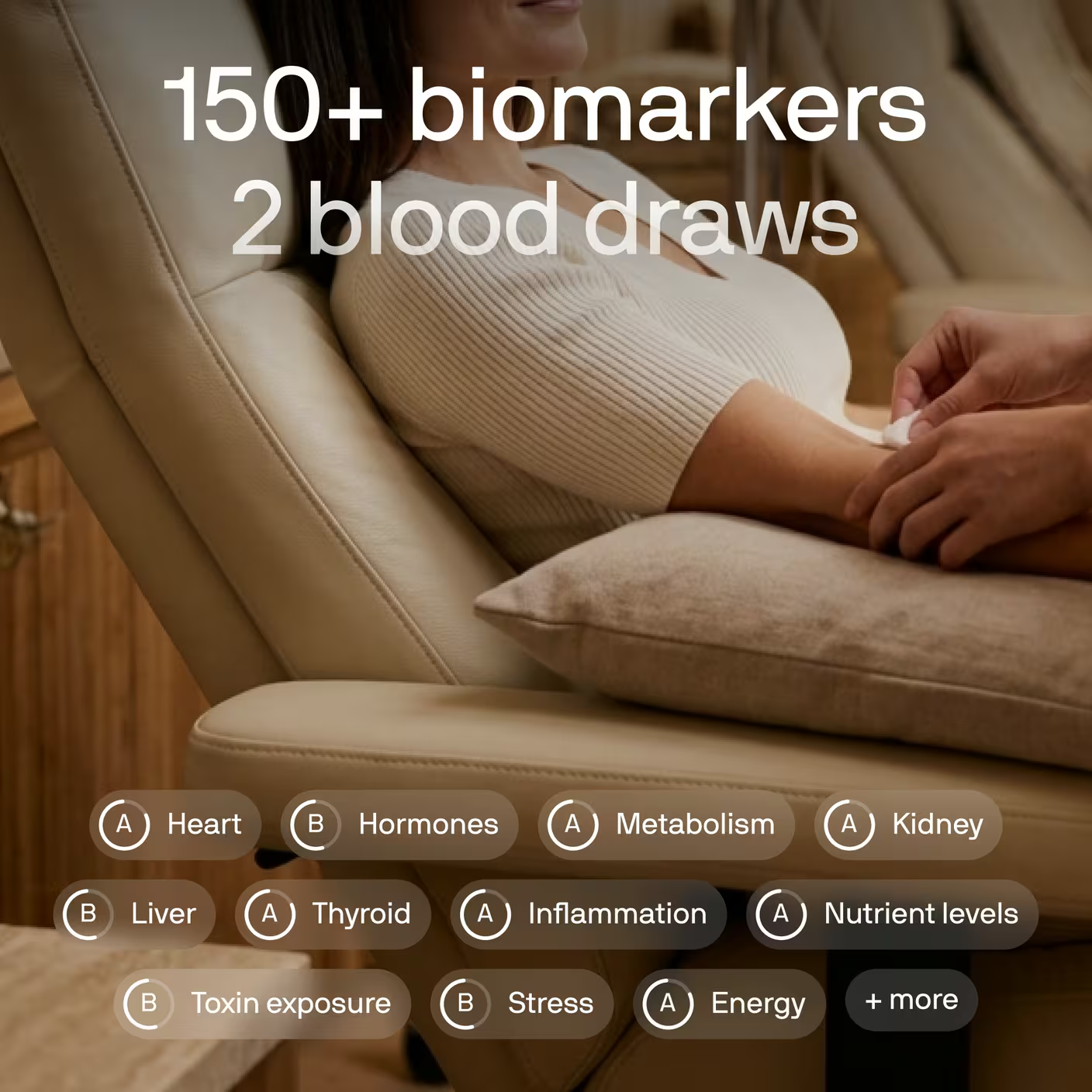
Two blood draws, 150+ lab tests, and the context to read them.
- CLIA-certified labs
- HIPAA compliant
- Personalized health protocol
The symptoms of diabetes at a glance
Diabetes is a condition in which blood glucose runs too high. The most common diabetes symptoms are increased urination, feeling very thirsty, and fatigue. Feeling very hungry even after eating, blurred vision, sores that do not heal, and frequent infections fill out the rest of the picture.
Those symptoms describe what high blood glucose feels like, not a diagnosis. Type 2 diabetes develops slowly, over several years. Plenty of people have no symptoms at all, or symptoms mild enough to miss.
The most common warning signs of diabetes
A handful of warning signs turn up whatever type of diabetes someone has.
- Frequent urination: surplus glucose leaves in the urine and takes water with it.
- Extreme thirst: replacing that fluid loss leaves you thirsty even after drinking.
- Extreme fatigue: cells short of usable fuel leave you tired and weak.
- Blurred vision: a swing in blood glucose temporarily changes how the eye focuses.
- Slow-healing sores: cuts, bruises, and wounds close slowly.
- Frequent infections: urinary tract, skin, or yeast infections keep coming back. Infection-related hospitalization runs 3.71 times higher in type 1 diabetes, 1.88 times higher in type 2.
- Numbness or tingling: peripheral neuropathy affects up to 50% of people with diabetes, and runs at 31.5% in type 2, 17.5% in type 1.
- Increased hunger: hunger that persists after a full meal.
- Unexplained weight loss: losing weight without trying, the classic addition in type 1 diabetes. Weight can move in either direction, though, so gaining it rules nothing out.
Why high blood sugar causes diabetes symptoms
Several of these symptoms start in the kidneys, which filter roughly 160 g of glucose a day and reabsorb it up to about 450 g. Past that ceiling, the surplus spills into the urine and pulls water with it, driving urination and thirst. Cells short of fuel account for the hunger and the fatigue.
How type 1, type 2, and gestational symptoms differ
The three types share most of the same symptoms, and differ in how fast those symptoms arrive and in who develops them.
| Type | How fast symptoms appear | Hallmark symptoms | Who it typically affects |
|---|---|---|---|
| Type 1 | Quickly, over a few days or weeks | Frequent urination, extreme thirst, extreme fatigue, and unexplained weight loss | 5 to 10% of all cases; most often diagnosed at ages 10 to 14, but the US median is 24, so not a childhood-only disease |
| Type 2 | Slowly, over several years, often with none at all | Frequent urination, extreme thirst, extreme fatigue, blurred vision, slow-healing sores, and frequent infections | 90 to 95% of all cases and roughly 1 in 6 US adults; older age, family history, overweight or obesity, and physical inactivity raise risk |
| Gestational | Most people have no symptoms | Usually none | 5.8 to 9.2% of US pregnancies, found by scheduled screening at 24 weeks of gestation or after |
The early signs of prediabetes
Prediabetes is blood glucose above the normal range but not yet at the diabetes range. Prediabetes usually causes no symptoms at all. The early signs worth knowing are the mild versions of the classic ones, plus one change you can actually see.
- Thirst and urination that crept up rather than arrived suddenly.
- Fatigue that rest does not resolve.
- Blurred vision that comes and goes.
- Cuts that heal slowly.
- Recurrent skin, urinary tract, or yeast infections.
- Acanthosis nigricans: velvety dark patches in body parts with folds, most often on the neck and the knuckles. Present in 46.3% of adults aged 40 to 60, it is 0.85 to 0.90 specific for insulin resistance and worth raising with a clinician. High specificity is not high sensitivity, so its absence means nothing.
How diabetes symptoms differ in women and men
Pregnancy can unmask a metabolic problem that was already there. Gestational diabetes is the most prominent risk factor for later progression to type 2 diabetes in women. Women also tend to arrive at diagnosis carrying more risk factors, obesity above all. Recurrent thrush is the presentation that sends women searching. Vaginitis ran at 21 per 1,000 person-years in type 2 diabetes, a relative risk of 1.81.
Men are usually diagnosed younger, and at a lower body fat mass than women. Erectile dysfunction is the one that sends them to a search box, at 52.5% in diabetes overall and 66.3% in type 2. Balanitis runs at 8.4 per 1,000 person-years in type 2 diabetes, a relative risk of 2.85. Either is worth raising with a clinician, and neither proves diabetes.
The diabetes symptoms that need urgent care
Symptoms that persist, worsen, or arrive together warrant a scheduled appointment. Diabetic ketoacidosis is a different matter, a defined hyperglycemic emergency rather than ordinary high blood sugar. That emergency is often how diabetes first announces itself. Up to 44% of children with type 1 diabetes present with diabetes-related ketoacidosis and 23% of adults do.
- Feeling very tired
- Trouble breathing
- Fruity-smelling breath
- Fainting from dehydration
- Abdominal pain, nausea, or vomiting
Diabetic ketoacidosis is a medical emergency that needs emergency care right away.
Get 150+ lab tests from home
Two blood draws a year. A full picture of your health, explained in plain language.
Get 150+ lab tests from home
Two blood draws a year. A full picture of your health, explained in plain language.
Diabetes can be present with no symptoms at all
A clean symptom check is not a negative result. 27.6% of US adults with diabetes are undiagnosed. In some groups the share of cases that goes undetected can be far higher, ranging from 23 to 61%. Asian Americans and people without health care access carry most of that gap.
What closes that gap is testing on published triggers, not on how you feel. Anyone with symptoms should be tested. Routine testing starts at age 35, or earlier with overweight or obesity plus one more risk factor. After a normal result, testing repeats every 3 years. Symptoms are the loudest signal diabetes gives, not the earliest one.
How a diabetes diagnosis is confirmed
A diabetes diagnosis runs on a measured blood glucose result that a clinician confirms, and an over-the-counter meter cannot. “Normal” in these bands describes where most people fall, a population reference rather than a personal target.
| Test | What it measures | What the result tells you |
|---|---|---|
| A1C | Average blood glucose over 3 months | Normal below 5.7%, prediabetes 5.7 to 6.4%, diabetes 6.5% or above |
| Fasting plasma glucose | Blood glucose after an 8-hour fast | Normal 99 mg/dL or below, prediabetes 100 to 125 mg/dL, diabetes 126 mg/dL or above |
| Oral glucose tolerance test | Blood glucose 2 hours after a glucose drink | Normal 139 mg/dL or below, prediabetes 140 to 199 mg/dL, diabetes 200 mg/dL or above |
| Random plasma glucose | Blood glucose at any time of day | 200 mg/dL or above at any time, used when symptoms are present |
These are the numbers a clinician reads a result against. A single out-of-range value is confirmed before a diagnosis is made.
Understand your metabolic markers with Superpower
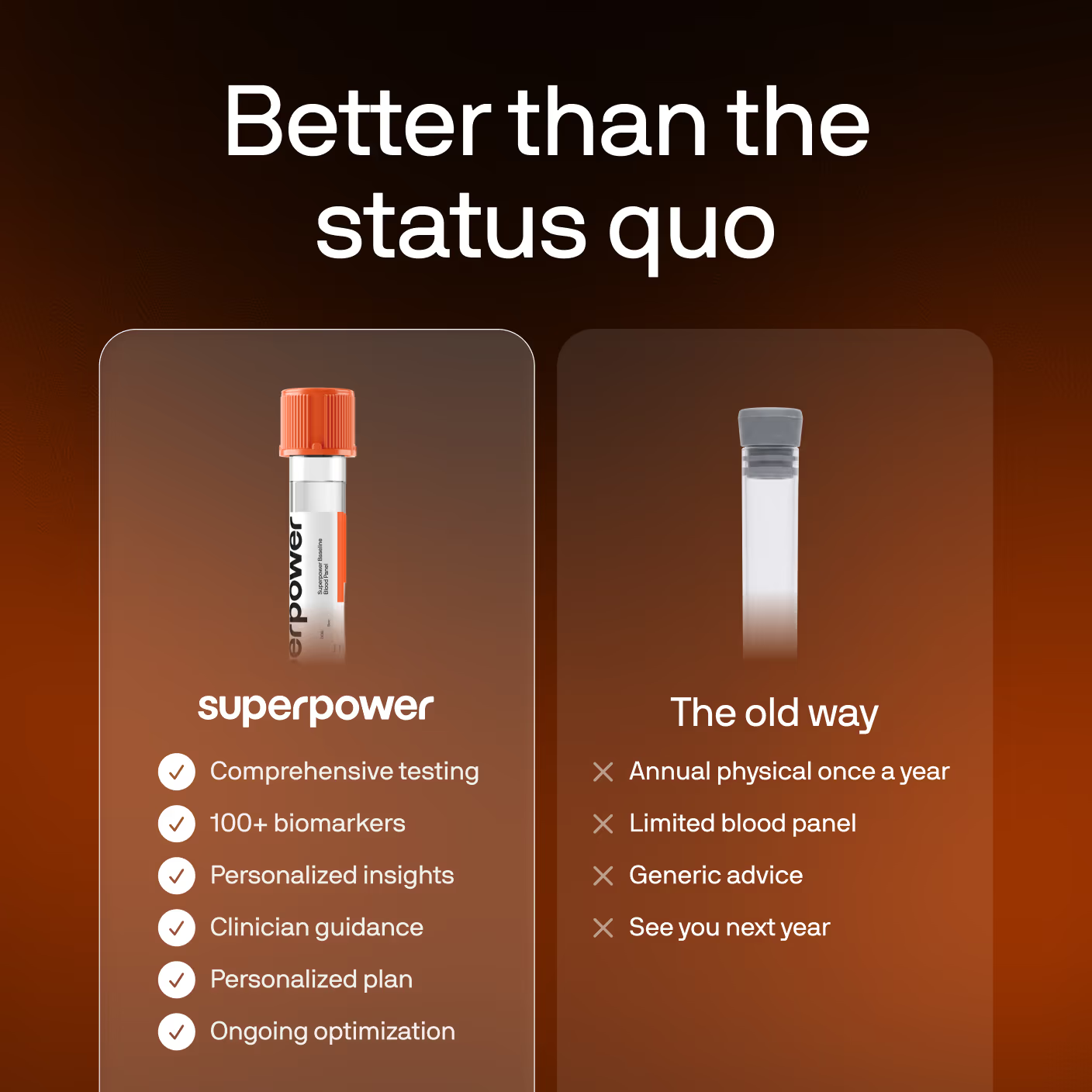
Diabetes symptoms tell you something has changed. A broader picture of your biology is what turns that into something you and a clinician can act on. A Superpower membership includes two blood draws, an initial baseline plus a partial re-draw of your most critical markers, for 150+ lab tests. Superpower keeps those results in one place, tracked across draws, with a personalized action plan for the habits behind them.
Guessing at what your body is doing is the expensive option. Discover what your own health data says. Start your Superpower membership.
Frequently Asked Questions
References
- National Institute of Diabetes and Digestive and Kidney Diseases (2024). *Symptoms & causes of diabetes*. U.S. Department of Health and Human Services. https://www.niddk.nih.gov/health-information/diabetes/overview/symptoms-causes
- Carey IM, Critchley JA, DeWilde S, Harris T, Hosking FJ, Cook DG (2018). Risk of infection in type 1 and type 2 diabetes compared with the general population: a matched cohort study. *Diabetes Care*, *41*(3), 513–521. https://doi.org/10.2337/dc17-2131
- Sun J, Wang Y, Zhang X, Zhu S, He H (2020). Prevalence of peripheral neuropathy in patients with diabetes: a systematic review and meta-analysis. *Primary Care Diabetes*, *14*(5), 435–444. https://doi.org/10.1016/j.pcd.2019.12.005
- Vallon V, Thomson SC (2017). Targeting renal glucose reabsorption to treat hyperglycaemia: the pleiotropic effects of SGLT2 inhibition. *Diabetologia*, *60*(2), 215–225. https://doi.org/10.1007/s00125-016-4157-3
- Okamoto F, Sone H, Nonoyama T, Hommura S (2000). Refractive changes in diabetic patients during intensive glycaemic control. *British Journal of Ophthalmology*, *84*(10), 1097–1102. https://doi.org/10.1136/bjo.84.10.1097
- Jacobsen LM, Schatz DA (2026). Type 1 diabetes: a review. *JAMA*, *335*(12), 1070–1083. https://doi.org/10.1001/jama.2026.0048
- Kalyani RR, Neumiller JJ, Maruthur NM, Wexler DJ (2025). Diagnosis and treatment of type 2 diabetes in adults: a review. *JAMA*, *334*(11), 984–1002. https://doi.org/10.1001/jama.2025.5956
- US Preventive Services Task Force, Davidson KW, Barry MJ, Mangione CM, Cabana M, Caughey AB, Davis EM, Donahue KE (2021). Screening for gestational diabetes: US Preventive Services Task Force recommendation statement. *JAMA*, *326*(6), 531–538. https://doi.org/10.1001/jama.2021.11922
- National Institute of Diabetes and Digestive and Kidney Diseases (2022). *Diabetes tests & diagnosis*. U.S. Department of Health and Human Services. https://www.niddk.nih.gov/health-information/diabetes/overview/tests-diagnosis
- Álvarez-Villalobos NA, Rodríguez-Gutiérrez R, González-Saldivar G, Sánchez-García A, Gómez-Flores M, Quintanilla-Sánchez C, Treviño-Álvarez AM, Mancillas-Adame LG, González-González JG (2020). Acanthosis nigricans in middle-age adults: a highly prevalent and specific clinical sign of insulin resistance. *International Journal of Clinical Practice*, *74*(3), e13453. https://doi.org/10.1111/ijcp.13453
- Kautzky-Willer A, Leutner M, Harreiter J (2023). Sex differences in type 2 diabetes. *Diabetologia*, *66*(6), 986–1002. https://doi.org/10.1007/s00125-023-05891-x
- Hirji I, Andersson SW, Guo Z, Hammar N, Gomez-Caminero A (2012). Incidence of genital infection among patients with type 2 diabetes in the UK General Practice Research Database. *Journal of Diabetes and Its Complications*, *26*(6), 501–505. https://doi.org/10.1016/j.jdiacomp.2012.06.012
- Kouidrat Y, Pizzol D, Cosco T, Thompson T, Carnaghi M, Bertoldo A, Solmi M, Stubbs B, Veronese N (2017). High prevalence of erectile dysfunction in diabetes: a systematic review and meta-analysis of 145 studies. *Diabetic Medicine*, *34*(9), 1185–1192. https://doi.org/10.1111/dme.13403
- Umpierrez GE, Davis GM, ElSayed NA, Fadini GP, Galindo RJ, Hirsch IB, Klonoff DC, McCoy RG, Misra S, Gabbay RA, Bannuru RR, Dhatariya KK (2024). Hyperglycemic crises in adults with diabetes: a consensus report. *Diabetes Care*, *47*(8), 1257–1275. https://doi.org/10.2337/dci24-0032
- Fang M, Wang D, Coresh J, Selvin E (2022). Undiagnosed diabetes in U.S. adults: prevalence and trends. *Diabetes Care*, *45*(9), 1994–2002. https://doi.org/10.2337/dc22-0242
- Hicks CW, Selvin E (2019). Epidemiology of peripheral neuropathy and lower extremity disease in diabetes. *Current Diabetes Reports*, *19*(10), 86. https://doi.org/10.1007/s11892-019-1212-8
- Centers for Disease Control and Prevention (2026). *National diabetes statistics report*. https://www.cdc.gov/diabetes/php/data-research/index.html






















 Heart & Vascular Health
 Metabolic Health
 Energy
 Liver Health
 Kidney
 Sex Hormones
 Thyroid Health
 Nutrients
 Immune System
 Inflammation