

Understand what your electrolytes minerals testing results really mean
See your biomarkers in context with a comprehensive panel.
- CLIA-certified labs
- HIPAA compliant
- Personalized health protocol
Dehydration and the blood signals of low body water
Dehydration biomarkers are measurable signals in your blood that reveal how much water your body has and how your organs are responding to fluid loss. They translate invisible shifts in body water into a clear picture of blood concentration, kidney workload, and hormone activity. The core signals show how “thick” the bloodstream has become (osmolality) and how much dissolved salt it carries (sodium). Byproducts filtered by the kidneys rise as blood concentrates and filtration slows, marking the strain on kidney function (urea/BUN and creatinine). The percentage of blood made up of red cells increases when plasma volume shrinks, reflecting hemoconcentration (hematocrit). At the same time, the body turns on water- and salt-saving hormones from the brain and adrenal–kidney axis to stabilize pressure and preserve fluid (vasopressin/antidiuretic hormone, often tracked by copeptin; renin; aldosterone). Together, these biomarkers show the balance between body water and solutes, the size of the circulating volume, and the intensity of the body’s conservation response, enabling a precise read on dehydration’s impact on circulation and cells.
Why hydration markers matter beyond thirst
Blood tests flag dehydration by showing how concentrated your blood has become and how your kidneys and hormones are handling water. Sodium reflects water balance in the bloodstream, the BUN/creatinine ratio signals reduced kidney perfusion (prerenal strain), and albumin tracks plasma concentration and oncotic pressure. Together, they reveal effects on the brain, circulation, kidneys, and muscles long before severe symptoms appear. Typical sodium sits around 135–145, with the middle generally most stable. The BUN/creatinine ratio is usually about 10–20, where mid-teens are common. Albumin tends to run near 3.5–5, with mid-range typical in health. When dehydration concentrates the blood, sodium often drifts high, the BUN/creatinine ratio rises above the usual range, and albumin can appear high-normal or elevated; people notice thirst, dry mouth, dark urine, dizziness, fast pulse, or confusion—older adults are particularly prone because thirst and kidney concentration responses decline. When values run low, they signal different physiology. Low sodium suggests excess water relative to salt or sodium loss replaced with free water—seen with prolonged sweating, diarrhea, or certain medicines—and can cause headache, nausea, muscle cramps, confusion, or seizures; children and endurance athletes are vulnerable. A low BUN/creatinine ratio points away from dehydration toward liver disease or low protein intake. Low albumin reflects inflammation, liver or kidney protein loss, or pregnancy-related dilution; it can mask dehydration on other markers and favors edema and fatigue. Big picture: these markers sit at the crossroads of fluid balance, vasopressin and aldosterone signaling, cardiovascular stability, and brain osmolar regulation. Persistent abnormalities link to falls, delirium, kidney injury and stones, and higher hospitalization risk—making dehydration testing a window into whole-system resilience.
Test 150+ biomarkers
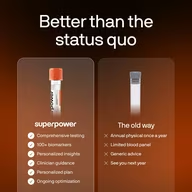
Two blood draws. A full picture of your health, explained in plain language.
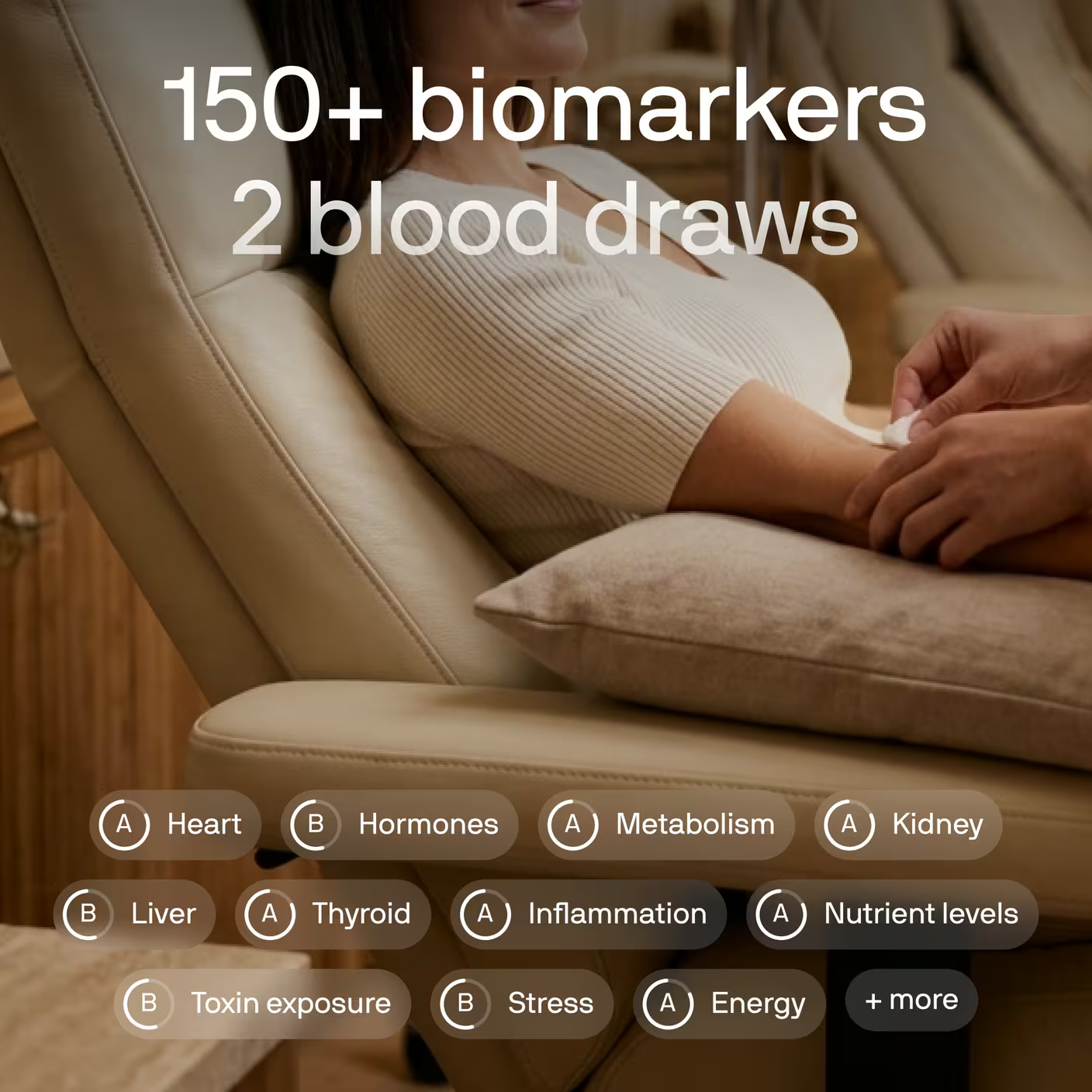
Test 150+ biomarkers
Two blood draws. A full picture of your health, explained in plain language.
What a hydration panel can and can't resolve
Dehydration blood testing provides a window into how well your body maintains fluid balance—a critical factor for energy production, metabolism, cardiovascular stability, brain function, and immune defense. Even mild dehydration can disrupt these systems, affecting everything from blood pressure to mental clarity. At Superpower, we assess dehydration risk and status by measuring sodium, BUN/creatinine ratio, and albumin. Sodium is a key electrolyte that helps regulate water distribution throughout the body. When you’re dehydrated, sodium levels often rise because there’s less water to dilute it. The BUN/Creatinine ratio compares two waste products filtered by the kidneys; this ratio typically increases when the body is low on fluids, as the kidneys conserve water and concentrate waste. Albumin is a major blood protein that helps keep fluid within blood vessels. Higher albumin levels can signal dehydration, as less water in the bloodstream makes proteins appear more concentrated. Together, these biomarkers reflect your body’s ability to maintain stable internal conditions—what medicine calls homeostasis. Healthy sodium, BUN/Creatinine ratio, and albumin levels suggest your fluid balance systems are working well, supporting stable blood pressure, efficient metabolism, and optimal organ function. When these markers are out of range, it may indicate that your body is under stress from fluid loss, which can impact everything from heart and kidney function to cognitive performance. Interpretation of these results can be influenced by factors such as age, pregnancy, acute illness, certain medications, and laboratory methods. These variables can shift normal ranges or affect how your body handles fluids, so results are always considered in context.
Frequently Asked Questions
References
- Hooper L, Abdelhamid A, Attreed NJ, Campbell WW, Channell AM, Chassagne P, Culp KR, Fletcher SJ, Fortes MB, Fuller N, Gaspar PM, Gilbert DJ, Heathcote AC, Kafri MW, Kajii F, Lindner G, Mack GW, Mentes JC, Merlani P, ... Hunter PR (2015). Clinical symptoms, signs and tests for identification of impending and current water-loss dehydration in older people. *Cochrane Database of Systematic Reviews*, *2015*(4), CD009647. https://doi.org/10.1002/14651858.CD009647.pub2
- Christ-Crain M, Refardt J, Winzeler B (2022). Approach to the patient: 'Utility of the copeptin assay.' *The Journal of Clinical Endocrinology & Metabolism*, *107*(6), 1727-1738. https://doi.org/10.1210/clinem/dgac070
- Sterns RH (2015). Disorders of plasma sodium—Causes, consequences, and correction. *New England Journal of Medicine*, *372*(1), 55-65. https://doi.org/10.1056/NEJMra1404489
- Parkinson E, Hooper L, Fynn J, Wilsher SH, Oladosu T, Poland F, Roberts S, Van Hout E, Bunn D (2023). Low-intake dehydration prevalence in non-hospitalised older adults: Systematic review and meta-analysis. *Clinical Nutrition*, *42*(8), 1510-1520. https://doi.org/10.1016/j.clnu.2023.06.010
- Thomas DR, Tariq SH, Makhdomm S, Haddad R, Moinuddin A (2003). Physician misdiagnosis of dehydration in older adults. *Journal of the American Medical Directors Association*, *4*(5), 251-254. https://doi.org/10.1097/01.JAM.0000083444.46985.16



















 Heart & Vascular Health
 Metabolic Health
 Energy
 Liver Health
 Kidney
 Sex Hormones
 Thyroid Health
 Nutrients
 Immune System
 Inflammation