Excellent 4.6 out of 5
Renal and Electrolyte Disorders

SIADH Biomarker Testing

Biomarker testing helps confirm SIADH by revealing disordered water balance and dilutional hyponatremia. Sodium tracks true hyponatremia; albumin helps interpret volume status and oncotic pressure that can mimic or modify findings. At Superpower, we test for Sodium, Albumin for SIADH.

With Superpower, you have access to a comprehensive range of biomarker tests.

Test for SIADH
Cancel anytime
HSA/FSA eligible
Results in a week
Physician reviewed

Every result is checked

·
CLIA-certified labs

Federal standard for testing

·
HIPAA compliant

Your data is 100% secure

Key Benefits

  • Spot SIADH by detecting low sodium and using albumin to rule other causes.
  • Clarify symptoms like headache, confusion, or nausea by linking them to hyponatremia severity.
  • Guide treatment urgency by grading sodium levels and monitoring safe correction over time.
  • Differentiate euvolemic SIADH from cirrhosis or nephrotic syndrome using albumin levels.
  • Protect brain health by flagging severe hyponatremia that raises seizure and fall risk.
  • Track progress by trending sodium during fluid restriction, salt therapy, or vasopressin antagonists.
  • Best interpreted with serum and urine osmolality, urine sodium, and your symptoms.

What are SIADH Biomarkers?

SIADH biomarkers are the lab signals that reveal water is being held in the body under the pull of excess antidiuretic hormone (ADH, vasopressin), producing diluted blood and concentrated urine despite overall normal fluid volume. They capture the hormone’s effect rather than an isolated number: blood chemistries that reflect dilution (sodium and osmolality), urine that stays concentrated with salt still being excreted (urine osmolality and urine sodium), and, when needed, a stable proxy for the hormone itself (copeptin, a surrogate for arginine vasopressin). Together they map the kidney’s response—less water excreted, more water kept—and help distinguish SIADH from other explanations for a diluted blood chemistry by showing an ADH-driven water imbalance rather than salt loss or dehydration. Additional checks of whole-body context, such as thyroid and adrenal status, support the picture by ruling out other signals that can mimic SIADH. In short, these biomarkers translate a complex water-regulation disorder into a readable pattern, enabling clear identification of SIADH’s physiology so treatment can be directed at the true driver: inappropriate ADH activity.

Why are SIADH biomarkers important?

SIADH biomarkers are the lab signals that reveal how the brain, kidneys, and blood work together to control water. The central marker is serum sodium, which reflects plasma tonicity and brain safety; albumin helps interpret volume status and the causes of hyponatremia that can mimic SIADH.

Typical serum sodium sits around 135–145, with most people feeling best in the middle. Albumin is generally 3.5–5.0, and tends to be healthiest toward the mid-to-high end because it maintains oncotic pressure and reflects nutritional status. In pregnancy, normal sodium runs slightly lower and albumin is diluted, so interpretation shifts.

When sodium falls, plasma becomes hypotonic and water moves into cells. In SIADH, excess antidiuretic hormone keeps kidneys reabsorbing water despite normal body salt and volume, so sodium drops while albumin often remains normal. The brain is most vulnerable: headache, nausea, unsteadiness, confusion, and seizures can emerge; children and older adults are more seizure- and fall-prone, and premenopausal women face higher risk of cerebral edema. Low albumin, by contrast, points to other hyponatremia states (cirrhosis, nephrotic syndrome, heart failure) rather than SIADH.

Sodium above the reference range usually signals water loss or diabetes insipidus—processes opposite to SIADH—and albumin may appear high from hemoconcentration. Big picture, these biomarkers integrate neuroendocrine control, renal handling, and vascular protein balance; tracking them helps prevent neurologic injury, gait and cognitive effects, bone loss from chronic hyponatremia, and clarifies overlap with thyroid, adrenal, cardiac, hepatic, and renal disorders.

What Insights Will I Get?

Water and sodium balance governs cell volume, nerve signaling, muscle contraction, and blood pressure. In SIADH, excess antidiuretic hormone causes water retention and lower plasma tonicity, which can strain brain and cardiovascular function. At Superpower, we test these biomarkers: Sodium, Albumin.

Sodium is the principal extracellular electrolyte; in SIADH the kidneys reabsorb water out of proportion to solute, diluting serum sodium even though total body sodium is typically normal. Albumin is the dominant plasma protein that maintains oncotic pressure; it is usually normal in SIADH, and when low it suggests alternative, hypervolemic causes of hyponatremia (for example liver or kidney disease) rather than inappropriate ADH.

For stability and healthy function, a steady sodium concentration signals effective osmoregulation and balanced ADH activity. Falling sodium indicates hypotonic stress that especially affects the brain. When sodium is low with normal albumin, the pattern supports euvolemic dilution consistent with SIADH. When sodium is low with reduced albumin, the pattern points toward reduced oncotic pressure and fluid overload as a more likely explanation than SIADH.

Notes: Interpretation is influenced by age, pregnancy (lower physiologic sodium), acute illness, pain, surgery, pulmonary or CNS disease, and medications that raise ADH or impair water excretion (e.g., SSRIs/SNRIs, carbamazepine/oxcarbazepine, thiazides, antipsychotics, desmopressin). Adrenal or thyroid insufficiency can mimic SIADH. Analytical methods (direct vs indirect ion-selective electrodes) and severe hyperlipidemia or hyperproteinemia can artifactually alter sodium results.

Superpower also tests for

See more diseases

Frequently Asked Questions About SIADH

What is SIADH biomarker testing?

SIADH testing looks for signs that your body is holding on to water when it shouldn’t, which dilutes blood sodium. In plain terms, it checks if a water‑balance hormone (antidiuretic hormone, ADH/vasopressin) is inappropriately active. Superpower tests for Sodium and Albumin. Sodium reflects water balance; low values signal dilutional hyponatremia. Albumin is a major blood protein that helps assess volume status; normal albumin supports a “euvolemic” picture seen in SIADH, while low albumin points toward other causes of low sodium (like liver or kidney protein loss). Definitive SIADH diagnosis also uses serum/urine osmolality and urine sodium, interpreted with clinical context.

Why should I get SIADH biomarker testing?

It quickly shows whether low energy, headaches, nausea, confusion, or falls could be from low sodium due to water retention. Sodium tracks the severity of dilutional hyponatremia; albumin helps separate SIADH (euvolemic) from edema‑forming states like cirrhosis or nephrotic syndrome (hypoalbuminemic, hypervolemic). Testing is also useful if you take medicines known to trigger SIADH physiology (for example SSRIs, SNRIs, carbamazepine, oxcarbazepine, certain antipsychotics, or chemotherapy) or if you’ve had unexplained low sodium before. Superpower measures Sodium and Albumin to anchor this assessment and guide whether further confirmatory urine and osmolality studies are warranted.

How often should I test?

Frequency depends on risk and prior results. A baseline makes sense when symptoms are present, after a previously low sodium, or when starting medicines linked to SIADH physiology. If sodium has been low, periodic checks track stability and safety. During acute illness, pain, nausea, or after surgery—states that transiently raise ADH—repeat testing can clarify whether hyponatremia is evolving. If levels are stable and you’re asymptomatic, testing is typically occasional rather than routine. Superpower’s Sodium and Albumin provide a fast signal of dilution and volume status; persistently abnormal patterns usually prompt more detailed serum/urine osmolality testing.

Sarcopenia biology shifts slowly, so the value is in the trend, not a single snapshot. Meaningful changes in muscle quantity and quality emerge over months as protein turnover and anabolic signaling adjust. A 6‑month interval cleanly separates true signal from day‑to‑day noise. At Superpower, we take a blood draw test every 6 months. The goal is to confirm your trajectory—maintaining versus losing muscle—rather than reacting to minor fluctuations.

What can affect biomarker levels?

Many factors shift sodium independent of chronic disease. Medications that raise ADH effect or impair water excretion (SSRIs/SNRIs, carbamazepine/oxcarbazepine, chlorpropamide, cyclophosphamide, some antipsychotics, MDMA) can lower sodium. Thiazide diuretics also commonly cause hyponatremia. Acute pain, nausea, stress, and postoperative states transiently increase ADH. High water intake, low solute intake (“tea and toast” or beer potomania), vomiting/diarrhea, and endurance exercise change water‑salt balance. Endocrine disorders (adrenal insufficiency, hypothyroidism) mimic SIADH. Low albumin often reflects liver disease, nephrotic syndrome, or malnutrition and points toward hypervolemic causes of hyponatremia. Lab-to-lab reference ranges vary modestly.

Are there any preparations needed before SIADH biomarker testing?

No special preparation is required. Fasting is not needed for Sodium or Albumin. Avoid extreme fluid behaviors immediately before your blood draw—both deliberate overhydration and fluid restriction can transiently skew sodium by changing plasma water. Take your medications as prescribed; many influence sodium, and abrupt changes can confound interpretation. Routine, steady hydration and typical diet on the day of testing make the results easier to interpret. Superpower measures Sodium and Albumin from a standard blood sample, providing a clean snapshot of dilution and protein status without complex pretest steps.

Can lifestyle changes affect my biomarker levels?

Yes. Sodium reflects the balance between water intake, water excretion, and total body solute. In SIADH physiology, the kidney holds water; high fluid intake can push sodium lower, while lower intake can allow sodium to rise. Low dietary solute (very low protein and salt) reduces the kidney’s ability to excrete free water, worsening dilution. Heavy sweating with hypotonic fluid replacement, binge drinking, and prolonged endurance exercise can acutely lower sodium. Albumin changes more slowly; it shifts with protein nutrition, liver synthesis, and renal or gastrointestinal protein losses rather than day‑to‑day habits.

How do I interpret my results?

Low Sodium suggests dilutional hyponatremia; the lower it is, the higher the immediate risk for neurologic symptoms. Normal Albumin with low Sodium supports a euvolemic pattern consistent with SIADH, but confirmation usually requires serum osmolality (low), urine osmolality (inappropriately high), and urine sodium (elevated), plus exclusion of thyroid and adrenal disorders. Low Albumin with low Sodium points to alternative mechanisms (reduced effective arterial volume in cirrhosis, heart failure, or nephrotic syndrome). Normal Sodium argues against active SIADH at the time of testing. Superpower provides Sodium and Albumin to anchor this triage and signal when deeper testing is needed.

How it works

1

Test your whole body

Get a comprehensive blood draw at one of our 2,000+ partner labs or from the comfort of your own home.

2

An Actionable Plan

Easy to understand results & a clear action plan with tailored recommendations on diet, lifestyle changes, supplements and pharmaceuticals.

3

A Connected Ecosystem

You can book additional diagnostics, buy curated supplements for 20% off & pharmaceuticals within your Superpower dashboard.

Superpower tests more than 
100+ biomarkers & common symptoms

Developed by world-class medical professionals

Supported by the world’s top longevity clinicians and MDs.

Dr Anant Vinjamoori

Superpower Chief Longevity Officer, Harvard MD & MBA

A smiling woman wearing a white coat and stethoscope poses for a portrait.

Dr Leigh Erin Connealy

Clinician & Founder of The Centre for New Medicine

Man in a black medical scrub top smiling at the camera.

Dr Abe Malkin

Founder & Medical Director of Concierge MD

Dr Robert Lufkin

UCLA Medical Professor, NYT Bestselling Author

Your membership

Select your assessment level

Superpower provides the most advanced health check with a plan that works. Go far beyond your annual physical.

Panels designed by

world class clinicians

2,000+ lab locations

across the country

Baseline

$199/yr

100+ biomarker blood test

Performance

Recommended

$365/yr

115+ biomarker blood test

60 biomarker follow-up retest

Complete

$649/yr

115+ biomarker blood test

60 biomarker follow-up retest

Gut microbiome analysis

Organ age breakdown

Get started
Loading...
HSA/ FSA eligible · Secure checkout

Baseline

$199

per year

Covers your metabolic, hormonal and cardiovascular baseline. The best basis for a single snapshot of your overall health.

What's included

Test Breakdown

These are the panels offered in the tiers above

100+ biomarker blood test

Heart & Vascular Health

20 markers

ApoB, LDL-Cholesterol, Triglycerides

Sex Hormones

8 markers

Testosterone, Estradiol, DHEA-S, Cortisol

Metabolic Health

7 markers

Glucose, HbA1c

Thyroid Health

4 markers

TSH, T3 Uptake, Free T4, T4 Total

Liver Health

13 markers

ALT, AST, GGT, Bilirubin

Nutrients

12 markers

Vitamin D, Total Protein, Hemoglobin

Immune System

16 markers

White blood cells, Neutrophils, Lymphocytes

Energy

5 markers

Ferritin, Iron, Cortisol

Kidney Health

9 markers

Creatinine, eGFR, Potassium, Sodium

See full list →

+21 additional

Included with every assessment

17 health areas developed by world class clinicians

Personalized clinical protocol

On-demand messaging with your care team

20% off superpower marketplace

Member pricing on add-on tests, supplements & RX

Upload past labs & wearable data for tracking

Superpower AI — a world class system trained on you

Complete

$649

per year

Normally $703 (save 8%)

Adds gut microbiome analysis and organ age surfacing, what standard blood panels may miss across energy, digestion, and immunity.

What's included

Test Breakdown

These are the panels offered in the tiers above

115+ biomarker blood test

Heart & Vascular Health

20 markers

ApoB, LDL-Cholesterol, Triglycerides, Lipoprotein(a)

Sex Hormones

11 markers

Testosterone, Estradiol, DHEA-S, Cortisol, PSA, FSH, LH, AMH

Metabolic Health

7 markers

Glucose, HbA1c, Insulin

Thyroid Health

4 markers

TSH, T3 Uptake, Free T4, T4 Total

Liver Health

8 markers

ALT, AST, GGT, Bilirubin

Nutrients

12 markers

Vitamin D, Total Protein, Hemoglobin

Immune System

16 markers

White blood cells, Neutrophils, Lymphocytes

Energy

5 markers

Ferritin, Iron, Cortisol

Kidney Health

24 markers

Creatinine, eGFR, Potassium, Urinary pH, RBC Urine, Nitrites

DNA Health

3 markers

Homocysteine, B12, Folate

Inflammation

3 markers

hs-CRP, Systemic Immune-Inflammation Index

See full list →

+8 additional

60 biomarker follow-up retest

Retesting panel

100 markers

Complete second draw — 60 biomarkers retested for longitudinal tracking.
Most biomarkers can move significantly within 3–6 months if you're actively trying to fix them.

Gut microbiome analysis

$239

Gut microbiome

300+ data points

Profiles 300 bacterial strains in your gut to map your microbial balance.
Identifies dysbiosis that may be driving symptoms like bloating, irregular digestion, skin issues, and mood changes, with actionable guidance on diet and lifestyle shifts to help restore balance.

Organ age breakdown

$99

OrganAge is the most detailed biological age test available today. Rather than showing a single number, it reveals how old each of your body's nine key systems is

Organ age breakdown

10 key systems

Circulatory, digestive, genitourinary, infectious, mental, metabolic, musculoskeletal, nervous, respiratory and systemic ages based on cutting edge longevity research

Included with every assessment

17 health areas developed by world class clinicians

Personalized clinical protocol

On-demand messaging with your care team

20% off superpower marketplace

Member pricing on add-on tests, supplements & RX

Upload past labs & wearable data for tracking

Superpower AI — a world class system trained on you

Get started
Loading...
HSA/ FSA eligible · Secure checkout

Finally, healthcare that looks at the whole you

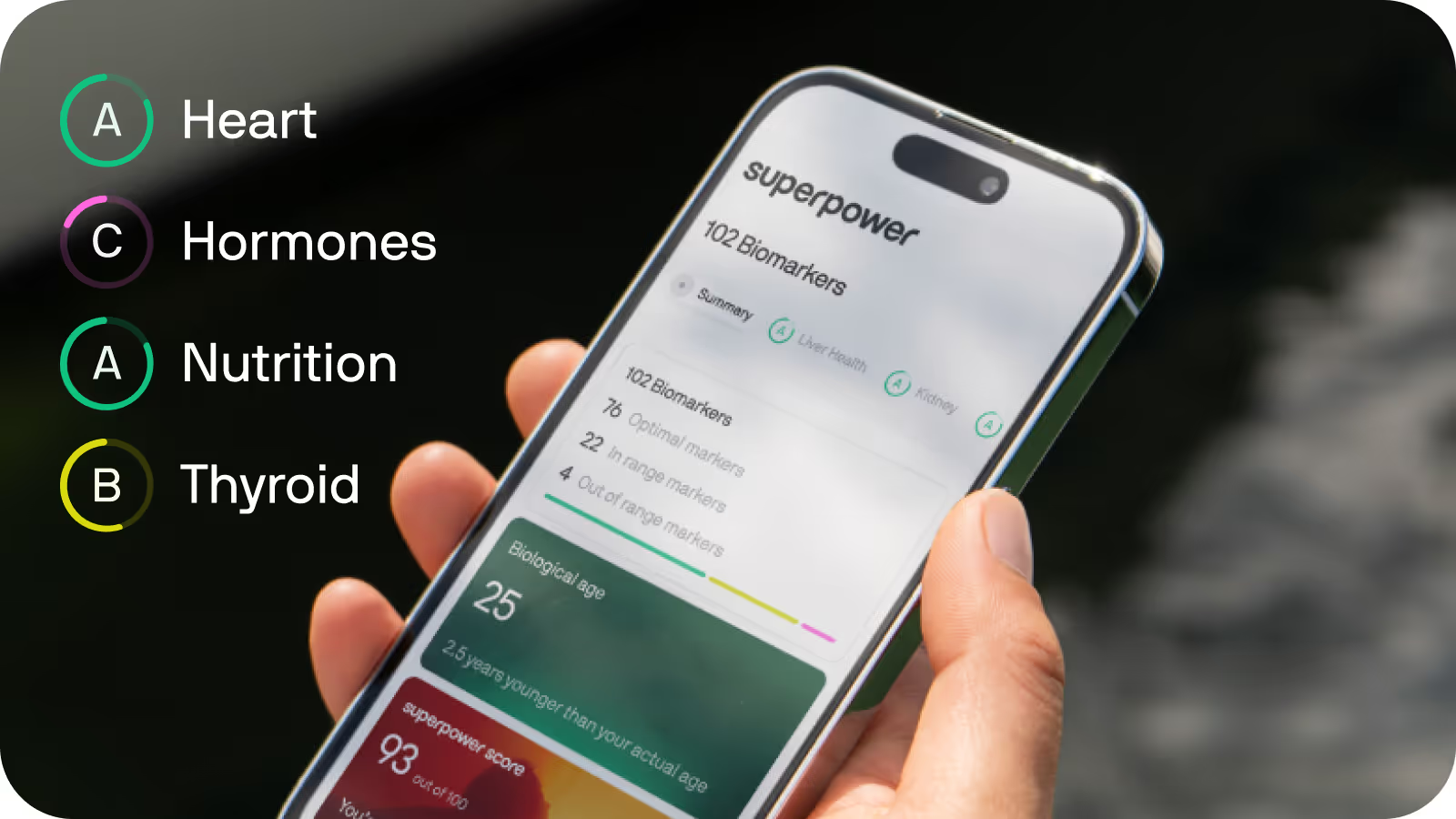
Superpower app on phone
Designed by world-class physicians

Get simple, free protocols for energy, heart health and more

Please enter a valid email address

Free protocols for

Improving energy with simple lifestyle changes

Reducing heart attack risk if you’re 30+

Slowing your pace of aging

Thanks for signing up!

Your health journey starts now. Watch your inbox for updates and smarter health insights – stay tuned.