

Excellent 4.6 out of 5
Cancers

Ovarian Cancer Biomarker Testing

Biomarker testing helps detect early biologic signals of ovarian disease, when symptoms are subtle. At Superpower, we track hormone balance and inflammation—Estradiol (E2), ESR, and CRP—to illuminate ovarian and systemic activity that can accompany tumor growth, progression, or benign conditions, guiding timely evaluation and surveillance.

With Superpower, you have access to a comprehensive range of biomarker tests.

Test for Ovarian Cancer
Cancel anytime
HSA/FSA eligible
Results in a week
Physician reviewed

Every result is checked

·
CLIA-certified labs

Federal standard for testing

·
HIPAA compliant

Your data is 100% secure

Key Benefits

'- Check estrogen and inflammation signals that may accompany ovarian tumors or related conditions.

  • Spot estrogen imbalance suggesting granulosa cell tumors or ovarian hyperfunction.
  • Clarify causes of irregular periods, bloating, or pelvic pain using estradiol context.
  • Guide therapy by tracking inflammation shifts (ESR, CRP) alongside oncologic treatment milestones.
  • Protect fertility planning by identifying estrogen extremes that disrupt ovulation and endometrial health.
  • Support pregnancy care by flagging estrogen abnormalities affecting implantation, miscarriage risk, or bleeding.
  • Track recovery or complications by monitoring CRP/ESR for infection versus tumor-related inflammation.
  • Best interpreted with CA-125, pelvic ultrasound, and your symptoms for specificity.

What are Ovarian Cancer Biomarkers?

Ovarian cancer biomarkers are measurable signals that reflect the presence and behavior of ovarian tumors. They are molecules made by tumor cells or released as the body reacts to the tumor, and they circulate in blood or appear in tissue and fluids. In practice, these signals help flag a suspicious pelvic mass, support decisions about surgery, estimate how much cancer is in the body, and follow how well treatment is working over time and whether disease is returning. The most familiar blood proteins are CA-125 (MUC16) and HE4 (WFDC2), large glycoproteins shed from the surface of ovarian epithelial cells. Tumor genetics also function as biomarkers: inherited or tumor-acquired changes in DNA repair genes such as BRCA1 and BRCA2 can reveal how the cancer grew and which drugs it might respond to. Newer markers track fragments of tumor DNA in the bloodstream (circulating tumor DNA, ctDNA), providing a moving picture of tumor activity. Together, these biomarkers turn hidden disease into trackable biological information.

Why are Ovarian Cancer biomarkers important?

Ovarian cancer biomarkers are measurable signals that reflect how the tumor and the body’s systems are interacting. Beyond tumor markers like CA‑125 and HE4, hormone and inflammation markers show the endocrine and immune “weather” around the disease, influencing symptoms, spread, and recovery.

Estradiol charts ovarian hormone output: in premenopausal women it typically ranges roughly 30–400 depending on cycle phase, falls under 20 after menopause, and sits around 10–40 in men. For cycling women, cycle‑appropriate mid‑range values are expected; after menopause, lower values are physiologic. ESR is generally under 15–20 in adult men and under 20–30 in adult women, with lower being favorable; CRP under 1 is optimal, 1–3 is borderline, and higher suggests active inflammation. Pregnancy pushes estradiol, ESR, and CRP higher for non‑cancer reasons.

When these values are low, they tell a specific physiologic story. Low estradiol signals ovarian quiescence—common after menopause or oophorectomy—with hot flashes, vaginal dryness, reduced libido, and bone loss; importantly, low estradiol does not exclude ovarian cancer, which often arises postmenopause. Very low ESR and CRP indicate minimal systemic inflammation; in cancer, that can mean limited inflammatory burden and fewer whole‑body symptoms like fatigue or appetite loss, yet localized tumor may still be present.

Higher readings carry different implications. Markedly elevated estradiol can occur with estrogen‑secreting tumors (e.g., granulosa cell), bringing irregular bleeding or breast tenderness. Rising ESR and CRP reflect cytokine‑driven inflammation from tumor activity, infection, or treatment effects, and often track with fatigue, anemia, and weight loss; persistently high levels can portend worse outcomes.

Big picture, these biomarkers connect ovarian pathology to endocrine balance, immune tone, metabolism, and vascular risk. Interpreted together—and over time—they help map disease biology, anticipate complications, and contextualize long‑term health beyond the ovary.

What Insights Will I Get?

Ovarian cancer touches multiple systems—endocrine signaling, immune activation, metabolism, and coagulation—that influence energy, resilience, and reproductive health. Biomarkers help map this physiology and the body’s response to potential pathology. At Superpower, we test Estradiol, ESR, and CRP to view the estrogen axis alongside systemic inflammation relevant to ovarian biology.

Estradiol is the principal estrogen, reflecting ovarian and peripheral estrogenic activity. Some ovarian tumors (especially sex cord–stromal types) can produce estradiol, and many epithelial tumors express estrogen receptors that respond to estrogenic signaling. ESR (erythrocyte sedimentation rate) is an indirect measure of inflammation driven by plasma proteins like fibrinogen; it can rise with tumor-associated inflammation. CRP (C‑reactive protein) is a liver-made acute‑phase protein induced by IL‑6; it often increases with cancer-related inflammation and tissue injury.

For stability and healthy function, estradiol appropriate for age and menopausal status suggests balanced reproductive–endocrine tone; incongruous elevations, particularly after menopause, indicate abnormal estrogenic drive that warrants clinical correlation. Low, steady ESR and CRP indicate a quiet innate immune state and a stable tissue environment. Persistently high values suggest ongoing systemic inflammation, which can accompany malignancy but also infection or autoimmune disease; movement of these markers over time reflects shifts in inflammatory load.

Notes: Interpretation depends on age, menstrual phase or menopause, pregnancy, hormonal medications (contraceptives, HRT), acute illness, surgery, chronic inflammatory conditions, and obesity. Steroids and NSAIDs can lower CRP. Assay methods and timing vary across labs; single values are less informative than consistent patterns.

Superpower also tests for

See more diseases

Frequently Asked Questions About Ovarian Cancer

What is Ovarian Cancer biomarker testing?

Ovarian cancer testing looks for biologic signals of ovarian cell activity and tissue stress. Clinically, tumor markers like CA‑125 and HE4 plus imaging and exam are used to assess risk and disease. Superpower tests for Estradiol, ESR (erythrocyte sedimentation rate), and CRP (C‑reactive protein). These show hormone output and whole‑body inflammation but are not diagnostic for ovarian cancer. Normal results do not rule out cancer; abnormal results do not confirm it.

Why should I get Ovarian Cancer biomarker testing?

Use biomarkers to support an evaluation when symptoms, imaging, or history raise concern, and to monitor biology after a diagnosis. Estradiol reflects ovarian hormone production; ESR and CRP reflect systemic inflammation. They provide physiologic context but do not screen for ovarian cancer. Definitive assessment relies on tumor markers such as CA‑125/HE4, imaging, and clinical judgment.

How often should I test?

There is no routine screening interval for average‑risk, symptom‑free people; major guidelines do not recommend it. Testing frequency is driven by clinical context: new symptoms, abnormal exams or imaging, or follow‑up after a known condition. Estradiol is often interpreted relative to cycle timing; ESR/CRP are repeated only to track changes in inflammation. For ovarian cancer risk assessment, intervals are individualized and typically use CA‑125/HE4 with imaging when indicated.

There’s no standard screening schedule for ovarian cancer biomarkers. They aren’t recommended for routine screening in average‑risk people. These markers—most often CA‑125 and sometimes HE4—are best read as trends, not single values. Levels can shift with benign processes like menstruation, endometriosis, fibroids, or pelvic inflammation, so isolated spikes often reflect noise. The signal is a persistent elevation or rise over time, which tracks tumor‑associated glycoprotein activity and peritoneal irritation. At Superpower, we draw blood every 6 months to watch for stable patterns versus meaningful change. This cadence supports pattern detection and reduces false alarms. It’s a monitoring tool, not a diagnosis.

What can affect biomarker levels?

Estradiol varies with menstrual phase, pregnancy, menopause, ovarian cysts, hormonal contraception, and hormone therapy. ESR and CRP rise with infections, injuries, surgery, chronic inflammatory or autoimmune disease, and may be higher with obesity or smoking; they can fall with steroids or NSAIDs. Recent illness, vigorous exercise, and sample handling can shift results. None of these markers alone diagnoses ovarian cancer.

Are there any preparations needed before Ovarian Cancer biomarker testing?

No fasting is required for Estradiol, ESR, or CRP. If possible, avoid testing during an acute infection if you want a baseline inflammation read. Note your menstrual cycle day or menopausal status for Estradiol interpretation. List hormones, steroids, NSAIDs, or other medicines you take, as they can influence results. Routine hydration and usual diet are fine.

Can lifestyle changes affect my biomarker levels?

Systemic inflammation markers (CRP, ESR) can move with changes that alter inflammatory tone and metabolic stress; hormone levels (Estradiol) reflect ovarian function and exogenous hormones and may shift with weight and medications. These shifts are physiologic, not specific to cancer. Lifestyle effects cannot diagnose or rule out ovarian cancer, and changes in these biomarkers must be interpreted in clinical context.

How do I interpret my results?

Estradiol indicates ovarian hormone output; values are read against age and cycle/menopausal status. ESR and CRP are acute‑phase reactants; elevations signal inflammation somewhere in the body, not its cause. Normal Estradiol/ESR/CRP do not exclude ovarian cancer. Elevated values do not prove it. For ovarian cancer risk, decision‑making relies on symptoms, exam, imaging, and tumor markers like CA‑125/HE4. Use Superpower’s Estradiol, ESR, and CRP as context, not as a standalone cancer screen.

How it works

1

Test your whole body

Get a comprehensive blood draw at one of our 2,000+ partner labs or from the comfort of your own home.

2

An Actionable Plan

Easy to understand results & a clear action plan with tailored recommendations on diet, lifestyle changes, supplements and pharmaceuticals.

3

A Connected Ecosystem

You can book additional diagnostics, buy curated supplements for 20% off & pharmaceuticals within your Superpower dashboard.

Superpower tests more than 
100+ biomarkers & common symptoms

Developed by world-class medical professionals

Supported by the world’s top longevity clinicians and MDs.

Dr Anant Vinjamoori

Superpower Chief Longevity Officer, Harvard MD & MBA

A smiling woman wearing a white coat and stethoscope poses for a portrait.

Dr Leigh Erin Connealy

Clinician & Founder of The Centre for New Medicine

Man in a black medical scrub top smiling at the camera.

Dr Abe Malkin

Founder & Medical Director of Concierge MD

Dr Robert Lufkin

UCLA Medical Professor, NYT Bestselling Author

Your membership

Select your assessment level

Superpower provides the most advanced health check with a plan that works. Go far beyond your annual physical.

Panels designed by

world class clinicians

2,000+ lab locations

across the country

Baseline

$199/yr

100+ biomarker blood test

Performance

Recommended

$365/yr

115+ biomarker blood test

60 biomarker follow-up retest

Complete

$649/yr

115+ biomarker blood test

60 biomarker follow-up retest

Gut microbiome analysis

Organ age breakdown

Get started
Loading...
HSA/ FSA eligible · Secure checkout

Baseline

$199

per year

Covers your metabolic, hormonal and cardiovascular baseline. The best basis for a single snapshot of your overall health.

What's included

Test Breakdown

These are the panels offered in the tiers above

100+ biomarker blood test

Heart & Vascular Health

20 markers

ApoB, LDL-Cholesterol, Triglycerides

Sex Hormones

8 markers

Testosterone, Estradiol, DHEA-S, Cortisol

Metabolic Health

7 markers

Glucose, HbA1c

Thyroid Health

4 markers

TSH, T3 Uptake, Free T4, T4 Total

Liver Health

13 markers

ALT, AST, GGT, Bilirubin

Nutrients

12 markers

Vitamin D, Total Protein, Hemoglobin

Immune System

16 markers

White blood cells, Neutrophils, Lymphocytes

Energy

5 markers

Ferritin, Iron, Cortisol

Kidney Health

9 markers

Creatinine, eGFR, Potassium, Sodium

See full list →

+21 additional

Included with every assessment

17 health areas developed by world class clinicians

Personalized clinical protocol

On-demand messaging with your care team

20% off superpower marketplace

Member pricing on add-on tests, supplements & RX

Upload past labs & wearable data for tracking

Superpower AI — a world class system trained on you

Complete

$649

per year

Normally $703 (save 8%)

Adds gut microbiome analysis and organ age surfacing, what standard blood panels may miss across energy, digestion, and immunity.

What's included

Test Breakdown

These are the panels offered in the tiers above

115+ biomarker blood test

Heart & Vascular Health

20 markers

ApoB, LDL-Cholesterol, Triglycerides, Lipoprotein(a)

Sex Hormones

11 markers

Testosterone, Estradiol, DHEA-S, Cortisol, PSA, FSH, LH, AMH

Metabolic Health

7 markers

Glucose, HbA1c, Insulin

Thyroid Health

4 markers

TSH, T3 Uptake, Free T4, T4 Total

Liver Health

8 markers

ALT, AST, GGT, Bilirubin

Nutrients

12 markers

Vitamin D, Total Protein, Hemoglobin

Immune System

16 markers

White blood cells, Neutrophils, Lymphocytes

Energy

5 markers

Ferritin, Iron, Cortisol

Kidney Health

24 markers

Creatinine, eGFR, Potassium, Urinary pH, RBC Urine, Nitrites

DNA Health

3 markers

Homocysteine, B12, Folate

Inflammation

3 markers

hs-CRP, Systemic Immune-Inflammation Index

See full list →

+8 additional

60 biomarker follow-up retest

Retesting panel

100 markers

Complete second draw — 60 biomarkers retested for longitudinal tracking.
Most biomarkers can move significantly within 3–6 months if you're actively trying to fix them.

Gut microbiome analysis

$239

Gut microbiome

300+ data points

Profiles 300 bacterial strains in your gut to map your microbial balance.
Identifies dysbiosis that may be driving symptoms like bloating, irregular digestion, skin issues, and mood changes, with actionable guidance on diet and lifestyle shifts to help restore balance.

Organ age breakdown

$99

OrganAge is the most detailed biological age test available today. Rather than showing a single number, it reveals how old each of your body's nine key systems is

Organ age breakdown

10 key systems

Circulatory, digestive, genitourinary, infectious, mental, metabolic, musculoskeletal, nervous, respiratory and systemic ages based on cutting edge longevity research

Included with every assessment

17 health areas developed by world class clinicians

Personalized clinical protocol

On-demand messaging with your care team

20% off superpower marketplace

Member pricing on add-on tests, supplements & RX

Upload past labs & wearable data for tracking

Superpower AI — a world class system trained on you

Get started
Loading...
HSA/ FSA eligible · Secure checkout

Finally, healthcare that looks at the whole you

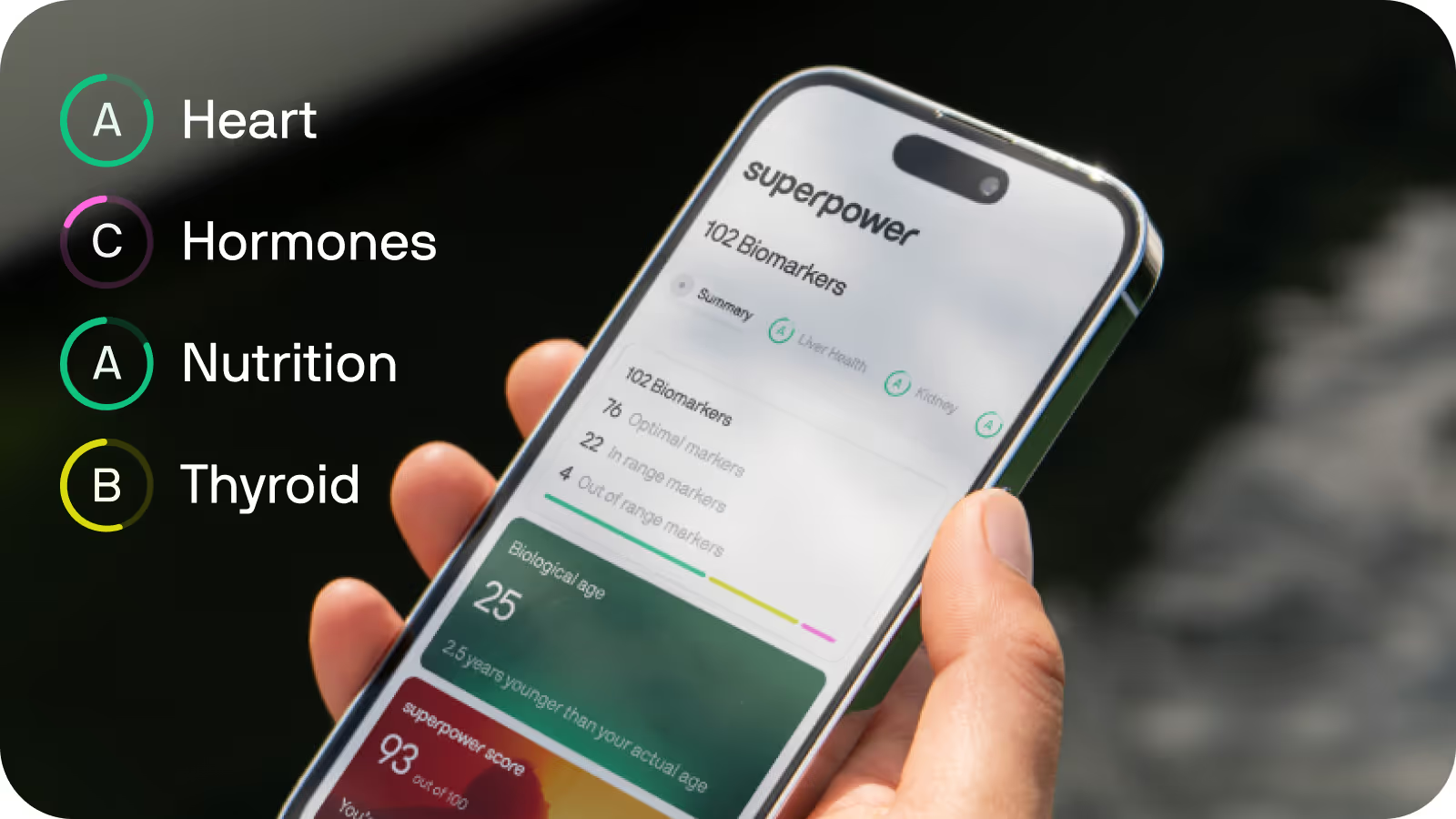
Superpower app on phone
Designed by world-class physicians

Get simple, free protocols for energy, heart health and more

Please enter a valid email address

Free protocols for

Improving energy with simple lifestyle changes

Reducing heart attack risk if you’re 30+

Slowing your pace of aging

Thanks for signing up!

Your health journey starts now. Watch your inbox for updates and smarter health insights – stay tuned.