
Excellent 4.6 out of 5
Renal and Electrolyte Disorders

Osteomalacia Biomarker Testing

Osteomalacia reflects impaired bone mineralization from disrupted vitamin D–calcium balance. Biomarker testing clarifies mineral metabolism and bone turnover. Vitamin D (25‑OH), serum calcium, and alkaline phosphatase track deficiency and osteoid remodeling. At Superpower, we test for Vitamin D, Calcium, and ALP for osteomalacia.

With Superpower, you have access to a comprehensive range of biomarker tests.

Test for Osteomalacia
Cancel anytime
HSA/FSA eligible
Results in a week
Physician reviewed

Every result is checked

·
CLIA-certified labs

Federal standard for testing

·
HIPAA compliant

Your data is 100% secure

Key Benefits

'- Screen for soft bones (osteomalacia) using vitamin D, calcium, and ALP results.

  • Spot vitamin D deficiency that weakens bone mineralization and increases fracture risk.
  • Flag low or borderline calcium that signals impaired mineralization and bone pain.
  • Identify raised ALP that points to active bone repair from osteomalacia.
  • Explain muscle weakness, waddling gait, or diffuse aches by linking labs to bone softening.
  • Guide targeted vitamin D and calcium replacement to restore mineralization and relieve symptoms.
  • Track recovery with rising vitamin D, steady calcium, and falling ALP over time.
  • Best interpreted alongside phosphate, parathyroid hormone, and your symptoms for accuracy.

What are Osteomalacia Biomarkers?

Osteomalacia biomarkers are blood and urine signals that show whether your bones are being properly hardened with minerals. They track the body’s mineral supply (calcium and phosphate), the nutrient that enables absorption and mineral delivery (vitamin D), the hormones that regulate this system, and the activity of bone‑forming cells. Core markers include vitamin D storage status (25‑hydroxyvitamin D), the active vitamin D hormone (1,25‑dihydroxyvitamin D), circulating calcium and phosphate, the calcium‑regulating hormone from the neck glands (parathyroid hormone, PTH), and the enzyme released when new bone is laid down (alkaline phosphatase, especially bone‑specific ALP). Some panels also measure the phosphate‑controlling signal made by bone (fibroblast growth factor 23, FGF23) and proteins that reflect bone turnover (osteocalcin, P1NP, CTX). Together, these tests reveal where the mineralization pathway is faltering—insufficient vitamin D input, phosphate loss, or disrupted handling in the gut or kidneys—and distinguish soft, under‑mineralized bone from other bone conditions. In short, they pinpoint the biological bottleneck so treatment can target the cause, not just the symptoms.

Why are Osteomalacia biomarkers important?

Osteomalacia biomarkers tell you how well your skeleton is being mineralized—and how the gut, kidneys, parathyroid glands, and muscles are coordinating to keep calcium and phosphate where they belong. They flag when bone is built but left “soft,” leading to pain, weakness, and fractures.

Vitamin D is typically considered sufficient around 30–50, with most people doing best in the middle of that range. Serum calcium commonly sits near 8.5–10.2, where a steady middle value supports nerve and muscle function. Alkaline phosphatase (ALP) in adults is often about 40–120, and healthy states tend to fall on the low-to-middle end; sustained elevations suggest increased bone turnover.

When vitamin D is low, intestinal calcium absorption drops. Calcium may be low or low–normal, the parathyroid glands ramp up (secondary hyperparathyroidism), and bone matrix fails to mineralize. ALP usually rises as osteoblasts work overtime. People feel deep, aching bone pain (hips, ribs, pelvis), thigh and shoulder-girdle weakness, difficulty climbing stairs, a waddling gait, and stress or fragility fractures. Men and women are both affected; risk increases with aging and in postmenopausal women. In children and teens, the same physiology appears as rickets—growth plate pain, bowed legs, and delayed motor milestones. During pregnancy, higher mineral demands can unmask deficiency, with cramps, tingling, or bone pain.

Big picture, these markers integrate sunlight and diet (vitamin D), liver–kidney activation pathways, parathyroid control, and skeletal remodeling. Keeping them in balance supports mobility, neuromuscular stability, and fracture resistance—key to independence and long-term quality of life.

What Insights Will I Get?

Osteomalacia reflects impaired bone mineralization, which can reverberate through muscle strength, nerve conduction, and whole‑body calcium–phosphate balance. Tracking its core biomarkers helps map that physiology in real time. At Superpower, we test Vitamin D, Calcium, and Alkaline Phosphatase (ALP). Together they show how effectively you absorb, mobilize, and mineralize the building blocks of bone.

Vitamin D (measured as 25‑hydroxyvitamin D) is the prohormone that enables intestinal absorption of calcium and phosphate; deficiency drives secondary hyperparathyroidism and unmineralized osteoid—hallmarks of osteomalacia. Serum Calcium reflects the immediate extracellular pool; it may be low or maintained at the expense of bone. ALP, largely from osteoblasts, rises when bone turnover accelerates in response to defective mineralization.

Healthy Vitamin D status signals an intact endocrine axis and efficient mineral supply to the skeleton, supporting neuromuscular stability and immune modulation. Stable Calcium within reference indicates balanced bone buffering and reliable cardiac and nerve function; low or labile values suggest strained homeostasis. A normal ALP fits steady remodeling; a high ALP with low Vitamin D points to high‑turnover, under‑mineralized bone.

Interpretation varies with age (higher ALP in growth), pregnancy, and lactation. Kidney or liver disease alters vitamin D activation and mineral balance. Anticonvulsants, glucocorticoids, and antiretrovirals affect vitamin D metabolism. Seasonal sun exposure and skin pigmentation influence vitamin D levels. Assay methods and lab reference ranges differ.

Superpower also tests for

See more diseases

Frequently Asked Questions About Osteomalacia

What is Osteomalacia biomarker testing?

It evaluates whether your bones are properly mineralized and why they might be soft or painful. Superpower tests for Vitamin D, Calcium, ALP. In clinical terms: 25‑hydroxyvitamin D shows substrate for mineralization, serum calcium reflects availability, and alkaline phosphatase (ALP) rises when unmineralized bone (osteoid) accumulates. Phosphate and parathyroid hormone (PTH) often add context, but this core trio screens the common causes.

Why should I get Osteomalacia biomarker testing?

To catch a reversible mineralization problem early, before fractures. Osteomalacia stems from vitamin D deficiency or low calcium/phosphate, leading to bone pain, muscle weakness, and fragility. Biomarkers reveal the pattern: low Vitamin D, low or low‑normal Calcium or phosphate, and high ALP, often with secondary hyperparathyroidism. Superpower’s Vitamin D, Calcium, and ALP provide a fast read on this biology and help distinguish osteomalacia from osteoporosis.

How often should I test?

Establish a baseline, then retest to confirm correction and stability. Every 3–6 months is reasonable while values are changing; yearly when stable. Seasonal changes in sun exposure, new medications, pregnancy, or chronic kidney/liver disease may justify closer monitoring. Trends over time matter more than a single draw.

Osteomalacia testing shows how well your bones mineralize. In plain terms, it reflects vitamin D status and the calcium–phosphate system. In medical terms, it integrates 25‑hydroxyvitamin D, alkaline phosphatase, calcium, phosphate, and PTH to flag impaired mineralization. These signals shift over weeks to months, not day to day, so trends matter more than a single value. You want enough spacing to capture seasonal change without losing the trajectory. At Superpower, we obtain a blood draw every 6 months to build a reliable trend and detect drift early.

What can affect biomarker levels?

Sun exposure, diet, and supplements shift Vitamin D and Calcium. Age, pregnancy, and skin pigmentation alter cutaneous vitamin D synthesis. Malabsorption (celiac, bariatric surgery) lowers levels. Kidney and liver disease impair vitamin D activation and phosphate handling, often raising ALP. Anticonvulsants and glucocorticoids reduce vitamin D; cholestasis elevates ALP. Healing fractures and hyperparathyroidism increase ALP.

Are there any preparations needed before Osteomalacia biomarker testing?

No fasting is typically needed. Stay consistent with usual Vitamin D and Calcium supplements so results reflect steady state. High‑dose biotin can interfere with some immunoassays; avoiding it for at least 24 hours helps. Time of day has minimal impact. Tell the lab about pregnancy, liver, or kidney disease, which can shift ALP and vitamin D pathways.

Can lifestyle changes affect my biomarker levels?

Yes. Sun exposure raises Vitamin D (cutaneous cholecalciferol). Dietary minerals and supplements influence Calcium and phosphate, affecting parathyroid signaling. Weight‑bearing activity and recent fractures can transiently increase ALP. Heavy alcohol use and smoking impair bone metabolism. Shifts in these inputs can move results within weeks.

How do I interpret my results?

Look for patterns. Osteomalacia is suggested by low Vitamin D with low or low‑normal Calcium and elevated ALP; phosphate is often low and PTH high (secondary hyperparathyroidism). Normal Vitamin D, Calcium, and ALP make active osteomalacia unlikely. An isolated high ALP may be hepatic rather than bone; context matters. Serial measurements are more informative than a single value.

How it works

1

Test your whole body

Get a comprehensive blood draw at one of our 2,000+ partner labs or from the comfort of your own home.

2

An Actionable Plan

Easy to understand results & a clear action plan with tailored recommendations on diet, lifestyle changes, supplements and pharmaceuticals.

3

A Connected Ecosystem

You can book additional diagnostics, buy curated supplements for 20% off & pharmaceuticals within your Superpower dashboard.

Superpower tests more than 
100+ biomarkers & common symptoms

Developed by world-class medical professionals

Supported by the world’s top longevity clinicians and MDs.

Dr Anant Vinjamoori

Superpower Chief Longevity Officer, Harvard MD & MBA

A smiling woman wearing a white coat and stethoscope poses for a portrait.

Dr Leigh Erin Connealy

Clinician & Founder of The Centre for New Medicine

Man in a black medical scrub top smiling at the camera.

Dr Abe Malkin

Founder & Medical Director of Concierge MD

Dr Robert Lufkin

UCLA Medical Professor, NYT Bestselling Author

Your membership

Select your assessment level

Superpower provides the most advanced health check with a plan that works. Go far beyond your annual physical.

Panels designed by

world class clinicians

2,000+ lab locations

across the country

Baseline

$199/yr

100+ biomarker blood test

Performance

Recommended

$365/yr

115+ biomarker blood test

60 biomarker follow-up retest

Complete

$649/yr

115+ biomarker blood test

60 biomarker follow-up retest

Gut microbiome analysis

Organ age breakdown

Get started
Loading...
HSA/ FSA eligible · Secure checkout

Baseline

$199

per year

Covers your metabolic, hormonal and cardiovascular baseline. The best basis for a single snapshot of your overall health.

What's included

Test Breakdown

These are the panels offered in the tiers above

100+ biomarker blood test

Heart & Vascular Health

20 markers

ApoB, LDL-Cholesterol, Triglycerides

Sex Hormones

8 markers

Testosterone, Estradiol, DHEA-S, Cortisol

Metabolic Health

7 markers

Glucose, HbA1c

Thyroid Health

4 markers

TSH, T3 Uptake, Free T4, T4 Total

Liver Health

13 markers

ALT, AST, GGT, Bilirubin

Nutrients

12 markers

Vitamin D, Total Protein, Hemoglobin

Immune System

16 markers

White blood cells, Neutrophils, Lymphocytes

Energy

5 markers

Ferritin, Iron, Cortisol

Kidney Health

9 markers

Creatinine, eGFR, Potassium, Sodium

See full list →

+21 additional

Included with every assessment

17 health areas developed by world class clinicians

Personalized clinical protocol

On-demand messaging with your care team

20% off superpower marketplace

Member pricing on add-on tests, supplements & RX

Upload past labs & wearable data for tracking

Superpower AI — a world class system trained on you

Complete

$649

per year

Normally $703 (save 8%)

Adds gut microbiome analysis and organ age surfacing, what standard blood panels may miss across energy, digestion, and immunity.

What's included

Test Breakdown

These are the panels offered in the tiers above

115+ biomarker blood test

Heart & Vascular Health

20 markers

ApoB, LDL-Cholesterol, Triglycerides, Lipoprotein(a)

Sex Hormones

11 markers

Testosterone, Estradiol, DHEA-S, Cortisol, PSA, FSH, LH, AMH

Metabolic Health

7 markers

Glucose, HbA1c, Insulin

Thyroid Health

4 markers

TSH, T3 Uptake, Free T4, T4 Total

Liver Health

8 markers

ALT, AST, GGT, Bilirubin

Nutrients

12 markers

Vitamin D, Total Protein, Hemoglobin

Immune System

16 markers

White blood cells, Neutrophils, Lymphocytes

Energy

5 markers

Ferritin, Iron, Cortisol

Kidney Health

24 markers

Creatinine, eGFR, Potassium, Urinary pH, RBC Urine, Nitrites

DNA Health

3 markers

Homocysteine, B12, Folate

Inflammation

3 markers

hs-CRP, Systemic Immune-Inflammation Index

See full list →

+8 additional

60 biomarker follow-up retest

Retesting panel

100 markers

Complete second draw — 60 biomarkers retested for longitudinal tracking.
Most biomarkers can move significantly within 3–6 months if you're actively trying to fix them.

Gut microbiome analysis

$239

Gut microbiome

300+ data points

Profiles 300 bacterial strains in your gut to map your microbial balance.
Identifies dysbiosis that may be driving symptoms like bloating, irregular digestion, skin issues, and mood changes, with actionable guidance on diet and lifestyle shifts to help restore balance.

Organ age breakdown

$99

OrganAge is the most detailed biological age test available today. Rather than showing a single number, it reveals how old each of your body's nine key systems is

Organ age breakdown

10 key systems

Circulatory, digestive, genitourinary, infectious, mental, metabolic, musculoskeletal, nervous, respiratory and systemic ages based on cutting edge longevity research

Included with every assessment

17 health areas developed by world class clinicians

Personalized clinical protocol

On-demand messaging with your care team

20% off superpower marketplace

Member pricing on add-on tests, supplements & RX

Upload past labs & wearable data for tracking

Superpower AI — a world class system trained on you

Get started
Loading...
HSA/ FSA eligible · Secure checkout

Finally, healthcare that looks at the whole you

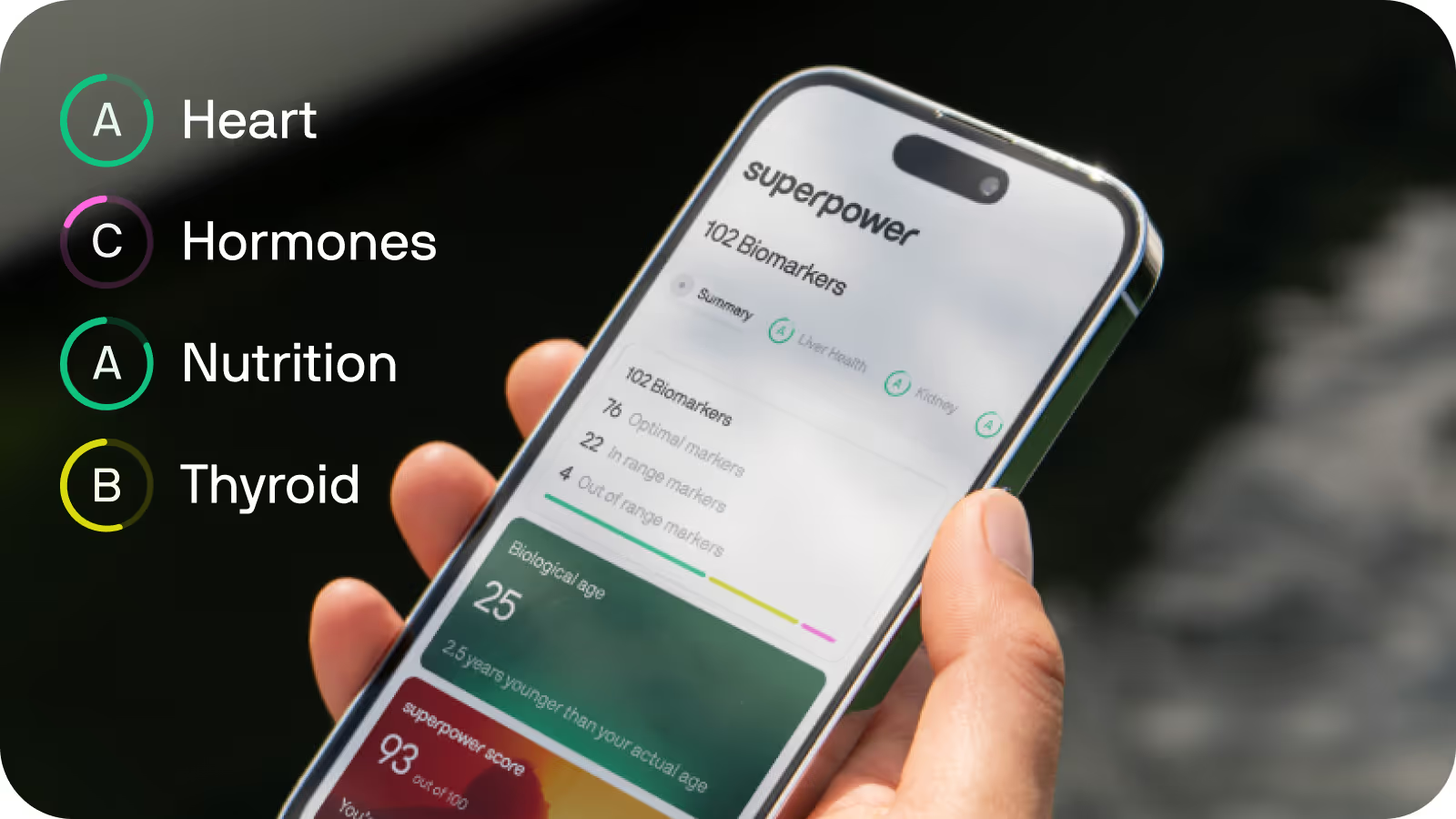
Superpower app on phone
Designed by world-class physicians

Get simple, free protocols for energy, heart health and more

Please enter a valid email address

Free protocols for

Improving energy with simple lifestyle changes

Reducing heart attack risk if you’re 30+

Slowing your pace of aging

Thanks for signing up!

Your health journey starts now. Watch your inbox for updates and smarter health insights – stay tuned.