Excellent 4.6 out of 5
Endocrine and Hormonal Disorders

Hypothyroidism Biomarker Testing

Hypothyroidism slows metabolic control; biomarker testing reveals hormone output and autoimmune causes. At Superpower, we test TSH ↑, Free T4 Index ↓, T4 Total ↓, T3 Uptake ↓, TPO Ab, and Tg Ab to confirm thyroid hormone deficiency and identify Hashimoto’s thyroiditis.

With Superpower, you have access to a comprehensive range of biomarker tests.

Test for Hypothyroidism
Cancel anytime
HSA/FSA eligible
Results in a week
Physician reviewed

Every result is checked

·
CLIA-certified labs

Federal standard for testing

·
HIPAA compliant

Your data is 100% secure

Key Benefits

  • Check for an underactive thyroid and identify autoimmune causes like Hashimoto’s.
  • Confirm overt hypothyroidism: high TSH with low T4 and low free T4 index.
  • Flag autoimmune thyroiditis: positive TPO or Tg antibodies signal immune-driven damage.
  • Explain symptoms: fatigue, weight gain, cold intolerance, and hair loss fit thyroid slowdown.
  • Guide levothyroxine treatment: use TSH to dose and Free T4 to confirm.
  • Protect fertility and pregnancy: treat promptly, targeting trimester-specific TSH ranges.
  • Predict progression risk: positive antibodies and elevated TSH increase hypothyroidism likelihood.
  • Track trends: recheck TSH 6–8 weeks after changes, then every 6–12 months.

What are Hypothyroidism Biomarkers?

Hypothyroidism biomarkers are blood signals that reveal how well the brain–thyroid system is supplying hormone to the body and whether the thyroid gland is being targeted by the immune system. The pituitary’s command signal (thyroid‑stimulating hormone, TSH) reflects how hard the brain is asking the thyroid to work. The thyroid’s main output (free thyroxine, FT4) shows the circulating hormone reservoir, while the active form used by cells (free triiodothyronine, FT3) indicates the hormone available for metabolism in tissues. Immune markers (thyroid peroxidase antibodies, TPOAb, and thyroglobulin antibodies, TgAb) point to autoimmune thyroiditis as a cause by identifying antibodies against thyroid proteins. Together, these biomarkers map the feedback loop from brain to thyroid to body, clarify whether the problem lies in hormone production, conversion, or immune attack, and provide a baseline for monitoring therapy. In short, they turn the invisible work of thyroid regulation into measurable information that guides diagnosis, reveals cause, and tracks restoration of normal hormone signaling.

Why are Hypothyroidism biomarkers important?

Hypothyroidism biomarkers map how the brain, thyroid gland, and immune system orchestrate metabolism. Together, TSH, Free T4 Index, Total T4, T3 uptake, and thyroid antibodies (TPO Ab, Tg Ab) reveal whether the pituitary is pushing the thyroid harder, whether circulating thyroid hormone is sufficient, and whether autoimmunity is targeting the gland. Because thyroid hormone sets the pace for energy use in every tissue, these markers relate to cognition, mood, heart rate, temperature regulation, digestion, skin and hair, fertility, and growth.

In a steady euthyroid state, TSH usually sits in the low-to-middle part of its reference range, with Free T4 Index and Total T4 near the middle and T3 uptake around the midrange; TPO and Tg antibodies are negative or very low. In primary hypothyroidism, TSH rises above range while Free T4 Index and Total T4 fall below, and T3 uptake tends to be reduced; positive TPO or Tg antibodies point to Hashimoto’s. During pregnancy, the healthy TSH range shifts lower and antibody positivity carries obstetric implications. In central (pituitary/hypothalamic) hypothyroidism, TSH can be low or inappropriately normal despite low T4.

When thyroid hormone values are low, cells downshift. People feel fatigue, cold intolerance, constipation, weight gain, dry skin, hair thinning, slowed thinking, and depressed mood. Women may notice heavy or irregular periods, fertility challenges, and pregnancy risks; men can have low libido and erectile dysfunction. Children may grow slowly and struggle with school; older adults may show subtle cognitive changes, bradycardia, and higher LDL cholesterol. A goiter can develop as the gland is chronically stimulated.

Big picture: these biomarkers integrate endocrine and immune physiology, forecast progression (antibody-positive states), and connect to cardiovascular risk, bone and neurocognitive health, and pregnancy outcomes. Tracking them clarifies where dysfunction sits and how it may influence long-term health.

What Insights Will I Get?

Thyroid hormones set the pace for cellular energy, metabolism, cardiovascular tone, cognition, mood, fertility, and immune balance. Testing shows how the brain–thyroid axis is signaling and how much hormone reaches tissues. At Superpower, we test these specific biomarkers: TSH ↑, Free T4 Index ↓, T4 Total ↓, T3 Uptake ↓, TPO Ab, Tg Ab.

TSH (thyroid-stimulating hormone) rises when the pituitary senses inadequate thyroid hormone—typical of primary hypothyroidism. Total T4 reflects thyroxine bound to proteins; low results point to reduced gland output. The Free T4 Index estimates unbound T4 available to cells; low values mark impaired hormone bioavailability. T3 Uptake gauges binding-protein sites and is used to compute the Free T4 Index; lower uptake usually reflects higher binding proteins and is not specific to hypothyroidism. TPO Ab and Tg Ab are autoantibodies; positivity implicates autoimmune thyroiditis (Hashimoto disease).

Together, high TSH with low Total T4 and a low Free T4 Index signals reduced tissue hormone delivery and unstable metabolic control. The magnitude of TSH elevation and the depth of T4/FTI depression help stage severity and persistence of hormone deficit. Low T3 Uptake flags binding-protein effects that can distort total hormone readings, sharpening interpretation via the index. Positive TPO or Tg antibodies indicate immune-mediated injury and a higher likelihood of progression or fluctuation over time.

Notes: Interpretation shifts with pregnancy (higher binding proteins, lower T3 Uptake, trimester-specific reference ranges), age, acute illness, and recovery. Assays and drugs can interfere (biotin, amiodarone, lithium, glucocorticoids, dopamine). In pituitary disease (central hypothyroidism), T4 can be low with non-elevated TSH, so the overall pattern matters more than a single value.


Superpower also tests for

See more diseases

Frequently Asked Questions About Hypothyroidism

What is Hypothyroidism biomarker testing?

This blood testing checks how well your thyroid axis is delivering hormone to tissues. When the thyroid underperforms, the pituitary drives TSH up and circulating thyroxine falls. Superpower tests for TSH ↑, Free T4 Index ↓, T4 Total ↓, T3 Uptake ↓, TPO Ab, Tg Ab. The Free T4 Index (calculated from T4 and T3 uptake) estimates available hormone; T3 uptake trends low when binding proteins have more open sites. TPO and Tg antibodies identify autoimmune thyroiditis (Hashimoto’s), the most common cause. Together, these markers map gland output, hormone transport, and immune attack.

Why should I get Hypothyroidism biomarker testing?

Thyroid hormone sets cellular energy use and impacts the heart, brain, muscles, gut, skin, blood, and reproductive systems. Low hormone slows metabolism, raises LDL cholesterol, affects mood and cognition, and can cause menstrual and fertility issues. Testing detects overt and “subclinical” hypothyroidism before complications build. Antibody testing pinpoints autoimmune disease, which guides prognosis and monitoring. In short, these biomarkers reveal whether your tissues are getting enough thyroid signal and why they might not be.

How often should I test?

Get a baseline. If results are abnormal or changing, recheck in about 6–8 weeks to confirm the direction, because TSH adjusts slowly. Once stable, checking every 6–12 months is typical. During pregnancy or major medication changes affecting thyroid function or binding proteins, monitor more closely. After thyroid surgery, radioiodine, or pituitary disease, intervals depend on the clinical course. Use the same lab and similar timing of day for consistency.

Hypothyroidism is tracked with thyroid function biomarkers—TSH (the pituitary signal) and Free T4 (circulating hormone). These show how the thyroid–pituitary axis is set and whether replacement is adequate. T4’s half-life is about 7 days and the axis resets over roughly 6 weeks, so values change gradually once stable. In routine care, stable cases are commonly rechecked every 6–12 months; testing happens sooner after major changes or new symptoms. At Superpower, we take a blood draw every 6 months.

What can affect biomarker levels?

Acute illness, major stress, and severe calorie restriction can transiently alter TSH and thyroid hormones (non‑thyroidal illness). Pregnancy and estrogens raise thyroid‑binding globulin, increasing Total T4 and lowering T3 uptake while free hormone may remain normal. Androgens, nephrotic syndrome, and liver disease lower binding proteins with opposite effects. Medications like biotin (assay interference), amiodarone, lithium, glucocorticoids, dopamine, and high iodine intake can shift results. Time of day influences TSH (highest overnight). Heterophile antibodies can rarely distort immunoassays.

Are there any preparations needed before Hypothyroidism biomarker testing?

Fasting is not required. Test in the morning for consistent TSH. Avoid high‑dose biotin for at least 48 hours to prevent assay interference. If you take levothyroxine, draw blood before your daily dose to avoid a post‑dose bump in T4. Try to test when you are not acutely ill, since illness can skew thyroid markers. Use the same lab and similar timing between tests to make trends reliable.

Can lifestyle changes affect my biomarker levels?

Lifestyle has limited impact on primary autoimmune hypothyroidism; the gland’s output and immune activity drive the numbers. Extreme calorie deficit, intense endurance training, or significant weight changes can lower T3 and modestly shift TSH. Iodine extremes (too little or too much) alter thyroid physiology. Smoking and severe stress can nudge pituitary‑thyroid signaling. These influences are usually small compared with true thyroid disease and may not normalize an underactive gland.

How do I interpret my results?

Primary hypothyroidism shows TSH high with Free T4 Index low, often with T4 Total low and T3 Uptake low; positive TPO Ab and/or Tg Ab supports autoimmune thyroiditis. Subclinical hypothyroidism shows TSH high with normal Free T4 Index. Central (pituitary/hypothalamic) hypothyroidism shows Free T4 Index low with TSH not appropriately elevated (low/normal). In pregnancy or high‑estrogen states, Total T4 rises and T3 Uptake falls while Free T4 Index remains the key indicator. The Free T4 Index integrates T4 and T3 uptake to approximate bioavailable hormone.

How it works

1

Test your whole body

Get a comprehensive blood draw at one of our 2,000+ partner labs or from the comfort of your own home.

2

An Actionable Plan

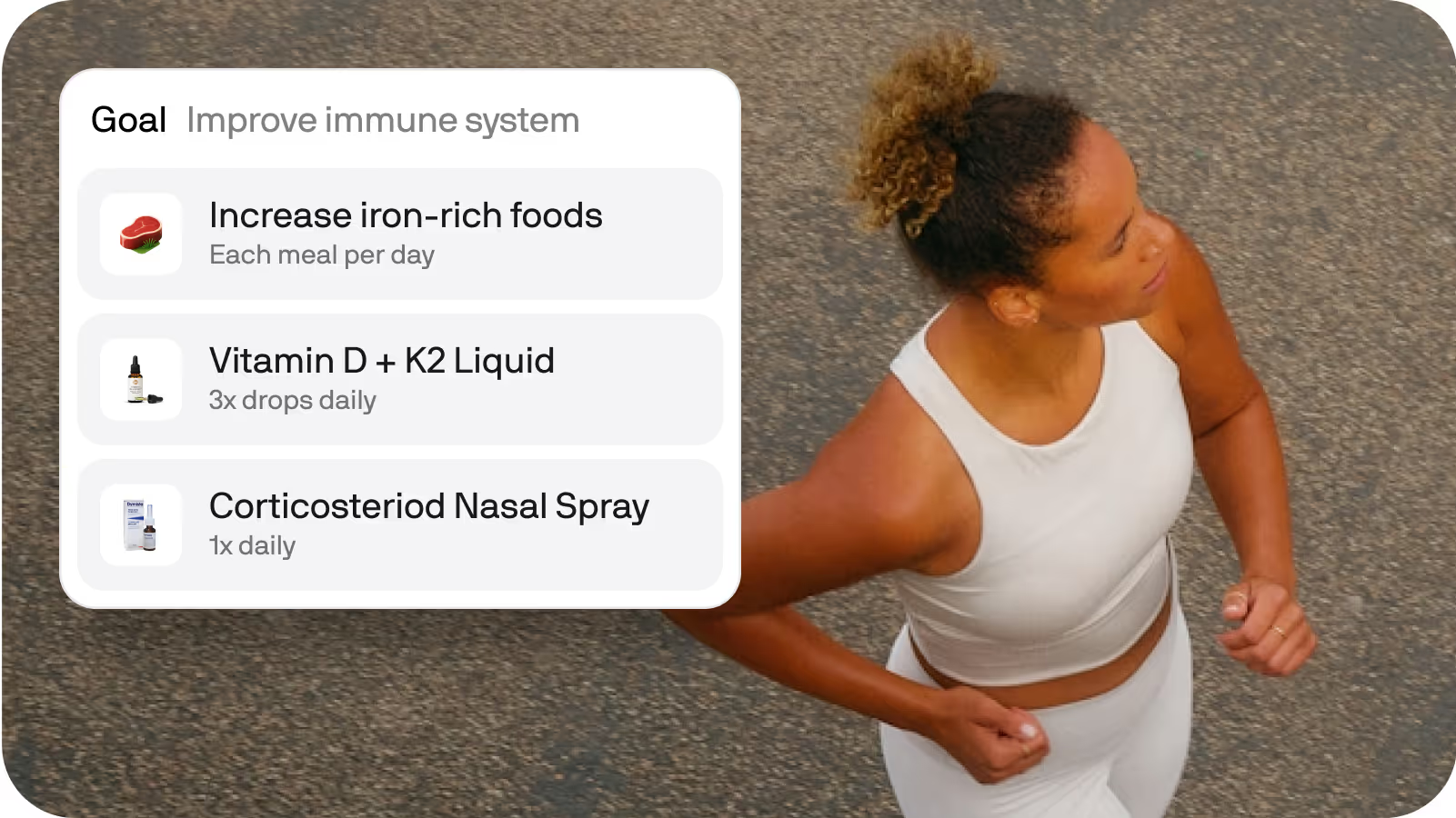
Easy to understand results & a clear action plan with tailored recommendations on diet, lifestyle changes, supplements and pharmaceuticals.

3

A Connected Ecosystem

You can book additional diagnostics, buy curated supplements for 20% off & pharmaceuticals within your Superpower dashboard.

Superpower tests more than 
100+ biomarkers & common symptoms

Developed by world-class medical professionals

Supported by the world’s top longevity clinicians and MDs.

Dr Anant Vinjamoori

Superpower Chief Longevity Officer, Harvard MD & MBA

A smiling woman wearing a white coat and stethoscope poses for a portrait.

Dr Leigh Erin Connealy

Clinician & Founder of The Centre for New Medicine

Man in a black medical scrub top smiling at the camera.

Dr Abe Malkin

Founder & Medical Director of Concierge MD

Dr Robert Lufkin

UCLA Medical Professor, NYT Bestselling Author

Your membership

Select your assessment level

Superpower provides the most advanced health check with a plan that works. Go far beyond your annual physical.

Panels designed by

world class clinicians

2,000+ lab locations

across the country

Baseline

$199/yr

100+ biomarker blood test

Performance

Recommended

$365/yr

115+ biomarker blood test

60 biomarker follow-up retest

Complete

$649/yr

115+ biomarker blood test

60 biomarker follow-up retest

Gut microbiome analysis

Organ age breakdown

Get started
Loading...
HSA/ FSA eligible · Secure checkout

Baseline

$199

per year

Covers your metabolic, hormonal and cardiovascular baseline. The best basis for a single snapshot of your overall health.

What's included

Test Breakdown

These are the panels offered in the tiers above

100+ biomarker blood test

Heart & Vascular Health

20 markers

ApoB, LDL-Cholesterol, Triglycerides

Sex Hormones

8 markers

Testosterone, Estradiol, DHEA-S, Cortisol

Metabolic Health

7 markers

Glucose, HbA1c

Thyroid Health

4 markers

TSH, T3 Uptake, Free T4, T4 Total

Liver Health

13 markers

ALT, AST, GGT, Bilirubin

Nutrients

12 markers

Vitamin D, Total Protein, Hemoglobin

Immune System

16 markers

White blood cells, Neutrophils, Lymphocytes

Energy

5 markers

Ferritin, Iron, Cortisol

Kidney Health

9 markers

Creatinine, eGFR, Potassium, Sodium

See full list →

+21 additional

Included with every assessment

17 health areas developed by world class clinicians

Personalized clinical protocol

On-demand messaging with your care team

20% off superpower marketplace

Member pricing on add-on tests, supplements & RX

Upload past labs & wearable data for tracking

Superpower AI — a world class system trained on you

Complete

$649

per year

Normally $703 (save 8%)

Adds gut microbiome analysis and organ age surfacing, what standard blood panels may miss across energy, digestion, and immunity.

What's included

Test Breakdown

These are the panels offered in the tiers above

115+ biomarker blood test

Heart & Vascular Health

20 markers

ApoB, LDL-Cholesterol, Triglycerides, Lipoprotein(a)

Sex Hormones

11 markers

Testosterone, Estradiol, DHEA-S, Cortisol, PSA, FSH, LH, AMH

Metabolic Health

7 markers

Glucose, HbA1c, Insulin

Thyroid Health

4 markers

TSH, T3 Uptake, Free T4, T4 Total

Liver Health

8 markers

ALT, AST, GGT, Bilirubin

Nutrients

12 markers

Vitamin D, Total Protein, Hemoglobin

Immune System

16 markers

White blood cells, Neutrophils, Lymphocytes

Energy

5 markers

Ferritin, Iron, Cortisol

Kidney Health

24 markers

Creatinine, eGFR, Potassium, Urinary pH, RBC Urine, Nitrites

DNA Health

3 markers

Homocysteine, B12, Folate

Inflammation

3 markers

hs-CRP, Systemic Immune-Inflammation Index

See full list →

+8 additional

60 biomarker follow-up retest

Retesting panel

100 markers

Complete second draw — 60 biomarkers retested for longitudinal tracking.
Most biomarkers can move significantly within 3–6 months if you're actively trying to fix them.

Gut microbiome analysis

$239

Gut microbiome

300+ data points

Profiles 300 bacterial strains in your gut to map your microbial balance.
Identifies dysbiosis that may be driving symptoms like bloating, irregular digestion, skin issues, and mood changes, with actionable guidance on diet and lifestyle shifts to help restore balance.

Organ age breakdown

$99

OrganAge is the most detailed biological age test available today. Rather than showing a single number, it reveals how old each of your body's nine key systems is

Organ age breakdown

10 key systems

Circulatory, digestive, genitourinary, infectious, mental, metabolic, musculoskeletal, nervous, respiratory and systemic ages based on cutting edge longevity research

Included with every assessment

17 health areas developed by world class clinicians

Personalized clinical protocol

On-demand messaging with your care team

20% off superpower marketplace

Member pricing on add-on tests, supplements & RX

Upload past labs & wearable data for tracking

Superpower AI — a world class system trained on you

Get started
Loading...
HSA/ FSA eligible · Secure checkout

Finally, healthcare that looks at the whole you

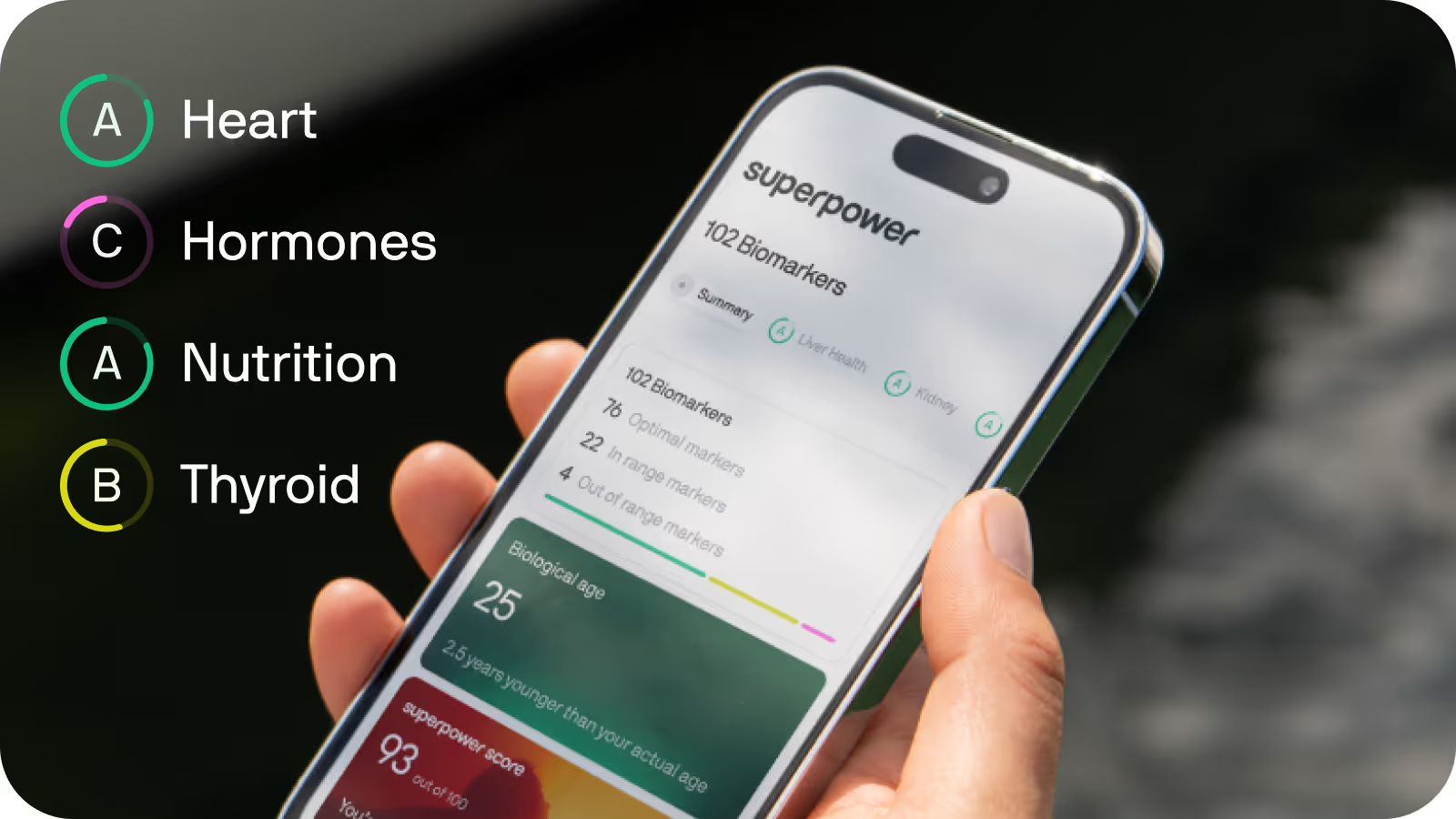
Superpower app on phone
Designed by world-class physicians

Get simple, free protocols for energy, heart health and more

Please enter a valid email address

Free protocols for

Improving energy with simple lifestyle changes

Reducing heart attack risk if you’re 30+

Slowing your pace of aging

Thanks for signing up!

Your health journey starts now. Watch your inbox for updates and smarter health insights – stay tuned.