

.svg)



Key Benefits
- Check hormone balance and inflammation to explain symptoms and long-term health risks.
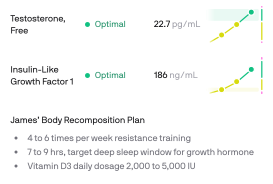
- Spot hormonal imbalance driving fatigue, low libido, mood changes, or muscle loss.
- Flag androgen excess in women suggesting PCOS, acne, or unwanted hair growth.
- Protect fertility by identifying low testosterone in men or ovulation issues.
- Clarify whole-body inflammation; elevated CRP signals infection, autoimmune flare, or injury.
- Support heart risk assessment when measured as high-sensitivity CRP alongside other risks.
- Track and guide therapy by repeating morning testosterone and CRP changes.
- Best interpreted with symptoms, morning timing, SHBG, LH/FSH, ESR, and CBC.
What is a Testosterone / CRP blood test?
Testosterone / CRP blood testing measures two distinct signals from the same blood sample. Testosterone is a sex hormone (androgen steroid) made mainly by the testes and, in smaller amounts, by the ovaries and adrenal glands; it is synthesized from cholesterol and circulates in the bloodstream. C‑reactive protein (CRP) is an inflammation protein (acute‑phase reactant) produced by the liver when immune messengers indicate that inflammation is present.
These markers reflect two pillars of physiology. Testosterone drives sexual development and reproductive function, helps maintain muscle and bone, supports red blood cell production, and influences libido, energy, and mood (androgen actions). CRP, by contrast, does not control a body function; it is a sensitive indicator of whole‑body inflammation, rising when the immune system responds to infection, tissue injury, or chronic inflammatory activity (systemic inflammatory burden). Measuring both offers a concise view of hormonal status alongside inflammatory tone—two fundamental forces shaping how you feel and function.
Why is a Testosterone / CRP blood test important?
A combined Testosterone/CRP blood test pairs an anabolic hormone with a core inflammation marker, giving a snapshot of how well the body builds and repairs tissues while managing immune stress. Testosterone influences muscle, bone, red blood cell production, metabolism, mood, and sexual function. C‑reactive protein (CRP), made by the liver, rises when inflammation is active anywhere in the body, from infection to cardiometabolic strain.
Testosterone reference ranges differ by sex and age, higher in adult men and much lower in women; healthy individuals often feel best when their personal level sits stably within the normal range for their group. CRP is ideally low; high‑sensitivity CRP at the lower end is associated with lower cardiovascular inflammation.
When testosterone runs below expected norms, it often reflects reduced gonadal production or pituitary signaling. In men, this can show up as fatigue, low libido, depressed mood, loss of muscle, increased fat, anemia, and lower bone density. In women, low levels can reduce sexual desire, energy, and bone support. Low CRP simply indicates quiet inflammatory activity, which is typical. In teens, low testosterone delays pubertal progression.
When testosterone is higher than expected, men may experience acne, oily skin, irritability, elevated red cell count, sleep apnea risk, and fertility suppression; in women, high levels suggest hyperandrogenism (such as PCOS) with irregular cycles, hirsutism, acne, and insulin resistance. Elevated CRP signals active inflammation—acute illness or chronic processes—and, when persistent at higher levels, higher cardiovascular risk. CRP often runs modestly higher in pregnancy; testosterone interpretation differs by sex and developmental stage.
Big picture: testosterone and CRP move with the balance of anabolic vigor and inflammatory load. Together they link to muscle and bone integrity, fertility, mood, glucose and lipid metabolism, and long‑term risks for cardiovascular disease and frailty.
What insights will I get?
This paired test measures testosterone (the principal androgen) and C‑reactive protein, CRP (an acute‑phase protein). Testosterone tracks anabolic capacity that supports energy use, muscle and bone, red blood cells, sexual function, and aspects of mood. CRP gauges total inflammatory burden that shapes metabolism, vascular risk, and immune activity; together they map anabolic drive versus inflammatory tone.
Low values usually reflect reduced androgen signaling and a quiet inflammatory state. In men, low testosterone can arise from decreased testicular or pituitary output or high SHBG, and often aligns with lower muscle, libido, and vitality; age‑related decline is common. In women, physiologic testosterone is much lower. Low CRP generally means minimal systemic inflammation; very low CRP also occurs with some genotypes or severe liver failure.
Being in range suggests adequate androgen signaling for age and sex with a low, stable inflammatory set point. For testosterone, mid–age‑adjusted ranges are often considered healthy; for CRP, the lower end of normal tends to associate with lower cardiometabolic stress.
High values usually reflect androgen excess or heightened inflammation. Elevated testosterone in men can follow exogenous androgens, tumors, or very low SHBG; in women, modest elevations may indicate hyperandrogenism (such as PCOS). CRP rises with infection, tissue injury, chronic inflammatory disease, and adiposity; persistent moderate hs‑CRP elevations track higher atherosclerotic risk.
Notes: Morning testing improves testosterone interpretation; assays for total versus free differ, and LC‑MS is most specific. Pregnancy and oral estrogens raise SHBG (increasing total, lowering free) and can raise CRP; acute illness, strenuous exercise, smoking, and anti‑inflammatory drugs can shift CRP.





.avif)


.svg)




.svg)


.svg)


.svg)

.avif)
.svg)









.avif)
.avif)

.avif)



.avif)