
Excellent 4.6 out of 5
Heart & Vascular Health

Blood Testing for SDMA

SDMA blood testing measures symmetric dimethylarginine, a small amino acid derivative that appears when cells break down methyl-marked proteins. Inside the nucleus, enzymes add methyl groups to arginine residues on proteins (protein arginine methylation). When those proteins are recycled, the modified arginine is released as SDMA and enters the bloodstream. At home blood testing is available in select states. See FAQs below

Book A SDMA Blood Test
Cancel anytime
HSA/FSA eligible
Results in a week
Physician reviewed

Every result is checked

·
CLIA-certified labs

Federal standard for testing

·
HIPAA compliant

Your data is 100% secure

Key Benefits

  • Spot kidney filtering decline earlier than creatinine, as SDMA rises sooner.
  • Clarify creatinine blind spots, being less affected by muscle mass or heavy training.
  • Protect kidneys in diabetes or hypertension by flagging early filtering changes.
  • Differentiate muscle loss from kidney issues when creatinine seems normal or mildly high.
  • Guide safer medication use by refining kidney function assessment for renally cleared drugs.
  • Flag cardiovascular risk, as higher SDMA associates with vascular events in studies.
  • Track trends to monitor chronic kidney disease progression and response to interventions.
  • Best interpreted with creatinine, cystatin C, urine albumin, and your symptoms.

What is a SDMA blood test?

SDMA blood testing measures symmetric dimethylarginine, a small amino acid derivative that appears when cells break down methyl-marked proteins. Inside the nucleus, enzymes add methyl groups to arginine residues on proteins (protein arginine methylation). When those proteins are recycled, the modified arginine is released as SDMA and enters the bloodstream. The body does not reuse SDMA for protein building; instead, it is carried in the blood and removed mainly by the kidneys, with little metabolic processing elsewhere.

Because the body produces SDMA at a fairly steady rate from normal cell turnover and the kidneys clear it efficiently, its blood level mirrors how well the kidneys are filtering small molecules (glomerular filtration). Unlike creatinine, SDMA depends less on muscle mass or diet, so it can offer a cleaner signal of filtration in many people. SDMA may also influence nitric oxide availability indirectly by affecting arginine transport, but its practical importance is as a sensitive readout of renal clearance. SDMA blood testing helps gauge kidney filtration performance.

Why is a SDMA blood test important?

SDMA (symmetric dimethylarginine) is a small, protein‑derived molecule cleared almost entirely by the kidneys. Because its level rises as filtration falls—and is largely independent of muscle mass—it offers a whole‑body view of how efficiently blood is being cleansed of metabolic byproducts, with links to kidney, heart, and vascular health.

In most labs, SDMA has a tight reference interval; values clustering in the low‑to‑middle portion generally indicate robust glomerular filtration. Compared with creatinine, it changes earlier when kidney function slips, especially in people with low or variable muscle mass.

When SDMA runs lower than average, it typically reflects brisk filtration and efficient renal clearance. People usually feel well. It can be modestly lower in normal pregnancy because GFR rises, and it shows little systematic difference between men and women since it is not driven by muscle mass.

Higher SDMA signals reduced kidney filtration. As retention of solutes develops, people may notice fatigue, swelling, higher blood pressure, decreased exercise tolerance, or foamy urine. Chronically elevated levels track with anemia, mineral–bone changes, and higher cardiovascular risk. In older adults or those with low muscle mass, SDMA often uncovers kidney impairment that creatinine can miss.

Big picture: SDMA complements creatinine, cystatin C, eGFR, urea nitrogen, electrolytes, and urine albumin to map renal and vascular physiology. Persistently higher values point to increased long‑term risks of chronic kidney disease progression and cardiovascular events, making SDMA a valuable early signal in protecting organ systems that depend on clean, well‑filtered blood.

What insights will I get?

SDMA (symmetric dimethylarginine) is a small protein-breakdown product released from cells and cleared almost entirely by the kidneys. Because its removal depends on glomerular filtration, an SDMA blood test tracks kidney filtering capacity (GFR) with minimal influence from muscle mass. Filtration underpins blood pressure control, electrolyte and acid–base balance, red cell production, toxin clearance, and therefore affects cardiovascular resilience, cognition, metabolism, and immunity.

Low values usually reflect efficient kidney filtration and dilution, or increased GFR states such as normal pregnancy. They can also reflect lower production of methylated arginine. Children and pregnant individuals often show lower SDMA due to physiologically higher filtration and are typically well.

Being in range suggests stable glomerular filtration and balanced protein turnover. Many clinicians view values in the low-to-mid portion of the reference interval as consistent with healthy renal reserve, given SDMA’s specificity for filtration.

High values usually reflect reduced kidney filtration (lower GFR) from acute illness or chronic kidney disease. SDMA may rise earlier than creatinine and is less biased by muscle mass, so elevations can flag early renal stress. Higher SDMA also tracks with cardiometabolic and inflammatory burden and tends to increase with age as GFR declines.

Notes: Hydration, acute infection, recent high catabolic states, and drugs that transiently reduce GFR can shift SDMA. Pregnancy typically lowers it; older age trends it upward. Methods and reference intervals vary by lab. SDMA is distinct from ADMA (an NO synthase inhibitor); SDMA primarily indicates renal filtration.


Superpower also tests for

See more blood diseases

Frequently Asked Questions About

What is SDMA and why is it important for kidney health?

SDMA (symmetric dimethylarginine) is a small amino acid derivative produced during normal protein turnover in the body. It is released into the bloodstream when methylated proteins are broken down and is cleared almost entirely by the kidneys through filtration. SDMA is important because its blood level directly reflects how well the kidneys are filtering waste (glomerular filtration rate, or GFR). Unlike creatinine, SDMA is minimally affected by muscle mass, making it a reliable marker for kidney function across different body types and ages. Monitoring SDMA helps detect early kidney stress, guide treatment decisions, and assess cardiovascular risk.

How does SDMA compare to creatinine in assessing kidney function?

SDMA offers several advantages over creatinine for assessing kidney function. While creatinine levels can be influenced by muscle mass, age, sex, and diet, SDMA is minimally affected by these factors. This makes SDMA especially useful in individuals with low or high muscle mass, such as the elderly, children, or athletes. SDMA often rises earlier than creatinine in cases of kidney dysfunction, allowing for detection of reduced filtration. For the accurate assessment, SDMA is best interpreted alongside creatinine, cystatin C, urinalysis, and eGFR.

What causes SDMA levels to increase in the blood?

Elevated SDMA levels typically indicate reduced kidney filtration (lower GFR). Causes include chronic kidney disease, acute kidney injury, dehydration, urinary tract obstruction, and certain medications that impair renal function. High SDMA can also be seen in conditions associated with endothelial dysfunction, such as hypertension and diabetes. In pregnancy, elevated SDMA is concerning because filtration should naturally increase. Acute illness, inflammation, and drugs affecting kidney blood flow can also raise SDMA levels.

What symptoms might suggest high SDMA and kidney stress?

Symptoms associated with high SDMA and kidney stress include fatigue, swelling (edema), high blood pressure, nausea, itchy skin, and cognitive issues like “brain fog.” As kidney function declines, the body struggles to excrete waste and maintain fluid, mineral, and acid–base balance. Over time, complications such as anemia, bone–mineral disorders, and increased cardiovascular risk may develop. However, SDMA can rise before symptoms appear, making it a valuable early warning marker.

How is SDMA measured and what is considered a normal range?

SDMA is measured through a blood test, with the accurate results obtained using LC-MS/MS (liquid chromatography–mass spectrometry). Normal SDMA values are typically low and fall within a narrow reference range, which may vary by age and pregnancy status. In healthy individuals, lower SDMA values indicate efficient kidney filtration. There is no universal “sweet spot” within the reference range, but values should be interpreted in the context of age, sex, and clinical status.

What states are Superpower’s at-home blood testing available in?

Superpower currently offers at-home blood testing in the following states: Alabama, Arizona, California, Colorado, Connecticut, Delaware, District of Columbia, Florida, Georgia, Idaho, Illinois, Indiana, Kansas, Maine, Maryland, Massachusetts, Michigan, Minnesota, Missouri, Montana, Nebraska, Nevada, New Hampshire, New Jersey, New Mexico, New York, North Carolina, Ohio, Oklahoma, Oregon, Pennsylvania, South Carolina, Tennessee, Texas, Utah, Vermont, Virginia, Washington, West Virginia, and Wisconsin.

We’re actively expanding nationwide, with new states being added regularly. If your state isn’t listed yet, stay tuned.

How does SDMA relate to cardiovascular risk and blood pressure?

SDMA levels are closely linked to cardiovascular health because kidney function and vascular health are interconnected. Reduced kidney filtration, indicated by high SDMA, can lead to increased blood pressure and accumulation of toxins, both of which raise cardiovascular risk. SDMA is also associated with endothelial dysfunction through impaired arginine transport, affecting nitric oxide availability and vascular tone. Monitoring SDMA can help guide heart-risk conversations and inform safe medication choices.

Can SDMA help guide medication dosing and safety?

Yes, SDMA can support safe medication choices by prompting dose adjustments and reviewing drugs that may harm the kidneys. Since SDMA reflects real-time kidney filtration, it helps clinicians determine whether certain medications need to be reduced or avoided to is studied for its potential effects on further kidney injury. This is especially important for patients with diabetes, hypertension, or those starting new therapies that may impact renal function.

What conditions can affect SDMA interpretation?

Several factors can influence SDMA interpretation, including age, pregnancy status, acute illness, inflammation, and medications that alter kidney blood flow or cause renal injury. While SDMA is less affected by muscle mass or diet than creatinine, assay method (such as LC-MS/MS) and individual clinical context are important. Always interpret SDMA alongside other kidney markers like creatinine, cystatin C, urinalysis, and eGFR for a comprehensive assessment.

How should SDMA be used to monitor kidney health over time?

SDMA is most appropriate used as part of a panel of kidney function tests to track trends over time, especially in people with diabetes, hypertension, or those at risk for kidney disease. Regular monitoring can detect early kidney stress before symptoms develop, allowing for timely intervention. Tracking SDMA alongside creatinine, cystatin C, electrolytes, and urine indices helps define long-term risk, guide therapy adjustments, and catch reversible kidney stress early.

How it works

1

Test your whole body

Get a comprehensive blood draw at one of our 3,000+ partner labs or from the comfort of your own home.

2

An Actionable Plan

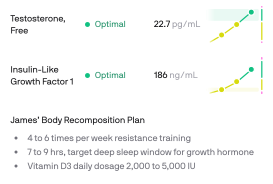
Easy to understand results & a clear action plan with tailored recommendations on diet, lifestyle changes, supplements and pharmaceuticals.

3

A Connected Ecosystem

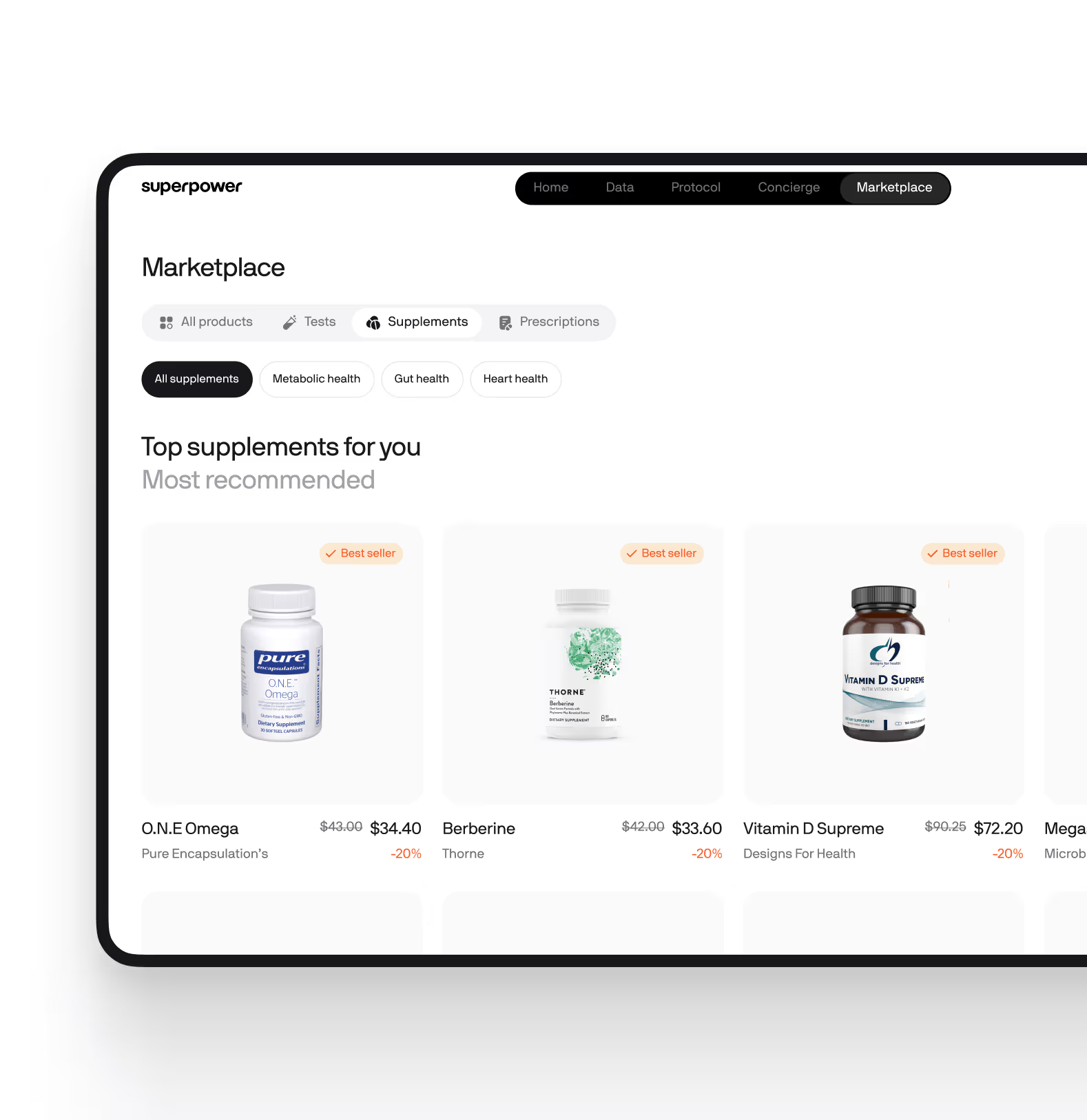
You can book additional diagnostics, buy curated supplements for 20% off & pharmaceuticals within your Superpower dashboard.

Superpower tests more than 
100+ biomarkers & common symptoms

Developed by world-class medical professionals

Supported by the world’s top longevity clinicians and MDs.

Dr Anant Vinjamoori

Superpower Chief Longevity Officer, Harvard MD & MBA

A smiling woman wearing a white coat and stethoscope poses for a portrait.

Dr Leigh Erin Connealy

Clinician & Founder of The Centre for New Medicine

Man in a black medical scrub top smiling at the camera.

Dr Abe Malkin

Founder & Medical Director of Concierge MD

Dr Robert Lufkin

UCLA Medical Professor, NYT Bestselling Author

membership

$17

/month
Billed annually at $199
A smartphone displays health app results, showing biomarker summary, superpower score, and biological age details.
What could cost you $15,000 is $199

Superpower
Membership

Your membership includes one comprehensive blood draw each year, covering 100+ biomarkers in a single collection
One appointment, one draw for your annual panel.
100+ labs tested per year
A personalized plan that evolves with you
Get your biological age and track your health over a lifetime
$
17
/month
billed annually
Pricing for members in NY & NJ is $499
Flexible payment options
Four credit card logos: HSA/FSA Eligible, American Express, Visa, and Mastercard.
Start testing
Cancel anytime
HSA/FSA eligible
Results in a week

Finally, healthcare that looks at the whole you