

Understand what your PCOS results really mean
See your biomarkers in context with a comprehensive panel.
- CLIA-certified labs
- HIPAA compliant
- Personalized health protocol
PCOS spotting is light, irregular bleeding between or instead of periods, caused by anovulation leaving an estrogen-driven lining that sheds in fragments. Most of it is hormonal, but heavy, prolonged, or long-delayed bleeding needs a medical check.
What happens in the uterus when you have PCOS
In a typical menstrual cycle, estrogen builds the uterine lining during the first half of the cycle, and progesterone stabilizes it after ovulation. When progesterone drops at the end of the cycle, the lining sheds in an organized way, producing a predictable period. With PCOS, this process breaks down. Without ovulation, the corpus luteum doesn't form, and progesterone production remains low or absent. Estrogen continues to stimulate the endometrium without the counterbalancing effect of progesterone, causing the lining to thicken unevenly.
Eventually, the lining becomes unstable and sheds in an irregular, unpredictable manner. The endometrium isn't shedding all at once in response to a hormonal signal; instead, it's breaking down in fragments as it outgrows its blood supply. This is what causes spotting between periods or prolonged episodes of light bleeding that don't resemble a normal menstrual flow.
When spotting signals something more serious
Persistent spotting or prolonged periods of amenorrhea followed by heavy bleeding can indicate endometrial hyperplasia, a condition where the uterine lining becomes abnormally thick. Left untreated, endometrial hyperplasia can progress to atypical hyperplasia, which carries a higher risk of endometrial cancer. Women with PCOS have a 2.7-fold increased risk of endometrial cancer compared to the general population.
Heavy bleeding that soaks through a pad or tampon every hour for several hours, or bleeding that lasts longer than seven days, should be evaluated. This level of blood loss can lead to anemia and may require medical intervention to stop the bleeding and assess the endometrium.
Postmenopausal bleeding or bleeding after a prolonged period of amenorrhea (more than six months) should always be investigated. While anovulation is common in PCOS, extended periods without shedding the endometrium increase the risk of hyperplasia and require assessment with imaging or biopsy.
If spotting is accompanied by pelvic pain, fever, or unusual discharge, it may indicate an infection or other structural issue unrelated to PCOS. These symptoms require prompt medical attention.
How hormonal imbalance drives irregular bleeding
Estrogen dominance and endometrial overgrowth
Without progesterone to regulate endometrial growth, estrogen stimulates continuous thickening of the uterine lining. The result is spotting that occurs at unpredictable intervals, sometimes light and sometimes heavier, depending on how much tissue has accumulated.
Anovulatory cycles and breakthrough bleeding
Without ovulation, there's no progesterone surge to organize the shedding of the endometrium. Instead, the lining continues to thicken until it becomes mechanically unstable, leading to breakthrough bleeding. This type of bleeding can be light and intermittent, or it can present as a prolonged, irregular flow that doesn't follow a predictable cycle.
Insulin resistance and androgen excess
Insulin resistance, present in many women with PCOS, amplifies hormonal dysfunction. Elevated insulin levels increase ovarian androgen production, which further disrupts normal follicle development and ovulation. High androgens also interfere with the hypothalamic-pituitary-ovarian axis, perpetuating anovulation and irregular bleeding patterns.
Why some women experience heavy bleeding and clots
While some women with PCOS experience light spotting, others have the opposite problem: heavy periods with large blood clots. This happens when the endometrium has been building for an extended period without shedding. When it finally does shed, the volume of tissue is substantial, and the bleeding can be rapid and heavy. In a normal period, enzymes break down clotting factors to keep menstrual blood liquid. But when the flow is heavy and fast, clots form before these enzymes can act. Larger clots, especially those bigger than a quarter, can indicate significant endometrial buildup and warrant medical evaluation.
Heavy bleeding episodes in PCOS are often preceded by months of amenorrhea or light spotting. The longer the interval between periods, the thicker the lining becomes, and the heavier the eventual bleed.
What drives spotting patterns in PCOS
- Frequency and duration of anovulation determine how regular bleeding patterns are. Occasional ovulation produces intermittent spotting, which is why you can get spotting instead of a period: without the progesterone drop that triggers a full period, the lining sheds in small amounts. Brown spotting is older blood that took longer to leave the uterus. Rare ovulation causes prolonged amenorrhea followed by heavy bleeding.
- Degree of insulin resistance worsens hormonal imbalance by increasing androgen production and disrupting ovulation, leading to more severe menstrual irregularities.
- Body weight and adipose tissue influence circulating estrogen levels through androgen conversion, which can exacerbate endometrial overgrowth.
- Stress and cortisol dysregulation suppress the hypothalamic-pituitary-ovarian axis, worsening anovulation and triggering spotting or further delaying periods.
Why bleeding patterns vary between women with PCOS
Not all women with PCOS experience the same bleeding patterns. Genetic differences influence how sensitive the endometrium is to estrogen and how efficiently the body metabolizes hormones. Some women have more robust progesterone production even without full ovulation, which can reduce the severity of spotting. Others have more pronounced insulin resistance or higher androgen levels, which worsen anovulation and bleeding irregularities.
Prior use of hormonal contraceptives can also affect bleeding patterns. Women who have been on birth control pills may experience more regular cycles initially after stopping, but anovulation often returns over time if PCOS is not managed. Conversely, women who have never used hormonal contraception may have more erratic patterns from the outset. Starting or adjusting hormonal contraception can also trigger breakthrough spotting while the lining adapts to the new hormone levels.
Thyroid function plays a role as well. Hypothyroidism, which is more common in women with PCOS, can worsen menstrual irregularities and contribute to heavier bleeding. Addressing thyroid dysfunction can sometimes improve cycle regularity even without directly treating PCOS.
Test 100+ biomarkers
One blood draw. A full picture of your health, explained in plain language.
Test 100+ biomarkers
One blood draw. A full picture of your health, explained in plain language.
Using biomarkers to understand your bleeding patterns
Tracking hormonal and metabolic markers over time provides insight into what's driving your bleeding patterns and whether interventions are working. Key biomarkers include estradiol, progesterone, testosterone, luteinizing hormone, and follicle-stimulating hormone.
Insulin and glucose markers, including fasting insulin, hemoglobin A1c, and fasting glucose, help assess insulin resistance, which directly impacts ovulation and bleeding regularity. Improving insulin sensitivity through diet, exercise, or medication like metformin can restore more regular cycles in some women.
Thyroid markers, including TSH, free T4, and thyroid antibodies, should be checked if bleeding patterns worsen or if other symptoms of hypothyroidism are present. Correcting thyroid dysfunction can improve menstrual regularity and reduce heavy bleeding.
Inflammatory markers like high-sensitivity C-reactive protein can reflect underlying metabolic dysfunction that contributes to hormonal imbalance. Chronic inflammation worsens insulin resistance and can perpetuate anovulation.
Tracking these markers over time, rather than relying on a single snapshot, reveals trends and helps distinguish between normal fluctuations and patterns that require intervention.
How Superpower helps you monitor PCOS symptoms
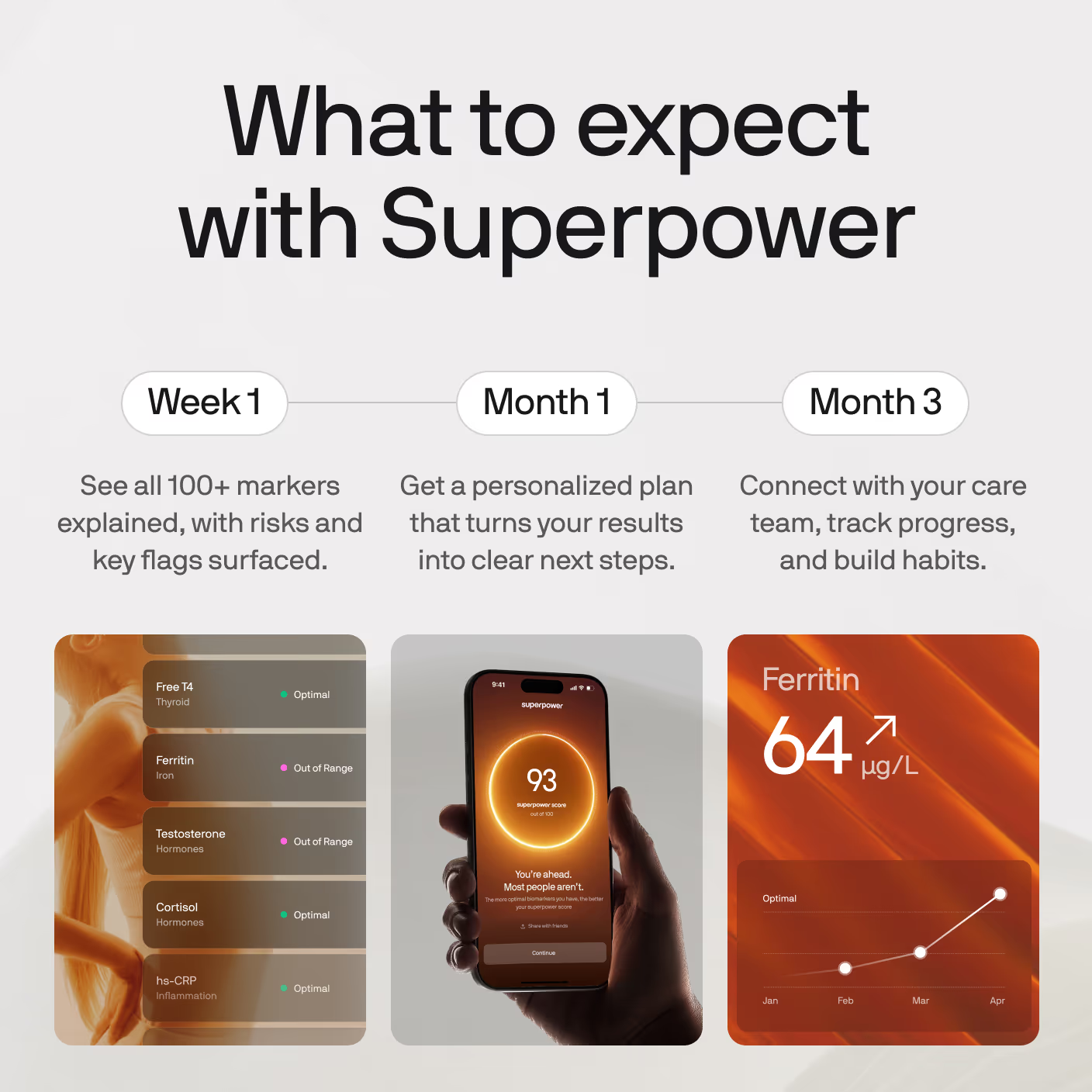
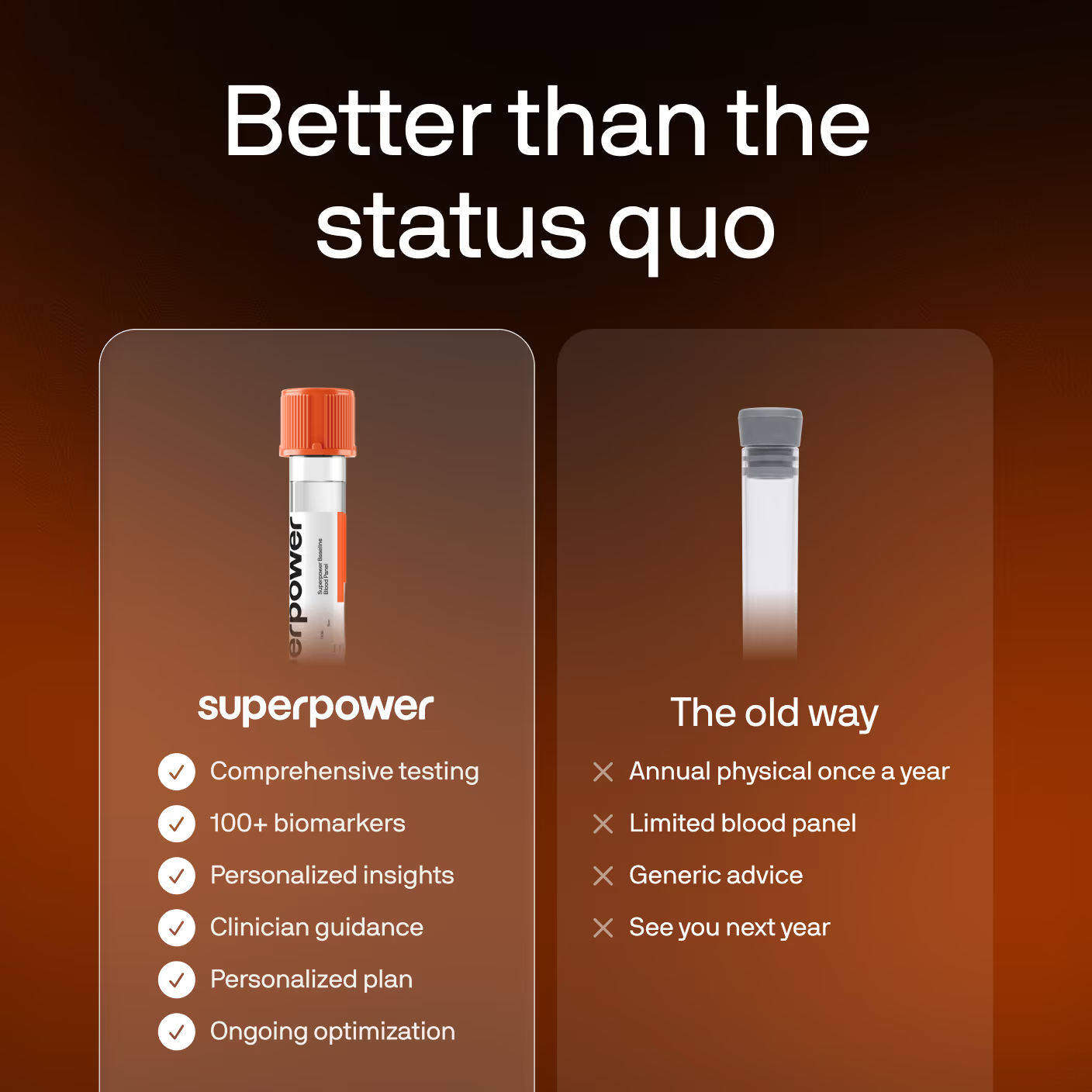
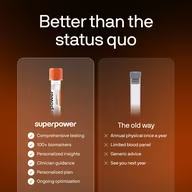
If you're managing PCOS and trying to understand your bleeding patterns, Superpower's baseline blood panel measures 100+ biomarkers, including the hormonal and metabolic markers that drive cycle irregularity. Tracking these over time shows whether your interventions are working and helps you catch changes before they become problems. PCOS isn't static, and neither should your data be. The same markers matter if you're planning a pregnancy with PCOS.
Frequently Asked Questions
References
- Dumesic DA, Lobo RA (2013). Cancer risk and PCOS. *Steroids*, *78*(8), 782-5. https://doi.org/10.1016/j.steroids.2013.04.004
- Singh G, Cue L, Puckett Y (2024). *Endometrial hyperplasia*. StatPearls Publishing. https://www.ncbi.nlm.nih.gov/books/NBK560693/
- Hickey M, Karthigasu K, Agarwal S (2009). Abnormal uterine bleeding: a focus on polycystic ovary syndrome. *Women's Health (London, England)*, *5*(3), 313-324. https://doi.org/10.2217/whe.09.20
- Barry JA, Azizia MM, Hardiman PJ (2014). Risk of endometrial, ovarian and breast cancer in women with polycystic ovary syndrome: a systematic review and meta-analysis. *Human Reproduction Update*, *20*(5), 748-758. https://doi.org/10.1093/humupd/dmu012
- Charalampakis V, Tahrani AA, Helmy A, Gupta JK, Singhal R (2016). Polycystic ovary syndrome and endometrial hyperplasia: an overview of the role of bariatric surgery in female fertility. *European Journal of Obstetrics, Gynecology, and Reproductive Biology*, *207*, 220-226. https://doi.org/10.1016/j.ejogrb.2016.10.001


















 Heart & Vascular Health
 Metabolic Health
 Energy
 Liver Health
 Kidney
 Sex Hormones
 Thyroid Health
 Nutrients
 Immune System
 Inflammation