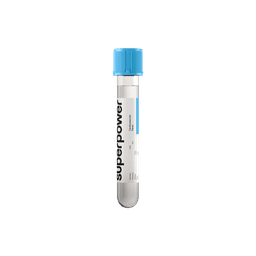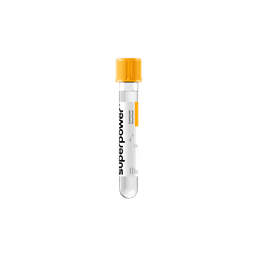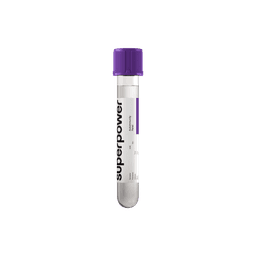
Test details
- Sample type:
- Single blood draw (blood only)
- Location:
- In-person at local lab / At-home phlebotomist visit (+$119)
- Availability:
- Available in 40 states
- Turnaround:
- Results delivered to your dashboard within 10 days
- Preparation:
- Follow any pre-test prep your care team specifies for your draw
About the Extended Heart Health Panel
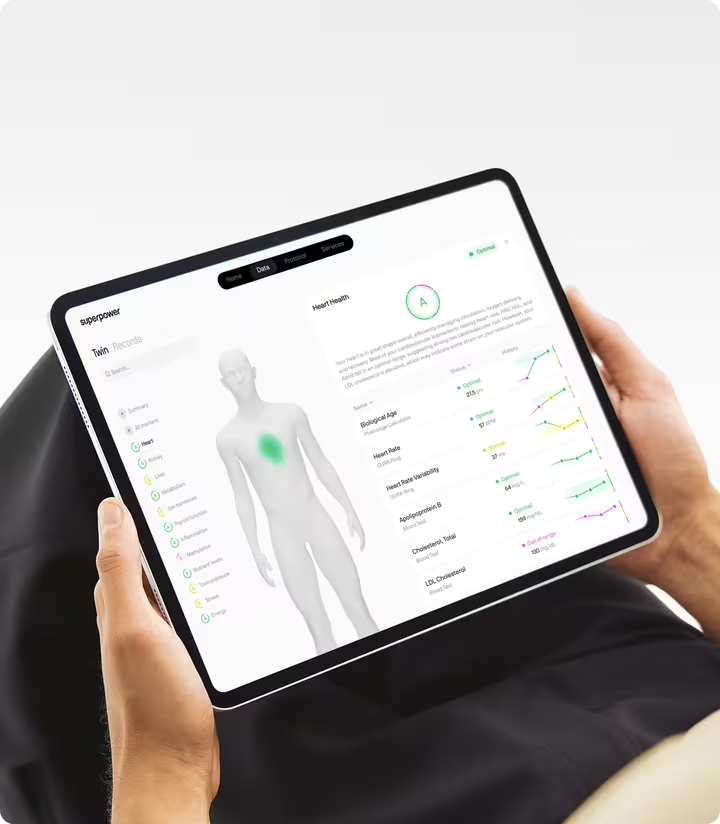
The Extended Heart Health Panel looks at genetic cholesterol risk, oxidative damage to your LDL particles, and early signs of blood vessel dysfunction. It adds cardiovascular markers (oxidized LDL, lipoprotein(a), ADMA, and SDMA) on top of the standard lipid picture your Baseline Blood Panel already provides.
A standard lipid panel measures total cholesterol, LDL, HDL, and triglycerides. That tells you how much cholesterol is circulating. It doesn't tell you whether that cholesterol is in the oxidized form most associated with artery wall damage, whether you carry an inherited risk factor that operates independently of diet, or whether your blood vessels are showing early functional changes. These markers extend into exactly those questions. This is an add-on for added depth, not a standalone heart workup, and it doesn't replace the standard panel underneath it.
What standard cholesterol tests miss
The standard lipid panel has been the default cardiovascular tool for decades. It's useful, and it's also incomplete. As an illustration of that limitation, many people who have a heart attack had "normal" cholesterol on standard tests.
That gap reflects something fundamental: LDL measures the mass of cholesterol in your particles, but not whether those particles are oxidizing, not whether you carry a genetic risk factor that operates independently of diet and lifestyle, and not whether your blood vessels are showing early functional changes. Cardiovascular risk can build quietly for years while standard numbers look reassuring.
This add-on extends your picture into three areas a standard panel can't reach: an inherited cholesterol factor that doesn't respond to diet or statins, the oxidized form of LDL associated with plaque formation, and early signals of blood vessel functional change.
The markers in this panel
This add-on layers cardiovascular markers onto your Baseline Blood Panel. The table below shows what each one adds beyond a standard lipid panel.
| Marker | What it adds beyond a standard lipid panel |
|---|---|
| Lipoprotein (a) | An inherited cholesterol particle associated with cardiovascular risk largely independent of diet, exercise, or statins: a genetic factor standard panels skip |
| Oxidized LDL | The oxidatively modified form of LDL associated with arterial plaque formation; standard panels measure LDL mass, not whether it is oxidizing |
| ADMA (asymmetric dimethylarginine) | A marker associated with endothelial / blood-vessel function: an early vascular signal a lipid panel cannot see |
| SDMA (symmetric dimethylarginine) | A related marker associated with vascular and renal-clearance function; complements ADMA for an early vascular-function read |
Who benefits from testing
- You have a family history of heart disease, stroke, or high cholesterol (especially at an early age) and want to understand whether you carry an inherited risk like elevated Lp(a)
- You exercise regularly and eat well but still wonder if something is being missed, since standard cholesterol results can look normal while elevated Lp(a), oxidized LDL, or early vascular changes develop quietly
- You're over 30 and want your true cardiovascular picture, not the abbreviated version from an annual physical
- Your standard cholesterol results have come back normal, but you or your provider still have cardiovascular concerns
- You're taking a statin or managing cholesterol with lifestyle changes and want to see how your Lp(a) and oxidized LDL are responding; Lp(a) in particular is largely statin-resistant
- You've never had your Lp(a) tested; because it's genetically set, knowing your number once is worthwhile
What your results reveal
Your results help clarify whether your risk is genetic, lifestyle-driven, or both, and what to consider for each. If your Lp(a) is elevated, your risk-management approach shifts entirely, because standard cholesterol management may not be enough. If oxidized LDL is high, it changes how aggressively you address inflammation. And if vascular function is impaired, ADMA and SDMA can flag early artery changes long before they'd otherwise show up.
You'll see a measured level for each marker, which your care team and provider interpret in context. Some markers (particularly Lp(a)) change very little over time and give a near-permanent read on genetic risk, while others like oxidized LDL and ADMA can shift with lifestyle and inflammation, making them useful to track. Your results are information, not a prescription, and your Superpower care team can interpret them in context with the rest of your blood panel.
Reference ranges vary by lab and individual. Your Superpower care team and your provider will interpret your specific result in context.
How it works
This panel is added to your existing Baseline blood draw, with no separate appointment required.
- Add it to your Superpower order. It joins your existing blood draw appointment.
- Follow any pre-test prep your care team specifies for your draw.
- Get your blood drawn at a local clinic, or with an optional at-home phlebotomist visit (+$119).
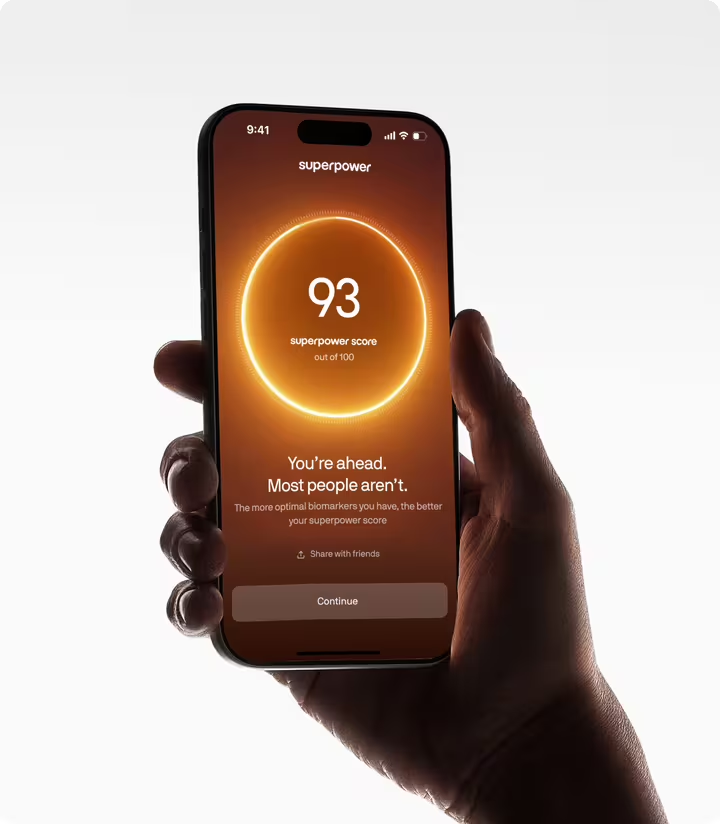
- Receive your results in your dashboard within 10 days, alongside your other panel data.
- Review with your care team. Your Superpower care team or AI-powered concierge can walk you through what your markers mean.
Frequently asked questions
Biomarkers tested
Asymmetric dimethylarginine (ADMA) is a small molecule that comes from the normal breakdown of proteins in the body.
Learn moreMethod: Laboratory-developed test (LDT) validated under CLIA; not cleared or approved by the FDA. Results are interpreted by clinicians in context and are not a stand-alone diagnosis.