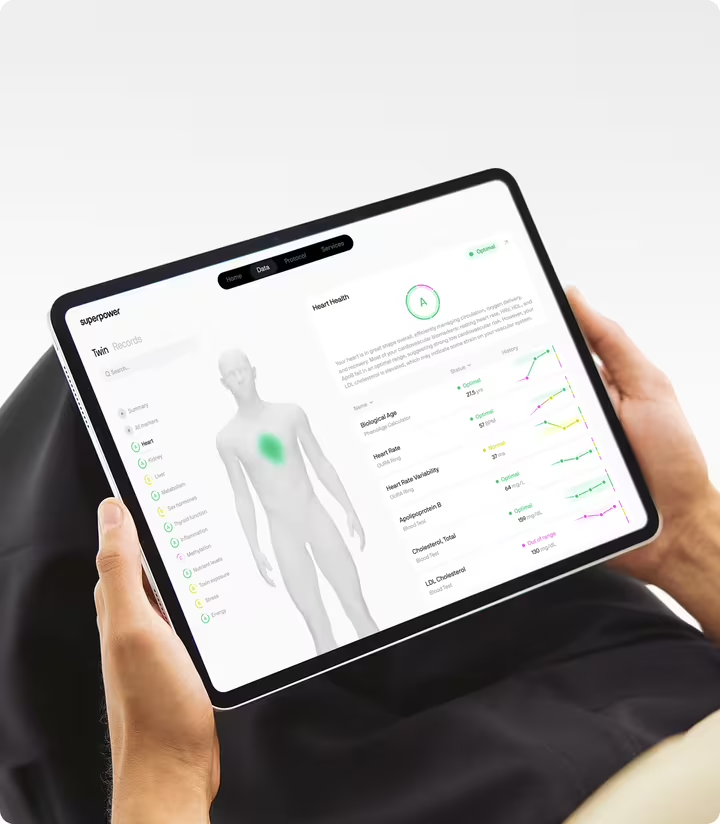

See how berberine is affecting your bloodwork
Track glucose, liver enzymes, and cholesterol before and after you start
- CLIA-certified labs
- HIPAA compliant
- Personalized protocols
What are the side effects of berberine?
Most berberine side effects are digestive and mild. Nausea, abdominal pain, bloating, constipation, and diarrhea are the ones people actually report, and in controlled studies these symptoms were few, mild, and transient rather than lasting. Berberine's more serious risks are rare and concentrate in specific people and specific drug combinations.
That severity picture holds up in the pooled data: across placebo-controlled trials in dyslipidemia, no serious adverse events were reported for berberine. The honest caveat, stated once so it does not need repeating: the trials behind that reassurance are small, short, and methodologically uneven in quality. Berberine is also an over-the-counter supplement, not approved for any medical use, and nothing here replaces a medication a clinician prescribed.
Common side effects of berberine
The common side effects are digestive, almost without exception. The symptoms people describe most often are the ones reported as primarily gastrointestinal:
- Nausea
- Abdominal pain
- Bloating
- Constipation
- Diarrhea
Berberine's side-effect profile is otherwise quiet. In most controlled studies, adverse events on berberine were no more frequent than on placebo.
| Side effect | How common | Typical onset | Typical duration | What to do | |---|---|---|---|---| | Digestive symptoms (nausea, bloating, constipation, diarrhea) | Common: 2-23% of berberine groups versus 2-15% on placebo across 12 trials | Within the first days of starting or after a dose increase | Usually transient | Take with food, split the daily dose, and raise persistent symptoms with a clinician | | Low blood sugar | Uncommon: not significantly increased in pooled trials | Around meals or dosing, mainly alongside glucose-lowering drugs | Minutes to hours | Manage the low, then talk to whoever manages your diabetes medication | | Heart rhythm changes | Rare, and mechanistic rather than trial-documented | Unpredictable | Unclear from current evidence | Discuss before starting if you have a known rhythm problem | | Liver enzyme changes | Not linked to clinically apparent liver injury | Not established | Not established | Routine bloodwork is enough for most people | | Allergic reaction | Rare, with very low toxicity at usual doses | Minutes to hours after a dose | Until resolved with care | Stop and seek urgent care |
Digestive side effects
How common is "common"? In placebo-controlled dyslipidemia trials, gastrointestinal adverse events turned up in 2-23% of berberine groups against 2-15% of placebo groups, which is a wide band because trials used different doses and different definitions.
A single, cleaner number comes from the head-to-head diabetes trial: at 0.5 g three times daily, 34.5% of participants had transient gastrointestinal effects. The reason tracks with the pharmacology. Berberine is poorly absorbed, so most of a dose never leaves the gut, and gastrointestinal distress rises at higher doses.
The nuance worth holding onto is that berberine's effect on the gut runs in both directions. In 132 adults with diarrhea-predominant irritable bowel syndrome taking 400 mg per day for 8 weeks, berberine reduced diarrhea frequency, abdominal pain, and urgency. Digestive responses are individual, not universal.
How long side effects usually last
Berberine's digestive effects are typically short-lived. They are described as mild and transient rather than persistent, and the 3-month diabetes trial likewise recorded its gastrointestinal effects as transient over the full course.
The practical read: symptoms that stretch beyond the first weeks, get worse, or show up after a dose increase are the ones worth raising with a clinician rather than waiting out.
Serious but less common risks
Serious reactions to berberine are rare in the trial literature. A systematic review spanning 38 randomized trials in 3,948 participants reported no deaths and no serious adverse events, at moderate to very low evidence quality. These risks matter less as general warnings and more as specific ones, tied to particular people and particular drug combinations.
Low blood sugar (hypoglycemia)
Berberine on its own is not a reliable cause of hypoglycemia. Pooled trials found no significant increase in hypoglycemia risk (RR 0.48, 95% CI 0.21-1.08), whether berberine was taken alone or alongside oral glucose-lowering drugs, and its glucose-lowering works in a glucose-dependent way rather than forcing insulin out the way a sulfonylurea does.
The real-world concern is arithmetic. Stack berberine on top of prescribed diabetes medication and the effects add: berberine alone lowered fasting plasma glucose by 0.82 mmol/L and HbA1c by 0.63% across 37 trials. That is a conversation for whoever writes your prescriptions, not a reason to adjust a dose yourself.
Signs of a blood sugar drop include:
- Shakiness
- Sweating
- Dizziness or lightheadedness
- Confusion
- A rapid heartbeat
Heart rhythm changes
Berberine may affect cardiac conduction. A systematic review of 22 studies of its effects on cardiac ion channels concluded that berberine can prolong the QT interval and produce bradycardia and hypotension, though that evidence is weighted toward laboratory and animal work rather than documented consumer harm.
The mechanism makes the concern plausible: in cell studies, berberine disrupts trafficking of the hERG potassium channel that handles cardiac repolarization. If you have known QT prolongation, an existing arrhythmia, or take a drug that affects rhythm, this belongs in a conversation with your cardiologist before you start.
Liver strain and rare liver toxicity
The internet's assumption that berberine taxes the liver runs opposite to the evidence. Berberine has not been linked to serum enzyme elevations or clinically apparent liver injury, and it carries a likelihood score of E, the category for agents considered an unlikely cause of drug-induced liver injury.
Trial data point the same way. Across 10 randomized trials in 811 people with non-alcoholic fatty liver disease, berberine reduced ALT, AST, and GGT rather than raising them, with only mild gastrointestinal adverse events reported. Those trials were short, so long-term data remain thin, and anyone with existing liver disease should clear berberine with their clinician.
Allergic reactions
Allergic reactions to berberine are rare, and clinical review of its human use describes very low toxicity at usual doses with only mild gastrointestinal reactions in some patients.
Rash or hives, swelling of the face, lips, or throat, and difficulty breathing are different. Those warrant emergency care immediately, not a wait-and-see approach.
How dose and timing change your risk
Risk questions are meaningless without a dose attached. Berberine's usual recommended dose is 250-500 mg two or three times daily. Lipid trials ran higher, at 900-1,500 mg per day for 4 to 24 weeks, and weight-related effects showed up mainly above 1 gram per day taken for more than 8 weeks.
Splitting the daily dose across meals is the practical answer to the most common complaint, and the pharmacology explains why. Oral bioavailability sits under 1%, so a large single dose mostly sits in the gut, where distress rises with dose size. Controlled trials followed the same logic, using regimens like 0.5 g three times daily and 400 mg per day given twice daily.
This is also why one person's stomach revolts and their friend feels nothing on the identical capsule. Berberine is handled by the CYP2D6 enzyme and the OCT1 transporter, roughly 9% of Europeans and white Americans carry poor-metabolizer or poor-transporter variants, and females showed 2.8-fold higher exposure and 3.6-fold higher peak concentrations than males at the same dose. Same pill, very different internal dose.
Berberine drug interactions to know
Berberine touches an unusually long list of medications for one plain reason: it inhibits CYP2D6 and CYP3A4, the liver enzymes that metabolize the largest share of clinically used drugs, and it also acts on the P-glycoprotein transporter that moves drugs across gut and liver membranes.
| Drug class | Example drugs | What berberine does | Practical implication | |---|---|---|---| | Immunosuppressants | Cyclosporine | Raised trough levels 29.3% and AUC 34.5% in renal transplant recipients | Requires prescriber oversight and level monitoring | | Diabetes medications | Metformin | Additive glucose lowering, plus a pharmacokinetic interaction worth attention | Tell the clinician managing your diabetes before adding berberine | | Statins | Simvastatin, atorvastatin | Laboratory evidence of greater CYP3A4 and hERG inhibition in combination | Theoretical concern from cell studies; worth flagging to a prescriber | | Cardiac glycosides | Digoxin | Flagged as a potentially important interaction | Narrow safety margin; do not combine without guidance | | Targeted cancer therapies | Bosutinib | Modelled 1.3-fold AUC increase at 300 mg three times daily (computer simulation, not a trial) | Clear any supplement with the oncology team |
Diabetes medications, including metformin
Berberine and prescribed glucose-lowering drugs push on the same outcome, so the issue is additive effect rather than a chemical clash. Combining berberine with oral hypoglycemic agents produced no significant increase in total adverse events (RR 0.73) in pooled trials.
Metformin is nonetheless named among the interactions worth attention on pharmacokinetic grounds. Tell whoever manages your diabetes medication before adding berberine, do not adjust a prescribed dose on your own, and do not treat berberine as a metformin replacement.
Immunosuppressants, statins, and sedatives
The strongest human interaction evidence involves an immunosuppressant, and it sets the tone for every narrow-margin drug. Adding 0.2 g of berberine three times daily to cyclosporine for 3 months in renal transplant recipients left trough concentrations 29.3% higher, with AUC up 34.5%, half-life extended by 2.7 hours, and clearance down 40.4%. When a drug has little room between too little and too much, that magnitude matters.
Statins bring a subtler signal. In laboratory work, berberine combined with simvastatin or atorvastatin inhibited CYP3A4 more than berberine alone and pushed hERG current inhibition past either agent, which is a theoretical cardiotoxicity concern rather than an observed one. The clinical counterweight is reassuring: across 44 trials in 4,606 cardiovascular patients, berberine alone or with statins showed no significant difference in adverse-reaction incidence.
The same caution extends to anesthetics, sedatives, and other central nervous system drugs, since herbal supplements can alter the metabolism of anesthetic drugs. A pharmacist reviewing your full list is the fastest way to settle it.
Why berberine affects so many drugs
Berberine is promiscuous at the enzyme level. It influences CYP3A4/5, CYP2D6, CYP2C9, CYP2E1, and CYP1A1/2, and a review across the 12 primary human CYP450 enzymes concludes that its inhibition of CYP2D6 and CYP3A4 is the interaction that matters most.
For anyone holding a medication list, the consequence is cumulative rather than pairwise. Berberine's own metabolism runs through the liver with fecal excretion of 11-23%, and interaction risk scales with the dose taken, so the number of prescriptions in play matters more than any single pairing.
Who should not take berberine
Berberine's risks concentrate in a small number of clearly defined groups. Being sold over the counter is not evidence of safety for everyone: supplements reach shelves without FDA approval for safety or effectiveness.
Pregnancy, breastfeeding, infants, and children
Berberine is one of the few supplements with an unambiguous infant warning. Exposure has been linked to a harmful buildup of bilirubin in infants that can cause brain damage, making berberine likely unsafe for infants and possibly unsafe during pregnancy or breastfeeding.
The mechanism is specific: berberine displaces bilirubin from albumin, roughly tenfold more potently than a known potent displacer on a molar basis, which is why jaundiced newborns are the group named.
Children deserve a direct answer too, because the pediatric trial data are easy to misread. No deaths or serious adverse events appeared across 38 trials in 3,948 participants, but 22 of 27 pediatric trials gave berberine as an enema rather than by mouth. That evidence says nothing about oral berberine supplements for kids.
Liver or kidney conditions
The starting point is reassuring rather than alarming. Berberine has not been linked to clinically apparent liver injury, and the head-to-head diabetes trial observed no functional liver or kidney damage in any participant.
Caution still applies for one structural reason: the liver is berberine's main site of distribution and metabolism. People with existing liver or kidney disease have the least margin for error and should clear it with their clinician first.
Before scheduled surgery
Stop herbal supplements ahead of an operation. Anesthesiology bodies recommend discontinuing them 1-2 weeks before elective surgery.
The catch is disclosure: 50-70% of surgical patients never tell their physician they take herbal products, and expert consensus holds that there is little downside to temporarily stopping a supplement before a procedure.
People on multiple prescriptions
The more prescriptions someone takes, the higher the odds that one of them runs through the enzymes and transporters berberine inhibits. That is precisely why a review across the CYP450 enzymes recommends thorough consultation before recommending berberine-containing herbs.
The cyclosporine result shows what a narrow-therapeutic-index drug can do when its levels shift, so bring the full medication and supplement list to a pharmacist or prescriber rather than assessing pairings one at a time.
Berberine vs. metformin: how the risk profiles differ
The comparison people search for traces back to one small pilot trial. Thirty-six adults with newly diagnosed type 2 diabetes took berberine at 0.5 g three times daily or metformin for 3 months, and berberine's glucose-lowering effect was similar to metformin's, with HbA1c falling from 9.5% to 7.5% and fasting glucose from 10.6 to 6.9 mmol/L. That is a pilot study, not a registration trial.
The risk profiles are where the two genuinely diverge. Berberine's reported harms in that trial were transient gastrointestinal symptoms in 34.5% of participants with no liver or kidney damage seen, while berberine, unlike a prescription medicine, is not FDA-approved for any use and is not reviewed for safety or effectiveness before it reaches the shelf.
Similar effect sizes in one small trial are not grounds to swap a prescribed medication for a supplement. Any change to a prescription belongs with the prescriber who wrote it.
Is berberine safe to take long term?
The best long-duration evidence is encouraging. In a multicenter double-blind randomized trial, 337 diabetes-free adults with obesity and MASLD took 1 g per day of berberine or placebo for 6 months with roughly 90% adherence, adverse events occurred at similar rates in both groups, and the investigators concluded the 6-month course had an excellent safety profile.
Safe is not the same as useful. That same trial found no reduction in visceral fat or liver fat, producing only modest changes in LDL-C (-7.72 mg/dL) and apolipoprotein B (-3.42 mg/dL). A placebo-controlled meta-analysis went further, finding courses of 90 days or less more effective for LDL-C and HDL-C than longer use, so stretching the duration has not been shown to add benefit.
The boundary is worth stating plainly. The best safety data run to about 6 months, which makes multi-year use untested rather than proven safe, and periodic review with a clinician is the sensible default.
Supplement quality, labeling, and contamination risk
What is in the bottle is its own risk category. DNA-based authentication of 5,957 commercial herbal products sold across 37 countries found 27% were adulterated relative to their labeled species, with the US figure at 29%, including undeclared fillers, substitute species, and products containing none of the labeled species at all.
The regulation explains the gap. Under the 1994 Dietary Supplement Health and Education Act, there is no provision for the FDA to approve supplements before they reach consumers, the agency must prove a marketed product unsafe to restrict it, and "standardized" has no legal definition in the US, so the word on a label signals nothing about quality.
Two things help. Good Manufacturing Practices require manufacturers to guarantee identity, purity, strength, and composition and to guard against contamination with pesticides, heavy metals such as lead, and bacteria, so third-party verification of those attributes is the practical check. Worth knowing: even the trial literature has been criticized for inconsistent reporting of product purity and potency.
When to stop berberine and call a doctor
Most berberine side effects are mild and settle on their own, so the signals worth acting on are the ones pointing at an allergic reaction, a blood sugar drop, or a heart rhythm problem rather than ordinary digestive upset.
Stop and seek care for:
- Swelling of the face, lips, or throat, or trouble breathing
- Fainting, palpitations, or a very slow heartbeat
- Confusion, sweating, or shakiness suggesting low blood sugar
- Yellowing of the skin or eyes
- Digestive symptoms that persist or worsen beyond the first weeks
Two follow-ups matter afterward. Tell the clinician managing any prescription that berberine was in the mix, and know that side effects from a supplement can be reported to the FDA through its reporting channel.
Biomarkers worth tracking if you take berberine
Berberine's studied effects and its main safety questions land in the same place: your blood work. No test measures "berberine levels" in any clinically useful way, so a baseline before starting and a repeat after the multi-week window trials used is the only way to see what is actually happening in your body.
The markers that map to berberine's known effects are:
- HbA1c, which reflects average blood glucose over the past 3 months, with normal below 5.7%
- Fasting glucose, which fell by 0.82 mmol/L across 37 trials
- Fasting insulin and HOMA-IR, which improved alongside HbA1c in 46 randomized trials
- ALT, AST, and GGT, which improved rather than worsened in NAFLD trials
- LDL cholesterol and triglycerides, which fell by 0.46 and 0.34 mmol/L in placebo-controlled trials
Read those numbers with appropriate humility. They are group averages from short trials, individual markers move for many reasons including diet, weight, and medication changes, and a marker shifting is not proof that a supplement caused it.
Track berberine's effects with a Superpower Blood Panel
Whether berberine is helping you or quietly causing a problem is ultimately a question about numbers, and berberine side effects rarely announce themselves before glucose, liver enzymes, and lipids do. Superpower makes establishing that baseline straightforward, with the Superpower Blood Panel measuring HbA1c, glucose, ALT, AST, GGT, LDL cholesterol, and triglycerides from a single annual draw so you can see what changed and what did not.
Frequently Asked Questions
References
- National Center for Complementary and Integrative Health (2023). *Berberine and weight loss: what you need to know*. National Institutes of Health.
- Blais JE, Huang X, Zhao JV (2023). Overall and sex-specific effect of berberine for the treatment of dyslipidemia in adults: a systematic review and meta-analysis of randomized placebo-controlled trials. *Drugs*, *83*(5), 403–427. https://doi.org/10.1007/s40265-023-01841-4
- National Institute of Diabetes and Digestive and Kidney Diseases, & National Institutes of Health (2020). *Berberine*. In LiverTox: clinical and research information on drug-induced liver injury. National Institute of Diabetes and Digestive and Kidney Diseases.
- Yin J, Xing H, Ye J (2008). Efficacy of berberine in patients with type 2 diabetes mellitus. *Metabolism*, *57*(5), 712–717. https://doi.org/10.1016/j.metabol.2008.01.013
- Xie W, Su F, Wang G, Peng Z, Xu Y, Zhang Y, Xu N, Hou K, Hu Z, Chen Y, Chen R (2022). Glucose-lowering effect of berberine on type 2 diabetes: a systematic review and meta-analysis. *Frontiers in Pharmacology*, *13*, 1015045. https://doi.org/10.3389/fphar.2022.1015045
- Nie Q, Li M, Huang C, Yuan Y, Liang Q, Ma X, Qiu T, Li J (2024). The clinical efficacy and safety of berberine in the treatment of non-alcoholic fatty liver disease: a meta-analysis and systematic review. *Journal of Translational Medicine*, *22*(1), 225. https://doi.org/10.1186/s12967-024-05011-2
- Chan E (1993). Displacement of bilirubin from albumin by berberine. *Biology of the Neonate*, *63*(4), 201–208. https://doi.org/10.1159/000243932
- Khoshandam A, Imenshahidi M, Hosseinzadeh H (2022). Pharmacokinetic of berberine, the main constituent of *Berberis vulgaris* L.: a comprehensive review. *Phytotherapy Research*, *36*(11), 4063–4079. https://doi.org/10.1002/ptr.7589
- Bathaei P, Imenshahidi M, Hosseinzadeh H (2025). Effects of *Berberis vulgaris*, and its active constituent berberine on cytochrome P450: a review. *Naunyn-Schmiedeberg's Archives of Pharmacology*, *398*(1), 179–202. https://doi.org/10.1007/s00210-024-03326-x
- Adiwidjaja J, Boddy AV, McLachlan AJ (2022). Physiologically based pharmacokinetic model predictions of natural product-drug interactions between goldenseal, berberine, imatinib and bosutinib. *European Journal of Clinical Pharmacology*, *78*(4), 597–611. https://doi.org/10.1007/s00228-021-03266-y
- Wu X, Li Q, Xin H, Yu A, Zhong M (2005). Effects of berberine on the blood concentration of cyclosporin A in renal transplanted recipients: clinical and pharmacokinetic study. *European Journal of Clinical Pharmacology*, *61*(8), 567–572. https://doi.org/10.1007/s00228-005-0952-3
- Lei L, Wang B, Zhao L, Li J, Yan X, Jiang J, Wang L, Ren G, Li Y, Cheng X, Yan X, Zhu Y, Guo Y, Zhong H, Zhang H, Li J (2026). Berberine and adiposity in diabetes-free individuals with obesity and MASLD: a randomized clinical trial. *JAMA Network Open*, *9*(1), e2554152. https://doi.org/10.1001/jamanetworkopen.2025.54152
- Liu D, Zhao H, Zhang Y, Hu J, Xu H (2025). Efficacy and safety of berberine on the components of metabolic syndrome: a systematic review and meta-analysis of randomized placebo-controlled trials. *Frontiers in Pharmacology*, *16*, 1572197. https://doi.org/10.3389/fphar.2025.1572197
- Elvir Lazo OL, White PF, Lee C, Cruz Eng H, Matin JM, Lin C, Del Cid F, Yumul R (2024). Use of herbal medication in the perioperative period: potential adverse drug interactions. *Journal of Clinical Anesthesia*, *95*, 111473. https://doi.org/10.1016/j.jclinane.2024.111473
- Cummings KC 3rd, Keshock M, Ganesh R, Sigmund A, Kashiwagi D, Devarajan J, Grant PJ, Urman RD, Mauck KF (2021). Preoperative management of surgical patients using dietary supplements: Society for Perioperative Assessment and Quality Improvement (SPAQI) consensus statement. *Mayo Clinic Proceedings*, *96*(5), 1342–1355. https://doi.org/10.1016/j.mayocp.2020.08.016
- Li Z, Wang Y, Xu Q, Ma J, Li X, Yan J, Tian Y, Wen Y, Chen T (2023). Berberine and health outcomes: an umbrella review. *Phytotherapy Research*, *37*(5), 2051–2066. https://doi.org/10.1002/ptr.7806
- Masoumi S, Moetazedian M, Jafari S, Heidari-Soureshjani S, Sherwin CM (2025). Mechanistic effects and complications of berberine on cardiac arrhythmias: a systematic review. *Current Reviews in Clinical and Experimental Pharmacology*. https://doi.org/10.2174/0127724328346501250404175826
- Imenshahidi M, Hosseinzadeh H (2019). Berberine and barberry (*Berberis vulgaris*): a clinical review. *Phytotherapy Research*, *33*(3), 504–523. https://doi.org/10.1002/ptr.6252
- Moon JM, Ratliff KM, Hagele AM, Stecker RA, Mumford PW, Kerksick CM (2021). Absorption kinetics of berberine and dihydroberberine and their impact on glycemia: a randomized, controlled, crossover pilot trial. *Nutrients*, *14*(1), 124. https://doi.org/10.3390/nu14010124
- Chen C, Tao C, Liu Z, Lu M, Pan Q, Zheng L, Li Q, Song Z, Fichna J (2015). A randomized clinical trial of berberine hydrochloride in patients with diarrhea-predominant irritable bowel syndrome. *Phytotherapy Research*, *29*(11), 1822–1827. https://doi.org/10.1002/ptr.5475
- Yu M, Jin X, Liang C, Bu F, Pan D, He Q, Ming Y, Little P, Du H, Liang S, Hu R, Li C, Hu YJ, Cao H, Liu J, Fei Y (2020). Berberine for diarrhea in children and adults: a systematic review and meta-analysis. *Therapeutic Advances in Gastroenterology*, *13*, 1756284820961299. https://doi.org/10.1177/1756284820961299
- Zhang K, Zhi D, Huang T, Gong Y, Yan M, Liu C, Wei T, Dong Z, Li B, Yang B (2014). Berberine induces hERG channel deficiency through trafficking inhibition. *Cellular Physiology and Biochemistry*, *34*(3), 691–702. https://doi.org/10.1159/000363034
- Blöcher JA, Meyer-Tönnies MJ, Morof F, Rönnpagel V, Bethmann J, Vollmer M, Engeli S, Tzvetkov MV (2025). Sex-dependent effects of CYP2D6 on the pharmacokinetics of berberine in humans. *Clinical Pharmacology & Therapeutics*, *117*(1), 250–260. https://doi.org/10.1002/cpt.3454
- Feng P, Zhao L, Guo F, Zhang B, Fang L, Zhan G, Xu X, Fang Q, Liang Z, Li B (2018). The enhancement of cardiotoxicity that results from inhibition of CYP3A4 activity and hERG channel by berberine in combination with statins. *Chemico-Biological Interactions*, *293*, 115–123. https://doi.org/10.1016/j.cbi.2018.07.022
- Yang L, Zhu W, Zhang X, Zhou X, Wu W, Shen T (2023). Efficacy and safety of berberine for several cardiovascular diseases: a systematic review and meta-analysis of randomized controlled trials. *Phytomedicine*, *112*, 154716. https://doi.org/10.1016/j.phymed.2023.154716
- National Institutes of Health, Office of Dietary Supplements (2020). *Dietary supplements: background information*. National Institutes of Health.
- Ichim MC (2019). The DNA-based authentication of commercial herbal products reveals their globally widespread adulteration. *Frontiers in Pharmacology*, *10*, 1227. https://doi.org/10.3389/fphar.2019.01227
- Elahi Vahed I, Shahir-Roudi E, Nojumi S, Golmohammadi S, Moradi Shahrebabak M, Sharafi Tafreshi Moghadam N, Bagheryan AS, Moftakhar M, Shamsipour F, Jafari M, Soltaninejad H, Rahmanian M (2026). The effect of berberine on obesity indices: a systematic review and meta-analysis. *International Journal of Obesity*, *50*(1), 53–73. https://doi.org/10.1038/s41366-025-01943-x
- U.S. Food and Drug Administration (2024). *Dietary supplements*. U.S. Department of Health and Human Services.
- National Institute of Diabetes and Digestive and Kidney Diseases (2018). *The A1C test and diabetes*. National Institutes of Health.
- Guo J, Chen H, Zhang X, Lou W, Zhang P, Qiu Y, Zhang C, Wang Y, Liu WJ (2021). The effect of berberine on metabolic profiles in type 2 diabetic patients: a systematic review and meta-analysis of randomized controlled trials. *Oxidative Medicine and Cellular Longevity*, *2021*, 2074610. https://doi.org/10.1155/2021/2074610