


Check your RBC magnesium before you dose
The Mineral Levels panel shows your tissue magnesium stores, explained in plain language.
- CLIA-certified labs
- HIPAA compliant
- Personalized health protocol
How magnesium works as a laxative, and why form changes everything
Magnesium citrate, oxide, and hydroxide work as laxatives, and magnesium glycinate does not. Citrate, oxide, and hydroxide are inorganic salts that dissolve in the gut but don't absorb well, so the magnesium stays in your intestines, draws in water, and moves things along.
Magnesium is an essential mineral involved in over 300 enzymatic reactions, but when you're taking it for constipation, you're not trying to correct a deficiency. You're exploiting a side effect. Poorly absorbed forms of magnesium remain in the intestinal lumen, where they exert an osmotic effect. The magnesium ions pull water into the bowel, softening stool and increasing its volume, which stimulates peristalsis and triggers a bowel movement.
The key phrase is poorly absorbed. Magnesium glycinate and magnesium malate are chelated forms that cross the intestinal wall efficiently, delivering magnesium to tissues where it's needed for:
- Muscle relaxation through calcium channel regulation
- Nerve function via neurotransmitter modulation
- Energy production as an ATP cofactor
They're excellent for correcting deficiency but lousy laxatives. The laxative effect comes from the osmotic load in the gut, not from systemic magnesium repletion.
| Form | Elemental magnesium | Bioavailability | Constipation dose | Onset |
|---|---|---|---|---|
| Magnesium oxide | 60% | 4% | 1,500 mg of magnesium oxide (about 900 mg elemental magnesium) per day in adult trials | Improvement over 4 weeks in adult trials |
| Magnesium citrate | 16% | 30% | 200-400 mg elemental magnesium (about 1,000-2,000 mg of citrate), with a full glass of water | 6-12 hours |
| Magnesium hydroxide (milk of magnesia) | — | — | 30-60 mL (6-12 teaspoons) at bedtime | 2-6 hours |
| Magnesium glycinate | — | Well absorbed | Not used for constipation | No reliable laxative effect |
What the clinical evidence shows for magnesium and constipation
In adults with chronic constipation, 1,500 mg of magnesium oxide a day for 28 days improved bowel movement frequency and quality of life compared with placebo. Across two placebo-controlled trials, 68% of people responded to magnesium oxide versus 19% on placebo, with about 3.7 more bowel movements a week and softer stools. At lower doses (200 to 400 mg elemental magnesium), it functions as a gentler osmotic laxative for occasional constipation.
The citrate form is more soluble than oxide, meaning it dissolves faster and acts more predictably, but it's also absorbed better, so the dose-response curve is steeper. Magnesium hydroxide has been used for decades as milk of magnesia. It's no longer widely recommended for chronic use because of potential complications in patients with kidney or heart disease, where magnesium accumulation can become dangerous.
The population studied matters. Most trials enrolled adults with functional constipation, defined as fewer than three bowel movements per week with hard stools. The evidence doesn't extend to people with normal bowel function who are simply looking for regularity optimization. If you're already having daily bowel movements, magnesium won't make them better; it will just make them looser.
Magnesium oxide: High dose, low absorption
The downside is unpredictability. Because absorption is so low, the osmotic effect depends heavily on gut pH, transit time, and what else you've eaten. Some people respond to 400 mg; others need 1,200 mg. Start low and titrate up until you get the desired effect, which should be a soft, formed stool, not diarrhea.
Magnesium citrate: Faster, more predictable
Magnesium citrate is available as a powder, capsule, or liquid. The liquid form is used for bowel prep and contains much higher doses (up to 1,800 mg elemental magnesium per bottle). That's not for daily use. For regular constipation management, stick to capsules or powder at the lower end of the dose range.
Magnesium hydroxide: Fast-acting but short-lived
Magnesium hydroxide (milk of magnesia) is effective but not ideal for chronic use due to the risk of electrolyte imbalances and dependency with prolonged administration.
Dose, form, and timing: What the evidence supports
The right dose depends on the form, your baseline magnesium status, and how constipated you are. The goal is to produce a soft, formed stool, not watery diarrhea. If you're getting diarrhea, you've overshot. Several factors determine optimal dosing strategy:
- Form selection determines absorption rate and osmotic potential
- Baseline magnesium status affects how much remains in the gut versus enters circulation
- Hydration status influences the osmotic gradient and water availability
- Timing relative to meals affects dissolution and transit time
For constipation, use magnesium citrate, oxide, or hydroxide. Do not use magnesium glycinate, malate, or threonate. Those forms are well-absorbed and designed to raise tissue magnesium levels, not to produce a laxative effect. If you take magnesium glycinate expecting it to relieve constipation, you'll be disappointed.
Start with 200 to 400 mg of elemental magnesium per day. If that doesn't produce a bowel movement within 24 to 48 hours, increase by 200 mg increments until you find the dose that works. The upper tolerable limit for supplemental magnesium is 350 mg per day for adults, but that's set to prevent diarrhea, which is exactly what you're trying to induce here (2023 meta-analysis). Higher doses are sometimes used for constipation and are generally considered safe in people with normal kidney function, though individual tolerance varies. Do not exceed 60 mL of milk of magnesia in 24 hours.
Take magnesium for constipation at bedtime with a full glass of water. The water is not optional. Magnesium works by drawing water into the bowel; if you're dehydrated, it won't work as well and may cause cramping. Taking it at night means you'll have a bowel movement in the morning, which is more convenient than mid-afternoon.
Magnesium works synergistically with fiber. Soluble fiber like psyllium absorbs water and adds bulk to stool, while magnesium draws water into the bowel. Together, they produce a softer, larger stool that's easier to pass. If you're taking magnesium citrate for constipation, consider adding 5 to 10 grams of psyllium per day. Do not take magnesium within two hours of calcium supplements, iron, or certain antibiotics (tetracyclines, fluoroquinolones). Magnesium binds to these compounds and reduces their absorption.
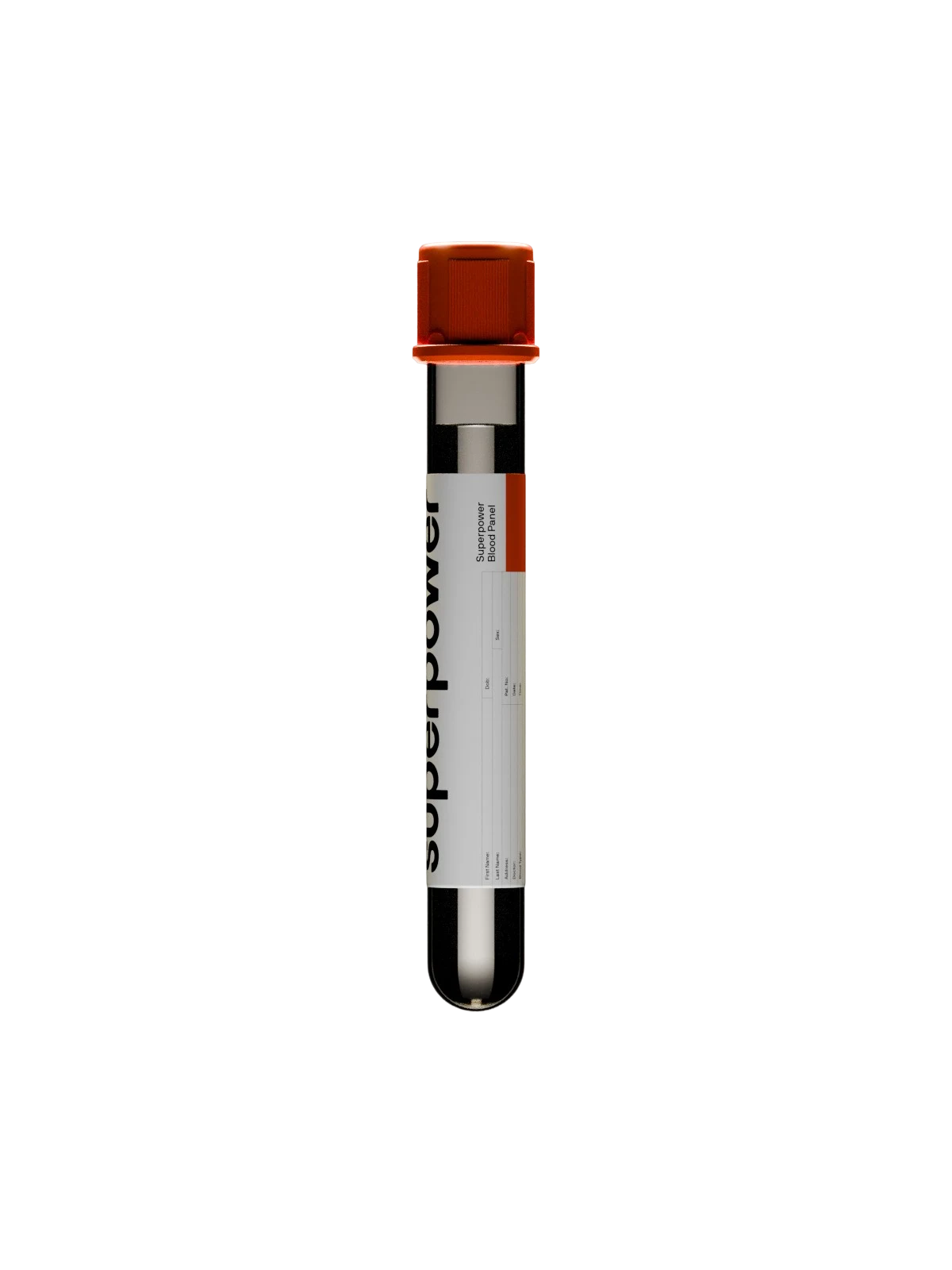
Know your magnesium status
The Mineral Levels panel includes RBC magnesium, explained in plain language.
Know your magnesium status
The Mineral Levels panel includes RBC magnesium, explained in plain language.
Who benefits most from magnesium for constipation, and who should be careful
Magnesium laxatives are most effective in people with functional constipation who are not magnesium-deficient. If you're deficient, your body will absorb more of the magnesium, reducing the osmotic effect. That's why testing baseline status matters. RBC magnesium, which reflects tissue stores more accurately than serum magnesium, is available through Superpower's Mineral Levels panel.
Older adults often respond well to magnesium for constipation because they're more likely to be on medications that slow gut motility (opioids, anticholinergics, calcium channel blockers) and less likely to drink enough water. Magnesium citrate at 200 to 400 mg per day is a reasonable first-line option in this population, but kidney function should be checked first (2023 RCT).
People with chronic kidney disease should avoid magnesium laxatives entirely. When kidney function is impaired, magnesium clearance drops, and even modest supplemental doses can cause hypermagnesemia, which presents as:
- Muscle weakness from impaired neuromuscular transmission
- Low blood pressure due to vasodilation
- Cardiac arrhythmias from altered electrical conduction
If your estimated glomerular filtration rate (eGFR) is below 60 mL/min, do not take magnesium supplements without medical supervision. Pregnant women can use magnesium citrate for constipation, which is common in pregnancy due to progesterone's effect on gut motility. Doses of 200 to 400 mg per day are considered safe, but higher doses should be discussed with a provider (2021 meta-analysis).
People on diuretics, particularly loop diuretics and thiazides, lose magnesium in urine and may be deficient. In this population, magnesium supplementation may correct the deficiency rather than produce a laxative effect. If you're on a diuretic and constipated, check your magnesium level before assuming supplementation will help with constipation.
Magnesium citrate is not a treatment for a bowel blockage. A swollen, tense belly with nausea and vomiting can signal an obstruction, and laxatives should not be used for intestinal obstruction or sudden abdominal pain without a known cause; those need a medical evaluation first. Over-the-counter magnesium citrate labels say to ask a doctor before use if you have abdominal pain, nausea, or vomiting, or have already used a laxative for longer than one week. Stop and get medical advice if you have rectal bleeding or no bowel movement after a dose.
Testing your magnesium status and tracking whether supplementation is working
Serum magnesium is a poor marker of total body magnesium because only 1% of magnesium is in the blood. RBC magnesium is a better functional marker, reflecting intracellular stores. If your RBC magnesium is low, supplementation will correct the deficiency, and you may not get the laxative effect you're expecting. If it's normal or high, the magnesium you take will stay in the gut and produce the osmotic effect.
Tracking stool frequency and consistency is the most direct way to know if magnesium is working. Use the Bristol Stool Scale:
- Type 3 or 4 indicates optimal response (soft, formed stool)
- Type 5, 6, or 7 indicates excessive dosing (loose to watery stool)
- Type 1 or 2 indicates insufficient dosing or need for form adjustment (hard, lumpy stool)
If you're taking magnesium citrate for constipation and not seeing results after a week at 400 mg per day, either increase the dose or switch to magnesium oxide, which has a stronger osmotic effect (2019 RCT). If you're getting diarrhea, cut the dose in half or switch to a better-absorbed form like magnesium bisglycinate for general supplementation rather than laxative use.
Downstream markers to watch include potassium and calcium. Chronic diarrhea from excessive magnesium can deplete both. If you're using magnesium laxatives regularly, check a comprehensive metabolic panel every few months to make sure electrolytes are stable.
Frequently Asked Questions
References
- Morishita D, Tomita T, Mori S, Kimura T, Oshima T, Fukui H, Miwa H (2021). Senna Versus Magnesium Oxide for the Treatment of Chronic Constipation: A Randomized, Placebo-Controlled Trial. *The American journal of gastroenterology*, *116*(1), 152-161. https://doi.org/10.14309/ajg.0000000000000942
- van der Schoot A, Creedon A, Whelan K, Dimidi E (2023). The effect of food, vitamin, or mineral supplements on chronic constipation in adults: A systematic review and meta-analysis of randomized controlled trials. *Neurogastroenterology and motility*, *35*(11), e14613. https://doi.org/10.1111/nmo.14613
- Costello R, Rosanoff A, Nielsen F, West C (2023). Perspective: Call for Re-evaluation of the Tolerable Upper Intake Level for Magnesium Supplementation in Adults. *Advances in nutrition (Bethesda, Md.)*, *14*(5), 973-982. https://doi.org/10.1016/j.advnut.2023.06.008
- Halawa N, Elsaid TW, El Wakeel LM, Shawki MA (2023). Impact of magnesium supplementation on clinical outcome and disease progression of patients with diabetic nephropathy: a prospective randomized trial. *Therapeutic advances in chronic disease*, *14*, 20406223231214641. https://doi.org/10.1177/20406223231214641
- Rosanoff A, Costello RB, Johnson GH (2021). Effectively Prescribing Oral Magnesium Therapy for Hypertension: A Categorized Systematic Review of 49 Clinical Trials. *Nutrients*, *13*(1). https://doi.org/10.3390/nu13010195
- Mori S, Tomita T, Fujimura K, Asano H, Ogawa T, Yamasaki T, Kondo T, Kono T, Tozawa K, Oshima T, Fukui H, Kimura T, Watari J, Miwa H (2019). A Randomized Double-blind Placebo-controlled Trial on the Effect of Magnesium Oxide in Patients With Chronic Constipation. *Journal of neurogastroenterology and motility*, *25*(4), 563-575. https://doi.org/10.5056/jnm18194
- Gotfried J (2026). *Constipation*. Merck Manual Professional Edition. https://www.merckmanuals.com/professional/gastrointestinal-disorders/symptoms-of-gastrointestinal-disorders/constipation
- National Library of Medicine. (2026). *Magnesium citrate oral solution* [Drug label]. DailyMed. https://dailymed.nlm.nih.gov/dailymed/drugInfo.cfm?setid=4ffe54ae-3126-ba58-e063-6294a90a8877



























 Heart & Vascular Health
 Metabolic Health
 Energy
 Liver Health
 Kidney
 Sex Hormones
 Thyroid Health
 Nutrients
 Immune System
 Inflammation