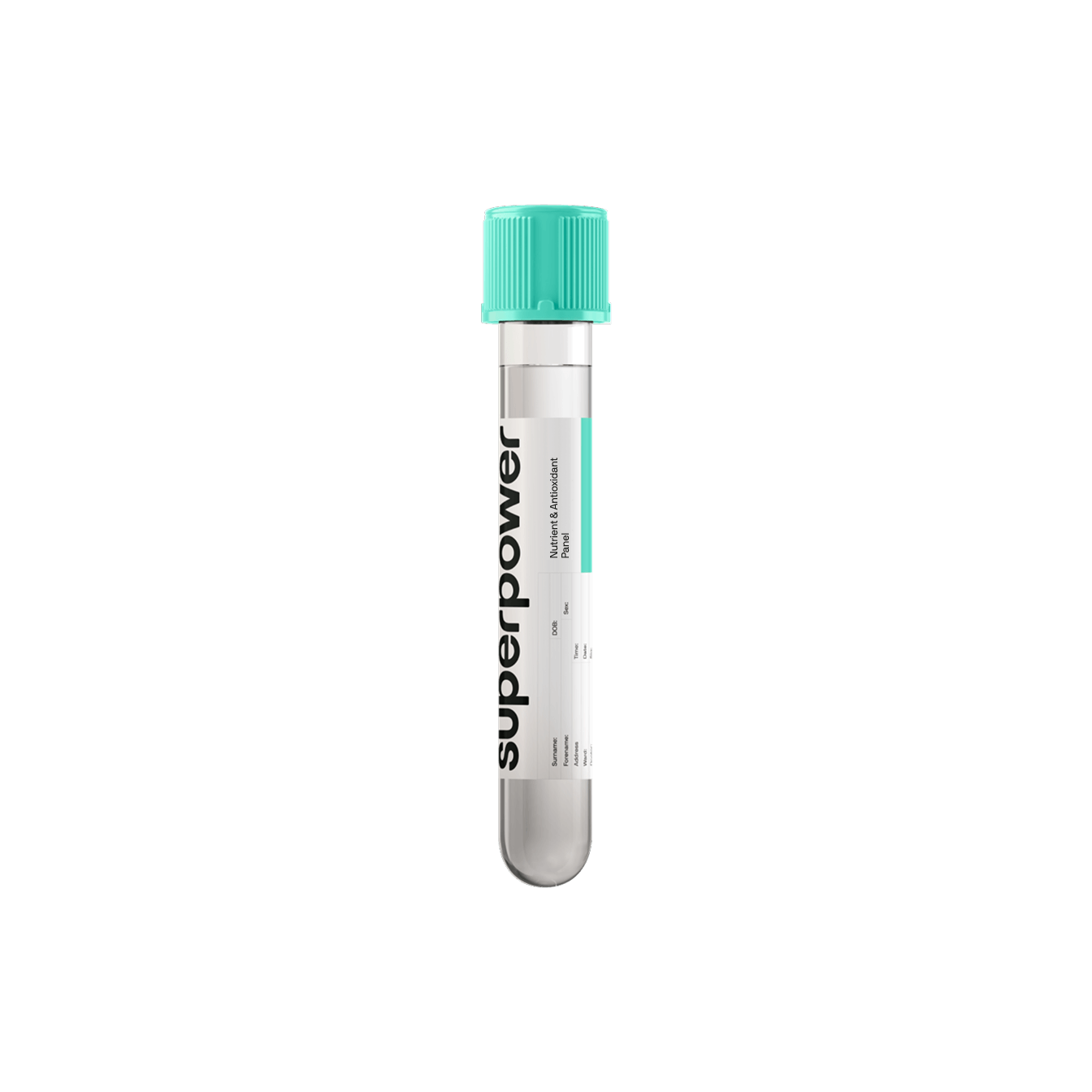
Test details
- Sample type:
- Single blood draw (blood only)
- Location:
- In-person at Quest Diagnostics / At-home phlebotomist visit (+$119)
- Availability:
- Available in 39 states and Washington, D.C.
- Turnaround:
- Results delivered to your dashboard within 10 days
- Preparation:
- Stop magnesium, selenium, and zinc supplements 7+ days beforeContinue all prescribed medications; stay hydrated
About the Mineral Levels Panel
Most blood panels already include magnesium, but they test the wrong form. Serum magnesium stays stable even when the magnesium inside your cells runs low, so a "normal" result can hide a real shortfall. The Mineral Levels panel measures RBC magnesium, selenium, and zinc, the forms that reflect your actual stores. No doctor's visit, results delivered to your dashboard.
Why RBC magnesium, selenium, and zinc, not just a standard mineral check
Magnesium is a cofactor in more than 300 enzyme systems, affecting muscle function, nerve signaling, blood sugar, blood pressure, and sleep. The standard serum magnesium test often misses deficiency, because your body pulls magnesium from cells to keep blood levels stable, so you can be significantly deficient while serum looks fine. RBC magnesium measures the magnesium inside your red blood cells, a far more accurate reflection of your stores. This panel pairs it with selenium, a trace mineral central to thyroid function, and zinc, a trace mineral central to immune function, both of which standard panels rarely include, covering three minerals commonly missed by routine testing.
What this panel tests
Magnesium RBC (Red Blood Cell Magnesium)
Magnesium is a cofactor in more than 300 enzyme systems in your body, affecting muscle function, nerve signaling, blood sugar regulation, blood pressure, and sleep quality. The standard serum magnesium test often misses deficiency, because your body pulls magnesium from cells to keep blood levels stable, so you can be significantly deficient while serum levels look fine. RBC magnesium measures the magnesium inside your red blood cells, a far more accurate reflection of your body's actual stores. Low levels have been associated with muscle cramps, poor sleep, and irregular heartbeat. Alcohol, high caffeine intake, chronic stress, certain diuretics, and GI malabsorption can all deplete magnesium over time.
Reference ranges vary by lab and individual. Your Superpower care team and provider will interpret your specific result in context.
Selenium
Selenium is a trace mineral essential for thyroid function, immune defense, and antioxidant protection. Your thyroid contains more selenium per gram than any other organ; it is needed to convert T4 into the active T3 hormone and to protect the thyroid from oxidative damage. Selenium also powers glutathione peroxidase, an enzyme that works with glutathione (your body's master antioxidant) to limit oxidative damage. Levels vary with diet and geography, since soil depletion affects how much selenium reaches the food supply. Low selenium has been associated with thyroid dysfunction and weakened immune defenses. Because selenium has a relatively narrow optimal range, knowing where you stand is more useful than guessing.
Reference ranges vary by lab and individual. Your provider will interpret your result in context.
Zinc
Zinc is a trace mineral involved in immune function, wound healing, and cell division. It supports the enzymes your body uses to repair tissue and fight infection, and it plays a role in taste and smell perception as well. Standard blood panels rarely include it, even though inadequate intake and absorption issues are common. Low zinc has been associated with slower wound healing, more frequent infections, and reduced immune response. Because zinc and copper compete for absorption, chronically low zinc can also affect copper balance over time.
Reference ranges vary by lab and individual. Your provider will interpret your result in context.
Symptoms associated with low magnesium, selenium, or zinc
The following have been associated with low mineral levels and may be worth investigating:
- Muscle cramps or twitching
- Persistent fatigue that does not resolve with sleep
- Irregular heartbeat or palpitations
- Poor sleep or difficulty staying asleep
- Anxiety or mood symptoms
- Symptoms of high stress, which depletes magnesium rapidly
- Thyroid-related symptoms such as sluggishness or cold intolerance
- Frequent infections or a slow immune response
- Slow-healing cuts or wounds
Who benefits from testing
- You have muscle cramps, poor sleep, anxiety, or an irregular heartbeat
- You have thyroid issues or a family history of thyroid disease
- You're under chronic stress, which depletes magnesium rapidly
- You want to verify your mineral intake is actually sufficient rather than assuming
- You supplement magnesium, selenium, or zinc and want to confirm you're in an effective range
- You're an athlete or active person dealing with cramps, poor recovery, or disrupted sleep
- You have a GI condition affecting absorption (Crohn's, celiac, IBS)
- You've noticed slow wound healing or frequent infections
- Your standard magnesium test came back "normal" but symptoms persist
How to prepare
- Stop magnesium, selenium, and zinc supplements at least 7 days before your draw — RBC magnesium, selenium, and zinc reflect recent mineral exposure, so supplementing right before the test can skew your result. This is the most important step for this panel.
- Continue all prescribed medications as normal.
- Drink water normally to stay hydrated.
How it works
- Order online — No doctor's visit required.
- Get your blood drawn at a local clinic near you, or with an at-home phlebotomist option (+$119).
- Review your results in your dashboard within 10 days, with your care team available for questions.
Frequently asked questions
Biomarkers tested
Magnesium is an essential mineral that acts as a cofactor for over 300 enzymatic reactions, including those that regulate energy production, DNA/RNA synthesis, protein formation, and nerve and muscle signaling.
Learn moreMethod: FDA-cleared clinical laboratory assay performed in CLIA-certified, CAP-accredited laboratories. Used to aid clinician-directed evaluation and monitoring. Not a stand-alone diagnosis.


























 Heart & Vascular Health
 Metabolic Health
 Energy
 Liver Health
 Kidney
 Sex Hormones
 Thyroid Health
 Nutrients
 Immune System
 Inflammation