


Understand what your sleep health results really mean
See your biomarkers in context with a comprehensive panel.
- CLIA-certified labs
- HIPAA compliant
- Personalized health protocol
Why fluid in the lungs makes sleep difficult
Fluid redistribution when you lie flat
During the day, gravity keeps fluid concentrated in the lower portions of your lungs. When you recline, that fluid spreads across a larger surface area, flooding the alveoli (tiny air sacs) where oxygen exchange happens. Your lungs effectively have less functional surface area for breathing, which triggers the sensation of breathlessness. This explains why you may feel fine sitting in a chair but struggle the moment you lie down.
Orthopnea and how many pillows matter
Orthopnea is breathlessness that occurs when lying flat and improves when sitting up. Doctors often quantify it by asking how many pillows you need to breathe comfortably at night. "Two-pillow orthopnea" or "three-pillow orthopnea" gives your medical team a measure of severity. If the number of pillows you need keeps increasing, it signals worsening fluid accumulation. For help with pillow positioning, see how many pillows you should sleep on.
Paroxysmal nocturnal dyspnea
This is the terrifying experience of waking suddenly, one to two hours after falling asleep, gasping for air. It happens as fluid gradually redistributes into your lungs over time after you lie down. Unlike orthopnea, which you notice immediately, paroxysmal nocturnal dyspnea strikes after you've been asleep. It often forces you to sit up or stand, and symptoms may take 15 to 30 minutes to resolve.
Safest sleeping positions for pulmonary fluid
Elevated upper body (45 to 60 degrees)
The most important adjustment for sleeping with fluid in your lungs is keeping your upper body significantly elevated. A 45- to 60-degree angle uses gravity to keep fluid in the lower lung bases, leaving more upper lung tissue available for oxygen exchange. An adjustable bed is ideal, but you can approximate this angle with a stack of firm pillows or a large wedge pillow. Some people find sleeping in a reclined sitting position most effective.
Supported side-lying with elevation
If you can't tolerate sleeping on your back, a side-lying position with your upper body still elevated can work. Place pillows behind your back for support and between your knees for comfort. If one lung is more affected than the other, lying with the affected side up may improve gas exchange by keeping the healthier lung in the gravity-dependent position, where blood flow is greatest.
The recliner option
For severe fluid accumulation, sleeping in a recliner may be more comfortable and safer than a bed. The recliner naturally positions your upper body at an appropriate angle while supporting your legs in a slightly elevated position. Many people with congestive heart failure find recliners offer better nighttime breathing than any bed configuration.
Positions to avoid
Never sleep flat on your back or stomach if you have fluid in your lungs. Flat positioning maximizes fluid redistribution across your lung tissue and can trigger dangerous episodes of breathlessness. If you wake up having slid down from your propped position, sit up immediately and reposition before attempting to sleep again.
Breathing techniques for nighttime relief
Pursed-lip breathing
Breathe in slowly through your nose for two counts, then exhale through pursed lips (as if blowing through a straw) for four counts. This technique creates back-pressure that keeps your airways open longer, allowing more air to exchange in each breath. Practice it before bed as a relaxation tool, and use it when you wake up feeling breathless. Research shows pursed-lip breathing improves oxygen saturation and reduces respiratory rate in people with respiratory compromise.
Diaphragmatic breathing
Place one hand on your chest and the other on your belly. Breathe so your belly hand rises while your chest hand stays relatively still. This engages your diaphragm more effectively, improving ventilation in the lower lungs. Five to ten minutes of diaphragmatic breathing before bed can reduce the anxiety and air hunger that make falling asleep difficult.
Coordinated breathing for movement
Getting in and out of bed with fluid in your lungs requires careful coordination. Exhale during exertion (standing up, climbing into bed) and inhale during rest phases. This prevents the breath-holding that often happens unconsciously during physical effort and reduces oxygen desaturation during position changes.
Environmental adjustments for better rest
Keep air cool and circulating
Cool, gently moving air can reduce the sensation of breathlessness. A fan directed toward your face (not directly at your chest) stimulates trigeminal nerve receptors in the face, which research has shown reduces the perception of dyspnea. Keep your bedroom at 65 to 68 degrees Fahrenheit. Warm, stuffy rooms amplify the feeling of air hunger.
Maintain appropriate humidity
Dry air can thicken secretions and make breathing feel more labored. A cool-mist humidifier maintaining 40% to 50% humidity helps keep airways moist. Avoid excessively humid environments, which can worsen breathing difficulty. If you also deal with nasal congestion, balanced humidity addresses both issues.
Oxygen supplementation if prescribed
If your doctor has prescribed supplemental oxygen, use it consistently during sleep. Nighttime oxygen desaturation is common with pulmonary fluid and can worsen during sleep when your breathing naturally becomes shallower. Keep your oxygen equipment within easy reach and make sure you have enough supply to last through the night. Monitoring your oxygen levels during sleep helps guide treatment decisions.
Managing related symptoms at night
Nighttime coughing
Fluid in the lungs often triggers a wet cough that worsens when you lie down. Elevation helps reduce this, but if coughing persists, discuss it with your doctor. The cough is your body's attempt to clear fluid from the airways, so suppressing it without medical guidance can be counterproductive. If you're also dealing with coughing at night, strategies for sleeping with bronchitis and sleeping with pneumonia overlap with fluid management techniques.
Anxiety and air hunger
The sensation of not being able to breathe naturally triggers anxiety, which increases your respiratory rate and worsens the perception of breathlessness. This cycle can make falling asleep extremely difficult. Pursed-lip breathing, calming routines, and knowing your emergency plan can reduce the anxiety component. If sleep anxiety is becoming a significant barrier, discuss it with your medical team.
Fluid retention and weight monitoring
Daily morning weight checks are one of the most effective tools for tracking fluid retention. A gain of two or more pounds overnight or five or more pounds in a week often signals worsening fluid accumulation before symptoms escalate. Report sudden weight changes to your doctor immediately, as they may need to adjust your diuretic dosage.
Test 150+ biomarkers
Two blood draws. A full picture of your health, explained in plain language.
Test 150+ biomarkers
Two blood draws. A full picture of your health, explained in plain language.
When to seek emergency care
Acute warning signs
Call 911 or go to the emergency room if you experience:
- Sudden severe breathlessness that doesn't improve with sitting up
- Foamy or pink-tinged sputum (this suggests acute pulmonary edema)
- Chest pain or tightness along with breathing difficulty
- Blue or gray discoloration of lips, fingertips, or skin
- Confusion or extreme drowsiness combined with breathing difficulty
These symptoms can indicate acute pulmonary edema, which is a medical emergency requiring immediate treatment.
Worsening chronic symptoms
Contact your doctor promptly if you notice needing more pillows than usual to breathe, new or increased leg swelling, a rapid weight gain of two or more pounds in 24 hours, or increased coughing with pink or frothy mucus. These are signs that your fluid levels are increasing and your treatment plan may need adjustment.
Working with your medical team
Medication management
Diuretics, ACE inhibitors, and other medications play a critical role in managing fluid in the lungs. Never adjust dosages on your own. If nighttime symptoms worsen, your doctor may change the timing of your diuretic or adjust the dose. Some people benefit from taking diuretics earlier in the day to reduce nighttime bathroom trips while still managing fluid levels.
Track and communicate patterns
Keep a log of how many pillows you need, how often you wake breathless, and your daily weight. This data helps your medical team make precise treatment adjustments. Apps or a simple notebook beside your bed work well. The more specific your observations, the better your care team can fine-tune your management.
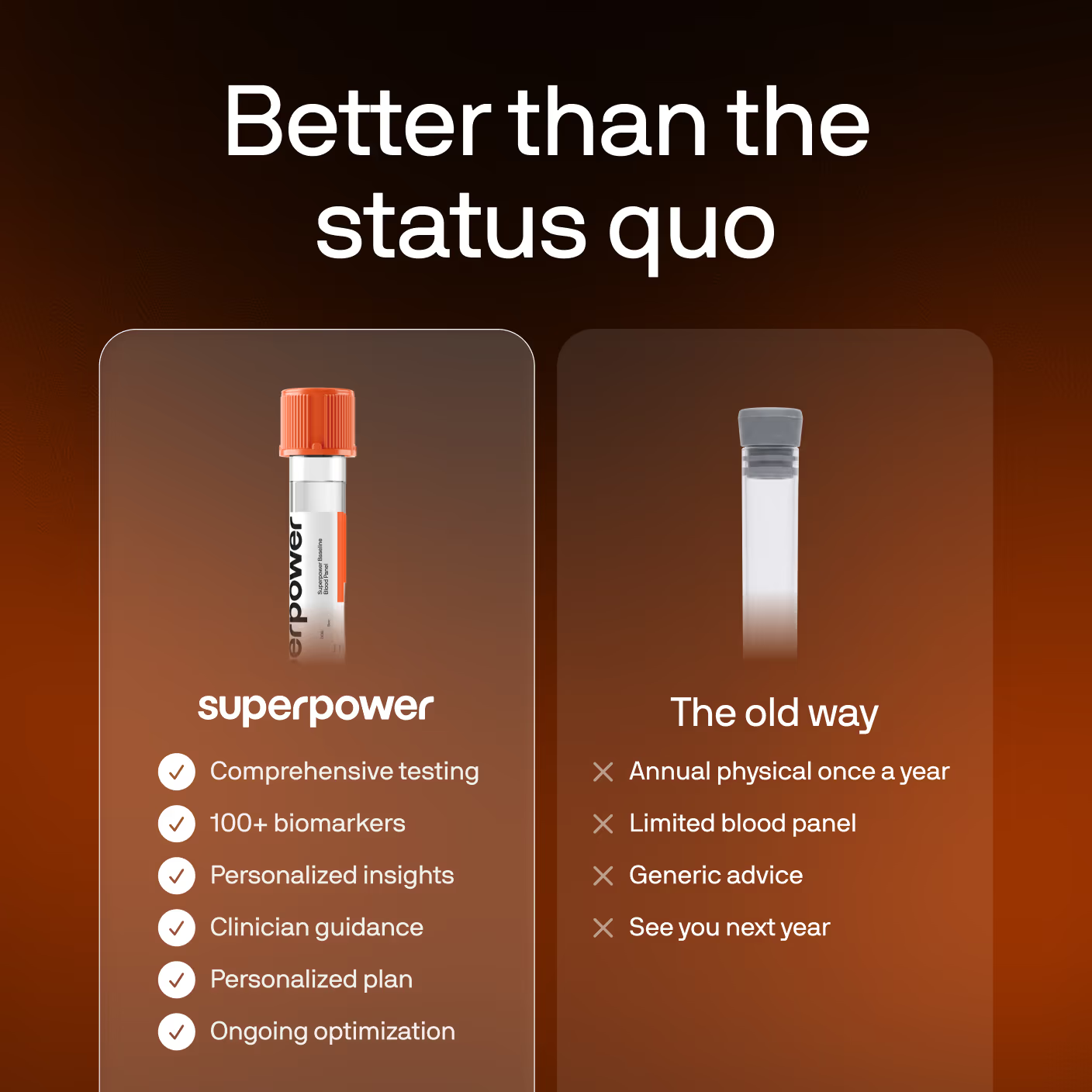
Superpower's at-home blood panel can complement your clinical care by tracking over 150 biomarkers, including BNP (a marker of heart strain), kidney function markers, and inflammatory indicators. These measurements, taken between clinic visits, provide your medical team with additional data points that help guide treatment timing and intensity.
Start your Superpower membership to add biomarker tracking to your ongoing care toolkit.
Frequently Asked Questions
References
- Mendes LP, Moraes KS, Hoffman M, Vieira DS, Ribeiro-Samora GA, Lage SM, Britto RR, Parreira VF (2019). Effects of Diaphragmatic Breathing With and Without Pursed-Lips Breathing in Subjects With COPD. *Respiratory care*, *64*(2), 136-144. https://doi.org/10.4187/respcare.06319
- Schwartzstein RM, Lahive K, Pope A, Weinberger SE, Weiss JW (1987). Cold facial stimulation reduces breathlessness induced in normal subjects. *The American review of respiratory disease*, *136*(1), 58-61. https://doi.org/10.1164/ajrccm/136.1.58
- Picano E, Gargani L, Gheorghiade M (2010). Why, when, and how to assess pulmonary congestion in heart failure: pathophysiological, clinical, and methodological implications. *Heart Failure Reviews*, *15*(1), 63-72. https://doi.org/10.1007/s10741-009-9148-8
- Galbraith S, Fagan P, Perkins P, Lynch A, Booth S (2010). Does the use of a handheld fan improve chronic dyspnea? A randomized, controlled, crossover trial. *Journal of Pain and Symptom Management*, *39*(5), 831-838. https://doi.org/10.1016/j.jpainsymman.2009.09.024
- Riegel B, Moser DK, Buck HG, Dickson VV, Dunbar SB, Lee CS, Lennie TA, Lindenfeld J, Mitchell JE, Treat-Jacobson DJ, Webber DE (2017). Self-care for the prevention and management of cardiovascular disease and stroke: a scientific statement for healthcare professionals from the American Heart Association. *Journal of the American Heart Association*, *6*(9), e006997. https://doi.org/10.1161/JAHA.117.006997



























 Heart & Vascular Health
 Metabolic Health
 Energy
 Liver Health
 Kidney
 Sex Hormones
 Thyroid Health
 Nutrients
 Immune System
 Inflammation