


Understand what your sleep health results really mean
See your biomarkers in context with a comprehensive panel.
- CLIA-certified labs
- HIPAA compliant
- Personalized health protocol
How lack of sleep causes headaches
The neuroscience behind the pain
Your brain has a pain-modulation system that depends on adequate rest to function properly. During sleep, your body produces proteins that help suppress pain signaling. When you cut sleep short, these proteins drop, and your pain threshold lowers. Activities and stimuli that would not normally bother you suddenly register as painful.
A study published in the journal Pain found that even one night of partial sleep deprivation significantly reduced participants' pain tolerance. The effect was comparable to the analgesic impact of a moderate dose of ibuprofen, just in reverse.
Inflammation and the glymphatic system
During deep sleep, your brain activates the glymphatic system, a network that flushes out metabolic waste products, including inflammatory molecules. Skip deep sleep, and these waste products accumulate. The result is neuroinflammation that can trigger or worsen headaches.
Research in Science demonstrated that the glymphatic system is 60% more active during sleep than during wakefulness. Every hour of lost sleep means less time for this critical cleaning process.
Types of headaches linked to sleep deprivation
Tension headaches from lack of sleep
The most common headache from sleep loss feels like a band tightening around your forehead. Tension headaches develop when sleep deprivation increases muscle tension in the neck, jaw, and scalp. They are usually bilateral (both sides of the head) and mild to moderate in intensity.
If you grind your teeth during sleep (bruxism), which worsens with stress and poor sleep, you may wake with a headache centered in the temples or jaw. Neck pain from poor sleep positioning compounds the problem.
Migraines triggered by sleep changes
Migraines have a more complex relationship with sleep. A study in Headache journal found that sleep disturbances were the most commonly reported migraine trigger, ahead of stress and missed meals. Both too little and too much sleep can set off an attack.
For migraine sufferers, the hypothalamus (your brain's master clock) is particularly sensitive to disruptions in sleep timing. Irregular sleep schedules are often more provocative than short sleep alone. This is why weekend "catch-up" sleeping sometimes triggers a Saturday morning migraine.
Can sleep apnea cause headaches
Morning headaches as a warning sign
Can sleep apnea cause headaches? Yes, and it is one of the condition's hallmark symptoms. Up to 29% of people with obstructive sleep apnea report waking with headaches, typically described as a pressing or dull ache on both sides of the head that fades within a few hours.
These headaches happen because sleep apnea causes repeated drops in blood oxygen throughout the night. Each apnea episode (a pause in breathing lasting 10 seconds or more) triggers a brief spike in carbon dioxide, which dilates blood vessels in the brain and activates pain receptors.
Why you might not know you have it
Many people with sleep apnea do not realize it because they do not fully wake during breathing pauses. You might sleep eight hours and still feel unrested, with headaches as your only obvious clue. Snoring, witnessed breathing pauses, and excessive daytime sleepiness are other red flags.
If morning headaches are a regular pattern, a sleep study can determine whether apnea is the culprit. Treatment with CPAP or positional therapy often eliminates the headaches entirely.
The headache-sleep cycle
How pain disrupts sleep
Here is the frustrating part: headaches from lack of sleep make it harder to fall asleep the next night. Pain activates your sympathetic nervous system (the fight-or-flight response), raising heart rate and cortisol. Both work against the calm, parasympathetic state your body needs to drift off.
Migraine attacks are especially disruptive. The throbbing pain, light sensitivity, and nausea can keep you awake for hours. And the resulting sleep loss lowers your migraine threshold for the following day, creating a vicious cycle.
Breaking the loop
The cycle usually breaks from the sleep side, not the pain side. Prioritizing consistent sleep timing, even during a headache episode, helps reset the pattern faster than pain medication alone. A randomized trial in Headache showed that behavioral sleep interventions reduced headache frequency by 49% in chronic migraine patients.
This does not mean ignoring the pain. Treat acute headaches appropriately. But layering sleep improvements underneath prevents the next episode from stacking on top of the last.
How much sleep you need to prevent headaches
Finding your threshold
For most adults, the recommended seven to nine hours protects against sleep-related headaches. But there is an individual threshold below which headaches become likely for you. Some people hit it at six and a half hours. Others hold up until they drop below six.
Track your headaches alongside sleep duration for two to three weeks. Most people find a clear pattern: headaches cluster on days following shorter nights. That bottom number is your personal floor.
Too much sleep causes headaches too
Sleeping more than nine hours regularly is also associated with increased headache frequency. Oversleeping disrupts your circadian rhythm and can cause "withdrawal" headaches from delayed caffeine intake or blood sugar drops. If you try to catch up on sleep by sleeping 11 hours on Saturday, you may wake up with a headache rather than feeling refreshed.
Consistency trumps total hours. A steady seven and a half hours beats alternating between five and ten.
Test 150+ biomarkers
Two blood draws. A full picture of your health, explained in plain language.
Test 150+ biomarkers
Two blood draws. A full picture of your health, explained in plain language.
Practical ways to stop headaches from lack of sleep
Fix your sleep consistency first
Go to bed and wake up within a 30-minute window every day, including weekends. This single change has the strongest evidence for reducing sleep-related headaches. Your hypothalamus thrives on predictability, and erratic schedules keep it in a state of constant recalibration.
- Set a consistent wake time (this anchors your circadian rhythm more than bedtime)
- Avoid screens for 60 minutes before bed, or use a blue-light filter at minimum
- Keep your bedroom dark, cool (65 to 68 degrees), and quiet
- Limit caffeine after 2 PM, especially if you are headache-prone
Address hidden contributors
Dehydration amplifies sleep-related headaches. Drink water throughout the day, not just when you feel thirsty. Nicotine disrupts sleep architecture and is independently linked to headache disorders.
Magnesium deficiency is associated with both migraines and poor sleep. A meta-analysis in Headache found that supplementing with 400 to 600 mg of magnesium daily reduced migraine frequency. Magnesium glycinate specifically supports both sleep quality and headache prevention.
When to see a doctor
Red flags to watch for
Most headaches from lack of sleep resolve when you restore consistent, adequate rest. But certain patterns warrant medical attention:
- Morning headaches occurring three or more days per week (possible sleep apnea)
- Headaches that worsen progressively over weeks
- New headache type after age 50
- Headache accompanied by fever, stiff neck, confusion, or vision changes
- Headaches that do not respond to improved sleep and standard pain relief
The role of blood work
Chronic headaches sometimes trace back to metabolic issues that overlap with sleep disruption. Low ferritin, thyroid dysfunction, vitamin deficiencies, and elevated inflammatory markers can all contribute. If you have addressed sleep hygiene and headaches persist, blood testing can reveal whether something deeper is driving both the poor sleep and the pain.
Get to the root of your headaches
Headaches from lack of sleep are your body's signal that recovery is falling short. Fixing the sleep is the first step, but it is not always the last.
Superpower's comprehensive blood panel measures inflammatory markers, magnesium, iron, thyroid hormones, and other biomarkers that sit at the intersection of sleep and pain. When you can see the full picture, you can stop chasing symptoms and start addressing causes.
Order your Superpower panel and uncover what is really behind your headaches.
Frequently Asked Questions
References
- Schrimpf M, Liegl G, Boeckle M, Leitner A, Geisler P, Pieh C (2015). The effect of sleep deprivation on pain perception in healthy subjects: a meta-analysis. *Sleep medicine*, *16*(11), 1313-1320. https://doi.org/10.1016/j.sleep.2015.07.022
- Xie L, Kang H, Xu Q, Chen MJ, Liao Y, Thiyagarajan M, O'Donnell J, Christensen DJ, Nicholson C, Iliff JJ, Takano T, Deane R, Nedergaard M (2013). Sleep drives metabolite clearance from the adult brain. *Science (New York, N.Y.)*, *342*(6156), 373-7. https://doi.org/10.1126/science.1241224
- Vgontzas A, Pavlović JM (2018). Sleep Disorders and Migraine: Review of Literature and Potential Pathophysiology Mechanisms. *Headache*, *58*(7), 1030-1039. https://doi.org/10.1111/head.13358
- Spałka J, Kędzia K, Kuczyński W, Kudrycka A, Małolepsza A, Białasiewicz P, Mokros, Ł. (2020). Morning Headache as an Obstructive Sleep Apnea-Related Symptom among Sleep Clinic Patients-A Cross-Section Analysis. *Brain sciences*, *10*(1). https://doi.org/10.3390/brainsci10010057
- Smitherman TA, Walters AB, Davis RE, Ambrose CE, Roland M, Houle TT, Rains JC (2016). Randomized Controlled Pilot Trial of Behavioral Insomnia Treatment for Chronic Migraine With Comorbid Insomnia. *Headache*, *56*(2), 276-91. https://doi.org/10.1111/head.12760
- Mauskop A, Varughese J (2012). Why all migraine patients should be treated with magnesium. *Journal of neural transmission (Vienna, Austria : 1996)*, *119*(5), 575-9. https://doi.org/10.1007/s00702-012-0790-2
- Sönmez DZ, Taşcı S (2024). The Effect of St. John's Wort Oil (Hypericum Perforatum L.) in Knee Osteoarthritis: A Randomized Controlled and Qualitative Study. *Pain management nursing : official journal of the American Society of Pain Management Nurses*, *25*(2), e115-e125. https://doi.org/10.1016/j.pmn.2023.12.002
- Staffe AT, Bech MW, Clemmensen SLK, Nielsen HT, Larsen DB, Petersen KK (2019). Total sleep deprivation increases pain sensitivity, impairs conditioned pain modulation and facilitates temporal summation of pain in healthy participants. *PloS one*, *14*(12), e0225849. https://doi.org/10.1371/journal.pone.0225849
- Walker WH, Walton JC, DeVries AC, Nelson RJ (2020). Circadian rhythm disruption and mental health. *Translational psychiatry*, *10*(1), 28. https://doi.org/10.1038/s41398-020-0694-0













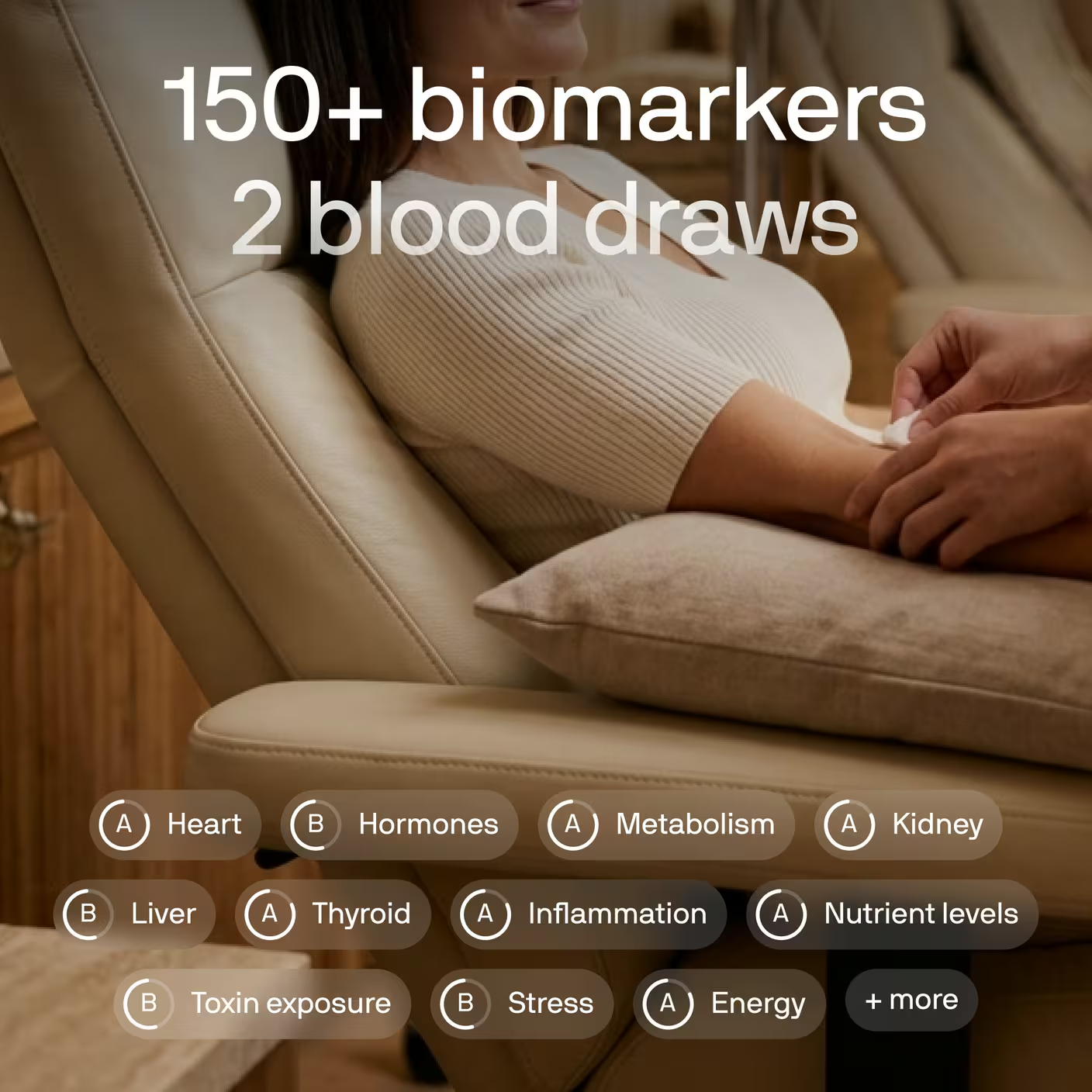


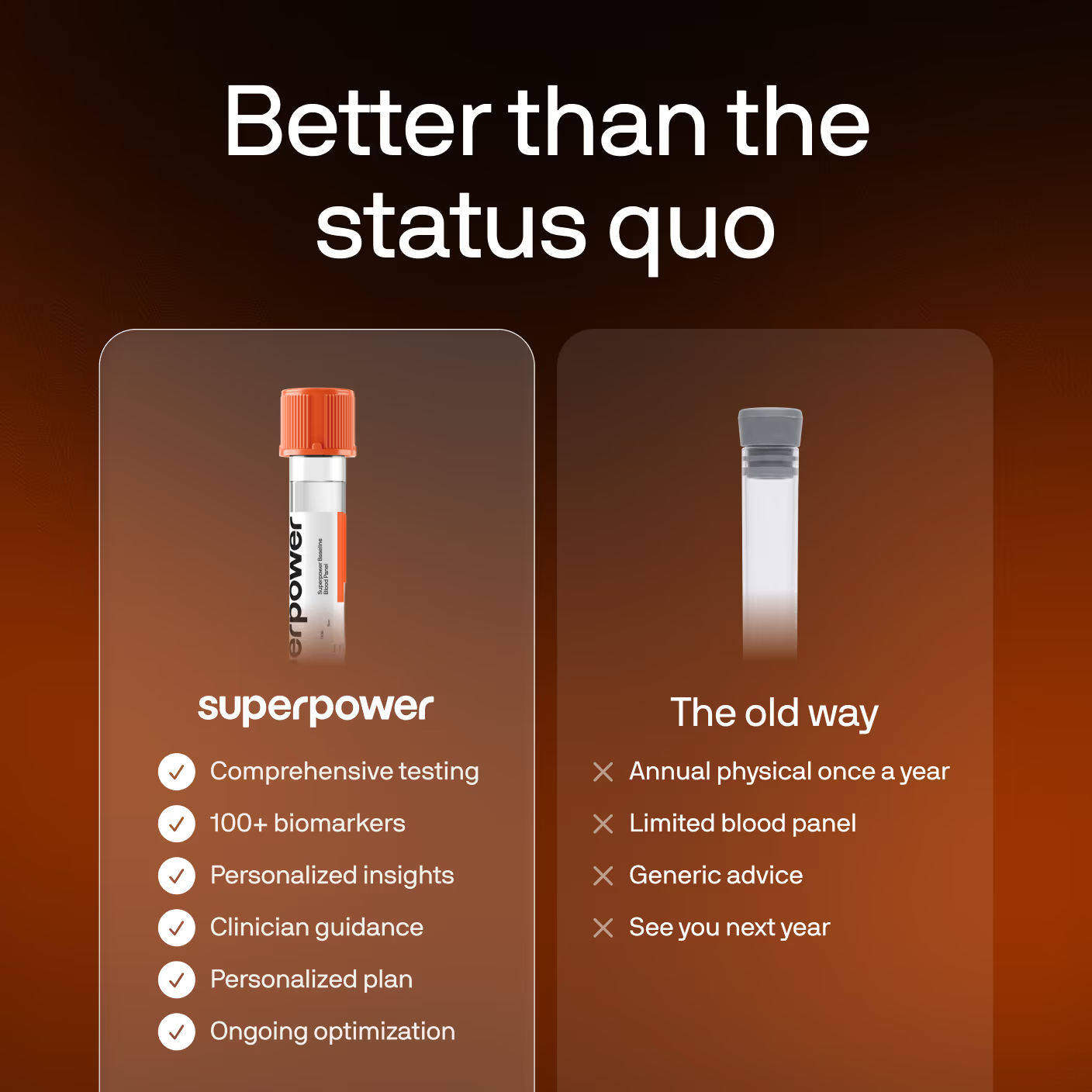
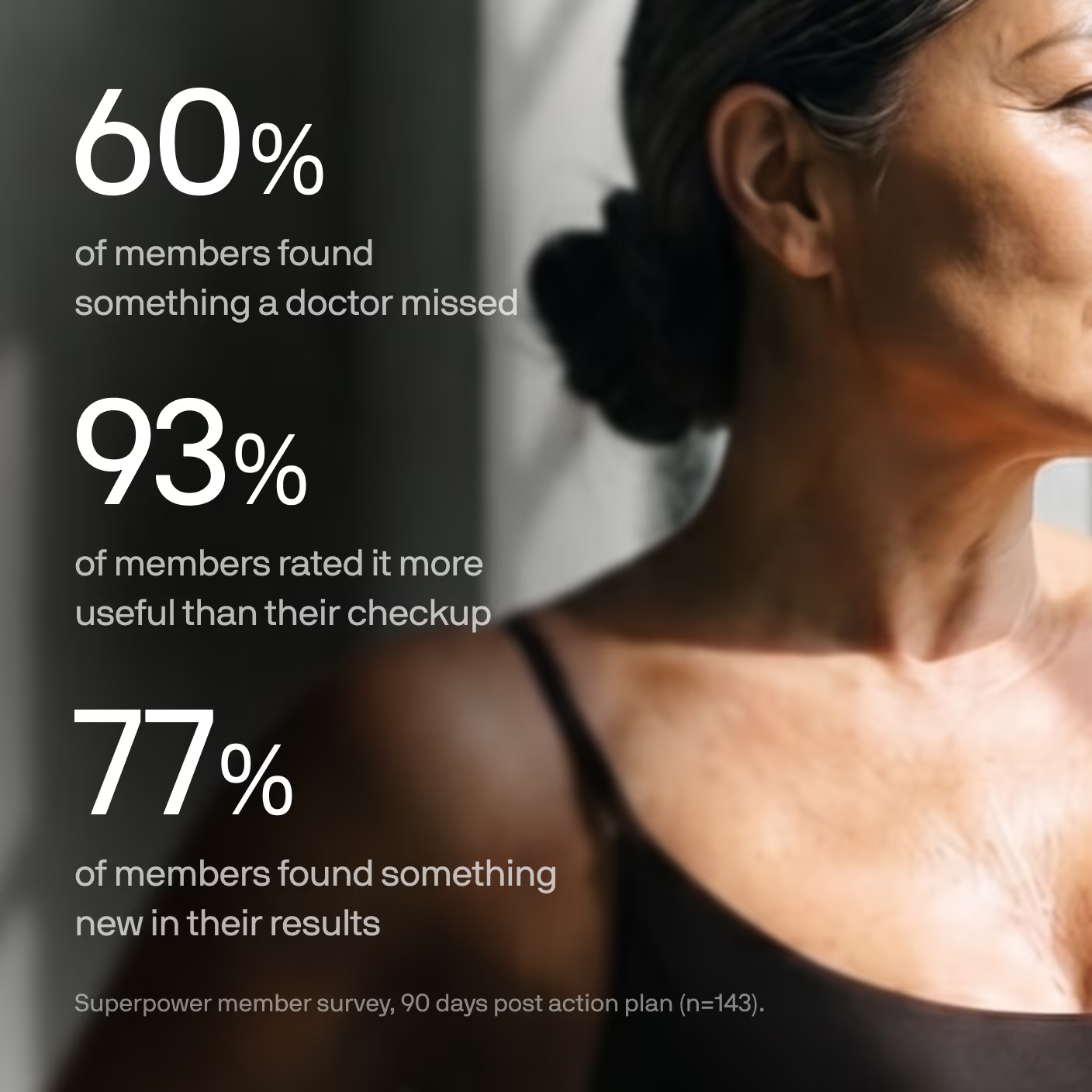










 Heart & Vascular Health
 Metabolic Health
 Energy
 Liver Health
 Kidney
 Sex Hormones
 Thyroid Health
 Nutrients
 Immune System
 Inflammation