


Understand what your sleep health results really mean
See your biomarkers in context with a comprehensive panel.
- CLIA-certified labs
- HIPAA compliant
- Personalized health protocol
What happens to your body when you don't sleep enough
Cognitive decline starts early
After just 24 hours without sleep, your cognitive performance drops to the equivalent of a blood alcohol concentration of 0.10%, according to a study published in Occupational and Environmental Medicine. That's over the legal driving limit in every state. Even losing two hours from your normal sleep duration impairs attention, working memory, and decision-making.
Hormones shift quickly
One night of poor sleep raises cortisol levels the following evening, disrupts insulin sensitivity, and increases ghrelin (the hunger hormone) while suppressing leptin (the satiety signal). This is why you crave sugar and carbs after a bad night. Your endocrine system is trying to compensate for missing recovery time.
Immune function takes a hit
Sleep deprivation reduces the activity of natural killer cells, your front-line immune defenders. A study in Sleep showed that sleeping fewer than six hours per night made participants four times more likely to catch a cold when exposed to the virus. If you're trying to recover from lack of sleep fast, supporting your immune system is part of the equation.
Can you actually catch up on sleep?
Short-term debt is recoverable
If you lost sleep over one or two nights, catching up is genuinely possible. Your body prioritizes deep sleep and REM sleep during recovery nights, spending more time in these restorative stages than usual. This process, called sleep rebound, means your brain self-corrects when given the opportunity.
Chronic debt is different
Weeks or months of insufficient sleep create deficits that one long weekend won't fix. Research in Scientific Reports found that recovery from chronic sleep restriction required more than a single night, and some cognitive deficits persisted even after multiple recovery nights. The lesson: catch up early, before sleep debt compounds.
How to recover from lack of sleep fast
Prioritize your next bedtime
The single most effective way to recover from lack of sleep fast is to go to bed 60 to 90 minutes earlier than usual tonight. Don't try to sleep 12 hours. That disrupts your circadian rhythm. Instead, give your body a modest extension that lets it prioritize the deep sleep stages it missed.
Protect the following night too
One recovery night helps significantly, but two consecutive good nights cement the rebound. Studies on sleep recovery show that performance metrics improve substantially after two full nights of adequate sleep. Keep your sleep schedule consistent during this window.
Use caffeine strategically, not recklessly
Caffeine blocks adenosine receptors, masking sleepiness without actually reducing your sleep debt. Use it in the morning only, and keep your intake moderate (200 to 400 mg, roughly two to four cups of coffee). Avoid caffeine after noon so it doesn't sabotage the recovery sleep you need tonight.
Strategic napping for maximum recovery
The 20-minute power nap
A nap between 10 and 20 minutes improves alertness, mood, and reaction time without dropping you into deep sleep. Waking from deep sleep causes grogginess (sleep inertia) that can leave you feeling worse. Set an alarm and stick to it. NASA research found that a 26-minute nap improved pilot performance by 34%.
Timing matters
The best window for a recovery nap falls between 1 and 3 p.m., when your circadian rhythm naturally dips. Napping after 3 p.m. risks delaying your sleep onset that night, which creates another short night and a vicious cycle. If you're recovering from lack of sleep fast, the early afternoon nap is your most powerful tool.
The 90-minute full cycle
If your schedule allows, a 90-minute nap gives you a full sleep cycle including deep sleep and REM. This longer nap provides more restorative benefit but should only be used after severe sleep loss (less than four hours the previous night). Avoid making it a habit, as regular long naps can interfere with nighttime sleep quality.
Food and hydration for sleep recovery
Hydrate first thing
Sleep deprivation increases cortisol, which promotes fluid loss. Start your morning with 16 to 20 ounces of water before reaching for coffee. Dehydration amplifies fatigue, headaches, and brain fog, all of which compound sleep deprivation symptoms.
Eat protein, not sugar
Your body craves quick energy after a short night, so it pushes you toward sugary foods. Resist that pull. A protein-rich breakfast stabilizes blood sugar and provides sustained energy. Think eggs, Greek yogurt, or nut butter. Sugar delivers a spike followed by a crash that deepens your afternoon slump.
Avoid heavy meals midday
A large lunch triggers postprandial somnolence (the "food coma" effect), which compounds existing sleepiness. Eat a moderate, balanced meal with lean protein, vegetables, and complex carbohydrates. Save heavier eating for dinner, when it won't undermine your ability to function.
Test 150+ biomarkers
Two blood draws. A full picture of your health, explained in plain language.
Test 150+ biomarkers
Two blood draws. A full picture of your health, explained in plain language.
Light exposure and circadian reset
Morning sunlight is the reset button
Bright light in the first 30 to 60 minutes after waking suppresses melatonin and signals your circadian clock to start the day. Research in Sleep Medicine Reviews shows that light exposure is the strongest zeitgeber (time-giver) for your internal clock. Step outside for 10 to 15 minutes, even on a cloudy day. It matters more after a bad night than a good one.
Dim the lights early
On your recovery night, begin dimming screens and overhead lights two hours before bedtime. Bright light in the evening delays melatonin release and pushes your sleep onset later. Use warm-toned lighting or enable night mode on your devices. This primes your body for the deep sleep it's craving.
When sleep debt becomes a chronic problem
Signs you've crossed the line
If you regularly need more than 30 minutes to fall asleep, wake unrefreshed despite spending enough time in bed, or rely on caffeine just to function, you may be dealing with chronic sleep deprivation or an underlying sleep disorder. Nausea, dizziness, and persistent chest discomfort are additional red flags.
The biomarker connection
Chronic sleep loss elevates inflammatory markers like C-reactive protein (CRP), disrupts HbA1c (a measure of long-term blood sugar control), and suppresses testosterone and thyroid function. These changes happen gradually and often go unnoticed until a blood panel reveals the pattern. If you've been under-sleeping for weeks or months, your body is keeping score.
Build a recovery system that lasts
Knowing how to recover from lack of sleep fast is valuable, but building a system that prevents chronic sleep debt is the real goal. The strategies in this guide work for acute recovery, but recurring poor sleep points to deeper issues that deserve investigation.
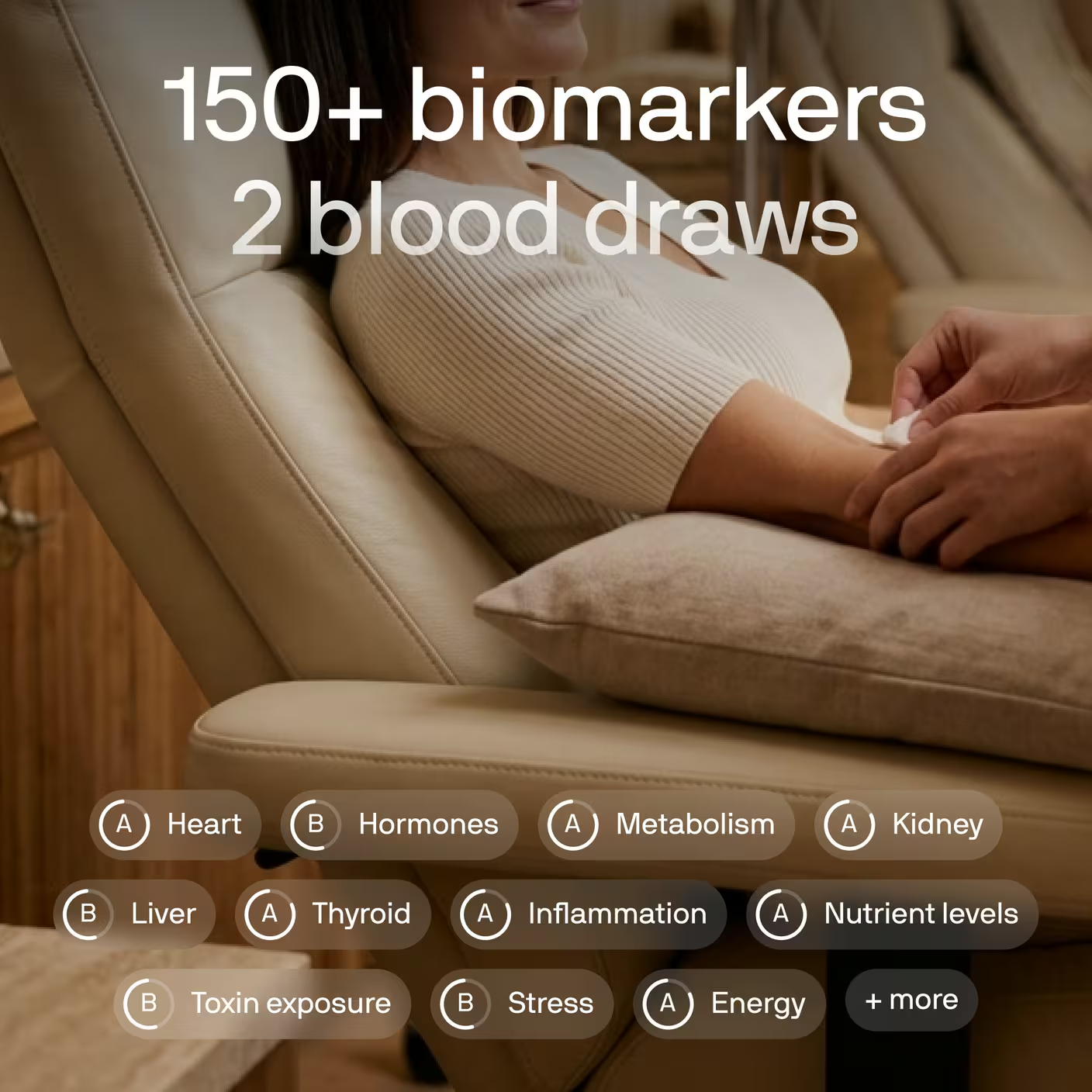
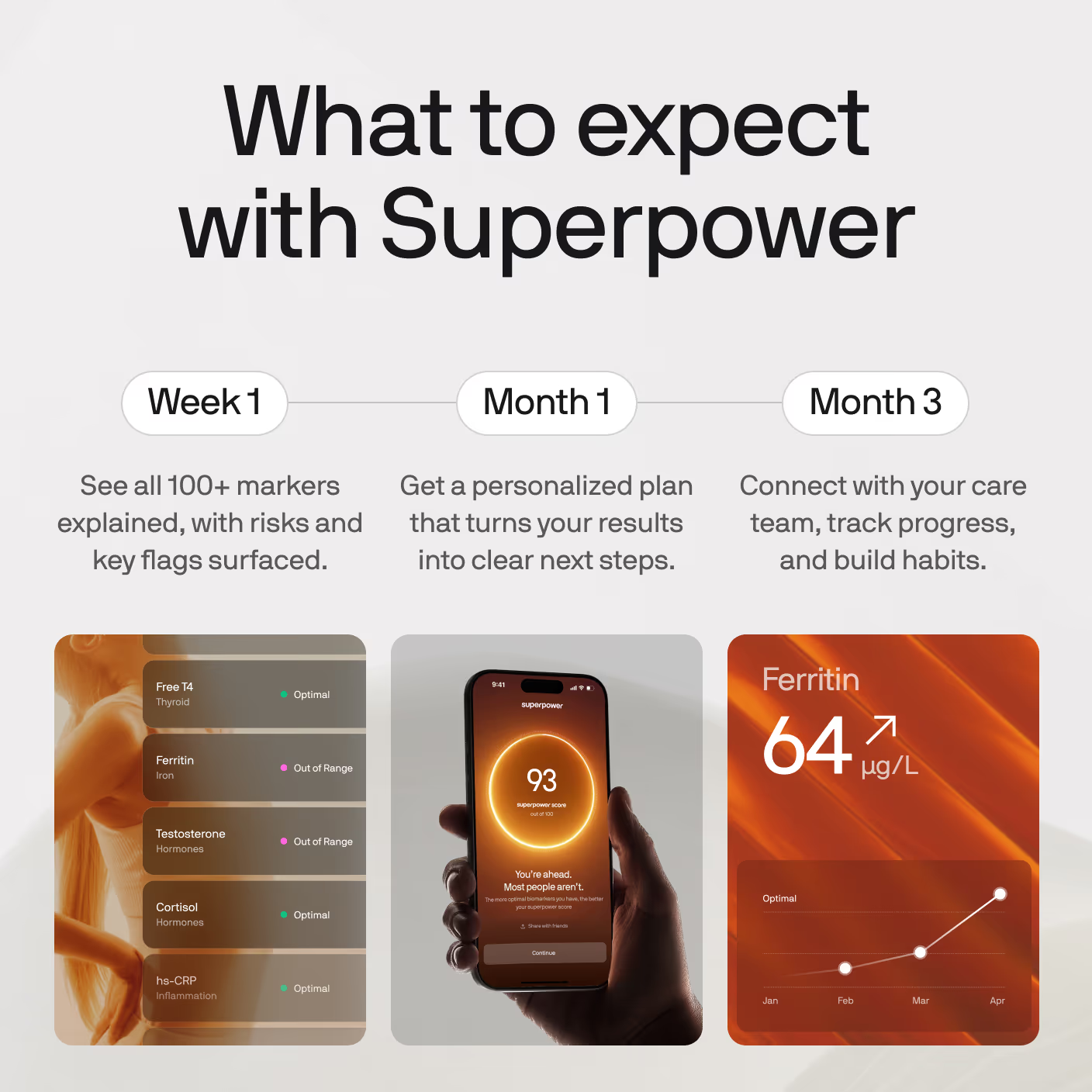
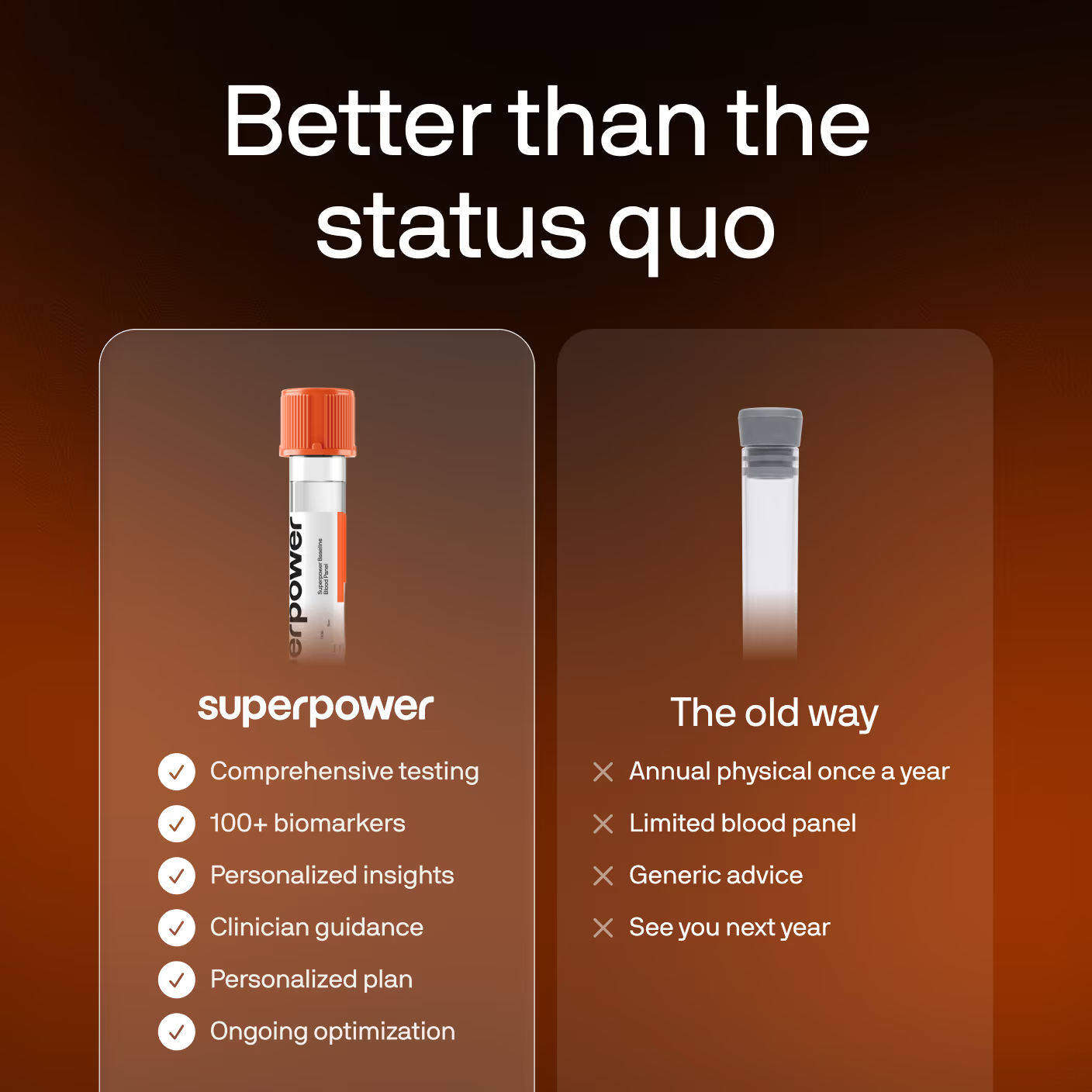
Superpower's comprehensive blood panel tests over 150 biomarkers, including cortisol, thyroid hormones, vitamin D, ferritin, and inflammatory markers that reveal whether sleep deprivation is leaving a lasting footprint on your health. Paired with personalized protocols, you can identify what's undermining your recovery and fix it at the source.
Start your Superpower membership and give your body the data it needs to recover smarter.
Frequently Asked Questions
References
- Williamson AM, Feyer AM (2000). Moderate sleep deprivation produces impairments in cognitive and motor performance equivalent to legally prescribed levels of alcohol intoxication. *Occupational and environmental medicine*, *57*(10), 649-55. https://doi.org/10.1136/oem.57.10.649
- Irwin M, Mascovich A, Gillin JC, Willoughby R, Pike J, Smith TL (1994). Partial sleep deprivation reduces natural killer cell activity in humans. *Psychosomatic medicine*, *56*(6), 493-8. https://doi.org/10.1097/00006842-199411000-00004
- Kitamura S, Katayose Y, Nakazaki K, Motomura Y, Oba K, Katsunuma R, Terasawa Y, Enomoto M, Moriguchi Y, Hida A, Mishima K (2016). Estimating individual optimal sleep duration and potential sleep debt. *Scientific reports*, *6*, 35812. https://doi.org/10.1038/srep35812
- Chai Y, Fang Z, Yang FN, Xu S, Deng Y, Raine A, Wang J, Yu M, Basner M, Goel N, Kim JJ, Wolk DA, Detre JA, Dinges DF, Rao H (2020). Two nights of recovery sleep restores hippocampal connectivity but not episodic memory after total sleep deprivation. *Scientific reports*, *10*(1), 8774. https://doi.org/10.1038/s41598-020-65086-x
- Dhand R, Sohal H (2006). Good sleep, bad sleep! The role of daytime naps in healthy adults. *Current opinion in pulmonary medicine*, *12*(6), 379-82. https://doi.org/10.1097/01.mcp.0000245703.92311.d0
- Walker WH, Walton JC, DeVries AC, Nelson RJ (2020). Circadian rhythm disruption and mental health. *Translational psychiatry*, *10*(1), 28. https://doi.org/10.1038/s41398-020-0694-0

















 Heart & Vascular Health
 Metabolic Health
 Energy
 Liver Health
 Kidney
 Sex Hormones
 Thyroid Health
 Nutrients
 Immune System
 Inflammation