


See where your B12 sits with the Methylation Panel
Serum B12, homocysteine, and methylmalonic acid, read side by side
- CLIA-certified labs
- HIPAA compliant
- Personalized health protocol
What vitamin B12 does and how labs measure it
Vitamin B12 (cobalamin) is a vitamin the body needs for nerve function, red blood cell formation, and DNA synthesis. A serum B12 test measures the total circulating amount.
Cells can only use vitamin B12 once it is released from food protein, absorbed with intrinsic factor (a stomach protein), and carried by transport proteins.
Labs report serum B12 in pg/mL or pmol/L, so 200 pg/mL and 148 pmol/L describe the same level. Either figure is read against a range, and a normal range and a B12 optimal range differ.
Normal vs optimal vitamin B12 ranges
Normal vitamin B12 levels run about 299 to 1,054 pg/mL (219 to 773 pmol/L) on one lab's reference interval. The interval is population-derived, describing where most people fall. Optimal is narrower. One large study of middle-aged and older adults tracked methylmalonic acid (MMA), a marker of how cells use B12. MMA began rising once plasma B12 fell below 400 pmol/L (about 542 pg/mL).
The low cutoff varies by lab, most often 200 or 250 pg/mL, because definitive cutoffs are not possible.
| Tier | Serum B12 (pg/mL) | Serum B12 (pmol/L) | What the tier signals |
|---|---|---|---|
| Deficient | Below 200 | Below 148 | The cutoff used for deficiency in US national survey data |
| Insufficient | 200 to 299 | 148 to 220 | Low enough to count as insufficient in the same survey data |
| Laboratory reference interval | 299 to 1,054 | 219 to 773 | A single lab's normal range; no flag, wherever in the range a result sits |
| Optimal | 542 and above | 400 and above | The level above which MMA stopped rising in a large population study |
| Above the reference interval | Above 1,054 | Above 773 | Higher than that lab's normal range, with varied causes |
A result inside the laboratory reference interval can still sit below the level where MMA starts rising, leaving open how much B12 reaches cells.
Why a normal B12 result can still run low
A normal serum B12 result can still run low, because the test counts all circulating B12. Only about one-quarter of circulating vitamin B12 is active B12, the form available to cells.
Even inside the normal range, lower B12 in healthy older adults was associated with slower nerve signaling and processing speed. Lower active B12 also went with more white matter changes on MRI.
Low B12 levels can show up as fatigue or as numbness and tingling in the hands and feet, nerve symptoms that can occur without anemia. A serum number alone does not always settle the question.
The tests that clarify a borderline B12 result
A borderline serum B12 result gets clearer when paired with a metabolic marker that builds up as cells run short of B12.
In US national survey data, about a third of adults had serum B12 in an intermediate band, neither normal nor clearly deficient. Serum B12 remains the first-line test, with second-line tests clarifying uncertain results.
| Test | What it measures | What it adds to a serum B12 result |
|---|---|---|
| Methylmalonic acid (MMA) | A byproduct that builds up when B12 is lacking | The most sensitive marker of B12 status, used to confirm a result between 150 and 399 pg/mL; read in light of age and kidney function |
| Homocysteine | An amino acid that builds up when B12 is lacking | Helpful, but less specific than MMA |
| Holotranscobalamin (active B12) | The B12 fraction cells can take up | Tracks raised MMA better than total B12 in comparison studies, though a gray area can remain |
| Mean cell volume (MCV), on a complete blood count | Average red blood cell size | Larger red cells are the hallmark of the anemia B12 deficiency can cause |
The Methylation Panel measures vitamin B12 alongside both metabolic markers.
These tests clarify a low or borderline result, while a high reading points to different causes.
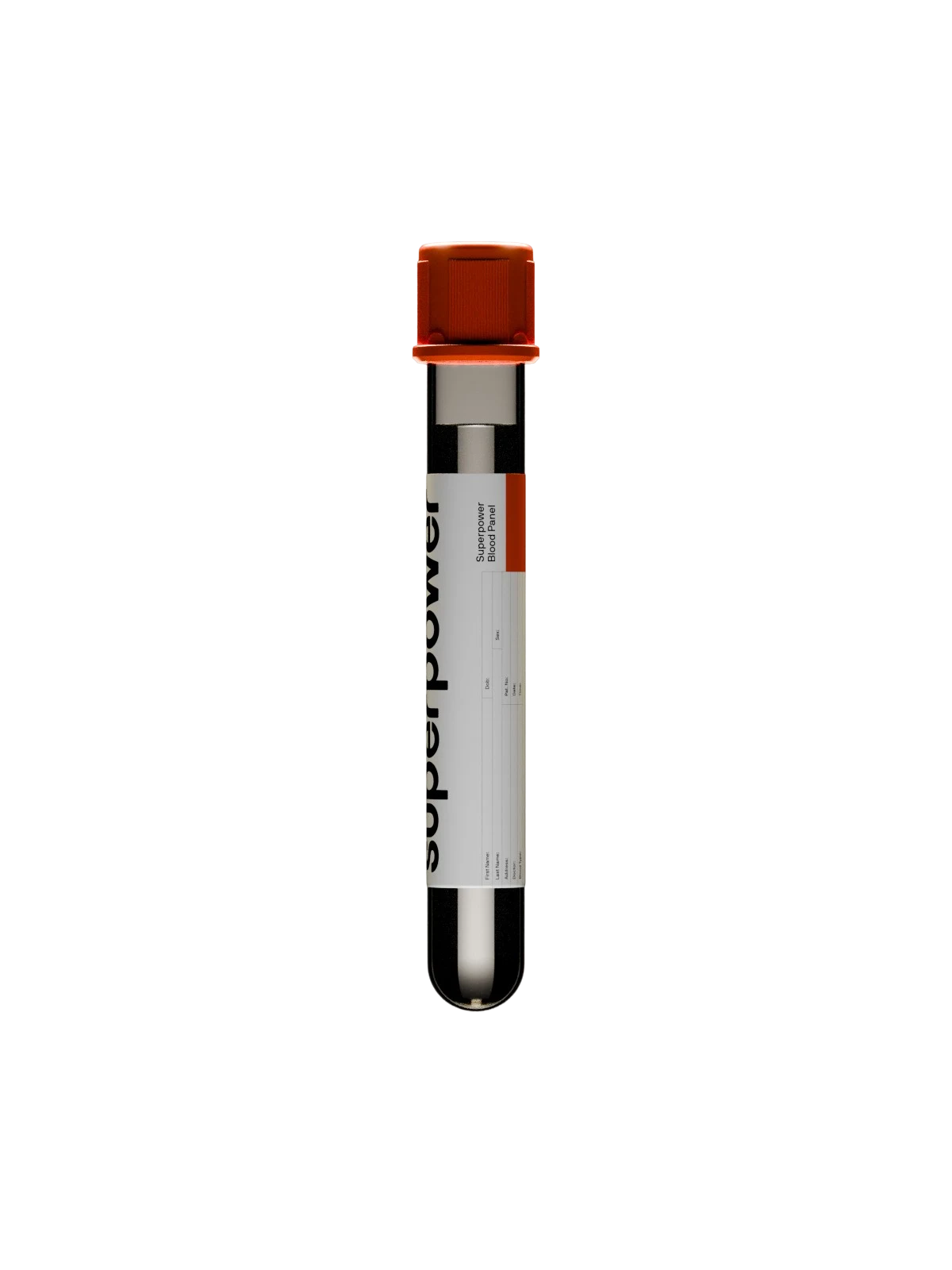
Check your B12 with the Methylation Panel
Vitamin B12, methylmalonic acid, and homocysteine, measured together.
Check your B12 with the Methylation Panel
Vitamin B12, methylmalonic acid, and homocysteine, measured together.
What a high vitamin B12 level means
A vitamin B12 level above the lab's reference interval is most often of no clinical importance, though sometimes linked to an underlying cancer.
High-dose supplements and injections raise total B12, limiting the test's value for people taking them. Raised serum B12 is also associated with liver disease, such as cirrhosis or hepatitis, and myeloproliferative disorders, in which the bone marrow overproduces blood cells.
A high reading does not on its own mean optimal, because impaired uptake can leave cells short at any serum level. Low levels, meanwhile, are more common in some groups.
Who tends to fall below the optimal B12 range
Vitamin B12 runs low most often when absorption or intake drops. About 12.5% of US adults fall below 300 pg/mL.
- Older adults: atrophic gastritis cuts the stomach acid that frees B12 from food, and affected 15% of adults 60 and older in one study.
- Vegans and vegetarians: deficiency is reported more often in vegans than in other vegetarians.
- Acid-reducing drugs and metformin: two or more years of acid suppressants and each year of metformin were linked to deficiency.
- Gut conditions and surgery: pernicious anemia, celiac disease, and weight-loss or stomach surgery reduce absorption.
- Pregnancy: serum B12 tends to fall as pregnancy progresses.
In these groups, a result's place in the reference interval says more than the lab's flag.
Understand your vitamin B12 levels with Superpower
A B12 result reads clearest against its optimal range when a comprehensive blood test also shows the markers of how your cells use it. A Superpower membership includes 100+ biomarkers in a single draw, among them mean cell volume (MCV), the measure of red blood cell size. Vitamin B12 itself is measured on the Methylation Panel add-on. As your home for health, Superpower measures your markers, then supports improving them with a personalized protocol, plus AI and care team support.
Discover what your own health data says. Start your Superpower membership.
References
- Office of Dietary Supplements. Vitamin B12: fact sheet for health professionals. National Institutes of Health. Updated July 2, 2025. Accessed October 17, 2026.
- Sobczyńska-Malefora A, Delvin E, McCaddon A, Ahmadi KR, Harrington DJ. Vitamin B12 status in health and disease: a critical review. Diagnosis of deficiency and insufficiency – clinical and laboratory pitfalls. *Crit Rev Clin Lab Sci*. 2021;58(6):399-429. https://doi.org/10.1080/10408363.2021.1885339
- MedlinePlus. Vitamin B12 level. National Library of Medicine. Reviewed January 10, 2026. Accessed October 17, 2026.
- Vogiatzoglou A, Oulhaj A, Smith AD, et al. Determinants of plasma methylmalonic acid in a large population: implications for assessment of vitamin B12 status. *Clin Chem*. 2009;55(12):2198-2206. https://doi.org/10.1373/clinchem.2009.128678
- Devalia V, Hamilton MS, Molloy AM; British Committee for Standards in Haematology. Guidelines for the diagnosis and treatment of cobalamin and folate disorders. *Br J Haematol*. 2014;166(4):496-513. https://doi.org/10.1111/bjh.12959
- Nexo E, Hoffmann-Lücke E. Holotranscobalamin, a marker of vitamin B-12 status: analytical aspects and clinical utility. *Am J Clin Nutr*. 2011;94(1):359S-365S. https://doi.org/10.3945/ajcn.111.013458
- Beaudry-Richard A, Abdelhak A, Saloner R, et al. Vitamin B12 levels association with functional and structural biomarkers of central nervous system injury in older adults. *Ann Neurol*. 2025;97(6):1190-1204. https://doi.org/10.1002/ana.27200
- Nexo E, Parkner T. Vitamin B12-related biomarkers. *Food Nutr Bull*. 2024;45(1 suppl):S28-S33. https://doi.org/10.1177/03795721241227114
- Bailey RL, Durazo-Arvizu RA, Carmel R, et al. Modeling a methylmalonic acid-derived change point for serum vitamin B-12 for adults in NHANES. *Am J Clin Nutr*. 2013;98(2):460-467. https://doi.org/10.3945/ajcn.113.061234
- Andrès E, Serraj K, Zhu J, Vermorken AJ. The pathophysiology of elevated vitamin B12 in clinical practice. *QJM*. 2013;106(6):505-515. https://doi.org/10.1093/qjmed/hct051
- Porter KM, Hoey L, Hughes CF, et al. Associations of atrophic gastritis and proton-pump inhibitor drug use with vitamin B-12 status, and the impact of fortified foods, in older adults. *Am J Clin Nutr*. 2021;114(4):1286-1294. https://doi.org/10.1093/ajcn/nqab193
- Pawlak R, Lester SE, Babatunde T. The prevalence of cobalamin deficiency among vegetarians assessed by serum vitamin B12: a review of literature. *Eur J Clin Nutr*. 2014;68(5):541-548. https://doi.org/10.1038/ejcn.2014.46
- Lam JR, Schneider JL, Zhao W, Corley DA. Proton pump inhibitor and histamine 2 receptor antagonist use and vitamin B12 deficiency. *JAMA*. 2013;310(22):2435-2442. https://doi.org/10.1001/jama.2013.280490
- Aroda VR, Edelstein SL, Goldberg RB, et al. Long-term metformin use and vitamin B12 deficiency in the Diabetes Prevention Program Outcomes Study. *J Clin Endocrinol Metab*. 2016;101(4):1754-1761. https://doi.org/10.1210/jc.2015-3754
- Sukumar N, Rafnsson SB, Kandala NB, Bhopal R, Yajnik CS, Saravanan P. Prevalence of vitamin B-12 insufficiency during pregnancy and its effect on offspring birth weight: a systematic review and meta-analysis. *Am J Clin Nutr*. 2016;103(5):1232-1251. https://doi.org/10.3945/ajcn.115.123083




























 Heart & Vascular Health
 Metabolic Health
 Energy
 Liver Health
 Kidney
 Sex Hormones
 Thyroid Health
 Nutrients
 Immune System
 Inflammation