


Test your B12 with the Methylation Panel
Vitamin B12, methylmalonic acid, and homocysteine, measured together in one test
- CLIA-certified labs
- HIPAA compliant
- Personalized health protocol
How B12 deficiency causes brain fog
Vitamin B12 deficiency can cause brain fog, meaning slowed thinking, poor focus, and memory trouble. The body needs vitamin B12 to form myelin and healthy red blood cells. Myelin is the sheath that insulates nerves, and red blood cells carry the oxygen the brain runs on.
Inside every cell, vitamin B12 also drives methylation and mitochondrial energy metabolism. When vitamin B12 runs short, two by-products of that chemistry, homocysteine and methylmalonic acid, start to build up.
Slower nerve signaling and weaker oxygen delivery shape what B12 brain fog feels like day to day.
What B12 brain fog feels like
B12 brain fog usually feels like slowed, effortful thinking that tends to develop gradually, often alongside low mood and tiredness. The symptoms of low vitamin B12 fall into three broad groups:
- Thinking: problems with memory, understanding, and judgment, and confusion in severe cases
- Mood: low mood or anxiety
- Body: tiredness and weakness; pins and needles or numbness in the hands and feet; unsteady balance; and pale skin or a sore, red tongue
These symptoms show up most often in people whose diet, digestion, or medicines limit how much vitamin B12 they take in.
The people most at risk of low B12
Low vitamin B12 is most likely in people who eat little or no animal food or absorb the vitamin poorly. Certain long-term medicines and older age raise the risk as well. Overall, vitamin B12 deficiency affects about 2% to 3% of US adults.
| Risk factor | Why it lowers B12 |
|---|---|
| Vegan or strict vegetarian diet | Vitamin B12 comes almost entirely from animal foods |
| Pernicious anemia (an autoimmune stomach condition) | Stops the stomach making intrinsic factor, a protein the gut needs to absorb B12, and is the most common cause of B12-related nerve problems |
| Celiac or Crohn's disease | Can limit how much B12 the gut absorbs from food |
| Stomach or weight-loss surgery | Can remove the stomach cells B12 absorption needs |
| Metformin for more than 4 months | Lowers B12 levels, with risk rising each year of use |
| Acid-reducing medicine (proton pump inhibitors or H2 blockers) for 2 years or more | Stomach acid is needed to free B12 from food |
| Age over 75 | Atrophic gastritis (a thinned stomach lining) becomes more common with age and cuts absorption |
For people in these groups, a blood test is the next step, though one vitamin B12 number does not always settle the question.
Brain fog with a normal B12 result
A normal serum vitamin B12 result does not always rule out deficiency, because no gold-standard test defines it. The standard test measures total vitamin B12 in the blood, which can differ from what reaches cells.
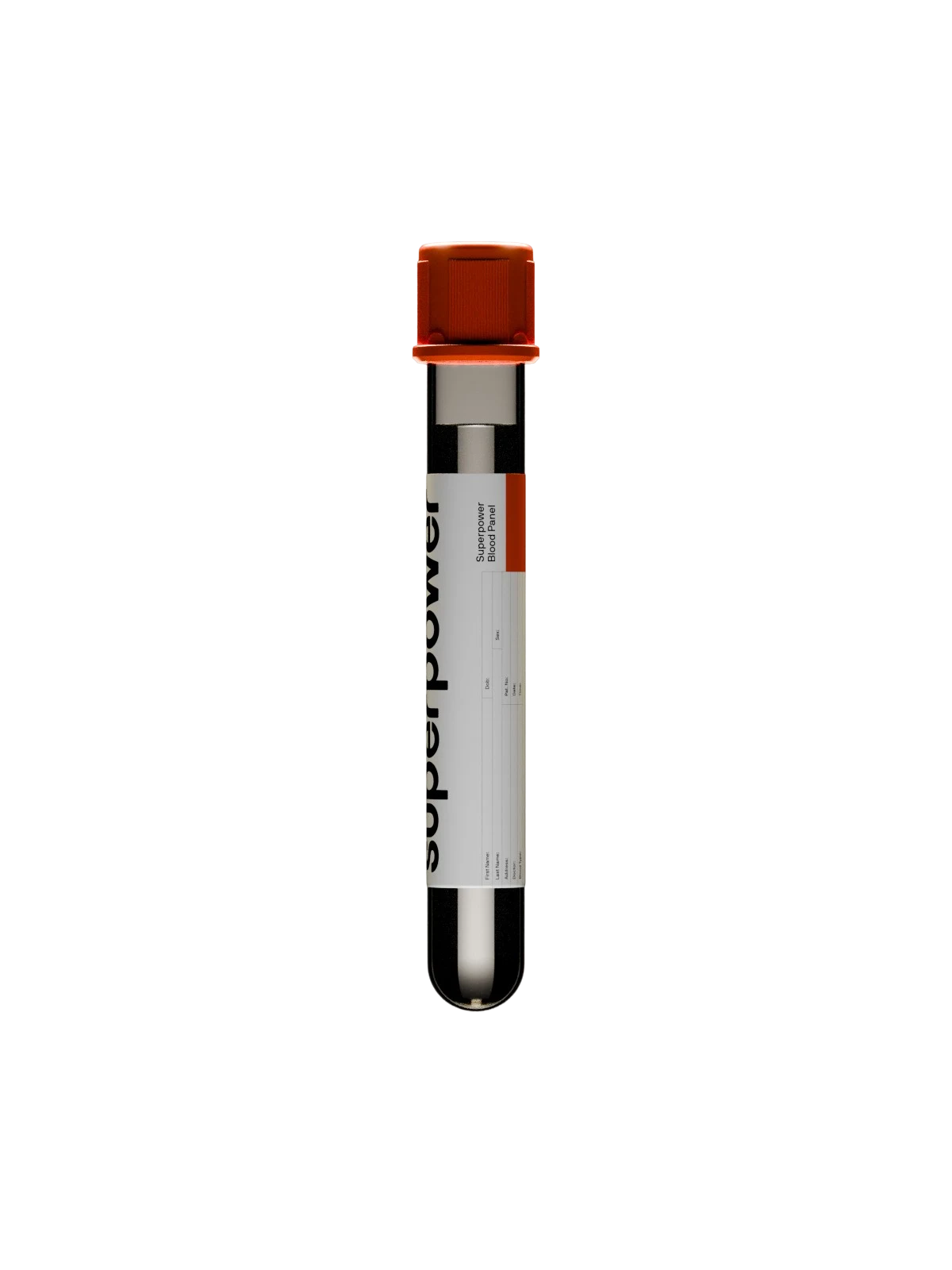
A borderline result of 180 to 350 pg/mL usually leads to a methylmalonic acid (MMA) test. MMA builds up when cells lack usable B12, making it the most sensitive marker of B12 status. Homocysteine and active B12 (holotranscobalamin) help too, though homocysteine is less specific than MMA. The Methylation Panel includes vitamin B12, MMA, and homocysteine.
Nerve symptoms can also appear without anemia (a low red blood cell count), as in 28% of 141 patients with B12-related nerve problems. High folic acid intake can correct B12-related anemia but not the nerve damage. Normal results can still leave brain fog unexplained, especially since other conditions look much the same.
Other conditions that mimic B12 brain fog
Several common conditions cause tiredness, low mood, or forgetfulness that can pass for B12 brain fog. Because B12 deficiency can look like many illnesses, blood tests help tell them apart.
- Underactive thyroid: tiredness, low mood, and forgetfulness as the body slows down
- Iron-deficiency anemia: fatigue, dizziness, and cold hands and feet
- Folate deficiency: memory and judgment problems like those of low B12, plus the same type of anemia when folate runs low
Once a blood test confirms low vitamin B12 as the cause, treatment can begin.
How brain fog improves with B12 treatment
Brain fog from a true vitamin B12 deficiency usually improves with treatment, though recovery is less complete after longer delays. Among patients tracked after treatment, every one improved, and about half recovered fully.
High-dose tablets work for most people and raise levels about as well as injections. Injections are usually needed for pernicious anemia, and they bring faster improvement when nerve symptoms are severe.
Worsening numbness, unsteady walking, or new confusion need prompt medical care, since untreated deficiency can cause permanent damage. Vitamin B12 supplements are unlikely to sharpen thinking when levels are already adequate, so testing comes first.
Get 100+ biomarkers tested in-lab or at home
One blood draw a year. A full picture of your health, explained in plain language.
Get 100+ biomarkers tested in-lab or at home
One blood draw a year. A full picture of your health, explained in plain language.
Understand your brain fog with Superpower
B12 brain fog and its look-alikes share symptoms, so a comprehensive blood test that reads several markers at once is the place to start telling them apart. A Superpower membership includes 100+ biomarkers in a single draw, among them hemoglobin, iron, and the thyroid marker TSH. Superpower is a home for your health, measuring these markers and helping you improve them. Your results come with a personalized protocol, plus AI and care team support.
Foggy thinking that drags on deserves a closer look. Start your Superpower membership and get your baseline in one draw.
References
- Patel H, McGuirk R. Vitamin B12 deficiency: common questions and answers. *Am Fam Physician*. 2025;112(3):294-300.
- Office of Dietary Supplements. Vitamin B12: fact sheet for health professionals. National Institutes of Health. Updated July 2, 2025. Accessed October 17, 2026.
- Green R, Allen LH, Bjørke-Monsen AL, et al. Vitamin B12 deficiency. *Nat Rev Dis Primers*. 2017;3:17040. https://doi.org/10.1038/nrdp.2017.40
- NHS. Symptoms: vitamin B12 or folate deficiency anaemia. Reviewed February 20, 2023. Accessed October 17, 2026.
- Healton EB, Savage DG, Brust JC, Garrett TJ, Lindenbaum J. Neurologic aspects of cobalamin deficiency. *Medicine (Baltimore)*. 1991;70(4):229-245. https://doi.org/10.1097/00005792-199107000-00001
- Langan RC, Goodbred AJ. Vitamin B12 deficiency: recognition and management. *Am Fam Physician*. 2017;96(6):384-389.
- Aroda VR, Edelstein SL, Goldberg RB, et al; Diabetes Prevention Program Research Group. Long-term metformin use and vitamin B12 deficiency in the Diabetes Prevention Program Outcomes Study. *J Clin Endocrinol Metab*. 2016;101(4):1754-1761. https://doi.org/10.1210/jc.2015-3754
- Lam JR, Schneider JL, Zhao W, Corley DA. Proton pump inhibitor and histamine 2 receptor antagonist use and vitamin B12 deficiency. *JAMA*. 2013;310(22):2435-2442. https://doi.org/10.1001/jama.2013.280490
- Devalia V, Hamilton MS, Molloy AM; British Committee for Standards in Haematology. Guidelines for the diagnosis and treatment of cobalamin and folate disorders. *Br J Haematol*. 2014;166(4):496-513. https://doi.org/10.1111/bjh.12959
- Sobczyńska-Malefora A, Delvin E, McCaddon A, Ahmadi KR, Harrington DJ. Vitamin B12 status in health and disease: a critical review. Diagnosis of deficiency and insufficiency - clinical and laboratory pitfalls. *Crit Rev Clin Lab Sci*. 2021;58(6):399-429. https://doi.org/10.1080/10408363.2021.1885339
- Lindenbaum J, Healton EB, Savage DG, et al. Neuropsychiatric disorders caused by cobalamin deficiency in the absence of anemia or macrocytosis. *N Engl J Med*. 1988;318(26):1720-1728. https://doi.org/10.1056/NEJM198806303182604
- Office of Dietary Supplements. Folate: fact sheet for health professionals. National Institutes of Health. Updated November 30, 2022. Accessed October 17, 2026.
- American Thyroid Association. Hypothyroidism. Accessed October 17, 2026.
- National Heart, Lung, and Blood Institute. Iron-deficiency anemia. National Institutes of Health. Updated March 24, 2022. Accessed October 17, 2026.
- Wang H, Li L, Qin LL, Song Y, Vidal-Alaball J, Liu TH. Oral vitamin B12 versus intramuscular vitamin B12 for vitamin B12 deficiency. *Cochrane Database Syst Rev*. 2018;3(3):CD004655. https://doi.org/10.1002/14651858.CD004655.pub3
- NHS. Treatment: vitamin B12 or folate deficiency anaemia. Reviewed February 20, 2023. Accessed October 17, 2026.
- Markun S, Gravestock I, Jäger L, Rosemann T, Pichierri G, Burgstaller JM. Effects of vitamin B12 supplementation on cognitive function, depressive symptoms, and fatigue: a systematic review, meta-analysis, and meta-regression. *Nutrients*. 2021;13(3):923. https://doi.org/10.3390/nu13030923




























 Heart & Vascular Health
 Metabolic Health
 Energy
 Liver Health
 Kidney
 Sex Hormones
 Thyroid Health
 Nutrients
 Immune System
 Inflammation