

Find out where your vitamin D and iron stand
Vitamin D, ferritin, and iron, measured in one blood draw
- CLIA-certified labs
- HIPAA compliant
- Personalized health protocol
How at-home vitamin deficiency test kits work
An at-home vitamin deficiency test kit is a home use test that lets you collect a small blood sample, usually by finger prick, and mail it to a lab. The lab reports each vitamin and mineral level against a reference range, with results online. A mail-in vitamin test runs in four steps:
- Order the kit
- Collect your sample with the kit's lancet and card or tube
- Mail the sample back to the lab
- Read your results in an online report
What a home vitamin test reveals depends on which nutrients the lab measures.
Vitamins and minerals at-home test kits measure
At-home vitamin test kits measure a handful of common nutrients, each through one blood marker. Kits like these are micronutrient tests, for vitamins and minerals your body needs in small amounts.
About 18% of people in the US are at risk of inadequate vitamin D. Among US adults, about 12.5% have insufficient vitamin B12.
| Nutrient | Marker the lab measures | What the result shows |
|---|---|---|
| Vitamin D | 25-hydroxyvitamin D (25(OH)D) | The main indicator of vitamin D status |
| Vitamin B12 | Serum B12 | The usual first check of B12 status |
| Folate | Serum folate | Recent intake more than long-term status |
| Iron | Ferritin | Iron stores, which fall before anemia develops |
| Magnesium | Serum magnesium | Under 1% of body magnesium, a weak guide to stores |
| Vitamin E | Blood vitamin E | Status, though deficiency is rare outside fat-absorption disorders |
How far you can trust any of these readings depends on the kind of sample the kit collects.
Finger-prick, blood-spot, and hair samples compared for accuracy
Lab-processed finger-prick blood is the most accurate home sample, and hair the least. Finger-prick blood met accuracy limits against a venous (arm-vein) draw for 30 of 33 routine markers in one comparison. Dried blood spot vitamin D, from drops of blood dried on a card, tracks blood levels with wider individual error.
Even after correction, about 1 in 10 blood-spot vitamin D results fell more than 20% from plasma. Blood spots are better suited to population screening than to individual checks.
One hair sample sent to six commercial labs returned results more than tenfold apart for 12 minerals. Hair vitamin D did not track blood levels either, and hair analysis is not a validated way to check vitamins. For anyone with a reason to check, blood is the sample to trust.
Who should consider an at-home vitamin deficiency test
An at-home vitamin deficiency test is most useful for people with a known risk factor for low levels. Experts advise against routine vitamin D testing in healthy people. Those most likely to run low include:
- Vegans and vegetarians: higher risk of low vitamin B12
- Older adults: some absorb less vitamin B12 from food
- Limited sun or darker skin: both raise the risk of low vitamin D
- Crohn's disease, celiac disease, or ulcerative colitis: each can limit vitamin D absorption
- Long-term metformin or acid reducers: both can lower vitamin B12
- Heavy periods, pregnancy, or blood donation: all raise iron needs, and 25% to 35% of regular donors become iron deficient
Your risk factor points to the nutrient worth checking, and so to the right kit.
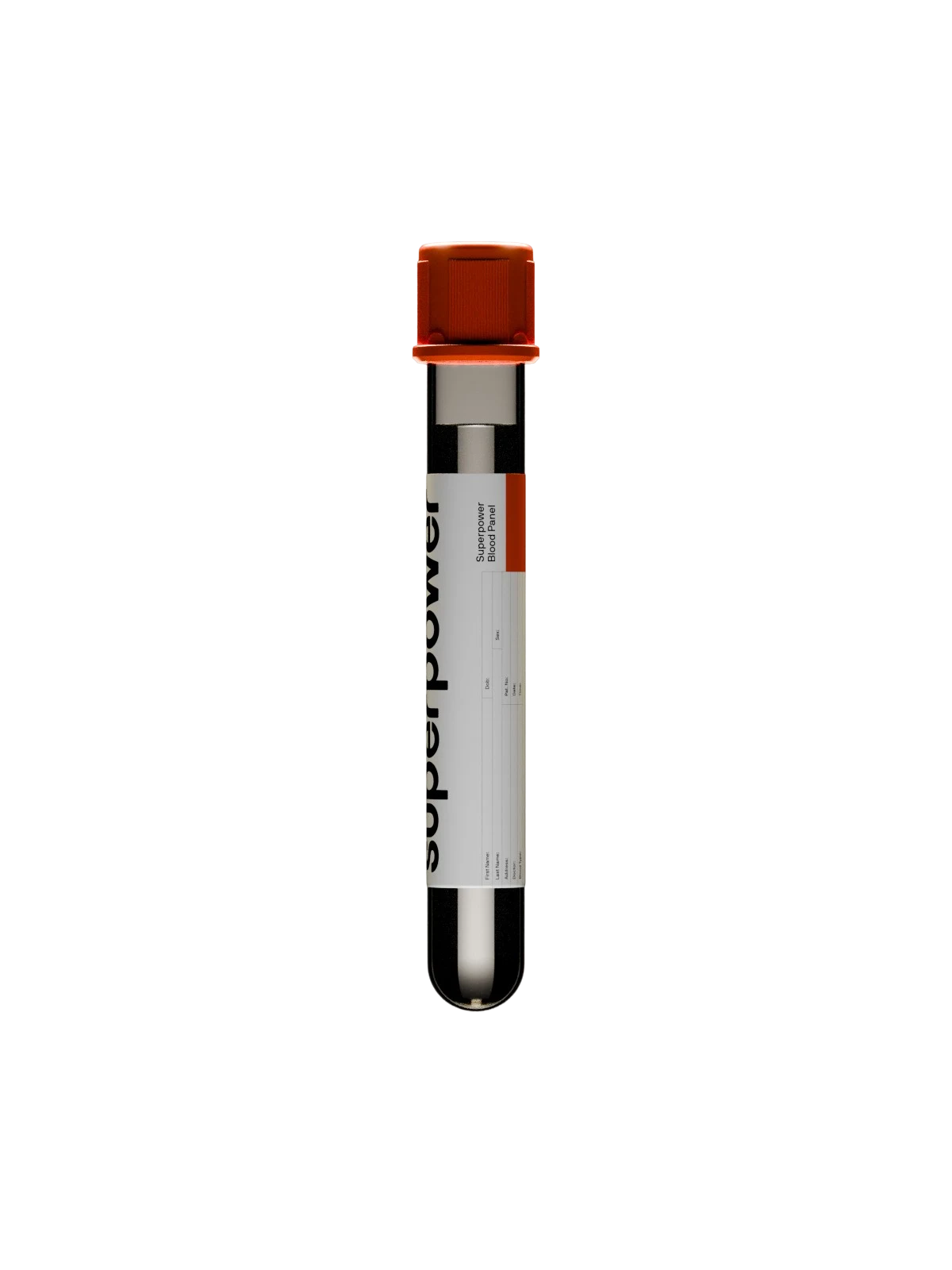
Get 100+ biomarkers tested in-lab or at home
One blood draw a year. A full picture of your health, explained in plain language.
Get 100+ biomarkers tested in-lab or at home
One blood draw a year. A full picture of your health, explained in plain language.
How to choose an at-home vitamin test kit
Choose an at-home vitamin test kit by its lab certification, its nutrient list, and whether you can go over the results with your own clinician.
A CLIA-certified lab meets federal standards under the Clinical Laboratory Improvement Amendments, meant to keep results accurate, reliable, and timely. Certification is publicly searchable.
Home tests are best evaluated alongside your medical history, an exam, and other testing. Reviewing a result with your own clinician gives you more than a bare number.
Follow the kit's mailing instructions, since samples left 24 hours at room temperature shifted ferritin and vitamin D beyond accepted limits. Even a well-handled sample can come back low.
What to do after a low vitamin result
A low home vitamin test result needs a clinician to confirm it and find the cause before treatment. Home kits should not replace visits to your doctor. Next steps usually include:
- Confirm borderline results: a vitamin B12 result of 150 to 399 pg/mL (picograms per milliliter) is often rechecked with a methylmalonic acid (MMA) test
- Look for the cause: behind low vitamin D, a clinician reviews diet, sun, absorption, and medicines
- Skip high-dose self-treatment: vitamin D toxicity almost always comes from supplements, and high folic acid intake may mask a vitamin B12 deficiency
Tracking vitamin levels over time makes any single result easier to act on.
Understand your vitamin levels with Superpower
An at-home vitamin deficiency test kit checks your vitamin levels, and a comprehensive blood test reads them beside the rest of your health. A Superpower membership includes 100+ biomarkers in a single draw. Vitamin D, ferritin, and iron are among them, markers an at-home vitamin deficiency test kit also checks. Superpower is also a home for your health, helping you improve what it measures.
Discover what your own health data says. Start your Superpower membership.
References
- US Food and Drug Administration. Home use tests. Updated June 21, 2022. Accessed October 16, 2026.
- National Institutes of Health Office of Dietary Supplements. Vitamin D: fact sheet for health professionals. Updated June 27, 2025. Accessed October 16, 2026.
- National Institutes of Health Office of Dietary Supplements. Vitamin B12: fact sheet for health professionals. Updated July 2, 2025. Accessed October 16, 2026.
- National Institutes of Health Office of Dietary Supplements. Folate: fact sheet for health professionals. Updated November 30, 2022. Accessed October 16, 2026.
- National Institutes of Health Office of Dietary Supplements. Iron: fact sheet for health professionals. Updated September 4, 2025. Accessed October 16, 2026.
- National Institutes of Health Office of Dietary Supplements. Magnesium: fact sheet for health professionals. Updated January 6, 2026. Accessed October 16, 2026.
- National Institutes of Health Office of Dietary Supplements. Vitamin E: fact sheet for health professionals. Updated March 26, 2021. Accessed October 16, 2026.
- Doeleman MJH, Koster AF, Esseveld A, et al. Comparison of capillary finger stick and venous blood sampling for 34 routine chemistry analytes: potential for in hospital and remote blood sampling. *Clin Chem Lab Med*. 2025;63(4):747-752. https://doi.org/10.1515/cclm-2024-0812
- Heughebaert L, Ghesquière R, Stove CP. Clinical validation of a DBS-based LC-MS/MS method for 25-hydroxyvitamin D: from lab sampling to home sampling. *Clin Chem Lab Med*. 2026;64(4):866-879. https://doi.org/10.1515/cclm-2025-1002
- Man PW, Heijboer AC, van der Meer IM, et al. Agreement between measurement of 25-hydroxyvitamin D3 in dried blood spot samples and serum in a Chinese population in the Netherlands. *J Steroid Biochem Mol Biol*. 2019;195:105472. https://doi.org/10.1016/j.jsbmb.2019.105472
- Seidel S, Kreutzer R, Smith D, McNeel S, Gilliss D. Assessment of commercial laboratories performing hair mineral analysis. *JAMA*. 2001;285(1):67-72. https://doi.org/10.1001/jama.285.1.67
- Gáll Z, Csukor B, Urkon M, Farczádi L, Kolcsár M. Vitamin D status assessment: lack of correlation between serum and hair 25-hydroxycholecalciferol levels in healthy young adults. *Diagnostics (Basel)*. 2022;12(5):1229. https://doi.org/10.3390/diagnostics12051229
- Hambidge KM. Hair analyses: worthless for vitamins, limited for minerals. *Am J Clin Nutr*. 1982;36(5):943-949. https://doi.org/10.1093/ajcn/36.5.943
- Demay MB, Pittas AG, Bikle DD, et al. Vitamin D for the prevention of disease: an Endocrine Society clinical practice guideline. *J Clin Endocrinol Metab*. 2024;109(8):1907-1947. https://doi.org/10.1210/clinem/dgae290
- MedlinePlus. Vitamin D test. National Library of Medicine. Updated December 4, 2024. Accessed October 16, 2026.
- Centers for Medicare & Medicaid Services. Clinical Laboratory Improvement Amendments (CLIA). Updated October 7, 2026. Accessed October 16, 2026.
- Maroto-García J, Deza S, Fuentes-Bullejos P, et al. Analysis of common biomarkers in capillary blood in routine clinical laboratory: preanalytical and analytical comparison with venous blood. *Diagnosis (Berl)*. 2023;10(3):281-297. https://doi.org/10.1515/dx-2022-0126



























 Heart & Vascular Health
 Metabolic Health
 Energy
 Liver Health
 Kidney
 Sex Hormones
 Thyroid Health
 Nutrients
 Immune System
 Inflammation