

See your iron levels before you supplement
Ferritin, hemoglobin, and iron markers in one baseline blood panel
- CLIA-certified labs
- HIPAA compliant
- Personalized protocols
What is the best iron supplement?
The best iron supplement is not a product, it is a match: a well absorbed ferrous form you can actually tolerate, taken at an adequate elemental-iron dose, and confirmed by a blood test. Ferrous forms such as ferrous sulfate and ferrous bisglycinate are absorbed better than ferric forms, which is why nearly every trial uses them.
Dose is where most people go wrong. The reference intakes for adults sit at 8 mg a day for men and 18 mg for women aged 19 to 50, while repletion studies run far higher, using single doses that maximize fractional absorption in the 40 to 80 mg elemental-iron range. Those are the numbers research reports, not a prescription for any one person.
Iron is one of the few supplements where the right answer depends on a measured number. Too little and you run down your stores, too much and you accumulate what your body has no easy way to shed, and ferritin tells you which situation you are in.
How the iron forms compare on absorption and tolerability
Every oral iron supplement is a salt or chelate of iron, and the forms differ in two ways that matter: how much actual iron each tablet carries, and how much gastrointestinal irritation the compound tends to cause. The iron atom your gut ultimately absorbs is the same in all of them.
That is also why the marketing arms race over "superior absorption" has a hard ceiling. Absorption is governed by the hormone hepcidin, so no formulation, however clever, can push unlimited iron across the gut wall.
| Form | Elemental iron per 100 mg compound | Typical studied dose | Absorption and evidence | GI tolerability | Best-fit situation |
|---|---|---|---|---|---|
| Ferrous sulfate | About 20 mg | 60 to 120 mg elemental in absorption trials | The comparator standard in most randomized trials | Roughly double the odds of GI side effects versus placebo | Lowest cost, best evidence base, tolerable stomach |
| Ferrous fumarate | About 33 mg | About 60 to 70 mg elemental per tablet | Same ferrous iron, fewer tablets to reach a dose | Similar to sulfate | Reaching a higher dose with fewer pills |
| Ferrous gluconate | About 12 mg | About 60 to 70 mg elemental per tablet | Same ferrous iron, most tablets per dose | Similar to sulfate, often taken in smaller units | Gentler single units, higher tablet count |
| Ferrous bisglycinate (amino-acid chelate) | Varies by product; dose is listed as elemental iron | 18 mg tested against 60 mg of ferrous sulfate | 18 mg did not match 60 mg of ferrous sulfate for raising ferritin | Fewer GI adverse events in pregnancy trials | Sensitive stomachs, paired with an adequate dose |
| Heme iron polypeptide, carbonyl iron, polysaccharide-iron complex | Varies; always read the elemental figure | Product-specific | Newer formulations still face hepcidin-driven absorption limits | May cause fewer GI effects than conventional salts | Repeated intolerance to ferrous salts |
Ferrous sulfate
Ferrous sulfate is the workhorse: among the most studied and least expensive oral iron options, supplying about 20% elemental iron by weight, which is exactly why it remains the comparator in most trials.
It also earns its reputation for stomach trouble. Across 43 randomized trials and 6,831 adults, ferrous sulfate roughly doubled the odds of gastrointestinal side effects versus placebo (OR 2.32, 95% CI 1.74 to 3.08), with no clear dose-response. Shaving the dose is not a reliable fix.
Ferrous bisglycinate (chelated iron)
Chelated iron has the strongest tolerability evidence of the common forms, and it comes with a footnote. Across 17 randomized trials, ferrous bisglycinate produced higher hemoglobin in pregnant women (SMD 0.54 g/dL, 95% CI 0.15 to 0.94) and fewer gastrointestinal adverse events (IRR 0.36, 95% CI 0.17 to 0.76), with no significant difference in children and limited evidence in other adults.
The footnote is the dose. In a randomized noninferiority trial, 18 mg of ferrous bisglycinate failed to match 60 mg of ferrous sulfate for raising ferritin. Better tolerated does not mean a smaller dose does the same job.
Ferrous gluconate and ferrous fumarate
These two salts differ in one meaningful way: density. Ferrous fumarate carries about 33% elemental iron and ferrous gluconate about 12%, so an identical milligram figure on two labels can mean nearly a threefold difference in the iron actually delivered.
In practice, the choice comes down to how many gluconate tablets it takes to reach a repletion dose, since these ferrous salts differ mainly in elemental iron content and are all recommended as the first-line oral option.
Heme iron polypeptide, carbonyl, and slow-release forms
This is the tolerability-marketed tier. Heme iron polypeptides, carbonyl iron, amino-acid chelates, and polysaccharide-iron complexes are reported to cause fewer gastrointestinal side effects than conventional ferrous salts.
The evidence behind them is thinner than the packaging suggests. Newer oral formulations including ferric maltol and sucrosomial iron have been compared with conventional salts on bioavailability and tolerability without escaping hepcidin's ceiling, and slow-release designs can carry iron past the duodenum, where absorption is highest.
Elemental iron: the number that actually matters on the label
Elemental iron is the amount of actual iron in a tablet, and it is always smaller than the compound weight printed on the front of the bottle. A bottle can honestly say "325 mg" and deliver a fraction of that.
Here is the conversion that clears up most label confusion. Ferrous fumarate is about 33% elemental iron, ferrous sulfate about 20%, and ferrous gluconate about 12%, so a 325 mg ferrous sulfate tablet supplies the roughly 65 mg of elemental iron common in iron-only supplements.
Because every dosing recommendation and trial result is expressed in elemental iron, comparing two products on compound weight is how people quietly under-dose a chelate or over-dose a fumarate. The trial where a low chelate dose came up short against a higher sulfate dose is the cleanest illustration of what that mistake costs.
How to pick the right form for your situation
Choosing iron is a criteria problem, not a product problem. Three criteria decide it: what your stomach tolerates, what elemental dose the form can realistically deliver, and whether anything in your life raises your requirement, such as menstrual or gastrointestinal blood loss, pregnancy, malabsorption, or a low-bioavailability diet.
Most people land in one of three common situations.
If you have a sensitive stomach
Two levers have evidence behind them: the schedule and the form. In a double-blind randomized trial of 150 women, alternate-day dosing produced the same median ferritin as daily dosing (44.8 vs 43.8 µg/L) with fewer gastrointestinal side effects.
The form lever points to chelated iron, which showed fewer gastrointestinal adverse events in pregnancy trials, provided it is paired with an adequate elemental dose rather than treated as a lower-dose substitute.
If you are pregnant, vegan, or menstruating heavily
Pregnancy raises the requirement to an RDA of 27 mg a day, and routine prenatal iron supplementation reduces maternal iron deficiency and iron-deficiency anemia. Even so, current evidence is insufficient to weigh the benefits and harms of routine screening or supplementation in asymptomatic pregnancy, so this one belongs in a conversation with your clinician.
Plant-based eating shifts the math a different way. Iron requirements are about 1.8 times higher on a vegetarian diet because non-heme iron is less bioavailable, and adult vegetarians carry significantly lower serum ferritin than non-vegetarians, most pronounced in men.
Heavy menstrual bleeding remains a leading driver of iron deficiency, which particularly affects premenopausal women, since iron lost with blood is iron the diet has to replace.
If ferrous sulfate has already failed you
Halving the tablet rarely helps. Ferrous sulfate side effects showed no significant dose-response relationship, so changing the schedule or the form is the move the evidence supports.
There is also a point where oral iron stops being the right tool. When it is poorly tolerated or absorption is impaired, intravenous iron is more effective, while oral iron remains appropriate for mild to moderate deficiency. That call belongs to a clinician, not a shopping cart.
How much iron to take and how often
In elemental iron, the reference intakes for adults are 8 mg a day for men, 18 mg for women aged 19 to 50, and 27 mg in pregnancy, while repletion-level supplementation typically starts with a salt containing about 60 to 70 mg of elemental iron per tablet, and single doses of 40 to 80 mg maximize fractional absorption.
More is not proportionally more. In iron-depleted women, doses of 60 mg or more raised serum hepcidin and cut fractional absorption by 35 to 45% at 24 hours, and a sixfold dose increase from 40 to 240 mg produced only a threefold increase in iron actually absorbed, 6.7 mg to 18.1 mg.
Spacing doses out recovers some of that loss. Cumulative fractional absorption was higher with alternate-day 60 mg dosing than with consecutive-day dosing, 21.8% versus 16.3%, and in anemic women fractional absorption on alternate days ran 40 to 50% higher than on the second of two consecutive days. The honest exception is speed: when correction cannot wait, 60 mg twice daily reached a 2 g/dL hemoglobin target in more patients at 3 weeks than 120 mg on alternate days, 32.3% versus 6.5%. Tolerability versus speed is a tradeoff to settle with a clinician.
When and how to take iron for the best absorption
Take iron as a single morning dose rather than splitting it across the day. Twice-daily split dosing raised hepcidin without improving total absorption over one morning dose.
The full sequence looks like this:
- Confirm deficiency with labs before starting, because whether a ferritin result counts as "low" depends on the cutoff your lab applies.
- Choose the form and the elemental dose together, keeping in mind that a lower dose of a better-absorbed chelate does not automatically match a higher sulfate dose.
- Take it as one morning dose, daily or every other day, since alternate-day dosing reached the same ferritin with fewer side effects.
- Separate the dose from coffee, tea, calcium supplements, and antacids by a couple of hours, because polyphenol-rich drinks sharply reduce non-heme iron absorption.
- Retest at 8 to 12 weeks, using the day-14 hemoglobin rise as the early signal of response.
Drinks deserve their own paragraph, because the effect size surprises people. Beverages supplying 20 to 50 mg of polyphenols cut non-heme iron absorption from a meal by 50 to 70%, with black tea inhibiting by 79 to 94%, and stable-isotope work confirms tea reduces iron bioavailability in both non-anemic women and women with iron-deficiency anemia.
Calcium is the milder version of the same story. High calcium intake reduces short-term non-heme iron absorption, but the effect is small, inconsistent, and did not translate into lower hemoglobin. Space a calcium supplement from your iron dose; do not give up dairy over it.
One more piece of near-universal advice deserves a correction. Adding 200 mg of vitamin C to oral iron was equivalent to oral iron alone for hemoglobin change at 2 weeks in 440 adults with iron-deficiency anemia, with no meaningful difference in ferritin. Vitamin C helps in single-meal absorption studies, but it did not change clinical outcomes in anemia already being managed with oral iron.
How long until iron levels improve
The first checkpoint arrives sooner than most people expect. A hemoglobin rise of at least 1.0 g/dL by day 14 predicted a satisfactory response at day 42 to 56 with 90.1% sensitivity and 79.3% specificity, and 72.8% of patients on oral iron were responders across five pooled randomized trials.
A realistic timeline runs in three intervals:
- 2 weeks: the hemoglobin checkpoint, where a rise of at least 1.0 g/dL signals the response is on track.
- 3 to 6 weeks: the hemoglobin trajectory, where an alternate-day arm at 6 weeks matched a twice-daily arm at 3 weeks for the same total iron delivered.
- 3 to 6 months: the ferritin-recovery horizon, where alternate-day dosing left fewer women iron-deficient at 6 months, 3.0% versus 11.4%.
Feeling better is not the finish line. Stores take longer to refill than hemoglobin takes to rise, so ferritin recovery, not symptom relief, is what tells you the job is done.
Test 100+ biomarkers
One blood draw. A full picture of your health, explained in plain language.
Test 100+ biomarkers
One blood draw. A full picture of your health, explained in plain language.
Common mistakes that stall iron repletion
Most stalled repletion traces back to how and when iron was taken, not to which bottle was bought. The recurring patterns are easy to spot once you know them:
- Splitting the dose across the day. A single morning dose absorbs as well as twice-daily dosing and raises hepcidin less.
- Escalating the dose instead of the schedule. A sixfold dose increase yields only a threefold increase in absorbed iron.
- Washing it down with coffee or tea. Polyphenol-rich beverages cut non-heme iron absorption by 50 to 70%.
- Stopping when symptoms lift. Iron stores refill more slowly than symptoms resolve.
- Supplementing without confirming deficiency. Recorded iron deficiency rose more than fourfold in incidence as the ferritin cutoff moved from 15 to 45 ng/mL, so "normal" is a moving target.
Side effects, upper limits, and who should not supplement
The ceiling for routine intake is a Tolerable Upper Intake Level of 45 mg a day for adults, at or above which supplemental iron may cause nausea and constipation. Clinician-supervised repletion doses can sit above that number, which is precisely why they are supervised.
What people actually experience falls into two tiers:
- Common gastrointestinal effects, including nausea, constipation, and abdominal discomfort, which is the roughly doubled odds seen with ferrous sulfate showing up in daily life.
- Corrosive gastrointestinal injury, which appears only at extremely high doses.
Iron is also one of the most dangerous supplements to have in a house with small children. At least 43 US children died from ingesting high-dose iron between 1983 and 2000, accidental iron ingestion caused roughly a third of reported US pediatric poisoning deaths from 1983 to 1991, and in 1997 the FDA began requiring single-dose packaging and strong warning labels on oral supplements containing more than 30 mg elemental iron per dose, a packaging requirement removed in 2003 while the warning label remains. Store it like a medication, not like a vitamin.
Two groups should not start iron on their own:
- Anyone with hereditary hemochromatosis or another iron-overload condition, where added iron accumulates rather than helps.
- Anyone with hemosiderosis or a history of hemolytic anemia, or with an unexplained deficiency, since an underlying cause should be sought in everyone presenting with iron deficiency.
Test before you supplement: the labs that define your dose
Iron is the rare supplement where one blood test decides whether to take it at all, and ferritin is the primary marker of iron stores.
| Test | What it measures | Direction that suggests deficiency | Why it matters |
|---|---|---|---|
| Ferritin | Stored iron | Low | The recommended primary measure of iron status |
| Serum iron | Iron circulating right now | Low | Fluctuates with meals and time of day, so it is read alongside other markers |
| Total iron-binding capacity | Capacity of transferrin to carry iron | High | Rises as stores fall |
| Transferrin saturation | Share of transferrin carrying iron | Low | Used with ferritin to sequence the workup |
| Hemoglobin | Oxygen-carrying capacity of blood | Low | Separates deficiency with anemia from deficiency without it |
| CRP or another inflammation marker | Active inflammation | Interpreted with ferritin | Ferritin tracks with acute-phase proteins, so inflammation can mask depleted stores |
Now the part almost nobody mentions: a "normal" ferritin depends entirely on which cutoff the lab applies. In a cohort of 255,351 primary care patients, the recorded incidence of iron deficiency rose from 10.9 to 29.9 to 48.3 per 1,000 patient-years as the ferritin cutoff moved from 15 to 30 to 45 ng/mL, with most of the difference in iron deficiency without anemia. Reference ranges describe where most people fall, not where you function best, which is how a meaningful result hides inside a "normal" report. Ferritin reference intervals are also reported separately for men and women among working-age adults without anemia.
Retesting at 8 to 12 weeks confirms whether the plan is working, with the day-14 hemoglobin change as the earliest signal.
When supplements are not enough
Oral iron handles most cases, but not all of them. Intravenous iron is more effective where absorption is impaired or repletion is urgent, while oral iron remains appropriate for mild to moderate deficiency.
The trigger is measurable rather than intuitive: a smaller-than-expected hemoglobin rise by day 14 identified the patients who should move to intravenous iron.
And unexplained iron deficiency always has a cause. Menstrual or gastrointestinal blood loss and malabsorption account for most of it, and finding the reason matters more than escalating the supplement. That is a conversation for your clinician.
Track your iron with a Superpower blood panel
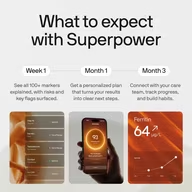
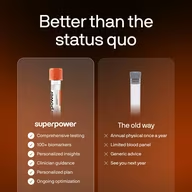
The best iron supplement is the one your labs actually call for, at a dose your results justify. Superpower makes it straightforward to see where your stores stand before you start and whether they are moving after you do, with ferritin, hemoglobin, iron, TIBC, and iron saturation measured together in the baseline blood panel.
Frequently Asked Questions
References
- National Institutes of Health Office of Dietary Supplements (2025). *Iron: fact sheet for health professionals*. National Institutes of Health. https://ods.od.nih.gov/factsheets/Iron-HealthProfessional/
- Moretti D, Goede JS, Zeder C, Jiskra M, Chatzinakou V, Tjalsma H, Melse-Boonstra A, Brittenham G, Swinkels DW, Zimmermann MB (2015). Oral iron supplements increase hepcidin and decrease iron absorption from daily or twice-daily doses in iron-depleted young women. *Blood*, *126*(17), 1981–1989. https://doi.org/10.1182/blood-2015-05-642223
- Pasricha SR, Tye-Din J, Muckenthaler MU, Swinkels DW (2021). Iron deficiency. *The Lancet*, *397*(10270), 233–248. https://doi.org/10.1016/S0140-6736(20)32594-0
- Nguyen M, & Tadi P (2023). *Iron supplementation*. StatPearls Publishing. https://www.ncbi.nlm.nih.gov/books/NBK557376/
- Pantopoulos K (2024). Oral iron supplementation: new formulations, old questions. *Haematologica*, *109*(9), 2790–2801. https://doi.org/10.3324/haematol.2024.284967
- Tolkien Z, Stecher L, Mander AP, Pereira DI, Powell JJ (2015). Ferrous sulfate supplementation causes significant gastrointestinal side-effects in adults: a systematic review and meta-analysis. *PLoS ONE*, *10*(2), e0117383. https://doi.org/10.1371/journal.pone.0117383
- Fischer JAJ, Pei LX, Elango R, Hou K, Goldfarb DM, Karakochuk CD (2023). Is a lower dose of more bioavailable iron (18-mg ferrous bisglycinate) noninferior to 60-mg ferrous sulfate in increasing ferritin concentrations while reducing gut inflammation and enteropathogen detection in Cambodian women? A randomized controlled noninferiority trial. *The Journal of Nutrition*, *153*(8), 2453–2462. https://doi.org/10.1016/j.tjnut.2023.05.029
- Fischer JAJ, Cherian AM, Bone JN, Karakochuk CD (2023). The effects of oral ferrous bisglycinate supplementation on hemoglobin and ferritin concentrations in adults and children: a systematic review and meta-analysis of randomized controlled trials. *Nutrition Reviews*, *81*(8), 904–920. https://doi.org/10.1093/nutrit/nuac106
- von Siebenthal HK, Gessler S, Vallelian F, Steinwendner J, Kuenzi UM, Moretti D, Zimmermann MB, Stoffel NU (2023). Alternate day versus consecutive day oral iron supplementation in iron-depleted women: a randomized double-blind placebo-controlled study. *eClinicalMedicine*, *65*, 102286. https://doi.org/10.1016/j.eclinm.2023.102286
- Cantor AG, Holmes R, Bougatsos C, Atchison C, DeLoughery T, Chou R (2024). Screening and supplementation for iron deficiency and iron deficiency anemia during pregnancy: updated evidence report and systematic review for the US Preventive Services Task Force. *JAMA*, *332*(11), 914–928. https://doi.org/10.1001/jama.2024.13546
- US Preventive Services Task Force (2024). *Iron deficiency and iron deficiency anemia during pregnancy: screening and supplementation*. US Preventive Services Task Force. https://www.uspreventiveservicestaskforce.org/uspstf/recommendation/iron-deficiency-anemia-in-pregnant-women-screening-and-supplementation
- Haider LM, Schwingshackl L, Hoffmann G, Ekmekcioglu C (2018). The effect of vegetarian diets on iron status in adults: a systematic review and meta-analysis. *Critical Reviews in Food Science and Nutrition*, *58*(8), 1359–1374. https://doi.org/10.1080/10408398.2016.1259210
- Zhao C, He W (2026). Efficacy of oral vs. intravenous iron for the treatment of iron deficiency anemia in different conditions: a systematic review and meta-analysis. *Biomedical Reports*, *24*(1), 11. https://doi.org/10.3892/br.2025.2084
- Stoffel NU, Cercamondi CI, Brittenham G, Zeder C, Geurts-Moespot AJ, Swinkels DW, Moretti D, Zimmermann MB (2017). Iron absorption from oral iron supplements given on consecutive versus alternate days and as single morning doses versus twice-daily split dosing in iron-depleted women: two open-label, randomised controlled trials. *The Lancet Haematology*, *4*(11), e524–e533. https://doi.org/10.1016/S2352-3026(17)30182-5
- Stoffel NU, Zeder C, Brittenham GM, Moretti D, Zimmermann MB (2020). Iron absorption from supplements is greater with alternate day than with consecutive day dosing in iron-deficient anemic women. *Haematologica*, *105*(5), 1232–1239. https://doi.org/10.3324/haematol.2019.220830
- Kaundal R, Bhatia P, Jain A, et al. (2020). Randomized controlled trial of twice-daily versus alternate-day oral iron therapy in the treatment of iron-deficiency anemia. *Annals of Hematology*, *99*(1), 57–63. https://doi.org/10.1007/s00277-019-03871-z
- Jäger L, Rachamin Y, Senn O, Burgstaller JM, Rosemann T, Markun S (2024). Ferritin cutoffs and diagnosis of iron deficiency in primary care. *JAMA Network Open*, *7*(8), e2425692. https://doi.org/10.1001/jamanetworkopen.2024.25692
- Hurrell RF, Reddy M, Cook JD (1999). Inhibition of non-haem iron absorption in man by polyphenolic-containing beverages. *British Journal of Nutrition*, *81*(4), 289–295. https://doi.org/10.1017/S0007114599000537
- Okam MM, Koch TA, Tran MH (2017). Iron supplementation, response in iron-deficiency anemia: analysis of five trials. *The American Journal of Medicine*, *130*(8), 991.e1–991.e8. https://doi.org/10.1016/j.amjmed.2017.03.045
- Lazrak M, El Kari K, Stoffel NU, et al. (2021). Tea consumption reduces iron bioavailability from NaFeEDTA in nonanemic women and women with iron deficiency anemia: stable iron isotope studies in Morocco. *The Journal of Nutrition*, *151*(9), 2714–2720. https://doi.org/10.1093/jn/nxab159
- Abioye AI, Okuneye TA, Odesanya AO, et al. (2021). Calcium intake and iron status in human studies: a systematic review and dose-response meta-analysis of randomized trials and crossover studies. *The Journal of Nutrition*, *151*(5), 1084–1101. https://doi.org/10.1093/jn/nxaa437
- Li N, Zhao G, Wu W, Zhang M, Liu W, Chen Q, Wang X (2020). The efficacy and safety of vitamin C for iron supplementation in adult patients with iron deficiency anemia: a randomized clinical trial. *JAMA Network Open*, *3*(11), e2023644. https://doi.org/10.1001/jamanetworkopen.2020.23644
- National Institutes of Health Office of Dietary Supplements (2025). *Iron: fact sheet for health professionals — health risks from excessive iron*. National Institutes of Health. https://ods.od.nih.gov/factsheets/Iron-HealthProfessional/#h21
- World Health Organization (2020). *WHO guideline on use of ferritin concentrations to assess iron status in individuals and populations*. World Health Organization. https://www.who.int/publications/i/item/9789240000124
- Means RT Jr, Bi C, Wong ECC, Bare LA, McPhaul MJ (2024). Ferritin reference intervals in a population of working-age adults without anemia. *American Journal of Hematology*, *99*(10), 2047–2049. https://doi.org/10.1002/ajh.27444
- Namaste SM, Rohner F, Huang J, et al. (2017). Adjusting ferritin concentrations for inflammation: Biomarkers Reflecting Inflammation and Nutritional Determinants of Anemia (BRINDA) project. *The American Journal of Clinical Nutrition*, *106*(Suppl 1), 359S–371S. https://doi.org/10.3945/ajcn.116.141762
















 Heart & Vascular Health
 Metabolic Health
 Energy
 Liver Health
 Kidney
 Sex Hormones
 Thyroid Health
 Nutrients
 Immune System
 Inflammation