


Understand what your thyroid health results really mean
See your biomarkers in context with a comprehensive panel.
- CLIA-certified labs
- HIPAA compliant
- Personalized health protocol
What free T3 measures
For adults, free T3 usually runs about 2.3 to 4.1 pg/mL, though each lab sets its own range. Free T3 represents the metabolically active fraction of triiodothyronine in your bloodstream. Think of it as the "available fuel" for your cellular engines. While total T3 includes both bound and unbound hormone, only the free portion can actually enter cells and stimulate metabolism.
Your thyroid produces about 80% T4 and 20% T3 directly. But here's where it gets interesting: your peripheral tissues, especially your liver and kidneys, convert T4 into T3 through enzymes called deiodinases. This conversion process is where many thyroid problems actually occur, even when TSH and T4 look normal.
Free T3 reflects this entire pipeline. Low levels might signal production problems at the thyroid gland, conversion issues in peripheral tissues, or increased conversion to reverse T3 (rT3), an inactive form that blocks T3 receptors. High levels typically indicate overproduction somewhere in this system.
The "normal range" represents the middle 95% of values in a reference population. But normal doesn't always mean optimal for you. Your symptoms, energy levels, and other biomarkers help determine whether your free T3 supports your metabolic needs.
Normal versus optimal free T3 levels
For adults, a typical free T3 normal range is 2.3 to 4.1 pg/mL, and children's ranges run higher. Each lab sets its own range and may report in pg/mL or pmol/L, so check the range printed on your report.
| Age | Free T3 (pg/mL) | Free T3 (pmol/L) |
|---|---|---|
| 1 to 6 years | 2.0 to 6.0 | 3.1 to 9.2 |
| 7 to 11 years | 2.7 to 5.2 | 4.1 to 8.0 |
| 12 to 17 years | 2.3 to 5.0 | 3.5 to 7.7 |
| Adults, 18 to 99 years | 2.3 to 4.1 | 3.5 to 6.3 |
The pmol/L column is converted from pg/mL using T3's molecular weight of 650.97, so 1 pg/mL equals about 1.54 pmol/L.
Reference ranges come from testing apparently healthy people, but "apparently healthy" doesn't aim to support optimal thyroid function.
Many functional medicine practitioners prefer free T3 levels in the upper third of the reference range, roughly 3.2 to 4.2 pg/mL. This preference stems from observing that people often feel their best when free T3 runs higher within the normal range, especially if they have symptoms suggesting thyroid dysfunction.
Individual optimization matters more than population averages. Some people thrive with free T3 at 2.8 pg/mL, while others need 3.8 pg/mL to feel energetic and maintain healthy metabolism. Your baseline becomes your reference point for tracking changes over time.
Context changes everything. A free T3 of 2.4 pg/mL might be perfectly adequate if your TSH is 1.5 and you feel energetic. The same level with TSH at 4.5 and persistent fatigue suggests suboptimal thyroid function, even though the number falls within the normal range.
What high free T3 levels can mean
Free T3 above the normal range often signals hyperthyroidism, where your thyroid produces excess hormone. Graves' disease, toxic multinodular goiter, and thyroiditis can all drive free T3 elevation. You might experience rapid heartbeat, weight loss, anxiety, heat intolerance, and difficulty sleeping.
Medication effects frequently cause elevated free T3. T3-containing thyroid medications like liothyronine (Cytomel) or desiccated thyroid can push levels high if the dose exceeds your needs. Even T4-only medications like levothyroxine can elevate free T3 if you're a rapid converter.
Timing matters for medication-related elevations. Free T3 peaks 2-4 hours after taking T3-containing medications, then gradually declines. Testing too soon after dosing can show artificially high levels that don't reflect your steady-state thyroid status.
In peripheral thyroid hormone resistance, a less common cause, tissues don't respond normally to thyroid hormone. Your body compensates by producing more T3, but cellular metabolism remains sluggish despite elevated hormone levels.
What low free T3 levels can mean
Low free T3 often reflects conversion problems rather than thyroid gland failure. Your thyroid might produce adequate T4, but peripheral tissues struggle to convert it into active T3.
Chronic stress commonly impairs T4-to-T3 conversion. Elevated cortisol shifts conversion toward reverse T3 instead of active T3, effectively putting your metabolism into conservation mode. This explains why some people develop hypothyroid symptoms during prolonged stress despite normal TSH.
Nutrient deficiencies can block conversion pathways. Selenium, zinc, and iron serve as cofactors for deiodinase enzymes. Deficiencies in these minerals can reduce T4-to-T3 conversion, leading to low free T3 even when thyroid production appears normal.
Certain medications inhibit conversion, including beta-blockers, steroids, and some antidepressants. Severe illness, calorie restriction, and inflammatory conditions can also redirect T4 toward reverse T3 production, dropping free T3 levels as part of a protective metabolic slowdown.
How free T3 is tested
Free T3 testing uses a blood sample, typically drawn from a vein in your arm. No special preparation is required, though some practitioners prefer morning draws to capture your natural hormone rhythm. You don't need to fast, but consistency in timing helps when tracking changes.
Most labs use immunoassays to measure free T3, though techniques vary slightly between facilities. The "free" measurement attempts to isolate unbound hormone from protein-bound T3, but technical limitations mean results can fluctuate based on protein levels, pH, and other blood chemistry factors.
Retest timing depends on your situation. If you're starting thyroid medication or adjusting doses, retesting every 6-8 weeks allows hormone levels to stabilize. For monitoring established thyroid function, testing every 3-6 months provides adequate tracking without over-testing.
Consistency improves reliability. Use the same lab when possible, test at similar times of day, and note any medication changes or health events that might influence results. If you take T3-containing medications, most practitioners recommend testing before your morning dose to avoid peak-level artifacts.
What can change free T3
Thyroid medication adjustments directly impact free T3 levels. Increasing T4 doses gradually raises free T3 through enhanced conversion, while T3-containing medications provide more immediate effects. Dose changes typically take 6-8 weeks to reach steady-state levels.
Stress management can significantly influence free T3 through cortisol's effects on conversion pathways. Chronic stress reduction often improves T4-to-T3 conversion, gradually increasing free T3 levels even without medication changes.
Nutritional optimization supports conversion enzymes. Adequate selenium (200 mcg daily has shown benefits in studies), zinc (8-11 mg daily), and iron (if deficient) can enhance T4-to-T3 conversion. However, excess supplementation doesn't provide additional benefits and can cause problems.
Sleep quality affects thyroid hormone regulation. Poor sleep can disrupt the hypothalamic-pituitary-thyroid axis, potentially reducing T3 production and conversion. Improving sleep consistency and duration often supports more stable thyroid hormone levels over time.
Test 100+ biomarkers
One blood draw. A full picture of your health, explained in plain language.
Test 100+ biomarkers
One blood draw. A full picture of your health, explained in plain language.
Connecting free T3 to related biomarkers
Free T3 interpretation improves dramatically when viewed alongside other thyroid markers. TSH provides the regulatory perspective, showing how your pituitary responds to circulating thyroid hormone levels, and free T4 reveals the conversion story.
| TSH | Free T4 | Free T3 | Likely meaning |
|---|---|---|---|
| High | — | Low | Primary thyroid dysfunction |
| Low | — | High | Overactive thyroid function |
| — | Normal or high | Low | Conversion problem rather than a production issue |
| Normal or low | — | High | Peripheral thyroid hormone resistance (less common) |
A conversion pattern often responds better to T3-containing medications or addressing conversion-blocking factors than simply increasing T4 doses.
Reverse T3 completes the conversion picture. High reverse T3 with low free T3 confirms that T4 is being converted into the inactive form instead of active T3. This pattern often appears during stress, illness, or certain medication effects.
Thyroid antibodies help identify autoimmune involvement. TPO antibodies and thyroglobulin antibodies can indicate Hashimoto's thyroiditis, while TSI or TRAb antibodies suggest Graves' disease. Autoimmune patterns often create more variable free T3 levels over time. In Hashimoto's, T4 and TSH are usually normal early, then T4 falls and TSH rises as the disease progresses, though some people first present with hyperthyroidism from the inflamed gland.
Why testing free T3 is worth it
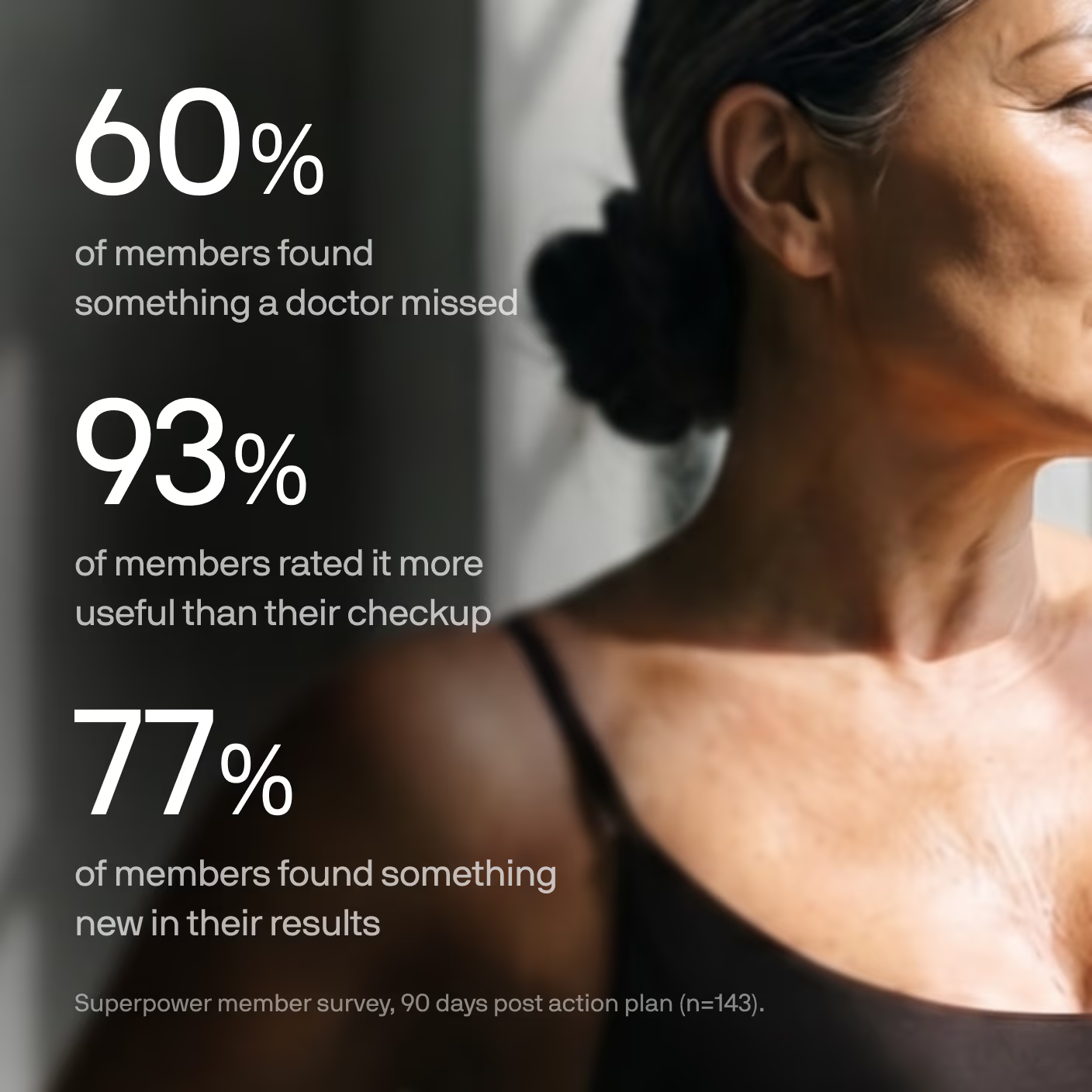
Free T3 testing reveals the metabolic reality that TSH alone might miss. Many people with "normal" TSH still struggle with fatigue, weight gain, brain fog, and other hypothyroid symptoms. Free T3 often explains these symptoms by showing inadequate active hormone despite apparently normal thyroid regulation. This is the kind of gap a fuller thyroid panel can surface, and 60% of members said Superpower identified something previously missed or overlooked by a doctor.
Conversion problems are surprisingly common but often overlooked. Standard thyroid panels typically include only TSH and sometimes free T4. Adding free T3 exposes conversion issues that could explain persistent symptoms despite normal basic thyroid tests.
Treatment optimization improves with free T3 monitoring. If you're taking thyroid medication, free T3 levels help guide dosing decisions and medication choices. Some people convert T4 to T3 efficiently and do well on T4-only medications, while others need T3-containing options for optimal free T3 levels.
Tracking trends provides early warning of thyroid changes. Free T3 levels can shift before TSH responds, giving you earlier insight into developing thyroid dysfunction. This is particularly valuable for people with autoimmune thyroid conditions, where function can fluctuate over time.
Free T3 is best interpreted alongside related biomarkers, and tracking it over time helps you spot patterns a single test might miss.
Frequently Asked Questions
References
- Bianco AC, Salvatore D, Gereben B, Berry MJ, Larsen PR (2002). Biochemistry, cellular and molecular biology, and physiological roles of the iodothyronine selenodeiodinases. *Endocrine reviews*, *23*(1), 38-89. https://doi.org/10.1210/edrv.23.1.0455
- Smith TJ, Hegedüs L (2016). Graves' Disease. *The New England journal of medicine*, *375*(16), 1552-1565. https://doi.org/10.1056/NEJMra1510030
- Pirahanchi Y, Toro F, Jialal I (2023). *Physiology, thyroid stimulating hormone*. StatPearls Publishing. https://www.ncbi.nlm.nih.gov/books/NBK499850/
- Shahid MA, Ashraf MA, Sharma S (2023). *Physiology, thyroid hormone*. StatPearls Publishing. https://www.ncbi.nlm.nih.gov/books/NBK500006/
- Dumitrescu AM, Hanlon EC, Arosemena M, Duchon O, Ettleson M, Giurcanu M, Bianco AC (2022). Extended Absorption of Liothyronine from Poly-Zinc-Liothyronine: Results from a Phase 1, Double-Blind, Randomized, and Controlled Study in Humans. *Thyroid : official journal of the American Thyroid Association*, *32*(2), 196-205. https://doi.org/10.1089/thy.2021.0304
- Warner MH, Beckett GJ (2010). Mechanisms behind the non-thyroidal illness syndrome: an update. *The Journal of endocrinology*, *205*(1), 1-13. https://doi.org/10.1677/JOE-09-0412
- Chakrabarti SK, Ghosh S, Banerjee S, Mukherjee S, Chowdhury S (2016). Oxidative stress in hypothyroid patients and the role of antioxidant supplementation. *Indian journal of endocrinology and metabolism*, *20*(5), 674-678. https://doi.org/10.4103/2230-8210.190555
- Kaur J, Jialal I (2026). *Hashimoto thyroiditis*. StatPearls Publishing. https://www.ncbi.nlm.nih.gov/books/NBK459262/
- Cleveland Clinic. (n.d.). *Triiodothyronine (T3) test*. https://my.clevelandclinic.org/health/diagnostics/22425-triiodothyronine-t3
- National Center for Biotechnology Information. (n.d.). *PubChem compound summary for CID 5920, Liothyronine*. https://pubchem.ncbi.nlm.nih.gov/compound/5920
- Boucai L. (n.d.). *Hashimoto thyroiditis*. Merck Manual Professional Edition. https://www.merckmanuals.com/professional/endocrine-and-metabolic-disorders/thyroid-disorders/hashimoto-thyroiditis












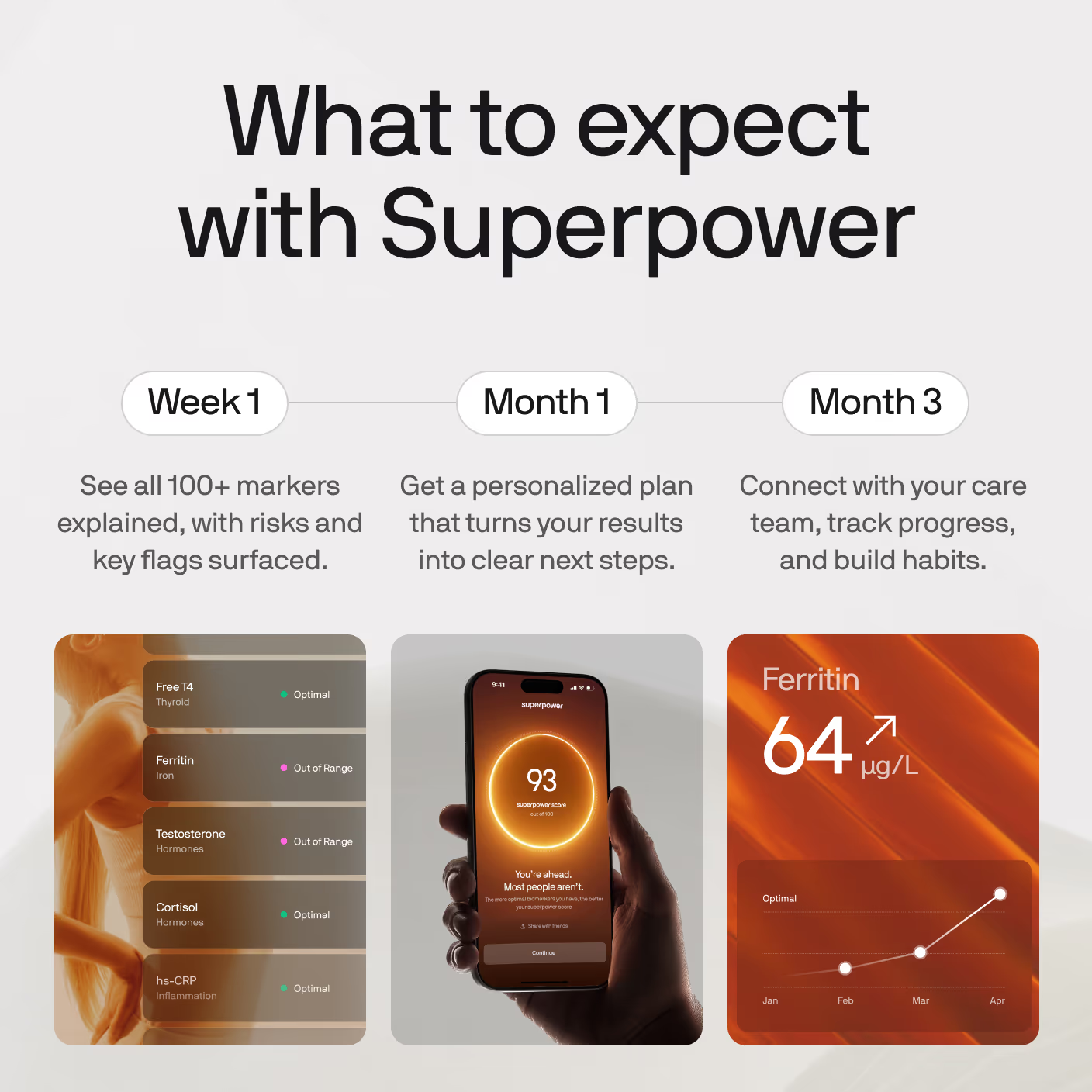











 Heart & Vascular Health
 Metabolic Health
 Energy
 Liver Health
 Kidney
 Sex Hormones
 Thyroid Health
 Nutrients
 Immune System
 Inflammation