

See where your blood sugar actually sits
A1C, glucose, and insulin, read together from one blood draw
- CLIA-certified labs
- HIPAA compliant
- Personalized health protocol
The early signs of diabetes in women
The diabetes symptoms women notice first can be recurrent yeast infections and urinary tract infections, vaginal dryness, dark skin patches, and irregular periods. Alongside those sit the signs both sexes share: increased urination, extreme thirst, increased hunger, fatigue, blurred vision, and sores that do not heal. Each of these may signal high blood sugar, and none of them confirms diabetes.
The question has a women-specific answer for a reason. Women experience greater hormone fluctuations and body changes tied to reproductive factors than men do. They also carry a greater risk factor burden by the time type 2 diabetes is found.
Diabetes symptoms specific to women
Some signs are specific to women because high blood glucose reshapes the genitourinary and hormonal picture. Those changes can be what a woman notices first, before any classic thirst or fatigue.
- Recurrent vaginal yeast infections: can precede a diagnosis, with type 2 diabetes following vulvovaginal candidiasis at 4.05 per 1,000 person-years against 3.06, and 9.56 from age 55.
- Urinary tract infections: common once diabetes is present, affecting 27.5% of women versus 9.8% of men hospitalized with type 2 diabetes, with female sex an independent predictor (odds ratio 3.47).
- Vaginal dryness and reduced libido: common once diabetes is present, part of the sexual dysfunction affecting 68.6% of women pooled across 25 type 2 diabetes studies.
- Polyendocrine metabolic ovarian syndrome (PMOS, formerly polycystic ovary syndrome): can precede a diagnosis, since women with PMOS are substantially more likely to develop type 2 diabetes.
- Dark velvety skin patches (acanthosis nigricans): common once diabetes is present, usually on the neck (29.6%) and knuckles (26.7%). The patches are a specific sign (specificity 0.85 to 0.90) of insulin resistance, where cells respond less to insulin and more of it is needed to clear the same sugar.
- Irregular or long menstrual cycles: can precede a diagnosis, with always-irregular cycles making type 2 diabetes 32%, 41%, and 66% more likely at ages 14 to 17, 18 to 22, and 29 to 46.
Symptoms that affect women and men alike
Most of what high blood sugar does, it does regardless of sex. The classic three arrive together: increased urination, extreme thirst, and increased hunger. All three describe blood sugar running high, known as hyperglycemia, which is a different thing from a confirmed diagnosis.
| Symptom | What to notice |
|---|---|
| Increased urination | Going more often, including overnight |
| Feeling very thirsty | Drinking more and still feeling dry |
| Feeling very hungry even after eating | Hunger returning soon after a meal |
| Fatigue | Tiredness that rest does not fix |
| Blurred vision | Vision fluctuating with blood glucose, sometimes the first sign |
| Sores or cuts that do not heal | Wounds taking longer than expected to close |
| Unexplained weight loss | Weight falling with no change in habits |
| Numbness or tingling in the feet or hands | Quiet changes in sensation, easy to dismiss |
The foot row is the easiest one to dismiss. Diabetic peripheral neuropathy is a complication of type 1 or type 2 diabetes in up to 50% of patients. Advanced cases bring foot ulcers and wounds that stay open.
What undiagnosed diabetes feels like
For a lot of women, undiagnosed diabetes feels like nothing at all. Type 2 symptoms can develop slowly, over several years, and many people have none, or ones too mild to notice. Most women with gestational diabetes have no symptoms either.
Detection has improved more than most people assume. Up to 90% of US diabetes cases are diagnosed. Undiagnosed diabetes now affects roughly 1% to 2% of US adults, far more where health care is out of reach. A national survey puts it at 4.5%, higher because it counts one elevated test rather than the confirmatory second test. Earlier still sits prediabetes, blood sugar above normal but below the diabetes cut-off.
How diabetes symptoms in women change across life stages
The same condition does not present the same way at 25 years old, at 30 weeks pregnant, or at 52 years old. Women move through greater hormone fluctuations and body changes than men do, and the signs move with them.
| Life stage | What changes | Signs to watch |
|---|---|---|
| Menstrual years | Cycle length and regularity | Cycles staying irregular or 40 days or longer |
| Pregnancy | Pregnancy can unmask existing metabolic problems | Gestational diabetes usually causes no symptoms, or mild extra thirst |
| Perimenopause and menopause | Upper body fat and insulin resistance increase | Earlier menopause, linked to higher later risk |
The women most at risk of diabetes
A risk factor is not a symptom. One raises the odds in the years ahead, the other suggests diabetes may already be present.
- A history of gestational diabetes: later type 2 diabetes is almost 10 times more likely than in women without it.
- PMOS: carries a 2.9-fold higher risk of type 2 diabetes after adjustment for body weight and education.
- Weight and inactivity: carrying extra weight, a large waist size, and physical inactivity.
- Age, family history, and background: age 35 or older, a family history of diabetes, and higher risk among African American, American Indian, Asian American, Hispanic or Latino, and Pacific Islander people.
- Prediabetes: blood sugar already sitting above the normal range.
Symptom differences across type 1, type 2, and gestational diabetes
The three types share most of the same signs, and what separates them is pace. Type 1 symptoms usually develop quickly, over days or weeks, while type 2 can take years to announce itself.
| Type | Typical onset | What it typically looks like |
|---|---|---|
| Type 1 | A few days or weeks | Signs arriving fast, often with unexplained weight loss |
| Type 2 | Several years | Many people have no symptoms, or ones too mild to notice |
| Gestational | Found during pregnancy | Most people have no symptoms; any are mild, such as extra thirst |
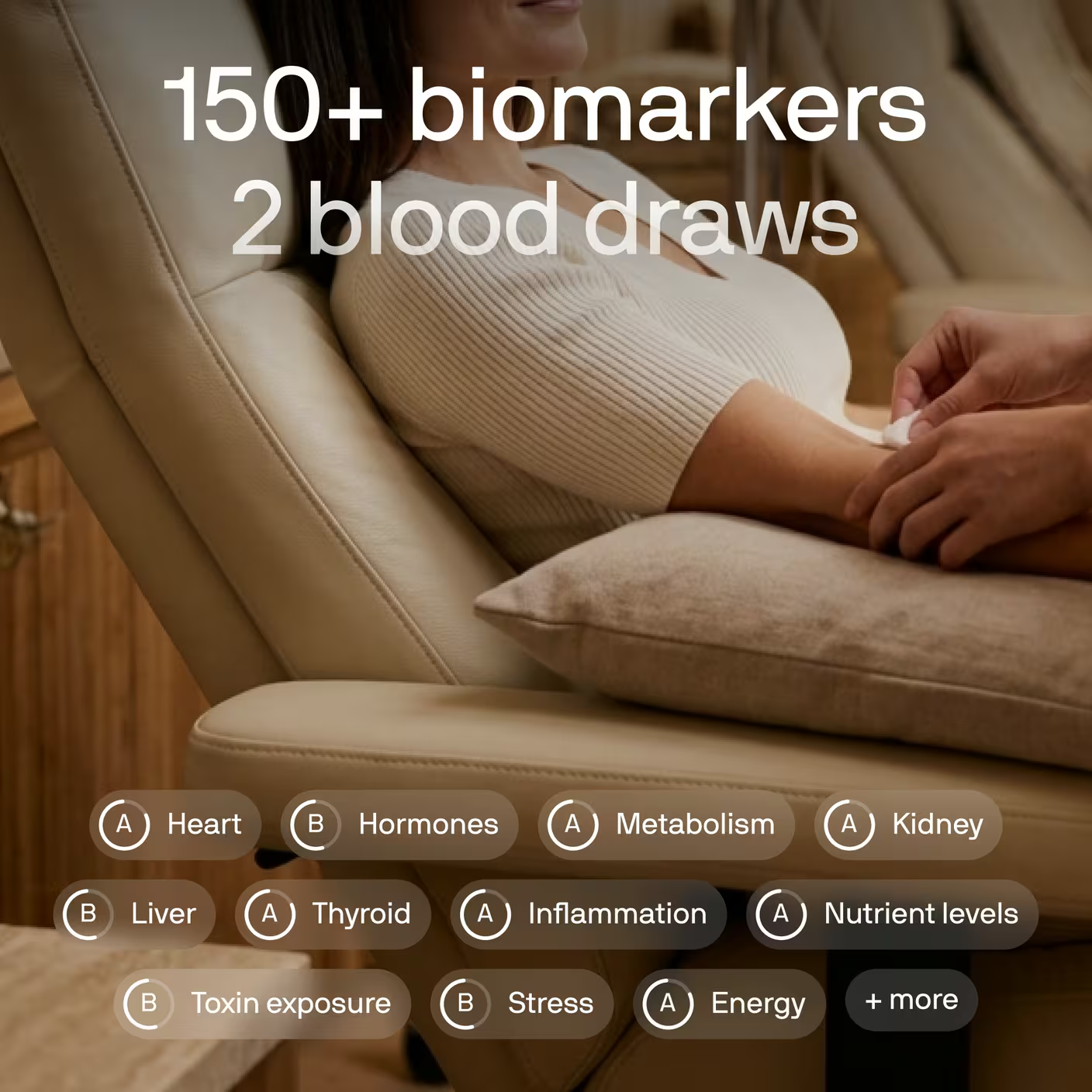
Get 150+ lab tests from home
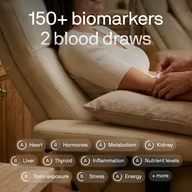
Two blood draws a year. A full picture of your health, explained in plain language.
Get 150+ lab tests from home
Two blood draws a year. A full picture of your health, explained in plain language.
The blood tests that confirm diabetes
Diabetes is confirmed on a blood test, not on symptoms, and a second test usually confirms the first. Every figure here is a cut-off a clinician applies to a result, never a rule you apply yourself.
- A1C reflects your average blood glucose over the past 3 months; 6.5% or above indicates diabetes, 5.7% to 6.4% prediabetes.
- Fasting plasma glucose is taken after at least 8 hours without food or drink; 126 mg/dL or above indicates diabetes, 100 to 125 mg/dL prediabetes.
- The oral glucose tolerance test measures glucose before and 2 hours after a sugary drink, where 200 mg/dL or above indicates diabetes and 140 to 199 mg/dL prediabetes.
- Random plasma glucose is used when symptoms are present and there is no wait to fast, with 200 mg/dL or above indicating diabetes.
Those cut-offs describe non-pregnant adults, and pregnancy uses different ones.
When to see a doctor about diabetes symptoms
Some symptoms cannot wait. Feeling very tired, trouble breathing, fruity-smelling breath, abdominal pain, nausea or vomiting, or fainting from dehydration can signal diabetic ketoacidosis, a medical emergency that needs immediate medical care.
Everything else earns an appointment. Signs that persist or keep returning deserve a clinician's assessment and a blood test: recurrent thrush or urinary infections, rising thirst and urination, unexplained fatigue, and changing vision. A history of gestational diabetes, PMOS, prediabetes, or diabetes in the family is reason to be tested with no symptoms at all.
Check your blood sugar markers with Superpower
Symptoms of diabetes in women are a prompt, not an answer. A Superpower membership includes two blood draws, an initial baseline plus a partial re-draw of your most critical markers, for 150+ lab tests. Blood sugar is read beside hormones, thyroid, and inflammation, never on its own. Superpower is built for what comes next: your results in one place, tracked over time, with a personalized action plan.
Symptoms arrive late in diabetes, and the markers move first. Start your Superpower membership and turn a single set of results into ongoing, on-demand support.
Frequently Asked Questions
References
- National Institute of Diabetes and Digestive and Kidney Diseases (2024). *Symptoms & causes of diabetes*. National Institutes of Health.
- Kautzky-Willer A, Leutner M, Harreiter J (2023). Sex differences in type 2 diabetes. *Diabetologia*, *66*(6), 986–1002. https://doi.org/10.1007/s00125-023-05891-x
- Brieditis E, Li X, Sundquist K, Jansåker F (2024). Vulvovaginal candidiasis and type 2 diabetes: a nationwide retrospective cohort study. *Diabetes, Obesity and Metabolism*, *26*(9), 4043–4051. https://doi.org/10.1111/dom.15757
- Sorescu T, Cosnita A, Braha A, et al. (2024). Predictive factors for urinary tract infections in patients with type 2 diabetes. *Journal of Clinical Medicine*, *13*(24), 7628. https://doi.org/10.3390/jcm13247628
- Rahmanian E, Salari N, Mohammadi M, Jalali R (2019). Evaluation of sexual dysfunction and female sexual dysfunction indicators in women with type 2 diabetes: a systematic review and meta-analysis. *Diabetology & Metabolic Syndrome*, *11*, 73. https://doi.org/10.1186/s13098-019-0469-z
- Glintborg D, Ollila MM, Møller JK, et al. (2024). Prospective risk of type 2 diabetes in 99 892 Nordic women with polycystic ovary syndrome and 446 055 controls: national cohort study from Denmark, Finland, and Sweden. *Human Reproduction*, *39*(8), 1823–1834. https://doi.org/10.1093/humrep/deae124
- Álvarez-Villalobos NA, Rodríguez-Gutiérrez R, González-Saldivar G, et al. (2020). Acanthosis nigricans in middle-age adults: a highly prevalent and specific clinical sign of insulin resistance. *International Journal of Clinical Practice*, *74*(3), e13453. https://doi.org/10.1111/ijcp.13453
- Wang YX, Shan Z, Arvizu M, et al. (2020). Associations of menstrual cycle characteristics across the reproductive life span and lifestyle factors with risk of type 2 diabetes. *JAMA Network Open*, *3*(12), e2027928. https://doi.org/10.1001/jamanetworkopen.2020.27928
- Kaštelan S, Gverović-Antunica A, Pelčić G, et al. (2018). Refractive changes associated with diabetes mellitus. *Seminars in Ophthalmology*, *33*(7–8), 838–845. https://doi.org/10.1080/08820538.2018.1519582
- Savelieff MG, Elafros MA, Viswanathan V, Jensen TS, Bennett DL, Feldman EL (2025). The global and regional burden of diabetic peripheral neuropathy. *Nature Reviews Neurology*, *21*(1), 17–31. https://doi.org/10.1038/s41582-024-01041-y
- Fang M, Wang D, Coresh J, Selvin E (2022). Undiagnosed diabetes in U.S. adults: prevalence and trends. *Diabetes Care*, *45*(9), 1994–2002. https://doi.org/10.2337/dc22-0242
- Gwira JA, Fryar CD, Gu Q (2024). Prevalence of total, diagnosed, and undiagnosed diabetes in adults: United States, August 2021–August 2023. *NCHS Data Brief*, (516). https://doi.org/10.15620/cdc/165794
- National Institute of Diabetes and Digestive and Kidney Diseases (2022). *Diabetes tests & diagnosis*. National Institutes of Health.
- American Diabetes Association Professional Practice Committee (2026). Diagnosis and classification of diabetes: Standards of Care in Diabetes—2026. *Diabetes Care*, *49*(Suppl. 1), S27–S49. https://doi.org/10.2337/dc26-S002
- Lambrinoudaki I, Paschou SA, Armeni E, Goulis DG (2022). The interplay between diabetes mellitus and menopause: clinical implications. *Nature Reviews Endocrinology*, *18*(10), 608–622. https://doi.org/10.1038/s41574-022-00708-0
- Vounzoulaki E, Khunti K, Abner SC, Tan BK, Davies MJ, Gillies CL (2020). Progression to type 2 diabetes in women with a known history of gestational diabetes: systematic review and meta-analysis. *BMJ*, *369*, m1361. https://doi.org/10.1136/bmj.m1361


















 Heart & Vascular Health
 Metabolic Health
 Energy
 Liver Health
 Kidney
 Sex Hormones
 Thyroid Health
 Nutrients
 Immune System
 Inflammation