Test details
- Sample type:
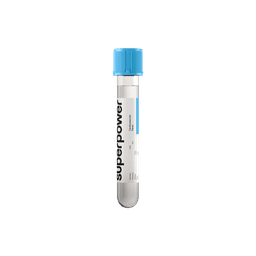
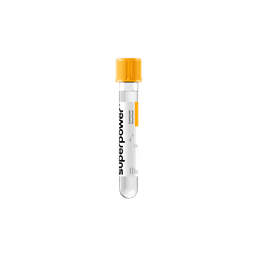
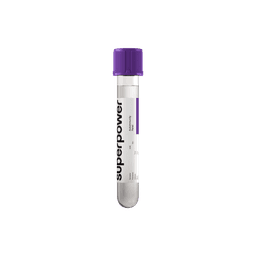
- Single blood draw (blood only)
- Location:
- In-person at local lab / At-home phlebotomist visit (+$119)
- Availability:
- Available in 40 states
- Turnaround:
- Results typically within 10 days
- Preparation:
- Hormone levels vary by cycle phase; note your cycle day for your provider
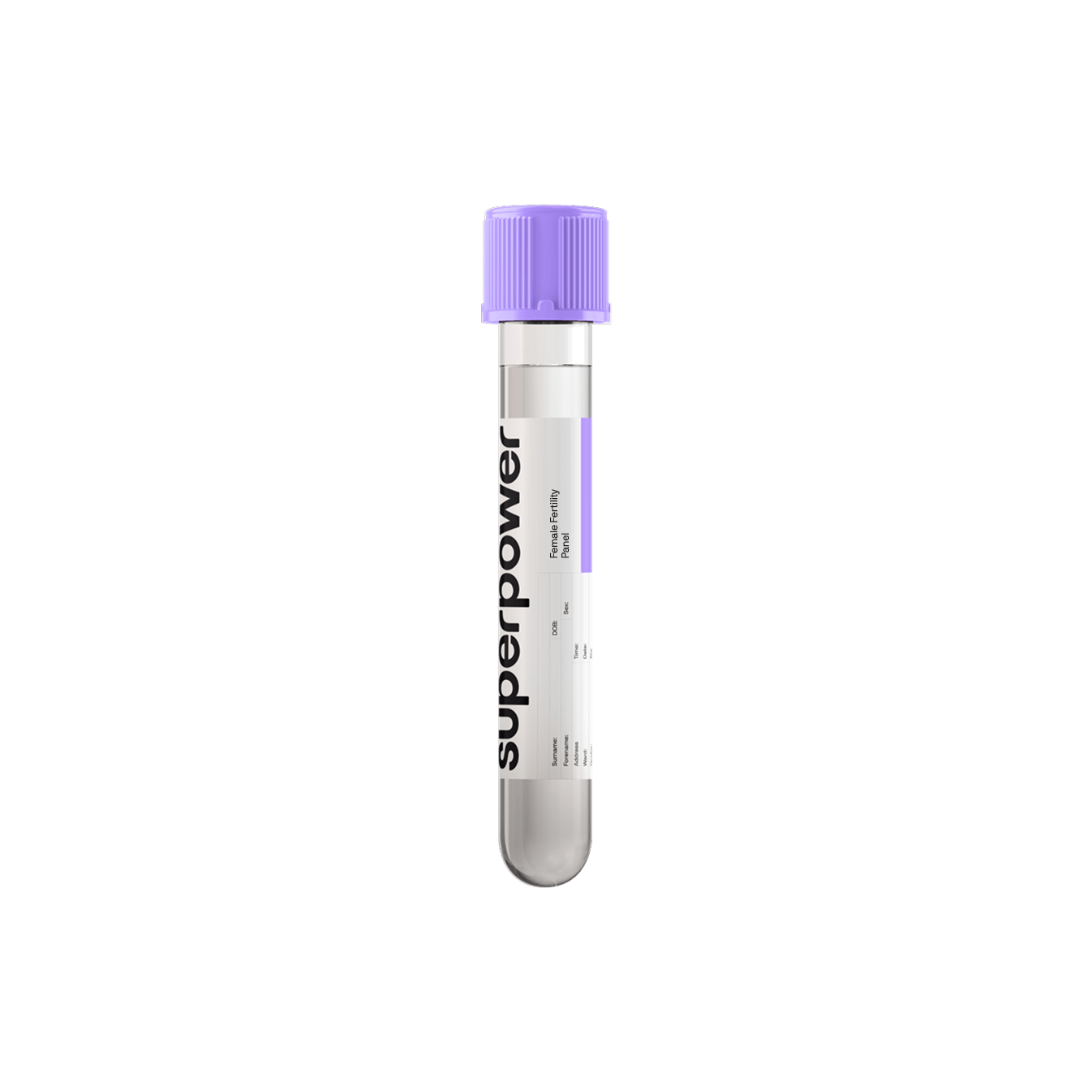
The Women's Core Hormones panel measures the reproductive and thyroid markers that shape how you feel day to day. It covers markers across three dimensions most panels treat separately: your reproductive hormones, adrenal context, and your thyroid antibodies. Add it to your Superpower order and review your results with your care team or share them with your provider.
About the Women's Core Hormones Panel
This eight-marker panel measures the hormones that regulate your menstrual cycle, mood, energy, and body composition.
These hormones work as a system. Your estrogen and progesterone levels shape cycle regularity, sleep, and how your body ages, and the pituitary hormones that regulate them signal where you are in your reproductive timeline. When one shifts, the others follow, which is why testing them in isolation misses the point.
Thyroid antibodies are included because autoimmune thyroid disease is the most common autoimmune condition in women, and its symptoms overlap so heavily with perimenopause that testing both together helps you and your provider tell which is driving how you feel.
This panel screens for hormonal patterns associated with common conditions. It does not diagnose any condition, and results should be interpreted by a qualified healthcare provider.
What's tested and why it matters
Reproductive hormones
Estradiol (high-sensitivity) The primary form of estrogen and a central cycle and fertility marker. Estradiol fluctuates across the menstrual cycle, and declining levels are associated with the perimenopause transition.
FSH (follicle-stimulating hormone) A pituitary hormone that drives follicle development. Elevated FSH is one of the earliest measurable signals associated with perimenopause, and the LH-to-FSH ratio is also relevant to PCOS evaluation.
LH (luteinizing hormone) Triggers ovulation. Elevated LH relative to FSH is a pattern associated with PCOS, though it is not sufficient on its own for clinical evaluation.
Progesterone Progesterone confirms that ovulation occurred when measured in the luteal phase, and low luteal-phase progesterone may indicate anovulatory cycles or luteal phase insufficiency.
Prolactin Elevated prolactin is associated with irregular or absent periods, galactorrhea (nipple discharge unrelated to breastfeeding), and difficulties with ovulation. It can be elevated due to pituitary activity, certain medications, or other causes.
Adrenal context
17-Hydroxyprogesterone (17-OHP) An adrenal hormone precursor. Elevated 17-OHP may indicate excess adrenal androgen production, a pattern associated with late-onset congenital adrenal hyperplasia and, in some cases, with PCOS-like presentations. It is rarely included in standard hormone panels.
Thyroid immune markers
TPO antibodies and thyroglobulin antibodies (TPO-Ab, TgAb) Autoimmune thyroid disease is the most common autoimmune condition in women. TPO and thyroglobulin antibodies are associated with autoimmune thyroid conditions including Hashimoto's thyroiditis, which can present alongside reproductive hormone disruption. Because the symptoms of Hashimoto's and perimenopause overlap so substantially (fatigue, mood changes, weight gain, hair thinning), testing both at once removes ambiguity a reproductive-only screen leaves behind. See the Thyroid Antibodies panel page for a detailed explanation of these markers.
Reference ranges vary by lab, cycle phase, and individual. Your provider will interpret your results in the context of your timing, symptoms, and history.
Who benefits from testing
- Women experiencing irregular periods, skipped cycles, or changes in cycle length or heaviness.
- Anyone noticing potential perimenopause symptoms (hot flashes, night sweats, mood changes, or sleep disruption), particularly from their mid-30s onward.
- Women investigating suspected PCOS or wanting hormonal context for an existing PCOS diagnosis.
- Anyone with persistent fatigue, brain fog, hair thinning, or low libido without a clear explanation.
- Women with fertility concerns who want a starting point for understanding their hormonal status.
- Anyone with a personal or family history of autoimmune thyroid conditions.
- Women who want a hormonal baseline before starting, stopping, or changing a hormonal contraceptive or HRT regimen.
Symptoms that may prompt testing
The following are commonly reported alongside hormonal shifts and may be worth investigating:
- Irregular, skipped, or significantly changed menstrual cycles
- Hot flashes or night sweats
- Sleep disruption without another explanation
- Mood changes, anxiety, or irritability that feel cycle-connected
- Fatigue or low energy disproportionate to sleep and lifestyle
- Brain fog or difficulty concentrating
- Hair thinning or changes in hair texture
- Decreased libido
- Difficulty achieving or maintaining pregnancy
- Unexplained weight changes or difficulty managing weight
What your results reveal
Your results give you a read across three dimensions of female hormonal health.
On the reproductive side, rising FSH alongside low or declining estradiol is a pattern associated with the perimenopause transition, and these changes often begin before periods become irregular. Elevated LH relative to FSH, taken together with the full hormonal picture, may be consistent with PCOS-pattern hormonal activity, though it is not sufficient on its own for clinical evaluation. Low luteal-phase progesterone may indicate that ovulation did not occur that cycle, and elevated prolactin points to a different driver of hormonal disruption that warrants provider evaluation.
On the thyroid immune side, elevated TPO or thyroglobulin antibodies are associated with autoimmune thyroid activity, a common co-occurrence with reproductive hormone changes in women, and one that may call for a different evaluation approach than hormone concerns alone. Your Superpower care team can walk you through your full hormonal picture and flag what's worth a provider conversation.
How it works
- Add the Women's Core Hormones panel to your Superpower order.
- Schedule a blood draw at a local clinic, or book an optional at-home visit from a trained phlebotomist (+$119).
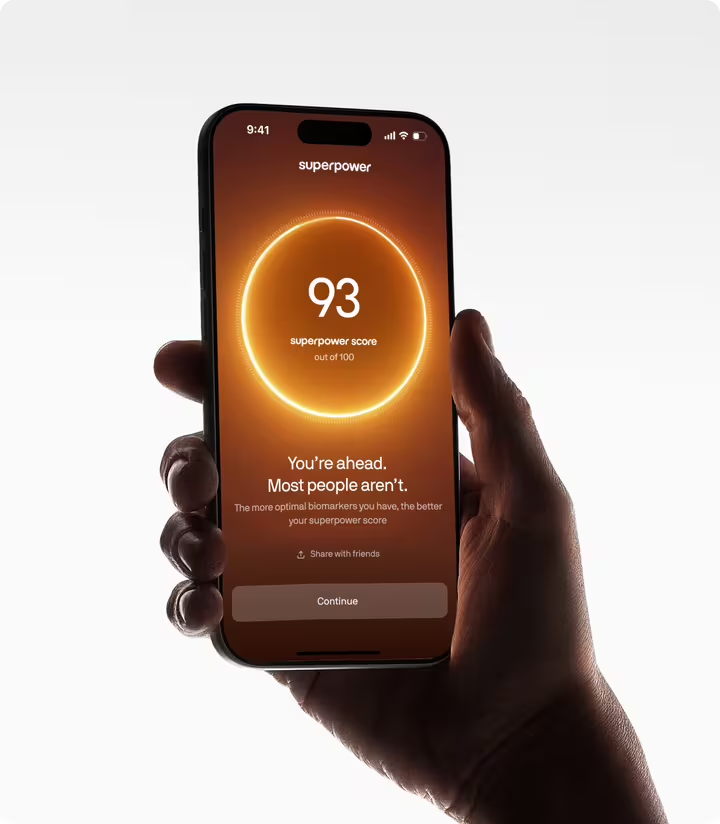
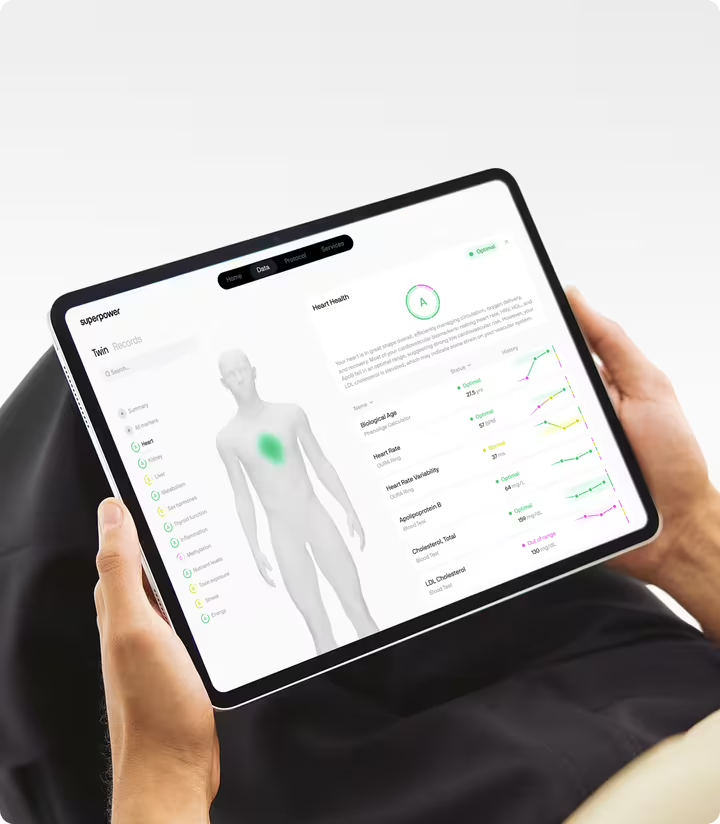
- Your sample is processed in a CLIA-certified lab, and your results are delivered to your dashboard, typically within 10 days.
- Review your results with your Superpower care team, or share your full hormonal profile with your provider.
Frequently asked questions
Frequently asked questions
This panel is for informational and screening purposes only. It does not constitute medical advice and does not diagnose PCOS, perimenopause, Hashimoto's thyroiditis, or any other medical condition. Reproductive hormone levels vary significantly by cycle phase, age, and individual factors. Always consult a qualified healthcare provider to interpret your results in the context of your complete health history.
Biomarkers tested
17-Hydroxyprogesterone (17-OHP) is a steroid hormone that acts as an intermediate step in the production of other hormones.
Learn moreMethod: Laboratory-developed test (LDT) validated under CLIA; not cleared or approved by the FDA. Results are interpreted by clinicians in context and are not a stand-alone diagnosis.