Test details
- Sample type:
- Non-contrast CT scan (no blood draw, no dye, no IV)
- Location:
- In-person at a partner facility
- Availability:
- Available in 41 states and Washington, D.C.
- Turnaround:
- Results within two business days of your scan
- Preparation:
- No alcohol or caffeine for four hours before your scanNo strenuous exercise for 24 hoursWear clothing with no metal or hard plastic
About the Heart Calcium Scan
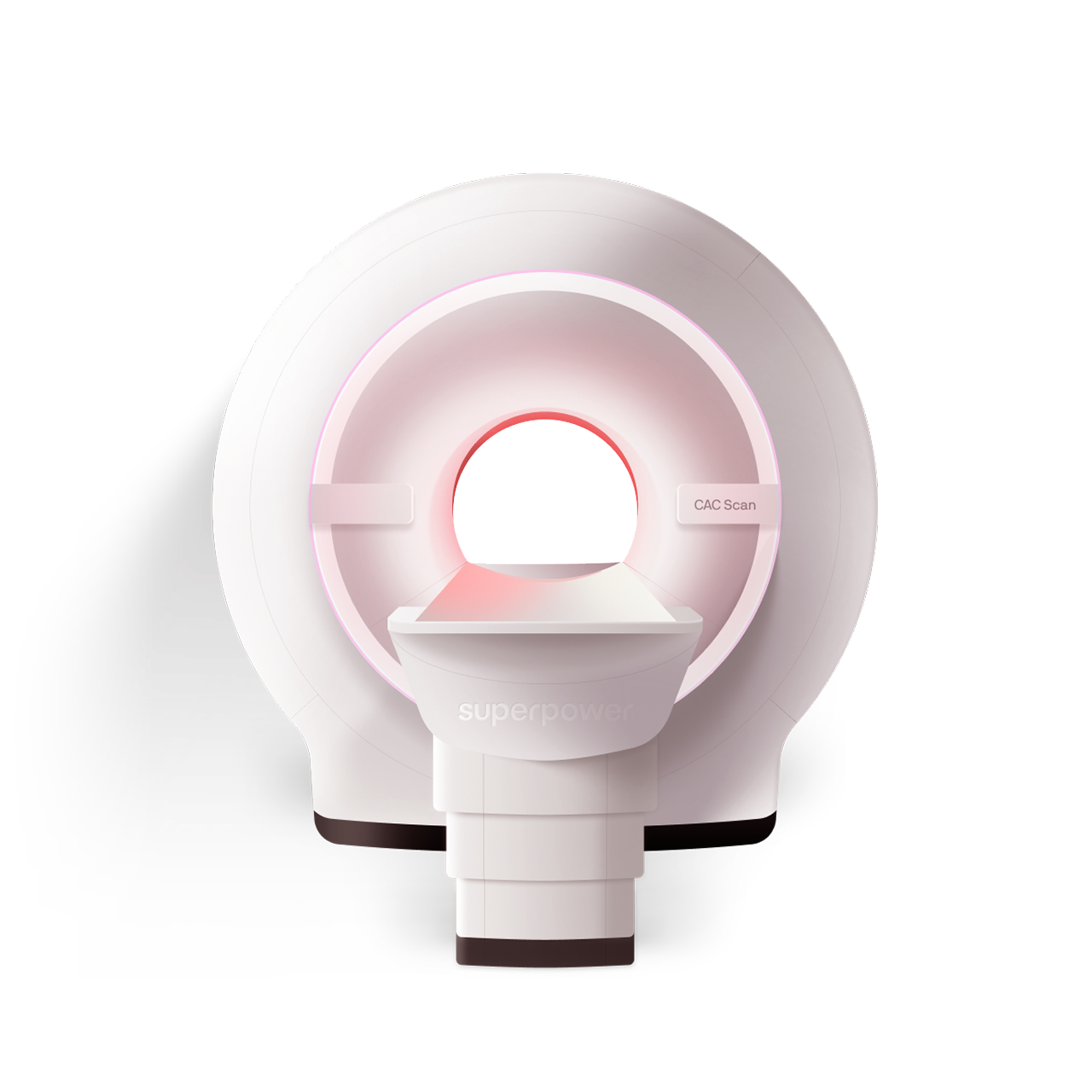
A heart calcium scan is a non-contrast CT scan that measures calcium build-up in the coronary arteries. There is no dye and no IV. The scan is timed to your heartbeat, so the moving arteries are captured sharply. The appointment runs about 10 to 15 minutes.
Most heart testing estimates what might happen. This scan looks at what has already formed. Calcium sitting in a coronary artery wall is usually a sign of atherosclerosis. Coronary artery calcium (CAC), CT calcium scoring, and the Agatston score are three names for the same result.
What this panel measures
One scan produces seven results. A whole-heart total, a score for each major coronary artery, and two percentiles placing your total against people like you.
| Marker | What it reflects |
|---|---|
| Coronary Artery Calcium Score (Agatston) | The whole-heart total, based on the amount of calcium found |
| Left Main Calcium Score | Calcified plaque in the left main artery |
| Left Anterior Descending Calcium Score | Calcified plaque in the left anterior descending artery |
| Left Circumflex Calcium Score | Calcified plaque in the left circumflex artery |
| Right Coronary Artery Calcium Score | Calcified plaque in the right coronary artery |
| CAC Percentile | Your total against people of the same age, sex, and race/ethnicity |
| CAC Upper Percentile | The upper figure reported with that peer comparison |
What a calcium score can and cannot tell you
A calcium score measures calcified plaque that has already formed inside the artery wall. It describes disease that exists rather than risk that might. That is what makes the number concrete, and it is also where the number stops. The score says how much calcium is present and where, not how an artery is behaving today.
A calcium score is not a measure of how narrow an artery is. A scan that looks for narrowing or blockage is a different exam that uses contrast dye. It also does not replace blood biomarkers of cardiovascular risk, such as lipoprotein(a).
A calcium score is not a diagnosis either, and this screen is not an assessment of current cardiac symptoms. Reading the report, and any decision that follows from it, belongs to the referring physician or your own provider. Your Superpower care team is available in the app.
Measured plaque vs estimated risk
A risk calculator estimates your chance of an event from risk factors: cholesterol, blood pressure, age, and smoking. A calcium scan images the plaque itself. Adding a calcium score to a standard risk calculator added further discrimination to the estimate.
| Risk estimate from risk factors | Calcium score from a scan |
|---|---|
| Built from cholesterol, blood pressure, age, smoking | Built from calcified plaque seen on imaging |
| Produces a percentage chance over ten years | Produces an Agatston number and a percentile |
| Cannot see plaque already in an artery | Does not show whether an artery is narrowed |
| Same estimate for very different arteries | Can move a risk category in either direction |
Worth being plain about the size of that gain. It is modest, and which patients benefit most is unsettled.
When this scan is not the right test
This scan is built for people without a known heart condition, and a few situations rule it out before checkout.
- Current cardiac symptoms such as chest pain, shortness of breath, an irregular heartbeat, dizziness, or fainting
- A prior diagnosis of heart disease, heart attack, stroke, heart failure, or coronary stents
- Any chance of being pregnant
If any of those apply, speak with your own provider or your care team first. Imaging decisions for a known heart condition belong with the treating clinician. Symptoms happening now need urgent medical attention, not a screening appointment. Call 911 or go to the nearest emergency room.
Who benefits from testing
The scan is designed for adults aged 40 and over with no known heart condition. They carry at least one raised-risk factor. That is the group where the measurement earns its place. Among adults at intermediate risk, coronary artery calcium was independently associated with incident coronary heart disease.
At least one of the following is required before checkout:
- A family history of cardiovascular disease
- High cholesterol or high blood pressure
- Diabetes
- A BMI over 25
- A sedentary lifestyle
- Current or former smoking
What your results reveal
A score of zero means no calcified plaque was detected. That negative result is associated with a very low chance of a heart attack over the next several years. Take a large group scanned for risk assessment. A zero score there was associated with stable low rates of cardiovascular and all-cause death. Follow-up ran a mean twelve years. Zero is not a guarantee, and it says nothing about symptoms now.
Calcium above zero indicates plaque is present, with a higher score pointing to a more severe problem. The per-vessel scores add where that plaque sits, and the percentiles add context. Calcium amount and prevalence rise with age, and differ by sex and race/ethnicity.
Results arrive in the Superpower app within two business days. Every result, zero included, comes with the option of a free 20-minute call with a board-certified physician. That physician works for the imaging partner and walks through your report. That call covers the numbers, not diagnosis, treatment, or personalized plans. For a score above zero, that team also shares your results with the primary care provider you named at intake. They arrange a review call. That outreach is a normal part of the process rather than an alarm in itself.
A calcium score is read in context. Your referring physician or your own provider interprets your specific results. Your Superpower care team is available in the app for questions.
How to prepare
Preparation is short, and all of it happens before you arrive.
- No alcohol or caffeine for four hours before the scan
- No strenuous exercise for 24 hours
- Clothing that is easy to remove, with no metal or hard plastic
- Arrive five minutes early with photo ID and your confirmation email
- Come on your own, without children or guests
One question worth answering before you book. A calcium scan is a CT, so it uses a small dose of ionizing radiation. The risk from any one scan is small. Acknowledging that dose is part of the consent form you complete before the appointment.
How it works
- Order online — Choose the scan, answer the eligibility questions, complete checkout, then give consent and pick your time slot.
- A physician authorizes your order — A board-certified physician reviews your answers and signs the order. Your appointment is confirmed once you are cleared, usually within a couple of hours and up to 48 hours. No outside referral needed.
- Attend the scan and read your results — The appointment runs 10 to 15 minutes, with brief breath holds while the table moves through the scanner. Your results arrive in the app within two business days.
Frequently asked questions
Biomarkers tested
The Left Anterior Descending (LAD) Calcium Score isolates the part of your total coronary calcium that sits in one specific artery: the left anterior descending, which runs down the front of the heart and feeds a large share of the left ventricle, the heart's main pumping chamber.
Learn moreMethod: Non-contrast computed tomography (CT), performed by Fitnescity; calcified plaque is reported as a total Agatston score, per-artery scores, and an age- and sex-matched percentile. Fitnescity does not provide medical advice, diagnosis, or treatment.


























 Heart & Vascular Health
 Metabolic Health
 Energy
 Liver Health
 Kidney
 Sex Hormones
 Thyroid Health
 Nutrients
 Immune System
 Inflammation