Test details
- Sample type:
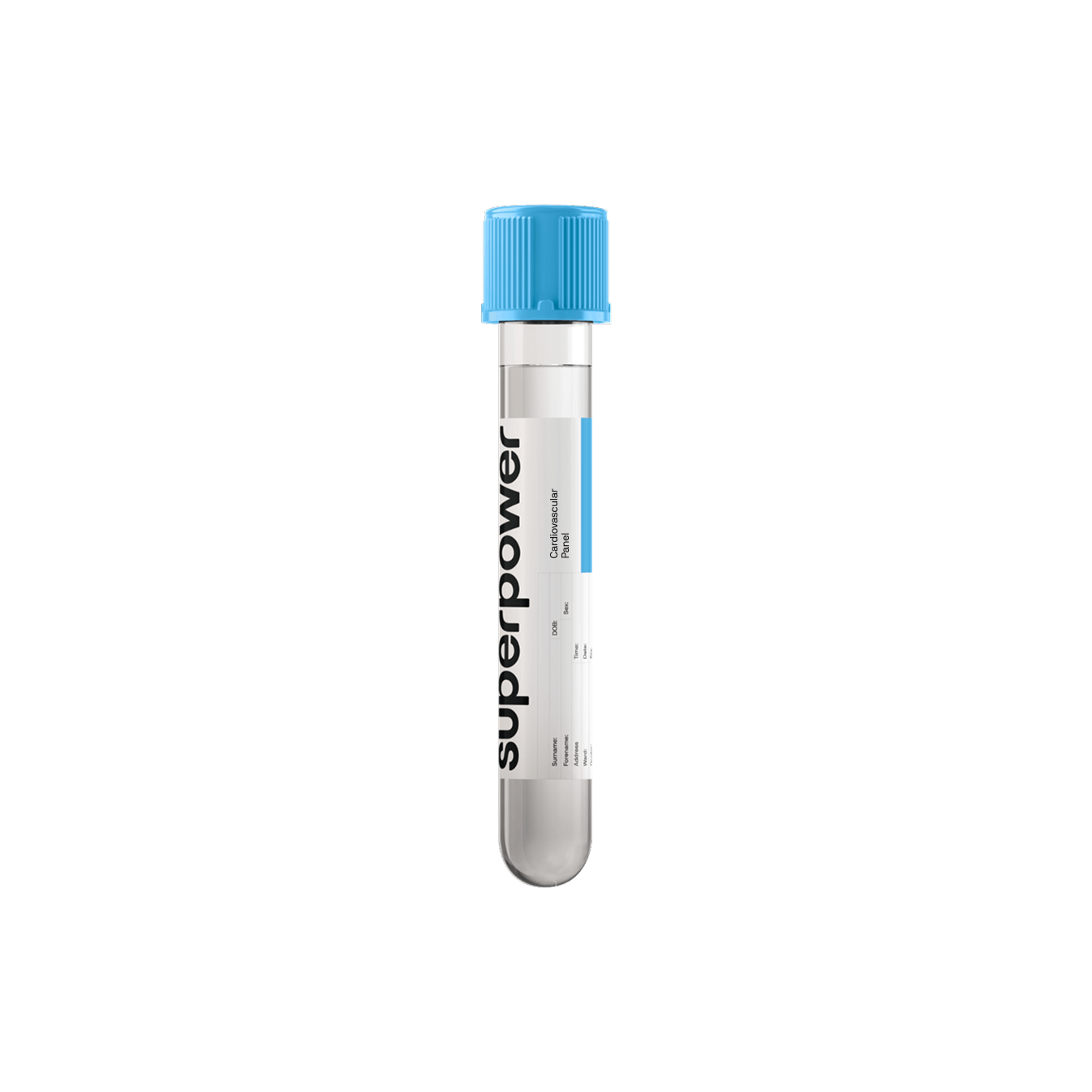
- Single blood draw (1 vial, blood only)
- Location:
- In-person at local lab / At-home phlebotomist visit (+$119)
- Availability:
- Available in 39 states and Washington, D.C.
- Turnaround:
- Results typically within 10 days
- Preparation:
- No fasting requiredPause biotin supplements 48-72 hours before your draw
Understanding Lipoprotein (a)
Lp(a) is a cholesterol particle with an extra protein attached to it. It binds to artery walls more aggressively than regular cholesterol, and it also mimics your body's natural clot-dissolving protein, which means it can interfere with your ability to clear clots. Unlike LDL, your Lp(a) level is set by your genes and barely moves with diet, exercise, or lifestyle changes. Research suggests about 1 in 5 people have elevated levels, and most have never been tested. Standard lipid panels don't include Lp(a), so someone can have "perfect" cholesterol numbers and still carry a genetically driven factor associated with increased cardiovascular risk that a standard panel won't reveal.
Why standard cholesterol tests miss this
A standard lipid panel measures total cholesterol, LDL, HDL, and triglycerides, but it does not include Lp(a). That means you can have normal LDL and still carry elevated, genetically driven Lp(a) that is associated with increased cardiovascular risk. Because it requires a separate test, this is one of the most common gaps in routine bloodwork.
Who benefits from testing
- You have a family history of heart disease, or you want a fuller picture of your inherited cardiovascular risk
- You're an adult who has never had it checked, since leading lipid and cardiology groups now recommend measuring Lp(a) at least once in adulthood
- You've had a cardiovascular event, especially at a young age
- You have elevated LDL despite statin therapy, since Lp(a) does not respond the same way
- You have familial hypercholesterolemia or a history of high LDL
- You're a woman approaching or past menopause, when Lp(a) may rise
What your results show
Your result reflects the concentration of Lp(a) particles in your blood. A result within the commonly referenced range is generally considered reassuring, while an elevated result is associated with increased cardiovascular risk and is worth discussing with your provider. An elevated level does not mean you will develop heart disease. It means this factor belongs in your overall cardiovascular risk assessment. A high Lp(a) with normal cholesterol may be worth discussing with your provider as part of your overall risk plan, while a high Lp(a) with high cholesterol may be worth discussing alongside other options with your provider.
Reference ranges vary by lab and individual. Your Superpower care team and your provider will interpret your specific result in context.
How to prepare
- No fasting is required for this test
- Pause biotin supplements 48-72 hours before your draw, since biotin (found in many multivitamins, B-complex, and hair/skin/nail supplements) can interfere with immunoassay tests
- Continue all prescribed medications unless your provider advises otherwise
- Stay well hydrated before your appointment
How it works
- Order online — No doctor's visit required
- Get your blood drawn at a local clinic, or with an at-home phlebotomist option (+$119) (1 vial)
- Review your results in your dashboard, typically within 10 days, with your Superpower care team available to walk through them
Frequently asked questions
Biomarkers tested
Lipoprotein (a) or Lp(a) is a macromolecular complex composed of one molecule of Low-Density Lipoprotein (LDL) containing apolipoprotein B100 and one molecule of apolipoprotein(a).
Learn moreMethod: FDA-cleared clinical laboratory assay performed in CLIA-certified, CAP-accredited laboratories. Used to aid clinician-directed evaluation and monitoring. Not a stand-alone diagnosis.


























 Heart & Vascular Health
 Metabolic Health
 Energy
 Liver Health
 Kidney
 Sex Hormones
 Thyroid Health
 Nutrients
 Immune System
 Inflammation