Test details
- Sample type:
- Single blood draw (blood only)
- Location:
- In-person at local lab / At-home phlebotomist visit (+$119)
- Availability:
- Available in 40 states
- Turnaround:
- Results typically within 10 days
A complete picture of the hormones that drive energy, strength, mood, and long-term health in men. This add-on layers a focused set of men's-health markers (testosterone and its regulators, growth factors, and a full prostate (PSA) screening workup) on top of your Baseline Blood Panel, measured through the most accurate methods available from a single blood draw.
About the Extended Men's Health Panel
Men's hormonal health is more than testosterone. It is a system where testosterone, its metabolites, pituitary signals, growth factors, and binding proteins all interact, and when one shifts, the downstream effects can touch energy, body composition, mood, and sexual function.
This add-on layers a focused set of men's-health markers on top of your Baseline Blood Panel, spanning the testosterone axis, the pituitary signals that regulate it, growth factors, and prostate screening. Testosterone is measured through the most accurate methods available: dialysis for free testosterone, mass spectrometry for total. Prostate screening is included because PSA screening is one of the most important and underused tools in men's preventive care, especially after 40. It provides a picture of where in the system a pattern may sit, from one blood draw.
What this add-on adds
One blood draw layers a focused set of men's-health markers across four systems on top of your Baseline panel.
Testosterone axis
This group covers how much testosterone you make and how much is actually available to your cells. Total Testosterone (measured by mass spectrometry) is the starting number. Free Testosterone (measured by dialysis) is the biologically active fraction. DHT is a potent metabolite associated with libido, body composition, and hair. SHBG is the binding protein that sets how much testosterone your tissues can use.
Hormone regulators
These are the pituitary signals that show where in the system a low-testosterone pattern may sit. LH and FSH together help locate whether a pattern is upstream (brain/pituitary) or at the testes, and elevated Prolactin is associated with low-testosterone patterns.
Growth-factor axis
IGF-1 is the primary blood proxy for growth-hormone output, associated with muscle, recovery, and aging. The IGF-1 Z-Score adds age- and sex-adjusted context, placing your result against others your age rather than an absolute number alone.
Prostate screening
PSA screening is included because it is an important, underused tool in men's preventive care, especially after 40. This panel includes the full PSA workup: Total PSA as the headline screening number, plus Free PSA and the % Free ratio, which add specificity when total PSA is borderline. PSA screens for prostate changes; an elevated PSA warrants evaluation by a provider and does not diagnose cancer.
Why free testosterone matters more than total
Total testosterone is the number most labs report. It measures all the testosterone in your blood, including the large fraction bound to proteins (primarily SHBG and albumin) that is unavailable to your cells.
The fraction that actually enters cells and drives the effects associated with testosterone, such as energy, libido, muscle synthesis, and mood, is free testosterone. Two men with identical total testosterone readings can have very different free testosterone levels depending on how much SHBG each produces. When SHBG rises, it binds more testosterone and reduces the free fraction, which may explain why someone with a "normal" total reading still feels off.
This add-on measures both free and total testosterone, along with SHBG, using dialysis for free testosterone, the most accurate measurement method available.
Symptoms worth testing for
Hormonal shifts in men often develop gradually and get attributed to aging, stress, or overwork before the underlying biology is examined. The following symptoms are worth investigating through testing.
- Low energy or decreased motivation. Can be associated with shifts in testosterone, IGF-1, or prolactin.
- Low libido or changes in sexual function. Can be associated with shifts in testosterone (free and total), DHT, and prolactin.
- Difficulty building or maintaining muscle. Can be associated with shifts in testosterone and IGF-1, which is tied to muscle, recovery, and aging.
- Increased body fat or difficulty losing fat. Can be associated with shifts in testosterone and IGF-1.
- Mood changes. Can be associated with shifts in testosterone.
- Hair thinning. Can be associated with shifts in DHT.
Symptoms alone cannot confirm a hormonal cause. Testing puts a number behind the pattern.
Extended vs. Men's Core Hormones
Superpower also offers a Men's Core Hormones add-on, which covers the core testosterone axis, its regulators, and growth factors. The Extended Men's Health Panel adds a prostate (PSA) screening workup on top of that same hormone picture; the shared hormone markers are identical in both.
| Marker group | Men's Core Hormones | Extended Men's Health Panel |
|---|---|---|
| Testosterone axis (Total T, Free T, SHBG, DHT) | Yes | Yes |
| Hormone regulators (LH, FSH, Prolactin) | Yes | Yes |
| Growth-factor axis (IGF-1 + Z-Score) | Yes | Yes |
| Prostate screening (Total PSA + Free PSA + % Free ratio) | No | Yes |
If prostate health is a concern, or if you are over 40 and want a broader men's-health baseline, the Extended panel adds the PSA workup on top of the core hormone read.
Who benefits from testing
- You are experiencing symptoms associated with hormonal shifts in men (low energy, decreased motivation, difficulty building or maintaining muscle, increased body fat, mood changes, or changes in sexual function) and want data rather than guesswork.
- You have had a total testosterone test that came back "normal," but you still feel off, and free testosterone and SHBG may tell a different story.
- You are over 35, when testosterone begins its gradual decline, and want a hormonal baseline that also includes prostate screening.
- You are considering or currently on testosterone replacement therapy (TRT) and want a full-system read before or during treatment.
- You have a family history of prostate concerns and want to establish a PSA baseline.
- You optimize your health proactively and want a complete hormonal picture, not just total testosterone.
What your results reveal
Whether your symptoms are hormonal, and where in the system the issue sits. The relationship between these markers helps narrow it down: is the pattern about production, availability, or signaling? That distinction can inform whether the right next step is a lifestyle change, supplementation, or a conversation with your provider.
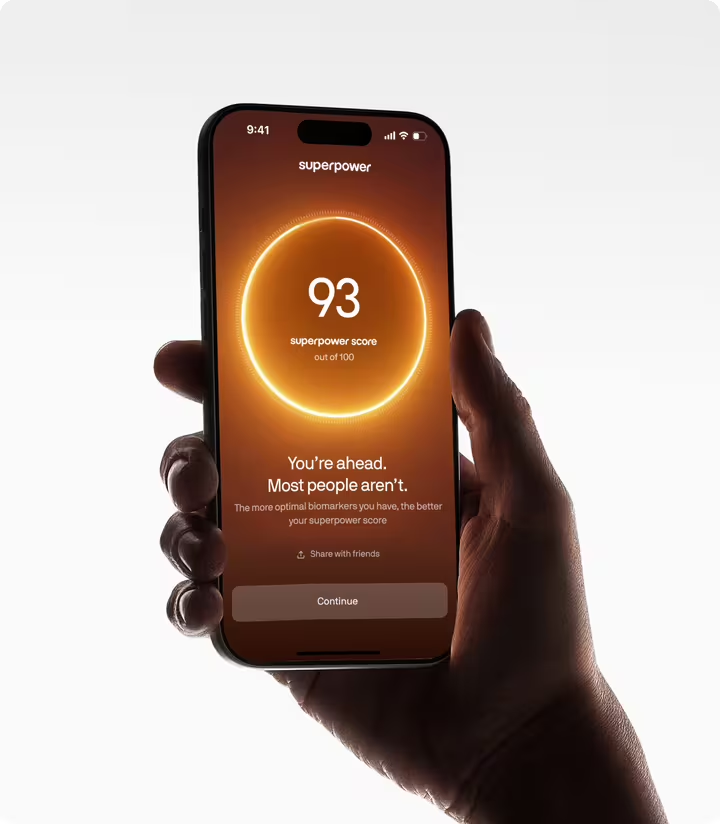
Your results show a measured value with a reference range for each marker. For IGF-1, your result includes a Z-Score that places your level relative to others your age. For prostate screening, your results include total PSA along with the free fraction and the % free ratio, giving more context than a single number. Your Superpower care team can help you interpret the full picture, and for any PSA findings that warrant further evaluation, can help you understand what follow-up makes sense.
How it works
- Add to your Superpower order. The Extended Men's Health Panel attaches to your blood-draw appointment.
- Schedule your appointment.
- Get your blood drawn. At a local clinic or via an optional at-home visit from a trained phlebotomist (+$119).
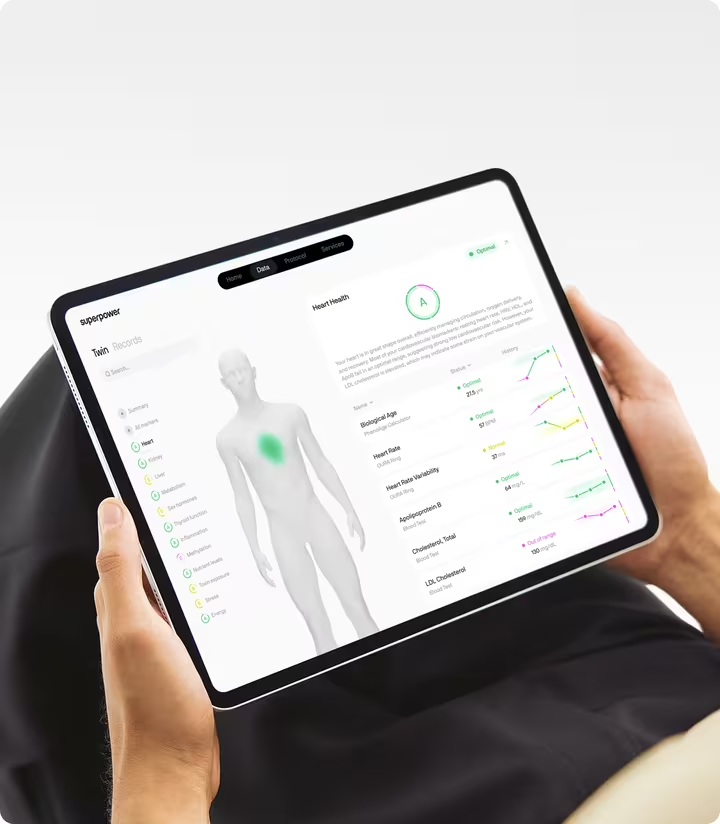
- Receive your results in your Superpower dashboard, typically within 10 days.
Frequently asked questions
Biomarkers tested
Dihydrotestosterone (DHT) is a potent androgen formed primarily through the conversion of testosterone by the enzyme 5-alpha-reductase.
Learn more