Test details
- Sample type:
- Single blood draw (blood only)
- Location:
- In-person at local lab / At-home phlebotomist visit (+$119)
- Availability:
- Available in 40 states
- Turnaround:
- Results typically within 10 days
- Preparation:
- Book a morning appointment; testosterone peaks early in the dayFast 8–12 hours; water is finePause biotin supplements 48–72 hours before your drawAvoid intense exercise the day before
If your energy isn't what it was a few years ago (harder to build or hold muscle, motivation and libido down, mood that feels off, sleep that doesn't quite restore you), those signals are worth investigating with bloodwork, not guessing at. Most men who get tested only ever see total testosterone. This panel measures the full hormonal system behind how you feel.
What the Men's Core Hormones Panel tests
This panel measures the hormones that most directly affect how men feel, function, and age. Free and Total Testosterone are measured using dialysis and mass spectrometry, the reference methods for free and total testosterone.
But testosterone alone doesn't tell you much. SHBG determines how much of it your tissues can actually use. The pituitary hormones (FSH, LH) reveal whether the problem is upstream in the brain or downstream in the testes. DHT, prolactin, and IGF-1 fill in the rest: hair, libido, muscle recovery, and cellular repair. Together, they show how the full system is working, not just one number on a lab report.
Where most lab reports give you a single total testosterone value, this panel measures the full axis (Total and Free Testosterone, SHBG, LH, FSH, Prolactin, DHT, and IGF-1) plus an age-adjusted IGF-1 Z-Score so your growth-factor result is easier to read in context. That's a meaningfully more complete picture than one number.
Signs that warrant a closer look
Hormone bloodwork may offer useful context if you've noticed signals like these. None of these "mean" you have a condition, but together they're worth investigating:
- Persistent fatigue or low motivation that sleep doesn't resolve
- Difficulty losing weight or gaining muscle despite regular training
- Increased body fat, particularly around the abdomen
- Decreased libido
- Mood changes, brain fog, or reduced focus
- Poor recovery after exercise or disrupted sleep
Some signals are more often associated with high prolactin, and may also be worth a closer look (this panel measures prolactin but does not measure estradiol directly):
- Water retention
- Testosterone that reads low even when LH looks normal
Breast tissue development (gynecomastia) is more often driven by estradiol balance, which this panel does not measure directly, though a high-prolactin picture can be a contributing factor worth ruling out.
What each biomarker reveals
Total testosterone
Total testosterone is the most commonly measured androgen, reflecting all the testosterone circulating in your blood, both bound and unbound. It's a useful starting point, but on its own it can miss cases where SHBG is elevated and free testosterone is low. Because levels follow a daily rhythm and peak in the morning, a morning draw gives the most accurate baseline. Here it's measured by mass spectrometry, the gold-standard method.
Free testosterone
Only a fraction of your total testosterone circulates freely, unbound to SHBG or albumin. That free fraction is the biologically active form: the testosterone available to bind androgen receptors and influence muscle, energy, libido, and mood. This is why a man can have normal total testosterone but low free testosterone when SHBG is elevated. Measuring it directly, by mass spectrometry, is the reference method for free testosterone.
SHBG (Sex Hormone-Binding Globulin)
SHBG is the protein that binds testosterone and makes it unavailable to your cells; it determines how much of your testosterone your tissues can actually use. When SHBG is high, more testosterone is bound and less is free, even if your total looks normal. SHBG naturally rises with age and may also be affected by thyroid status, liver function, and caloric restriction. Without it, total testosterone results can be misleading.
LH (Luteinizing Hormone)
LH is released by the pituitary gland and signals the testes to produce testosterone. Measured alongside testosterone, it helps reveal whether an imbalance is upstream in the brain (the signaling) or downstream in the testes (production itself). That distinction is central to how a provider interprets your results.
FSH (Follicle-Stimulating Hormone)
FSH stimulates sperm production in the testes and is often measured when fertility or sperm production is a concern. Combined with LH and testosterone, it completes the hypothalamic-pituitary-gonadal axis picture. Elevated FSH may indicate reduced testicular function and is best read alongside the other hormones in this panel.
Prolactin
Prolactin is produced by the pituitary gland. In men, elevated prolactin is associated with reduced testosterone and low libido, and in some cases may point to a pituitary abnormality. Measuring it helps evaluate this as a potential source of hormonal disruption, which is why it belongs alongside the testosterone and pituitary markers rather than on its own.
DHT (Dihydrotestosterone)
DHT is converted from testosterone by the enzyme 5-alpha reductase and is a more potent androgen than testosterone itself. It plays a role in facial hair growth, prostate development, and, in some men, male-pattern hair changes. DHT is less commonly included in standard hormone panels, so measuring it adds a more complete view of your androgen status.
IGF-1 (Insulin-like Growth Factor 1) and IGF-1 Z-Score
IGF-1 is a growth factor produced mainly by the liver in response to growth hormone, making it a key proxy for growth-hormone axis activity. It influences muscle protein synthesis, bone density, and body composition, and levels naturally decline with age. Including it adds a recovery and growth dimension that testosterone panels alone don't capture. The age-adjusted IGF-1 Z-Score makes your result easier to interpret relative to your age group. Most consumer hormone panels don't include IGF-1 at all.
Who benefits from testing
- You have fatigue, low motivation, difficulty losing weight or gaining muscle, mood changes, or decreased libido
- You're over 35, when testosterone production begins to decline
- You're on TRT and want to monitor more than just testosterone
- You've had testosterone tested but only received a total number, without free testosterone, SHBG, or pituitary context
- You're an athlete or active man who wants to understand your hormonal and growth-factor status
- You have concerns about fertility
- You've been prescribed, or are considering, hormone-related therapies and want a baseline first
- You have a history of head injury, pituitary concerns, or unexplained hormonal symptoms
How to prepare
- Book a morning appointment. Testosterone follows a daily rhythm, with levels highest in the early morning. Testing later in the day may give a result that appears lower than your actual baseline.
- Fast for 8–12 hours. Avoid food and caffeine in the 8–12 hours before your draw. Water is fine.
- Pause biotin supplements 48–72 hours before your draw. Biotin (in multivitamins, B-complex, and hair/skin/nail supplements) can interfere with some immunoassays.
- Continue all prescribed medications.
- Avoid intense exercise the day before. Acute exercise can temporarily affect hormone levels.
What your results show
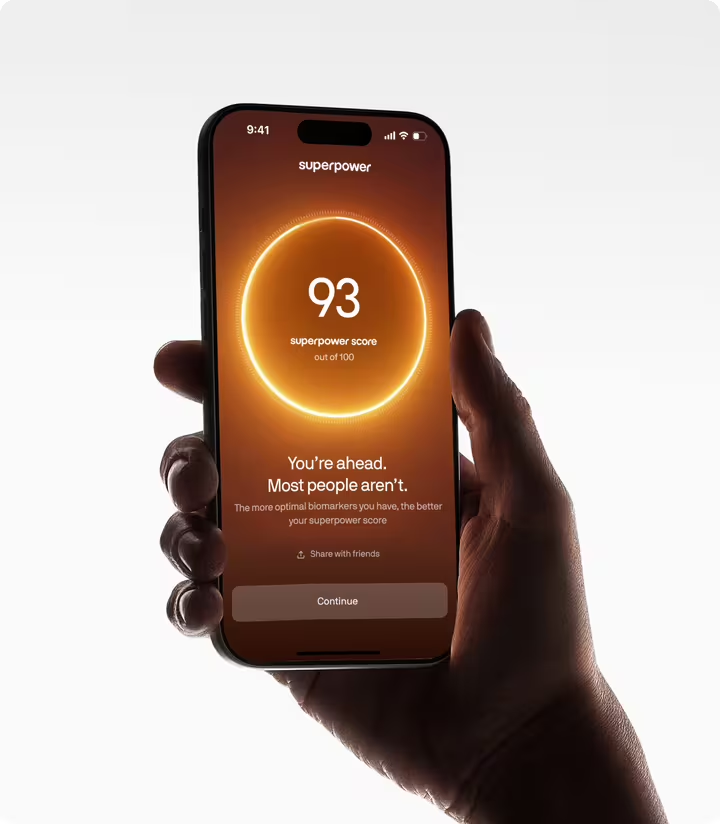
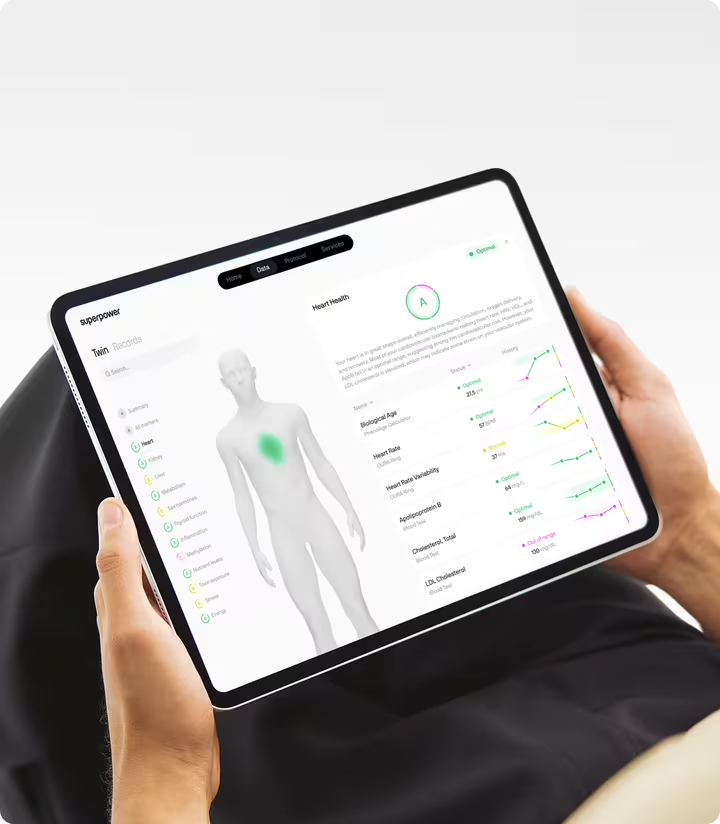
Your results show where in the system the picture actually sits, not just whether testosterone reads "low" or "fine." Every marker appears with your measured value and the reference range, and the relationship between them tells a more complete story than any single number. Results are most useful when read together as a system, not marker by marker. Your Superpower care team can walk you and your provider through what your specific pattern may mean.
Reference ranges vary by lab and individual. Your Superpower care team and your provider will interpret your specific results in context.
How it works
- Order online. No doctor's visit required. Select the Men's Core Hormones Panel and add it to your membership or cart.
- Get your blood drawn, morning preferred. Visit a local clinic or book an optional at-home phlebotomist visit (+$119). Schedule for the morning for the most accurate results.
- Review your results. Results arrive in your Superpower dashboard within 10 days, where your care team is available to walk through your numbers.
Frequently asked questions
Biomarkers tested
Dihydrotestosterone (DHT) is a potent androgen formed primarily through the conversion of testosterone by the enzyme 5-alpha-reductase.
Learn more