


Understand what your sleep health results really mean
See your biomarkers in context with a comprehensive panel.
- CLIA-certified labs
- HIPAA compliant
- Personalized health protocol
Which tea is best for sleep
Chamomile, passionflower, and valerian are the best-studied teas for sleep. Chamomile eased sleep problems linked to physical symptoms after 2 weeks of daily use in a randomized trial of postpartum women, and passionflower tea improved sleep quality after 1 week in a double-blind study. If you want the tea most likely to make you sleepy, valerian is the most potent, though it can cause morning grogginess. Each one acts on GABA (gamma-aminobutyric acid), the brain's main calming neurotransmitter, more gently than a sleeping pill does.
| Tea | Active compound or action | Evidence strength | Best for | Amount and brew time |
|---|---|---|---|---|
| Chamomile | Apigenin, which binds benzodiazepine receptors | Moderate; longest research history, but small, short trials | Falling asleep, with mild anxiety relief | 2-3 g dried flowers (1 heaping teaspoon), covered, 5-10 minutes just below boiling (about 200°F (93°C)); longer steeping extracts more apigenin |
| Valerian root | Valerenic acid, which slows GABA breakdown | Strong for sleep quality, mixed for falling asleep faster | Falling asleep | 1 teaspoon dried root, 10-15 minutes |
| Passionflower | Raises GABA levels | Strong; double-blind trial | Anxiety and racing thoughts | 1 tablespoon dried flower, 10 minutes |
| Magnolia bark | Honokiol and magnolol, which act on GABA-A receptors | Limited; mostly animal studies and small trials | Anxiety and sleep, as an add-on to established options | 1-2 teaspoons dried bark, 10-15 minutes |
| Lavender | Calming effects documented in aromatherapy | Limited | Anxiety | Not specified |
| Lemon balm | Mild sedative from the mint family | Limited | Anxiety; may be too mild for significant sleep difficulty | Not specified |
| Ashwagandha | Lowers cortisol | Indirect | Stress-driven insomnia | Not specified |
For many people with mild sleep difficulties, a tea's gentle nudge is enough. For more significant sleep latency issues, teas work best as one part of a broader sleep strategy.
Chamomile tea for sleep
The most studied sleep tea
Chamomile (Matricaria chamomilla) has the longest research history among sleep teas. Its primary active compound, apigenin, binds to benzodiazepine receptors in the brain. These are the same receptors targeted by prescription sedatives, though apigenin's effect is considerably gentler.
A randomized controlled trial in sleep-disturbed postpartum women found that two weeks of daily chamomile tea reduced sleep problems linked to physical symptoms compared to usual care. The benefit had faded by four weeks. In another small trial, chamomile extract showed a modest, non-significant edge on daytime functioning in people with chronic insomnia.
How to brew chamomile for maximum benefit
Drink your chamomile tea 30 to 60 minutes before bed. This gives the compounds time to absorb and begin working. Adding a spoonful of honey can complement the sleep benefits while making the tea more enjoyable.
Valerian root tea
A potent but polarizing option
Valerian (Valeriana officinalis) has been used as a sleep remedy since ancient Greece. It contains valerenic acid, which inhibits the breakdown of GABA in the brain. More GABA available means more neural quieting. A meta-analysis in The American Journal of Medicine found that valerian may improve subjective sleep quality, though the evidence for reducing sleep latency was mixed.
The taste challenge
Let's be honest: valerian root tea tastes earthy and somewhat pungent. Some people describe it as "swamp water." If you find the flavor off-putting, try blending valerian with chamomile or peppermint to soften the taste. You can also opt for valerian supplements in capsule form, though the tea ritual itself has its own sleep-promoting value.
Valerian can cause morning grogginess in some people, so begin on a night when you can sleep in if needed. It may take several days of consistent use before you notice the full effects.
Passionflower tea
Surprising clinical evidence
Passionflower (Passiflora incarnata) is less well known than chamomile but has surprisingly strong research behind it. Its primary mechanism involves increasing GABA levels in the brain, similar to valerian but with a milder, more pleasant taste.
A double-blind study found that participants who drank passionflower tea daily for one week showed significant improvements in sleep quality compared to a placebo group. The improvements were measured objectively using sleep diaries and subjective quality scales.
Why passionflower deserves more attention
Passionflower has a gentler side-effect profile than valerian and tastes considerably better. It's also less likely to cause morning drowsiness. For people who find chamomile too mild and valerian too intense, passionflower sits in a sweet spot.
It blends beautifully with chamomile for a combined effect. Some people also find it helpful for sleep anxiety, as its GABA-boosting properties can ease the racing thoughts that keep you awake.
Magnolia bark tea
An emerging option from traditional medicine
Magnolia bark (Magnolia officinalis) contains two key compounds: honokiol and magnolol. Both act on GABA-A receptors in the brain, promoting sedation and reducing anxiety. A study in the British Journal of Pharmacology found that honokiol increased non-REM sleep time in animal models without the rebound insomnia associated with some pharmaceutical sleep aids.
How to use magnolia bark tea
Magnolia bark tea is less widely available than chamomile or valerian, but you can find it at specialty tea shops and online. The flavor is mildly bitter with woody undertones.
Other teas worth trying
Lavender tea
Lavender's calming effects are well documented in aromatherapy, and drinking lavender tea may provide similar benefits. In a study of sleep-disturbed postnatal women, one cup of lavender tea daily for two weeks reduced fatigue and depression compared to usual care. Those benefits had faded by four weeks. Lavender tea has a floral, slightly sweet taste that pairs well with a small amount of honey.
Lemon balm tea
Lemon balm (Melissa officinalis) belongs to the mint family and has mild sedative properties. It is often paired with other calming herbs. In a placebo-controlled trial of menopausal women, a valerian and lemon balm combination reduced sleep disorder scores. On its own, lemon balm is pleasant tasting but may be too mild for people with significant sleep difficulties.
Ashwagandha tea
Ashwagandha (Withania somnifera) is technically an adaptogen, not a traditional sleep herb. But its ability to lower cortisol levels can indirectly improve sleep, especially for people whose insomnia is driven by stress. If you feel tired but can't sleep, elevated cortisol may be part of the picture, and ashwagandha tea could help address that root cause.
Test 100+ biomarkers
One blood draw. A full picture of your health, explained in plain language.
Test 100+ biomarkers
One blood draw. A full picture of your health, explained in plain language.
Teas to avoid before bed
Anything with caffeine
This seems obvious, but it's worth stating clearly: green tea, black tea, white tea, oolong tea, and pu-erh tea all contain caffeine. Even "low caffeine" varieties can contain enough to disrupt sleep if consumed within six hours of bedtime. Caffeine blocks adenosine receptors, the very receptors that build sleep pressure throughout the day.
Watch for hidden caffeine
Some herbal tea blends include green tea or yerba mate for an energy boost. Always check the ingredient list. "Herbal" doesn't automatically mean caffeine-free. Nicotine also disrupts sleep through stimulant effects, so avoid combining an evening tea with tobacco or nicotine products.
Peppermint tea is caffeine-free and often recommended for relaxation, but it can relax the lower esophageal sphincter and worsen heartburn. If you're prone to acid reflux, stick with chamomile or passionflower instead.
How to build a bedtime tea ritual
Make it consistent
The ritual aspect of bedtime tea matters almost as much as the biochemistry. When you perform the same calming sequence each night (boil water, steep tea, sip slowly), your brain starts associating those actions with sleep onset. This is a form of behavioral conditioning that reinforces your circadian rhythm.
Practical steps
- Choose your tea and stick with it for at least two weeks to assess its effects
- Begin your tea 30 to 60 minutes before your target bedtime
- Dim the lights while you drink (this supports natural melatonin production)
- Put away screens during your tea time
- Pair your tea with a small sleep-friendly snack like pistachios or a banana
Consistency is what transforms a cup of tea from a one-time experiment into a genuine sleep tool. If you're also working on shifting your bedtime earlier, a tea ritual can serve as the anchor point for your new schedule.
Test what's behind your sleep
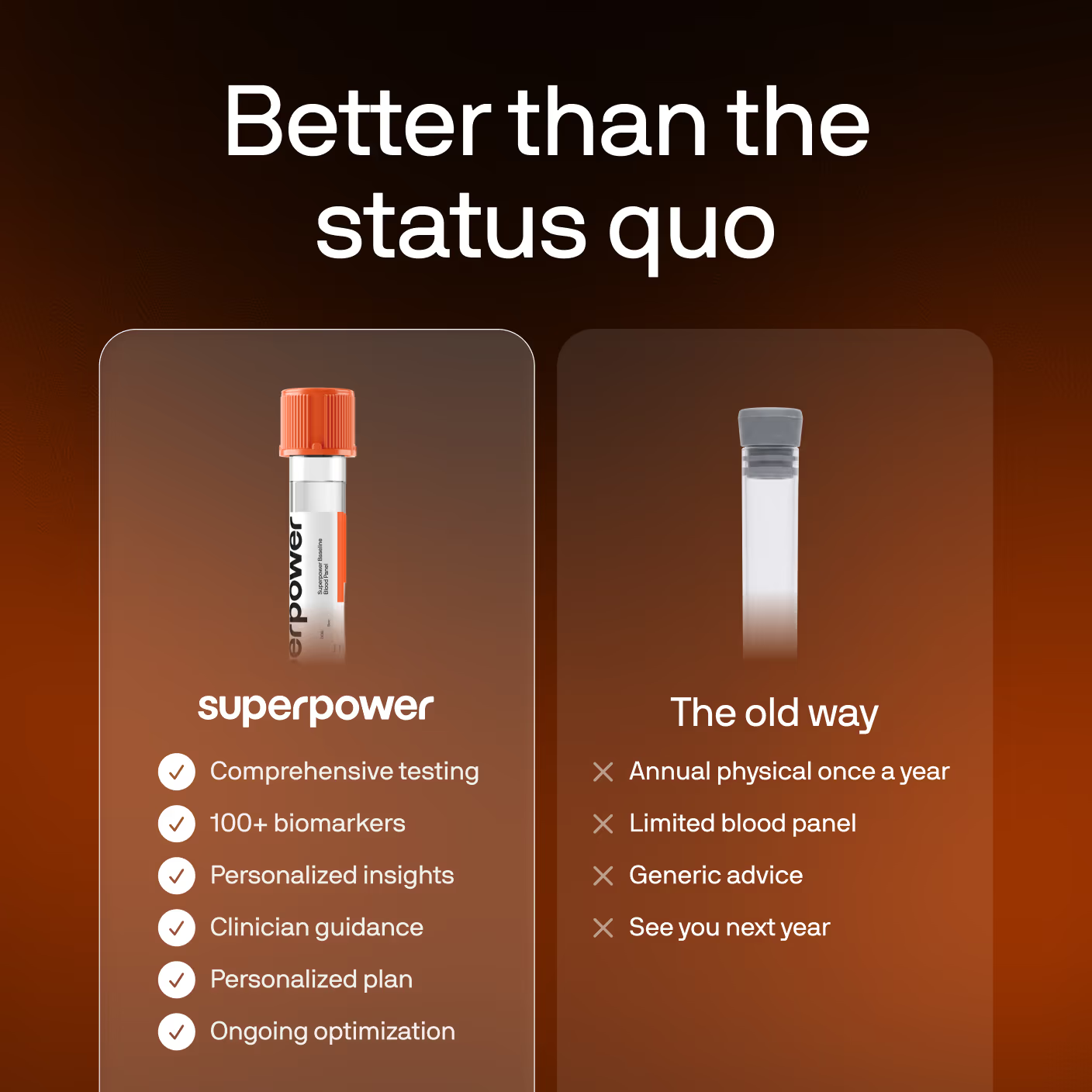
Herbal teas support sleep from the outside in. A blood test shows what's happening inside, such as whether your magnesium levels are sufficient or cortisol stays elevated into the evening. Superpower measures 100+ biomarkers that influence sleep quality, stress response, and overall health, with a personalized protocol built from your results.
Frequently Asked Questions
References
- Chang SM, Chen CH (2016). Effects of an intervention with drinking chamomile tea on sleep quality and depression in sleep disturbed postnatal women: a randomized controlled trial. *Journal of advanced nursing*, *72*(2), 306-15. https://doi.org/10.1111/jan.12836
- Zick SM, Wright BD, Sen A, Arnedt JT (2011). Preliminary examination of the efficacy and safety of a standardized chamomile extract for chronic primary insomnia: a randomized placebo-controlled pilot study. *BMC complementary and alternative medicine*, *11*, 78. https://doi.org/10.1186/1472-6882-11-78
- Killgore WD (2010). Effects of sleep deprivation on cognition. *Progress in brain research*, *185*, 105-29. https://doi.org/10.1016/B978-0-444-53702-7.00007-5
- Bent S, Padula A, Moore D, Patterson M, Mehling W (2006). Valerian for sleep: a systematic review and meta-analysis. *The American journal of medicine*, *119*(12), 1005-12. https://doi.org/10.1016/j.amjmed.2006.02.026
- Ngan A, Conduit R (2011). A double-blind, placebo-controlled investigation of the effects of Passiflora incarnata (passionflower) herbal tea on subjective sleep quality. *Phytotherapy research : PTR*, *25*(8), 1153-9. https://doi.org/10.1002/ptr.3400
- Qu WM, Yue XF, Sun Y, Fan K, Chen CR, Hou YP, Urade Y, Huang ZL (2012). Honokiol promotes non-rapid eye movement sleep via the benzodiazepine site of the GABA(A) receptor in mice. *British journal of pharmacology*, *167*(3), 587-98. https://doi.org/10.1111/j.1476-5381.2012.02010.x
- Cases J, Ibarra A, Feuillère N, Roller M, Sukkar SG (2011). Pilot trial of Melissa officinalis L. leaf extract in the treatment of volunteers suffering from mild-to-moderate anxiety disorders and sleep disturbances. *Mediterranean journal of nutrition and metabolism*, *4*(3), 211-218. https://doi.org/10.1007/s12349-010-0045-4
- Taavoni S, Nazem Ekbatani N, Haghani H (2013). Valerian/lemon balm use for sleep disorders during menopause. *Complementary therapies in clinical practice*, *19*(4), 193-6. https://doi.org/10.1016/j.ctcp.2013.07.002
- National Center for Complementary and Integrative Health (n.d.). Lavender. https://www.nccih.nih.gov/health/lavender
- Chen SL, Chen CH (2015). Effects of Lavender Tea on Fatigue, Depression, and Maternal-Infant Attachment in Sleep-Disturbed Postnatal Women. *Worldviews on evidence-based nursing*, *12*(6), 370-9. https://doi.org/10.1111/wvn.12122













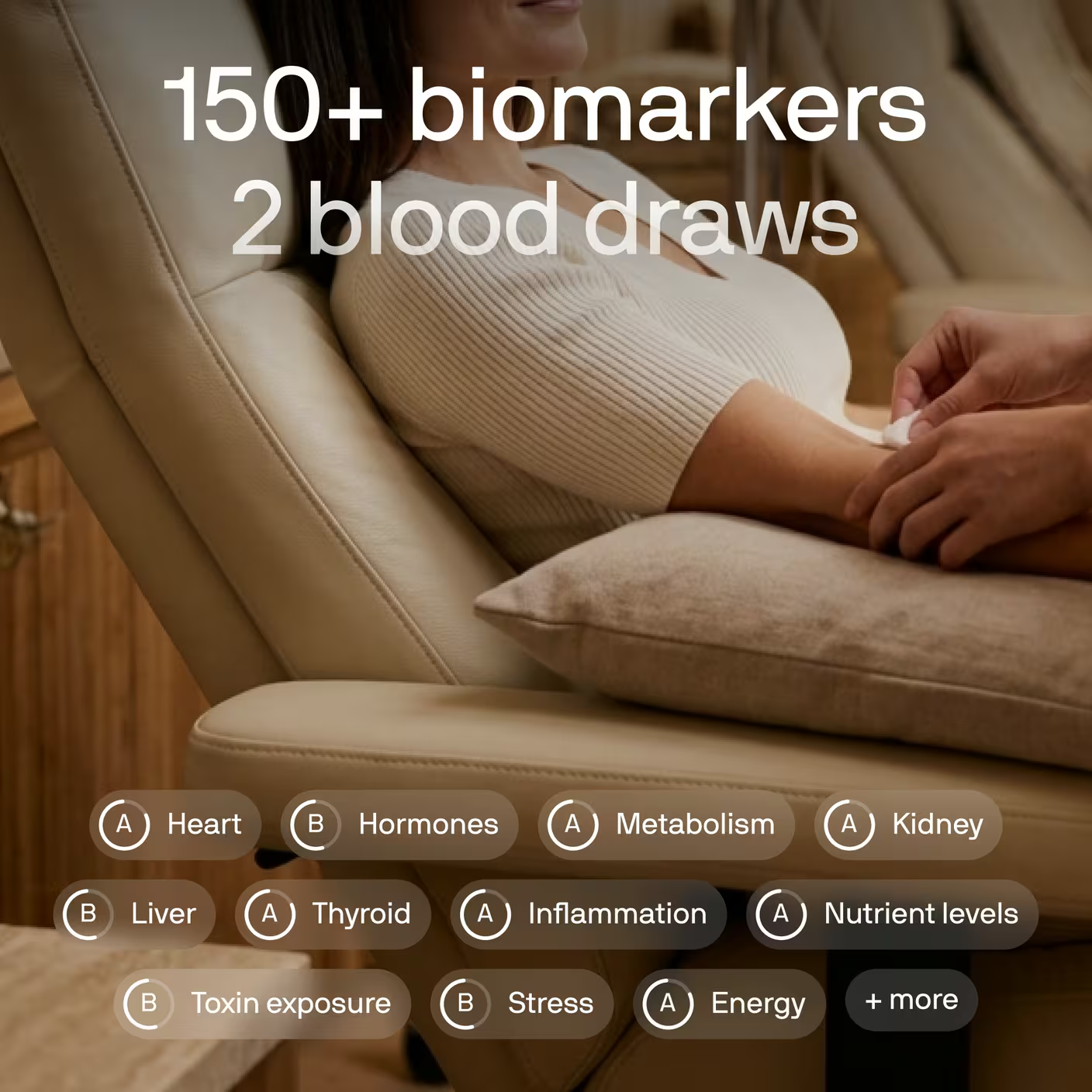











 Heart & Vascular Health
 Metabolic Health
 Energy
 Liver Health
 Kidney
 Sex Hormones
 Thyroid Health
 Nutrients
 Immune System
 Inflammation