


Understand what your organ health supplements results really mean
See your biomarkers in context with a comprehensive panel.
- CLIA-certified labs
- HIPAA compliant
- Personalized health protocol
What ubiquinone and ubiquinol actually are
Ubiquinone and ubiquinol are the same molecule, CoQ10, in two oxidation states. If you're under 40, healthy, and not taking medications that affect CoQ10 metabolism, a well-formulated ubiquinone is likely sufficient. If you're over 60, take statins, or have a chronic illness, ubiquinol may offer better tissue uptake because it skips the conversion step.
Coenzyme Q10 exists in two interconvertible forms: ubiquinone (the oxidized form) and ubiquinol (the reduced form). The molecule cycles between them as it participates in mitochondrial energy production. Ubiquinone accepts electrons during the electron transport chain and becomes ubiquinol. Ubiquinol donates electrons and reverts to ubiquinone. This redox cycling is how CoQ10 functions as both an energy shuttle and an antioxidant.
In human plasma, 93 to 99 percent of circulating CoQ10 exists as ubiquinol under normal conditions. This reflects the body's reducing environment and the continuous regeneration of ubiquinol from ubiquinone by cellular antioxidant systems, particularly glutathione. When you take ubiquinone orally, your intestinal cells reduce it to ubiquinol before it enters circulation. When you take ubiquinol, it can be absorbed directly, but it also oxidizes back to ubiquinone in the gut and bloodstream depending on local redox conditions.
The key question isn't which form is active (both are, depending on the metabolic context), but whether your body can efficiently perform the conversions required to maintain adequate CoQ10 levels in tissues where energy demand is highest: heart, brain, liver, and skeletal muscle.
What the clinical evidence actually shows
The majority of well-powered clinical trials demonstrating cardiovascular benefits, improved heart failure outcomes, and reduced oxidative stress have used ubiquinone, not ubiquinol. The landmark Q-SYMBIO trial, which showed reduced cardiovascular mortality in heart failure patients, used 100 mg of ubiquinone three times daily. Studies on statin-related muscle symptoms, blood pressure reduction, and endothelial function have predominantly tested ubiquinone formulations.
Head-to-head comparisons suggest ubiquinol achieves higher plasma CoQ10 concentrations at equivalent doses, particularly in older adults. A study in healthy adults over 60 found that 150 mg of ubiquinol produced plasma levels comparable to 300 mg of ubiquinone.
The discrepancy often comes down to formulation. CoQ10 is highly lipophilic and poorly water-soluble, which limits absorption. Ubiquinone in an oil-based softgel or emulsified preparation can achieve bioavailability similar to ubiquinol. Crystalline ubiquinone powder in a capsule performs poorly. The form matters less than the delivery system.
Population-specific findings
Evidence suggests that ubiquinol may offer a meaningful advantage in populations with compromised mitochondrial function or reduced antioxidant capacity (2020 literature review).
How conversion works and when it slows down
The conversion of ubiquinone to ubiquinol occurs primarily through enzymatic reduction by mitochondrial and cytoplasmic reductases, with glutathione playing a central role. This process is efficient in healthy cells with adequate antioxidant reserves. However, several factors impair this conversion:
- Aging reduces the expression and activity of enzymes involved in CoQ10 biosynthesis and recycling.
- Oxidative stress shifts the balance toward the oxidized ubiquinone form.
- Mitochondrial dysfunction impairs the cellular machinery needed for conversion.
- Chronic inflammation depletes antioxidant reserves required for maintaining ubiquinol.
- Certain medications (particularly statins) inhibit the enzymes needed for CoQ10 synthesis.
Tissue levels of CoQ10 peak around age 20 and decline progressively thereafter, with the heart showing some of the steepest declines. This isn't just about lower production; it's also about reduced capacity to maintain CoQ10 in its active, reduced form. Older adults often have lower glutathione levels and higher oxidative stress, both of which shift the balance toward ubiquinone.
Statin medications inhibit HMG-CoA reductase, the same enzyme required for CoQ10 synthesis. This is why statin users often have lower plasma and tissue CoQ10 levels. While the clinical significance of statin-induced CoQ10 depletion remains debated, some patients report muscle pain and fatigue that improve with CoQ10 supplementation. For these individuals, ubiquinol may be preferable because it bypasses the need for reduction.
Heart failure, diabetes, and neurodegenerative diseases are all associated with mitochondrial dysfunction and impaired CoQ10 metabolism. In these conditions, the ability to convert ubiquinone to ubiquinol may be rate-limiting, making direct ubiquinol supplementation a more efficient strategy.
Dose, form, and timing: What the evidence supports
| Feature | Ubiquinone | Ubiquinol |
|---|---|---|
| Oxidation state | Oxidized | Reduced; 93–99% of circulating CoQ10 in plasma |
| Stability | Stable; choose an oil-based softgel or emulsified preparation, not crystalline powder | Oxidizes easily in air and light; choose a stabilized product |
| Evidence base | Larger; studied for decades, including Q-SYMBIO and most heart failure, statin, and blood pressure trials | Smaller; commercially available more recently |
| Typical daily dose | 100–200 mg for maintenance (2022 meta-analysis); 300–600 mg studied in heart failure and other therapeutic uses (2025 rct) | 100–200 mg, lower because of higher bioavailability (2018 rct) |
| Who it suits | Adults under 40 who are healthy and take no medications that affect CoQ10 | Adults over 60; people with heart failure or other cardiovascular conditions; statin users; chronic illness, chronic fatigue, mitochondrial dysfunction, or neurodegenerative disease |
Both forms absorb best with a meal that contains fat. For timing, split dosing, and plasma targets, see the CoQ10 dosing guide.
CoQ10 works synergistically with other mitochondrial nutrients. Magnesium is required for ATP synthesis and mitochondrial function. Vitamin D influences mitochondrial gene expression. B vitamins, particularly B2 (riboflavin) and B3 (niacin), are cofactors in the electron transport chain. Selenium supports glutathione peroxidase, which helps maintain CoQ10 in its reduced form.
Who benefits most from ubiquinol, and who should be careful
If you're taking ubiquinone and seeing no benefit, switching to ubiquinol is worth trying, but the issue may also be dose, formulation, or the presence of other nutritional deficiencies that limit CoQ10 utilization.
CoQ10 supplementation is generally well-tolerated, with few reported side effects even at high doses. There is no evidence CoQ10 causes liver injury, and in healthy adults taking up to 900 mg a day for four weeks, blood chemistry and urinalysis showed no clinically significant changes. Mild gastrointestinal symptoms (nausea, diarrhea) can occur, particularly at doses above 300 mg per day (2022 meta-analysis). Taking CoQ10 with food usually mitigates this. No formal tolerable upper intake level has been established for CoQ10, and clinical studies at higher doses have generally reported good tolerability.
CoQ10 has a structural similarity to vitamin K and may theoretically reduce the effectiveness of warfarin, though clinical evidence for this interaction is inconsistent. If you're on warfarin, monitor your INR more frequently when starting CoQ10. CoQ10 may also lower blood pressure modestly, which is generally beneficial but could be additive with antihypertensive medications. If you're on blood pressure medication, monitor your levels and adjust dosing as needed with your physician.
There is no evidence that CoQ10 supplementation during pregnancy or lactation is harmful, but data are limited. CoQ10 is naturally present in the diet and synthesized endogenously, so supplementation is unlikely to pose risk, but it should be discussed with a healthcare provider.
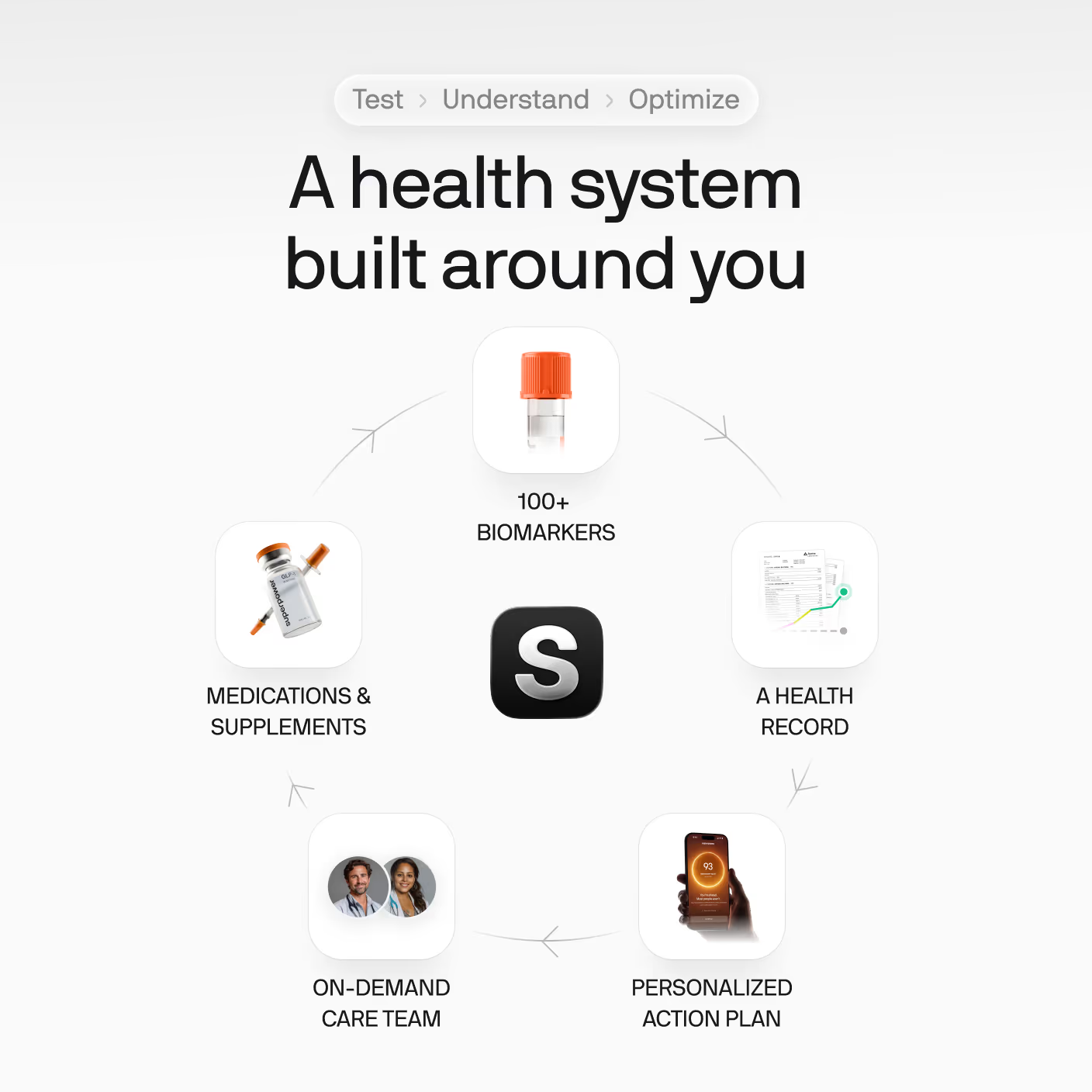
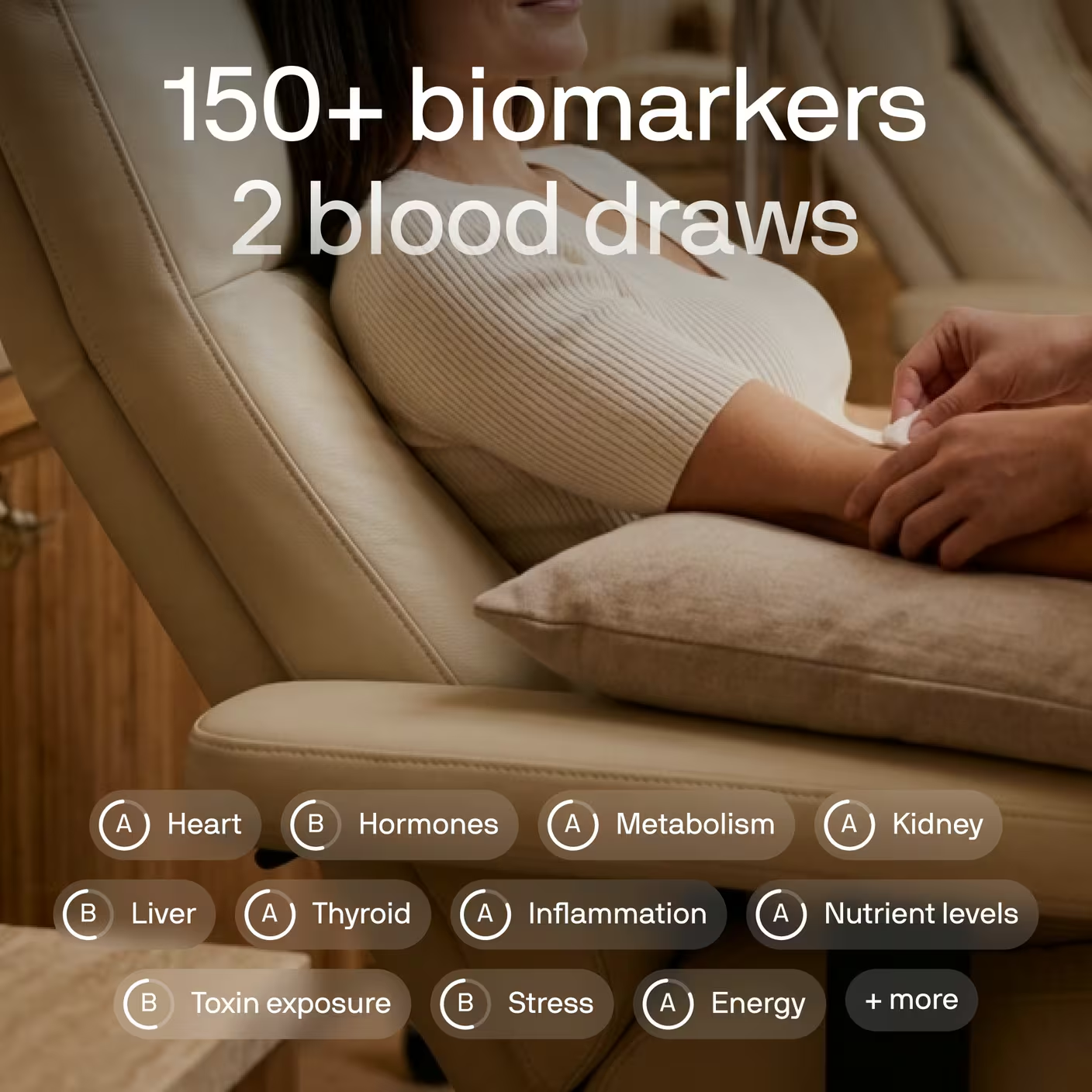
Test 100+ biomarkers
One blood draw. A full picture of your health, explained in plain language.
Test 100+ biomarkers
One blood draw. A full picture of your health, explained in plain language.
Testing your CoQ10 status and tracking response
Plasma CoQ10 levels can be measured, though the test isn't routinely available in standard lab panels. Levels below 0.5 mcg/mL suggest deficiency, while levels above 2.5 mcg/mL are generally considered adequate. However, plasma levels don't always reflect tissue levels, and CoQ10 status is best interpreted in the context of other markers.
If you're considering CoQ10 supplementation, baseline testing of mitochondrial and cardiovascular function provides a clearer picture of whether you're likely to benefit. Markers that reflect mitochondrial health and oxidative stress include:
- Ferritin (iron status affects mitochondrial function).
- High-sensitivity C-reactive protein (chronic inflammation impairs CoQ10 metabolism).
- Fasting glucose and insulin (metabolic dysfunction often coexists with mitochondrial impairment).
- Homocysteine (elevated levels suggest impaired methylation and increased oxidative stress).
Cardiovascular markers are particularly relevant if you're supplementing CoQ10 for heart health. Apolipoprotein B, triglycerides, and HDL cholesterol provide insight into lipid metabolism and cardiovascular risk. Lipoprotein(a) is a genetically influenced risk factor that CoQ10 doesn't directly address but is important context for overall cardiovascular strategy.
Functional indicators of CoQ10 adequacy include energy levels, exercise tolerance, and recovery. If you're supplementing for fatigue or muscle symptoms, tracking subjective improvements alongside objective markers (such as creatine kinase if muscle damage is suspected) helps determine whether the intervention is working. Blood pressure is another measurable outcome; CoQ10 supplementation has been shown to reduce systolic and diastolic pressure modestly in hypertensive individuals (2024 non-rct observational study).
Getting objective about your CoQ10 strategy
The choice between ubiquinone and ubiquinol isn't about one being universally superior; it's about matching the form to your physiology. If you're young, healthy, and metabolically efficient, ubiquinone is likely sufficient and more cost-effective. If you're older, dealing with chronic illness, or taking medications that deplete CoQ10, ubiquinol may offer better tissue uptake and require a lower dose. Superpower's baseline panel includes the metabolic, inflammatory, and cardiovascular markers that give context to the choice between forms, so you can track how your body responds before and during supplementation. Testing before and during supplementation transforms CoQ10 from a speculative intervention into a targeted strategy with measurable outcomes.
Frequently Asked Questions
References
- Di Lorenzo A, Iannuzzo G, Parlato A, Cuomo G, Testa C, Coppola M, D'Ambrosio G, Oliviero DA, Sarullo S, Vitale G, Nugara C, Sarullo FM, Giallauria F (2020). Clinical Evidence for Q10 Coenzyme Supplementation in Heart Failure: From Energetics to Functional Improvement. *Journal of clinical medicine*, *9*(5). https://doi.org/10.3390/jcm9051266
- Liu Z, Tian Z, Zhao D, Liang Y, Dai S, Liu M, Hou S, Dong X, Zhaxinima, Yang Y (2022). Effects of Coenzyme Q10 Supplementation on Lipid Profiles in Adults: A Meta-analysis of Randomized Controlled Trials. *The Journal of clinical endocrinology and metabolism*, *108*(1), 232-249. https://doi.org/10.1210/clinem/dgac585
- Bodea O, Boia ER, Craciun LM, Valcovici MD, Motofelea AC, Munteanu AM, Streian CG, Pop GN, Dragan SR (2025). Effect of Coenzyme Q10 Supplementation on Cardiac Function and Quality of Life in Patients with Heart Failure: A Randomized Controlled Trial. *Journal of clinical medicine*, *14*(11). https://doi.org/10.3390/jcm14113675
- Zhang Y, Liu J, Chen XQ, Oliver Chen CY (2018). Ubiquinol is superior to ubiquinone to enhance Coenzyme Q10 status in older men. *Food & function*, *9*(11), 5653-5659. https://doi.org/10.1039/c8fo00971f
- Tsai IC, Hsu CW, Chang CH, Tseng PT, Chang KV (2022). Effectiveness of Coenzyme Q10 Supplementation for Reducing Fatigue: A Systematic Review and Meta-Analysis of Randomized Controlled Trials. *Frontiers in pharmacology*, *13*, 883251. https://doi.org/10.3389/fphar.2022.883251
- LiverTox: Clinical and Research Information on Drug-Induced Liver Injury (2024). Coenzyme Q10. National Institute of Diabetes and Digestive and Kidney Diseases.
- Ikematsu H, Nakamura K, Harashima S, Fujii K, Fukutomi N (2006). Safety assessment of coenzyme Q10 (Kaneka Q10) in healthy subjects: a double-blind, randomized, placebo-controlled trial. *Regulatory toxicology and pharmacology*, *44*(3), 212-8. https://doi.org/10.1016/j.yrtph.2005.12.002
- Zhao D, Tian Z, Kuang H, Xu Y, Zheng Y, Zhong Z, Liang L, Yang Y (2024). Associations between Long-Term Dietary Coenzyme Q10 Intake and New-Onset Hypertension in Adults: Insights from a Nationwide Prospective Cohort Study. *Nutrients*, *16*(15). https://doi.org/10.3390/nu16152478

















 Heart & Vascular Health
 Metabolic Health
 Energy
 Liver Health
 Kidney
 Sex Hormones
 Thyroid Health
 Nutrients
 Immune System
 Inflammation