

Understand what your nutrition results really mean
See your biomarkers in context with a comprehensive panel.
- CLIA-certified labs
- HIPAA compliant
- Personalized health protocol
What selenium actually is and does
Selenium is a trace mineral your body uses to build selenoproteins — enzymes that protect cells from oxidative damage and help activate thyroid hormones. You don't make selenium; you eat it, absorb it, and your liver packages and ships it around the body as selenoprotein P. On a lab report, "selenium" typically means the concentration in serum or plasma: a snapshot of the mineral available for building and running these enzymes. It does not measure intracellular selenoprotein activity — serum levels are a proxy, not a direct enzyme-function assay.
How selenium powers antioxidant and thyroid enzymes
Normal metabolism and immune responses create reactive oxygen species. Selenium-containing enzymes — especially glutathione peroxidases and thioredoxin reductases — clear those byproducts before they damage DNA, lipids, or proteins. Thyroid hormone comes in two main forms: T4 (the storage form) and T3 (the active form). Converting T4 to T3 requires deiodinase enzymes that contain selenium. If selenium status is low, that conversion can tilt, nudging thyroid signaling off balance.
An important limitation of the serum measurement: glutathione peroxidase activity saturates at roughly 90 µg/L, while serum selenium continues to rise with higher intake. A rising number above that threshold does not reflect additional antioxidant enzyme function.
The dose-response curve is U-shaped, not linear. Observational data link very low selenium with higher risk of cardiomyopathy in severely deficient regions and with impaired immune defense. At the other end, very high selenium intake has been associated with higher risk of type 2 diabetes in some cohorts. The SELECT trial (Selenium and vitamin E Cancer Prevention Trial) found that selenium supplementation in well-nourished populations did not reduce prostate cancer risk and raised safety concerns when combined with high-dose vitamin E. Selenium sufficiency matters; excess does not add benefit and carries risk.
Selenium is also a negative acute-phase reactant. During infection or inflammation, the liver reprioritizes proteins and selenoprotein P falls — lowering measured serum selenium even when total body stores are adequate. This is the single most important confounder when interpreting a result: a low value during or shortly after illness does not reliably indicate true deficiency.
Reading your selenium number in context
Normal range
Reference intervals describe where most people's results fall, not where everyone thrives, and exact numbers vary with the assay method and the population sampled. Many labs report a serum range in the ballpark of 70–150 µg/L. Enzyme activity data suggest that certain selenoproteins approach a functional plateau once serum levels reach the lower-to-middle part of that range — glutathione peroxidase activity tends to saturate around 90 µg/L, while selenoprotein P rises with intake and then levels off as tissues are supplied. Going from low to adequate helps; overshooting does not keep adding benefit. Age, diet, pregnancy, and inflammation status all influence interpretation.
When levels run high
Elevations most often reflect high intake from supplements or selenium-rich foods. Brazil nuts can contain wildly variable amounts depending on soil — sometimes enough to exceed the daily upper limit if eaten regularly. Some multivitamins and hair/skin/nail products also contribute selenium without making it obvious. Less commonly, manufacturing errors, mislabeled supplements, or parenteral nutrition mistakes cause spikes, and geographic areas with selenium-rich soils can contribute. The tolerable upper intake level for adults is 400 µg/day, established to reduce toxicity risk. Persistent high levels can correlate with symptoms of selenosis: brittle hair and nails, a metallic or garlic-like breath odor, and at higher exposures, gastrointestinal upset and neurologic changes.
When levels run low
Low values can reflect inadequate intake, malabsorption, or increased demand. Regions with selenium-poor soils — across parts of Europe and Asia — see more dietary deficiency. Conditions that reduce absorption, including celiac disease, inflammatory bowel disease, and post-bariatric surgery, can pull levels down, as can long-term total parenteral nutrition without sufficient selenium supplementation. Pregnancy increases selenium requirements and can modestly lower serum values as blood volume expands and the placenta and fetus draw on supplies. Because selenium is a negative acute-phase reactant, levels can transiently fall during infections or inflammatory flare-ups even when total body selenium is adequate — making illness timing a critical piece of context for any low result.
Factors that move selenium levels between draws
Dietary intake
Selenium comes entirely from food and supplements. A mixed diet with protein sources such as seafood, eggs, and meats, plus grains or legumes, provides enough in most regions. Plant foods mirror the selenium content of the soil they grow in, so content varies by geography. Brazil nuts are potent but unpredictable — one nut can range from modest to more than a full day's recommended intake. The adult Recommended Dietary Allowance is 55 µg/day, with higher requirements during pregnancy and lactation. Supplement and multivitamin stacking can quietly push total daily intake above the tolerable upper level without it being obvious from any single product label.
Malabsorption and medical conditions
Celiac disease, inflammatory bowel disease, bariatric surgery, and long-term parenteral nutrition can all reduce selenium absorption or delivery. Dialysis and advanced kidney disease alter trace element handling. Autoimmune thyroiditis intersects with selenium status through the deiodinase and antioxidant systems. Pregnancy raises requirements and can modestly lower circulating levels.
Acute illness and inflammation
Because selenium is a negative acute-phase reactant, any active infection, inflammatory flare, or significant physiological stress can transiently suppress serum selenium independent of dietary intake or true body stores. A draw taken during acute illness may underestimate actual selenium status; results are most meaningful when collected under stable, non-inflammatory conditions.
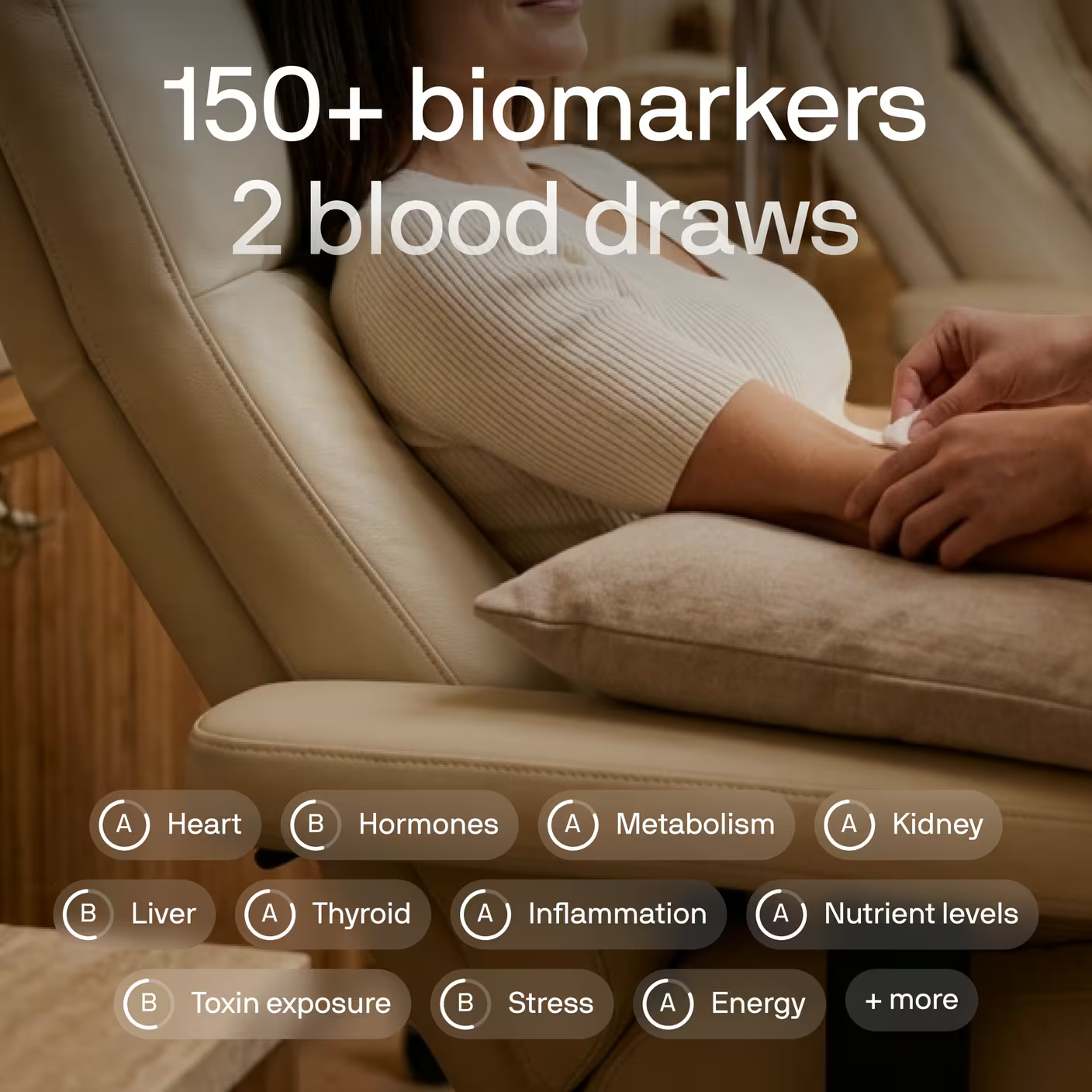
Test 150+ biomarkers
Two blood draws. A full picture of your health, explained in plain language.
Test 150+ biomarkers
Two blood draws. A full picture of your health, explained in plain language.
Markers that read selenium in context
- Thyroid-stimulating hormone (TSH) — selenium-containing deiodinase enzymes convert T4 to T3; a low selenium alongside a rising TSH can indicate suboptimal thyroid hormone activation, not just thyroid gland pathology.
- Free triiodothyronine (free T3) — free T3 is the endpoint of the selenium-dependent deiodinase conversion; low selenium can reduce free T3 even when TSH and T4 are normal, making free T3 the functional read on selenium's thyroid role.
- High-sensitivity C-reactive protein (hs-CRP) — because selenium is a negative acute-phase reactant, an elevated hs-CRP alongside a low serum selenium may indicate that inflammation is suppressing selenium levels transiently rather than reflecting true dietary deficiency.
- Thyroid peroxidase antibodies (TPO) — selenium protects the thyroid gland from oxidative stress generated during hormone synthesis; low selenium has been associated with higher TPO antibody levels in autoimmune thyroiditis cohorts.
- Vitamin D (25-hydroxy) — vitamin D and selenium both support immune regulation and thyroid function; deficiencies often coexist in people with malabsorption conditions, making joint testing informative.
A realistic retest window for selenium
Plasma selenium reaches a new steady state within 8–12 weeks after a sustained change in dietary intake, based on repletion trials. If dietary changes or supplementation have been introduced, retesting at 8–12 weeks gives a meaningful signal of whether levels have shifted. For healthy adults with no malabsorption or documented deficiency, annual monitoring is sufficient.
For consistency, use the same laboratory and the same assay method between draws — serum and plasma measurements can differ and are not directly interchangeable. Avoid drawing during or shortly after acute illness; the acute-phase redistribution effect can suppress serum selenium and produce a misleadingly low result. Retest under stable, non-inflammatory conditions for a reliable baseline.
When selenium results warrant a provider conversation
A result outside the reference range is a starting point, not a verdict. A value above 150 µg/L — particularly with symptoms such as brittle hair or nails, garlic-like breath, or gastrointestinal changes — warrants a review of supplement and multivitamin intake and a retest after adjusting. A persistently low value, especially alongside malabsorption, autoimmune thyroid disease, dialysis, or pregnancy, is worth discussing with a clinician rather than self-correcting.
Context matters most. A low result drawn during an acute illness, or alongside an elevated hs-CRP, may reflect transient acute-phase suppression rather than true deficiency — retesting under stable conditions clarifies the picture. A trend across two or more draws is more actionable than any single datapoint.
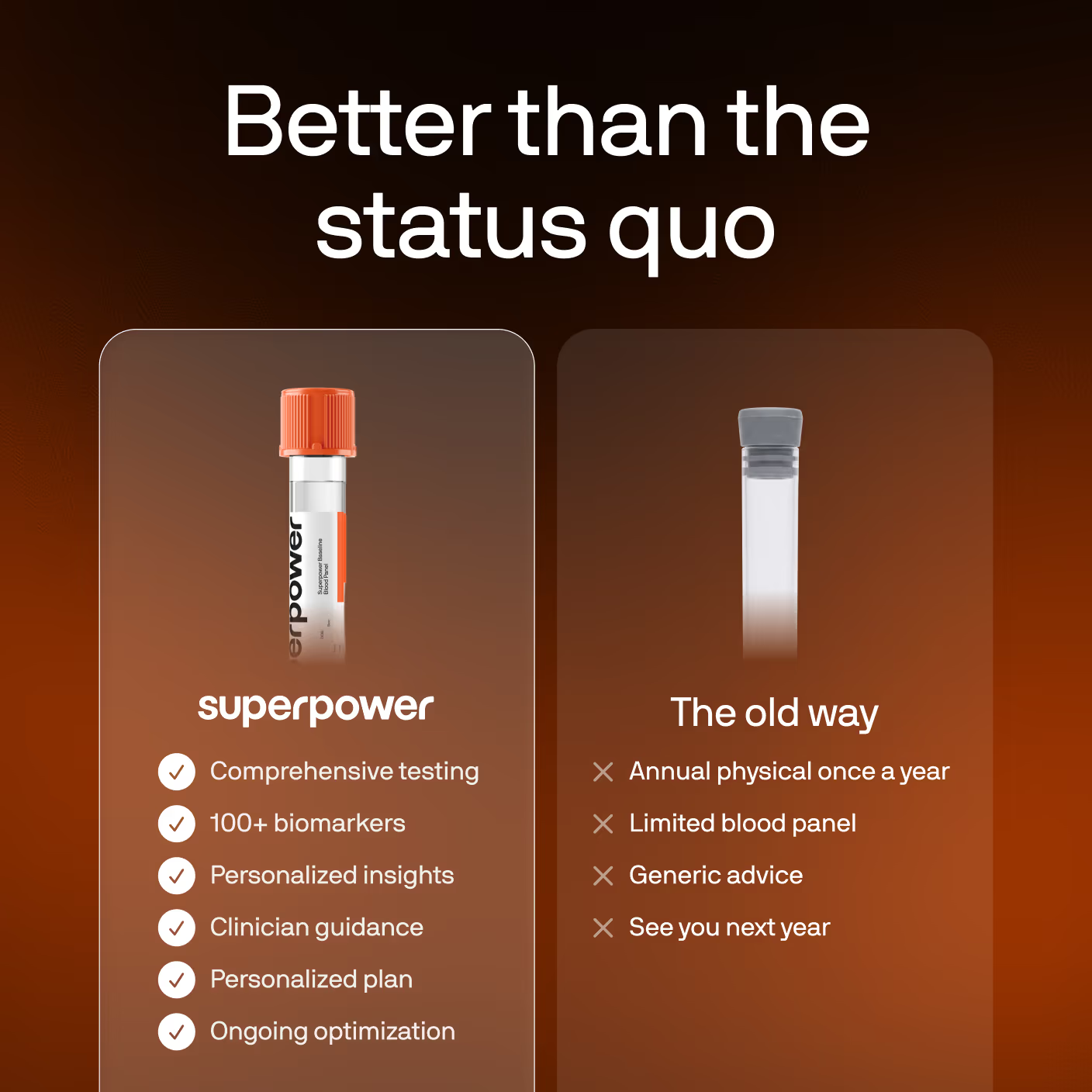
Testing takes the guesswork out of a nutrient that can be both essential and excessive. Seeing selenium next to thyroid markers, inflammation signals, and related nutrients — trended over time — turns a number into a coherent story. That's the approach behind Superpower: evidence-grounded, trended biomarker data guided by clinicians, built around the idea that fewer blind spots lead to better decisions. Learn more about that approach.
Frequently Asked Questions
References
- Lippman SM, Klein EA, Goodman PJ, Lucia MS, Thompson IM, Ford LG, Parnes HL, Minasian LM, Gaziano JM, Hartline JA, Parsons JK, Bearden JD, 3rd, Crawford ED, Goodman GE, Claudio J, Winquist E, Cook ED, Karp DD, Walther P, ... Coltman CA, Jr. (2009). Effect of selenium and vitamin E on risk of prostate cancer and other cancers: the Selenium and Vitamin E Cancer Prevention Trial (SELECT). *JAMA*, *301*(1), 39-51. https://doi.org/10.1001/jama.2008.864
- Stranges S, Marshall JR, Natarajan R, Donahue RP, Trevisan M, Combs GF, Cappuccio FP, Ceriello A, Reid ME (2007). Effects of long-term selenium supplementation on the incidence of type 2 diabetes: a randomized trial. *Annals of internal medicine*, *147*(4), 217-23. https://doi.org/10.7326/0003-4819-147-4-200708210-00175
- Hurst R, Armah CN, Dainty JR, Hart DJ, Teucher B, Goldson AJ, Broadley MR, Motley AK, Fairweather-Tait SJ (2010). Establishing optimal selenium status: results of a randomized, double-blind, placebo-controlled trial. *The American journal of clinical nutrition*, *91*(4), 923-31. https://doi.org/10.3945/ajcn.2009.28169
- Wichman J, Winther KH, Bonnema SJ, Hegedüs L (2016). Selenium Supplementation Significantly Reduces Thyroid Autoantibody Levels in Patients with Chronic Autoimmune Thyroiditis: A Systematic Review and Meta-Analysis. *Thyroid*, *26*(12), 1681-1692. https://doi.org/10.1089/thy.2016.0256
- Zuo Y, Li Y, Gu X, Lei Z (2021). The correlation between selenium levels and autoimmune thyroid disease: a systematic review and meta-analysis. *Annals of palliative medicine*, *10*(4), 4398-4408. https://doi.org/10.21037/apm-21-449






















 Heart & Vascular Health
 Metabolic Health
 Energy
 Liver Health
 Kidney
 Sex Hormones
 Thyroid Health
 Nutrients
 Immune System
 Inflammation