

Understand what your metabolic panel testing results really mean
See your biomarkers in context with a comprehensive panel.
- CLIA-certified labs
- HIPAA compliant
- Personalized health protocol
What high chloride means
Chloride above 106 or 107 milliequivalents per liter (mEq/L), depending on the lab, usually means dehydration, kidney dysfunction, or normal-anion-gap metabolic acidosis. The medical term is hyperchloremia.
Chloride is your body's most abundant negative ion, working as the counterpart to sodium's positive charge. Think of it as one half of table salt, sodium chloride. Your kidneys carefully regulate chloride levels to maintain the delicate balance of fluids inside and outside your cells.
When you get a chloride blood test, you're measuring the concentration of this electrolyte in your serum or plasma.
But chloride doesn't work alone. It partners with sodium to maintain blood volume and blood pressure. It also balances bicarbonate to keep your blood pH within the narrow range your cells need to function. When chloride climbs high, it's often your body's way of compensating for changes in these other electrolytes.
This is why isolated chloride readings can be misleading. Your body maintains what's called electroneutrality, the total positive and negative charges must balance. If chloride rises, something else is shifting too.
Normal versus optimal chloride levels
A typical lab reference range for chloride is 98 to 107 mEq/L. That range marks the absence of disease, not an optimal level, so a result can read normal and still sit near the high end. A reading of 109 or 112 mEq/L is above range, and what it means depends on the results beside it.
| Chloride reading | What it usually means | What to pair it with |
|---|---|---|
| Below 98 mEq/L | Low chloride (hypochloremia) | Bicarbonate: a high bicarbonate points to metabolic alkalosis |
| 98 to 107 mEq/L | Normal range | Sodium and bicarbonate, read on the same panel |
| Above 107 mEq/L, such as 109 or 112 | High chloride (hyperchloremia) | Sodium: both high suggests dehydration; normal or low sodium points to kidney dysfunction or an acid-base imbalance |
| Above 107 mEq/L with low bicarbonate | Metabolic acidosis | Anion gap: normal (8 to 12 mEq/L) suggests hyperchloremic metabolic acidosis; high suggests other causes, such as diabetic ketoacidosis |
| Above 107 mEq/L with normal bicarbonate | Dehydration or kidney issues | Sodium, to tell dehydration from a kidney cause |
Chronic mild hyperchloremia can indicate subtle kidney dysfunction or ongoing dehydration that hasn't yet caused obvious symptoms.
Individual patterns matter more than single readings. Your optimal chloride level depends on your baseline, your other electrolyte levels, and your kidney function. Someone with naturally higher sodium levels might run chloride at 105-106 mEq/L without problems, while another person might feel off when chloride climbs above 103 mEq/L.
Age influences chloride regulation too. Older adults are more prone to the dehydration and mild kidney decline that can push chloride higher. This doesn't mean high chloride is normal with aging, it means you need to consider the full clinical picture, including other kidney function markers.
Common causes of high chloride
Dehydration tops the list of causes for elevated chloride. When you lose water faster than electrolytes, through sweating, fever, or inadequate fluid intake, your remaining blood becomes more concentrated. Chloride levels rise along with sodium.
Kidney dysfunction disrupts chloride regulation in multiple ways. Your kidneys normally fine-tune chloride excretion to maintain balance. When kidney function declines, chloride can accumulate. This often shows up alongside elevated creatinine and reduced estimated glomerular filtration rate (eGFR).
Metabolic acidosis is frequently associated with higher chloride levels. When your blood becomes too acidic, your kidneys retain chloride to help balance the pH. This creates a specific pattern called normal anion gap metabolic acidosis, where chloride rises as bicarbonate falls.
Diarrhea can cause the same pattern. Losing bicarbonate-rich fluid through the gut lowers bicarbonate, and the kidneys hold on to chloride in its place, producing hyperchloremic metabolic acidosis.
Medications can push chloride higher. Acetazolamide (a carbonic anhydrase inhibitor), corticosteroids, certain antibiotics, and large-volume normal-saline infusions can raise chloride, while loop and thiazide diuretics more often lower it. Even over-the-counter NSAIDs can influence chloride regulation by impacting kidney function.
Chronic respiratory alkalosis paradoxically may be linked to high chloride through compensation. When you breathe off too much CO2 over days, from sustained hyperventilation, high altitude, or lung issues, your kidneys adjust by retaining chloride and releasing bicarbonate.
Low chloride, below 98 mEq/L, has a different set of causes, such as fluid overload and metabolic alkalosis, covered in what low chloride means.
How chloride is tested
Chloride testing requires a simple blood draw, usually from a vein in your arm. The sample goes into a standard tube, no special collection requirements. Most labs measure chloride using ion-selective electrodes that help detect the electrical charge of chloride ions in your serum.
No fasting is required for chloride testing, though if you're getting a comprehensive metabolic panel, other tests in that panel might require fasting. You can eat and drink normally before a chloride-only test.
Timing matters less for chloride than for hormones or glucose. Chloride is not subject to the day-to-day swings seen with glucose or hormones, though severe dehydration from morning fasting might artificially elevate results.
Retest frequency depends on your results and health status. If chloride is mildly elevated, retesting in 4-6 weeks makes sense. If it's significantly high or you have kidney issues, your care team might want more frequent monitoring.
Sample handling affects accuracy. Hemolysis (red blood cell breakdown) can interfere with chloride measurement and shift readings in either direction depending on the assay, while dehydration at the time of draw can temporarily elevate them. This is why trends matter more than single values.
What can change your chloride level
Hydration status directly impacts chloride levels. Adequate fluid intake may help maintain normal chloride concentration, while dehydration concentrates it. Aim for pale yellow urine as a hydration guide, dark urine often coincides with elevated chloride. Discuss hydration strategies with your care team.
Dietary sodium influences chloride since they're absorbed and regulated together. High-sodium diets can drive both sodium and chloride up, while very low-sodium approaches might lower both. Most people benefit from moderate sodium intake around 2,300mg daily. Consult with your care team about appropriate sodium intake for your situation.
Exercise intensity affects chloride through sweat losses and fluid shifts. Intense or prolonged exercise can concentrate chloride if you don't replace fluids appropriately. Sports drinks help, but plain water works for most exercise sessions under an hour. Discuss exercise and hydration strategies with your care team.
Medication timing matters for drugs that affect electrolyte balance. Taking diuretics, ACE inhibitors, or steroids can shift chloride levels. Never stop prescribed medications without discussing with your care team, but timing blood tests before morning doses gives the most accurate baseline reading.
Acid-base balance changes with diet and health status. Diets very high in protein can create mild metabolic acidosis, potentially raising chloride. Conversely, diets rich in fruits and vegetables provide alkalizing minerals that might help normalize chloride levels. Discuss dietary approaches with your care team.
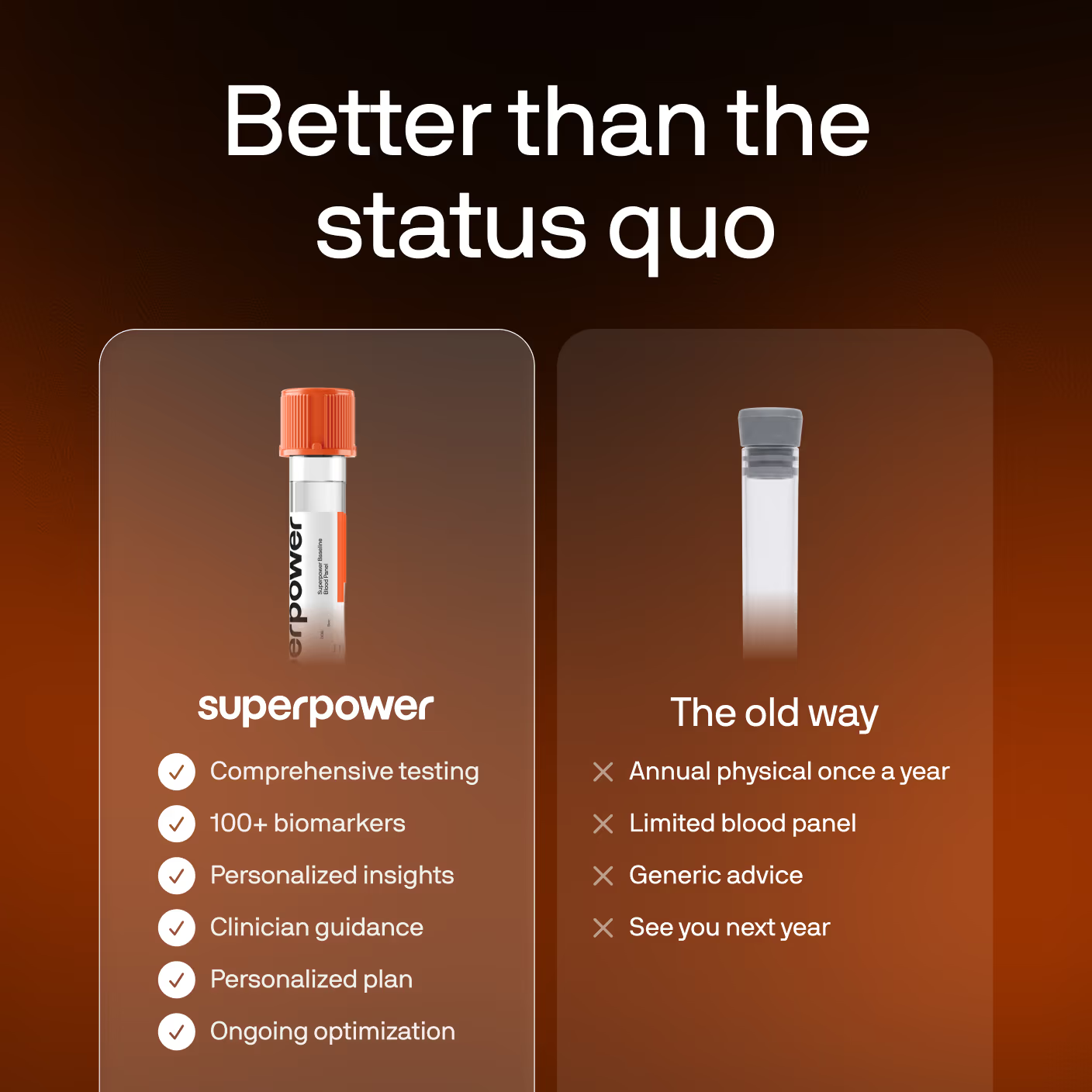
Test 100+ biomarkers
One blood draw. A full picture of your health, explained in plain language.
Test 100+ biomarkers
One blood draw. A full picture of your health, explained in plain language.
Chloride and related biomarkers
Sodium levels move closely with chloride in most situations, and bicarbonate and anion gap show which acid-base pattern sits behind a high reading. The table above pairs each one with its chloride result.
Kidney function markers including creatinine, blood urea nitrogen (BUN), and estimated glomerular filtration rate (eGFR) reveal whether elevated chloride stems from reduced kidney clearance. Rising creatinine with high chloride warrants prompt evaluation.
Potassium levels often shift alongside chloride changes. Both can be affected by diuretics, kidney function, and acid-base status. The pattern of multiple electrolyte changes tells a more complete story than chloride alone.
Why tracking chloride is worth it
Chloride testing shows fluid regulation and acid-base balance in ways symptoms alone cannot. You might feel fine while early kidney dysfunction or chronic mild dehydration develops, and elevated chloride can be an early warning sign before more obvious problems appear.
Trends over time tell you more than one reading. Tracked alongside sodium, bicarbonate, and kidney markers, serial chloride results show whether hydration changes are working. If you take diuretics, ACE inhibitors, or other drugs that affect electrolytes, they also help your care team catch problems early.
Frequently Asked Questions
References
- Sharma S, Hashmi MF, Aggarwal S (2023). *Hyperchloremic acidosis (Archived)*. StatPearls Publishing. https://www.ncbi.nlm.nih.gov/books/NBK482340/
- Bohn AA, de Morais HA (2017). A Quick Reference on Chloride. *The Veterinary clinics of North America. Small animal practice*, *47*(2), 219-222. https://doi.org/10.1016/j.cvsm.2016.10.008
- Berend K, van Hulsteijn LH, Gans RO (2012). Chloride: the queen of electrolytes?. *European journal of internal medicine*, *23*(3), 203-11. https://doi.org/10.1016/j.ejim.2011.11.013
- Kim S, Joo KW (2007). Electrolyte and Acid-base disturbances associated with non-steroidal anti-inflammatory drugs. *Electrolyte & blood pressure : E & BP*, *5*(2), 116-25. https://doi.org/10.5049/EBP.2007.5.2.116
- Shafat T, Novack V, Barski L, Haviv YS (2023). Community-based serum chloride abnormalities predict mortality risk. *PloS one*, *18*(2), e0279837. https://doi.org/10.1371/journal.pone.0279837
- Adeva-Andany MM, Carneiro-Freire N, Donapetry-García C, Rañal-Muíño E, López-Pereiro Y (2014). The importance of the ionic product for water to understand the physiology of the acid-base balance in humans. *BioMed research international*, *2014*, 695281. https://doi.org/10.1155/2014/695281
- Beck LH (2000). The aging kidney. Defending a delicate balance of fluid and electrolytes. *Geriatrics*, *55*(4), 26-8, 31-2. https://pubmed.ncbi.nlm.nih.gov/10771700/
- Morley JE (2015). Dehydration, Hypernatremia, and Hyponatremia. *Clinics in geriatric medicine*, *31*(3), 389-99. https://doi.org/10.1016/j.cger.2015.04.007
- Brinkman JE, Sharma S (2023). *Respiratory alkalosis (Archived)*. StatPearls Publishing. https://www.ncbi.nlm.nih.gov/books/NBK482117/
- Gillion V, Jadoul M, Devuyst O, Pochet JM (2019). The patient with metabolic alkalosis. *Acta clinica Belgica*, *74*(1), 34-40. https://doi.org/10.1080/17843286.2018.1539373
- Patel S, Sharma S (2023). *Respiratory acidosis*. StatPearls Publishing. https://www.ncbi.nlm.nih.gov/books/NBK482430/
- Peri A, Pirozzi N, Parenti G, Festuccia F, Menè P (2010). Hyponatremia and the syndrome of inappropriate secretion of antidiuretic hormone (SIADH). *Journal of endocrinological investigation*, *33*(9), 671-82. https://doi.org/10.1007/BF03346668
- Rayana MC, Burnett RW, Covington AK, D'Orazio P, Fogh-Andersen N, Jacobs E, Kataky R, Külpmann WR, Kuwa K, Larsson L, Lewenstam A, Maas AH, Mager G, Naskalski JW, Okorodudu AO, Ritter C, St John A, International Federation of Clinical Chemistry and Laboratory Medicine (IFCC) (2006). Recommendation for measuring and reporting chloride by ISEs in undiluted serum, plasma or blood. *Clinical chemistry and laboratory medicine*, *44*(3), 346-52. https://doi.org/10.1515/CCLM.2006.060
- Medlineplus. (n.d.). *Chloride Blood Test: MedlinePlus Medical Test*. https://medlineplus.gov/lab-tests/chloride-blood-test
- Koseoglu M, Hur A, Atay A, Cuhadar S (2011). Effects of hemolysis interferences on routine biochemistry parameters. *Biochemia medica*, *21*(1), 79-85. https://doi.org/10.11613/bm.2011.015
- Baker LB, De Chavez PJD, Ungaro CT, Sopeña BC, Nuccio RP, Reimel AJ, Barnes KA (2019). Exercise intensity effects on total sweat electrolyte losses and regional vs. whole-body sweat [Na. *European journal of applied physiology*, *119*(2), 361-375. https://doi.org/10.1007/s00421-018-4048-z
- Palmer BF (2011). Metabolic complications associated with use of diuretics. *Seminars in nephrology*, *31*(6), 542-52. https://doi.org/10.1016/j.semnephrol.2011.09.009
- Osuna-Padilla IA, Leal-Escobar G, Garza-García CA, Rodríguez-Castellanos FE (2019). Dietary Acid Load: mechanisms and evidence of its health repercussions. *Nefrologia*, *39*(4), 343-354. https://doi.org/10.1016/j.nefro.2018.10.005
- Feldman M, Dickson B (2018). Adjusted Plasma Chloride and Bicarbonate Concentrations: An Approach to Identifying Acid-Base Disorders. *The journal of applied laboratory medicine*, *2*(6), 833-840. https://doi.org/10.1373/jalm.2017.024794
- MedlinePlus. (n.d.). *Chloride test - blood: MedlinePlus Medical Encyclopedia*. https://medlineplus.gov/ency/article/003485.htm
- Lewis JL III (2025). *Metabolic acidosis*. Merck Manual Professional Edition. https://www.merckmanuals.com/professional/nephrology/acid-base-regulation-and-disorders/metabolic-acidosis





















 Heart & Vascular Health
 Metabolic Health
 Energy
 Liver Health
 Kidney
 Sex Hormones
 Thyroid Health
 Nutrients
 Immune System
 Inflammation