


See your ferritin and TIBC levels
See your biomarkers in context with a comprehensive panel.
- CLIA-certified labs
- HIPAA compliant
- Personalized health protocol
What to do if iron causes diarrhea
Iron supplements can cause diarrhea, and the priorities are replacing lost fluids, watching for dehydration, and calling a clinician when it lingers or comes with warning signs.
Replace fluids
Drink plenty of water or other fluids to avoid dehydration. General guidance for diarrhea suggests 8 to 10 glasses of clear fluids a day, plus at least 1 cup after each loose bowel movement. Water is the best choice, and caffeine, alcohol, and carbonated drinks are best avoided. Speak with a pharmacist or doctor before taking any other medicine for diarrhea.
Watch for dehydration
Dehydration is the main risk of ongoing diarrhea. Watch for these signs of dehydration:
- Extreme thirst or a dry mouth
- Urinating less than usual, or dark-colored urine
- Feeling tired, dizzy, or lightheaded
- Skin that does not flatten right away after a pinch
- Sunken eyes or cheeks
Blood tests can also show the blood signs of low body water.
When to call a clinician
Adults should talk with a doctor right away if diarrhea lasts more than two days or comes with a high fever, six or more loose stools a day, severe abdominal or rectal pain, frequent vomiting, or signs of dehydration. People who are pregnant, over 65, taking antibiotics, or living with a weakened immune system should keep in touch with their doctor from the start. Severe diarrhea lasting more than 24 hours can also make the contraceptive pill less reliable, so check the pill packet for advice.
Rather than stopping iron on your own, ask your provider about switching to another form of iron, because a side effect with one type of iron may not happen with another. Changes to dose, form, or schedule are decisions to make with your prescriber.
Black stools raise a different question: whether the color is just iron or a sign of bleeding.
Dark stools from iron versus signs of bleeding
Dark or black stools are expected on iron, while tarry stools, red streaks, or blood, especially alongside stomach pain or dizziness, can signal bleeding, so contact your provider right away.
| Usually iron | Possible bleeding | |
|---|---|---|
| Color and texture | Black or dark; normal when taking iron tablets | Tarry, foul-smelling, with red streaks or blood |
| Other symptoms | None | Cramps, sharp pains, or soreness in the stomach; vomiting blood or feeling dizzy or lightheaded |
| Next step | No action needed | Contact your provider right away |
Black, tarry stool with a foul smell most often indicates bleeding in the esophagus, stomach, or first part of the small intestine. Because iron can also blacken stool, a provider can test a stool sample for blood to tell the two apart, and blood work can show red-cell markers of a hidden GI bleed.
Why iron reaches the gut in the first place comes down to how little of each dose gets absorbed.
What iron supplements actually do in your digestive tract
Yes, iron supplements can cause diarrhea, though constipation is more common. Both come from how little of each dose your gut absorbs. When you swallow an iron supplement, specialized cells in your small intestine absorb elemental iron and shuttle it into your bloodstream. Your body regulates this through a protein called hepcidin, which controls how much iron enters circulation based on your current stores and red blood cell needs. When iron levels are low, hepcidin drops and absorption rises. When stores are adequate, hepcidin rises and absorption slows.
Why most of each dose stays in your gut
Most iron supplements deliver far more elemental iron than your intestinal cells can absorb in a single dose. A standard 325 mg ferrous sulfate tablet contains about 65 mg of elemental iron, but your body typically absorbs only 10 to 20% of that amount, even when you're iron deficient. The remaining 80 to 90% stays in your gut, where it triggers the side effects most people experience.
Unabsorbed iron doesn't pass through harmlessly. It oxidizes in the intestinal lumen, generating reactive oxygen species that irritate the mucosal lining. This oxidative stress disrupts your gut microbiome and alters gut motility. The result is a cascade of gastrointestinal symptoms that vary depending on the dose, the form of iron, and your individual gut physiology.
How iron affects gut motility, microbiome balance, and systemic circulation
Effects on gut motility and stool consistency
Iron's most common side effect is its impact on bowel movements. Unabsorbed ferrous iron binds to hydrogen sulfide in the colon, forming iron sulfide, a black compound that darkens your stool. The same iron also slows peristalsis, the rhythmic contractions that move stool through your colon.
The exact mechanism isn't fully established, but it is thought to involve iron's effects on intestinal smooth muscle function and gut microbiome composition, collectively reducing motility and increasing water reabsorption from stool. Can iron supplements cause constipation even in people who don't normally struggle with it? Yes, and the result is harder, drier stool that's more difficult to pass.
Paradoxically, some people experience the opposite, particularly at higher doses or in people with sensitive gut linings. Excess iron irritates the intestinal mucosa, triggering an inflammatory response that increases fluid secretion into the bowel.
Effects on gut microbiome composition
Iron is often a growth-limiting nutrient for gut bacteria, and iron you don't absorb reaches the colon. Lab and infant studies suggest extra colonic iron favors Enterobacteriaceae such as pathogenic Escherichia coli and Salmonella, which rely on iron to colonize the gut. Certain Clostridium species also show iron-dependent growth advantages, primarily in in vitro and infant trial data. The same studies suggest beneficial Lactobacillus and Bifidobacterium decline.
Human evidence is less clear-cut than lab studies. A 2024 trial of 923 Bangladeshi infants found no change in microbiome diversity or composition with iron in its primary analysis, and no increase in diarrhea. Only in analyses not adjusted for multiple comparisons did iron-treated infants show fewer Bifidobacterium and Lactobacillus and more potential pathogens such as Clostridium. Because these are infant data, they don't establish what happens in adults. Microbial shifts may contribute to bloating, gas, and the general sense that your digestion is off while taking iron, but that link hasn't been proven.
Effects on systemic circulation and hemoglobin production
Once absorbed, iron travels through your bloodstream bound to transferrin, a transport protein that delivers it to bone marrow for red blood cell production. As your body incorporates iron into hemoglobin, your oxygen-carrying capacity increases. This is the intended effect of iron supplementation, but the transition can produce systemic side effects.
Can iron supplements cause headaches? Yes, though the exact mechanism isn't well established. One hypothesis is that rapid hemoglobin increases alter cerebral circulation, but clinical studies haven't confirmed it. Headaches from iron supplements are most common in the first few weeks of treatment and often resolve as your body adjusts.
Can iron supplements cause diarrhea and constipation? What research shows
Side effect frequency and the most common symptoms
Large systematic reviews of oral iron supplementation consistently identify gastrointestinal side effects as the primary reason people stop treatment before their deficiency is corrected. The seven most frequently reported symptoms are:
- Constipation, the most frequently reported complaint; a meta-analysis of 43 trials found it in approximately 12% of ferrous sulfate users in controlled settings
- Nausea
- Abdominal pain and cramping
- Diarrhea
- Bloating and gas
- Dark or black stools
- Headaches, less common than the gut symptoms
Across 20 placebo-controlled trials in the same meta-analysis, ferrous sulfate more than doubled the odds of a GI side effect compared with placebo. In people with inflammatory bowel disease, side effects such as stomach pain and diarrhea lead up to 21% to stop treatment.
How dose and dosing schedule affect severity
Higher doses of elemental iron leave more unabsorbed iron in the gut, and larger or more frequent doses increase adverse effects, especially constipation. The 43-trial meta-analysis, though, didn't find a clear link between dose and the odds of GI side effects, so dose is one factor rather than the whole story. In a stable-isotope trial of iron-deficient anemic women, absorption per dose was 40–50% higher with alternate-day than consecutive-day dosing, because intervening days allow hepcidin to fall back to baseline before the next dose. A later double-blind RCT of 150 iron-depleted women found that, at the same total iron dose spread over six months instead of three, alternate-day dosing reached similar ferritin with fewer gastrointestinal side effects.
How the form of iron affects side effects
Formulation matters too. Ferrous sulfate is widely prescribed but delivers a high elemental iron dose and is more likely to oxidize in the gut. Chelated forms like iron bisglycinate are thought to be more bioavailable. A systematic review and meta-analysis of randomized trials, primarily in pregnant women, found they cause approximately 64% fewer gastrointestinal adverse events compared to other iron formulations (incidence rate ratio 0.36; 95% CI 0.17–0.76). Ferrous gluconate is another option: it is 12% elemental iron by weight, versus 20% for ferrous sulfate, so a tablet of the same weight delivers less iron, and doses of 45 mg a day or more may cause nausea and constipation.
How long iron side effects last
There's little research on how long iron side effects last. Some people find they ease over time, while others keep having GI symptoms like constipation and nausea until they change the dose, form, or schedule.
How to reduce iron supplement side effects without sacrificing absorption
Choose the right form of iron
Switching from ferrous sulfate to a chelated form like iron bisglycinate or to ferrous gluconate may reduce side effects.
Lower the dose and adjust frequency
Splitting a daily dose into a morning and an afternoon dose raised hepcidin without increasing total absorption compared with one morning dose, because each dose triggers a hepcidin rise that lowers absorption from a dose taken later the same day. Instead of splitting doses, ask your prescriber about switching to a lower-dose chelated form or taking your full dose every other day.
Alternate-day dosing reduces the total burden of unabsorbed iron in the gut while maintaining similar overall iron delivery. This approach may also ease the gut irritation that unabsorbed iron causes.
Time your dose strategically
Iron is best absorbed on an empty stomach, but taking it without food increases the likelihood of nausea and upset. If you can tolerate it, take iron 30 minutes before eating or two hours after a meal. If that causes too much discomfort, take it with a small amount of food. Bedtime doses, gaps around other medicines, and missed doses each shape when to take iron supplements.
Food and drinks do cut absorption: in a trial of iron-depleted women, coffee alone reduced iron absorption by 54%, and a breakfast with coffee reduced it by 66%. But a supplement you can tolerate consistently is more effective than one you stop taking. Avoid taking iron with calcium-rich foods, dairy, coffee, or tea, all of which further inhibit absorption.
Pair iron with vitamin C
Vitamin C enhances iron absorption by keeping iron in its more absorbable ferrous form and protecting it from binding to inhibitory compounds in food. Taking your iron supplement with a glass of orange juice or a vitamin C supplement can improve absorption: in iron-deficient women, 80 mg raised absorption by about 30%, and 500 mg added no further benefit. More isn't better here, since high doses of vitamin C can cause diarrhea, nausea, and abdominal cramps.
Support your gut microbiome
One specific probiotic strain has trial support. In a randomized (non-placebo-controlled) trial of 295 iron-deficiency anemia patients, adding Lactobacillus plantarum 299v for the first 30 days of oral iron therapy cut GI intolerance rates from 46.5% to 13.0% compared with iron alone, and improved iron status markers. The absence of a placebo arm means subjective symptom reporting may partly reflect expectation effects, and the result applies to that strain, not to probiotics or prebiotics in general.
Test 100+ biomarkers
One blood draw. A full picture of your health, explained in plain language.
Test 100+ biomarkers
One blood draw. A full picture of your health, explained in plain language.
Why the same iron supplement affects people differently
Your response to iron supplementation depends on factors that vary widely from person to person. Baseline gut motility plays a major role. If you tend toward constipation even without supplements, iron will likely make it worse. If you have a sensitive gut or a history of irritable bowel syndrome, you're more likely to experience cramping, bloating, and diarrhea.
Gut microbiome and genetics
Your gut microbiome composition may also matter, though research hasn't yet shown which baseline microbial patterns predict how someone will tolerate iron. Genetics influence how efficiently your intestinal cells absorb iron and how your body regulates hepcidin, which affects how much iron enters your bloodstream versus how much stays in your gut.
Health conditions and medications
Existing health conditions can amplify side effects. People with inflammatory bowel disease, celiac disease, or other conditions affecting gut integrity often tolerate oral iron poorly, and intravenous iron may be a better option, a decision to make with a healthcare provider. Medications also interact with iron: proton pump inhibitors and H2 blockers reduce stomach acid, impairing iron absorption and potentially requiring higher doses that produce more side effects.
Age and life stage
Age and life stage matter too. Pregnant women often experience more severe constipation from iron because pregnancy hormones already slow gut motility. Older adults with reduced gastric acid production absorb iron less efficiently and may need higher doses or alternative formulations.
How biomarkers reveal whether your iron supplement is working
Side effects tell you how your gut is responding to iron, but they don't tell you whether the supplement is actually correcting your deficiency. That requires tracking biomarkers over time.
Markers that track your response
- Ferritin reflects your body's iron stores and should rise steadily with supplementation. Recheck at 8 to 12 weeks to confirm your dose is adequate. Optimal ferritin is higher than most standard lab reference ranges suggest.
- Hemoglobin and hematocrit measure red blood cell oxygen-carrying capacity and should normalize as iron stores improve.
- Serum iron and iron saturation fluctuate throughout the day and immediately after a dose, so they're less useful for tracking long-term progress.
- Total iron binding capacity (TIBC) rises when iron stores are low and falls as they normalize, providing another measure of treatment response.
When ferritin is not rising
If your ferritin isn't rising after 12 weeks of consistent supplementation, the problem may be absorption, ongoing blood loss, or an underlying condition like celiac disease or Helicobacter pylori infection. Testing high-sensitivity CRP (hs-CRP) can help distinguish true iron deficiency from anemia of chronic disease, where inflammation blocks iron utilization even when stores are adequate.
Rare but urgent: child poisoning and allergic reactions
Iron poisoning in children and serious allergic reactions are rare, and both call for immediate help rather than home management.
Keep iron away from children
Iron-containing products carry an FDA-required warning that accidental overdose is a leading cause of fatal poisoning in children under 6. Store iron out of reach, and if a child swallows an iron pill, contact your local poison control center right away at 1-800-222-1222.
Serious allergic reaction
A serious allergic reaction (anaphylaxis) to ferrous sulfate is rare. Call 911 if your lips, mouth, throat, or tongue suddenly swell, you are breathing very fast or struggling to breathe, or your throat feels tight or you struggle to swallow.
Balance your ferritin levels with Superpower
How your gut feels on iron measures tolerance, not progress. Much of each dose stays in the gut, serum iron and saturation swing after every pill, and a ferritin that has not risen after 12 weeks can mean poor absorption, ongoing blood loss, or inflammation blocking iron use. Stomach comfort reveals none of that.
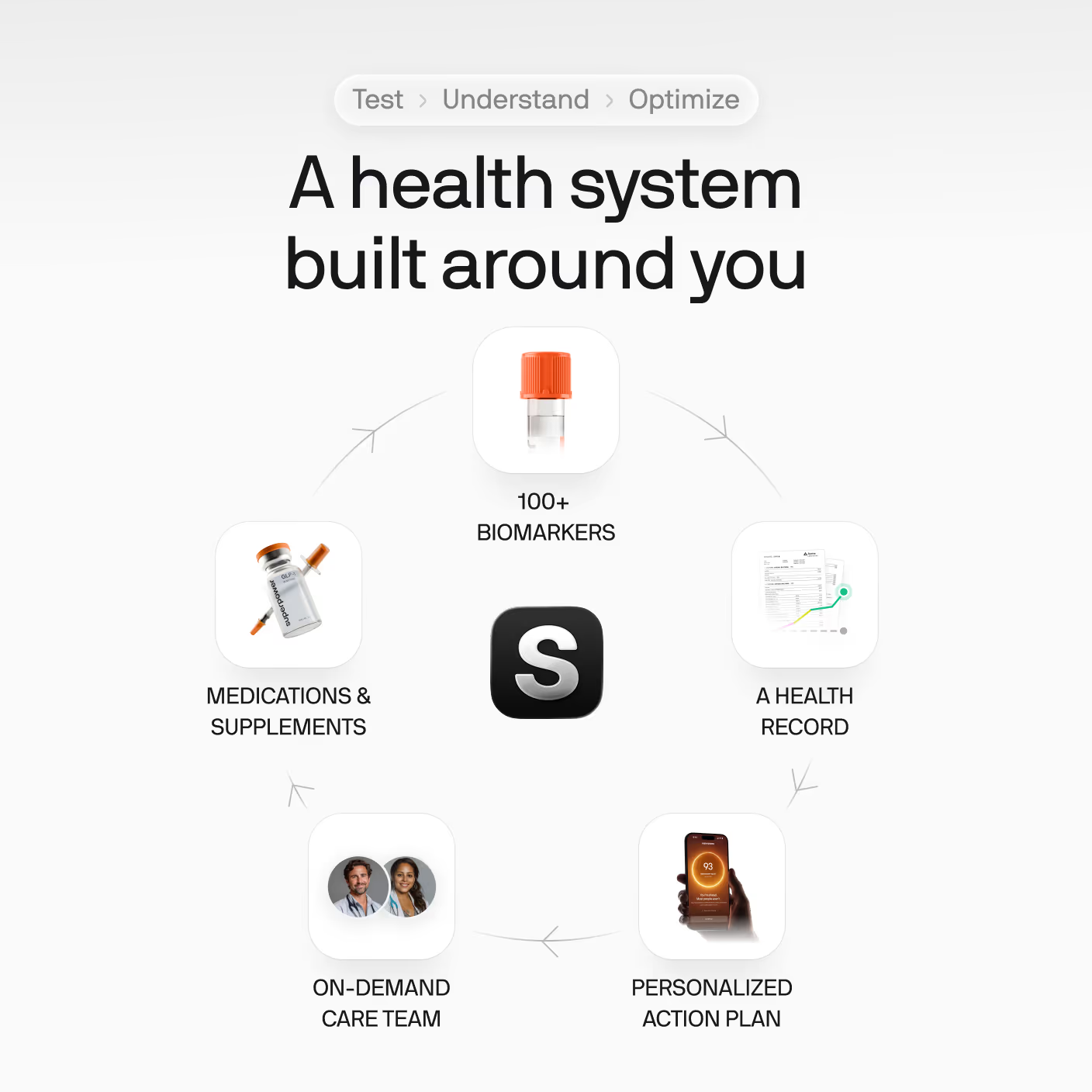
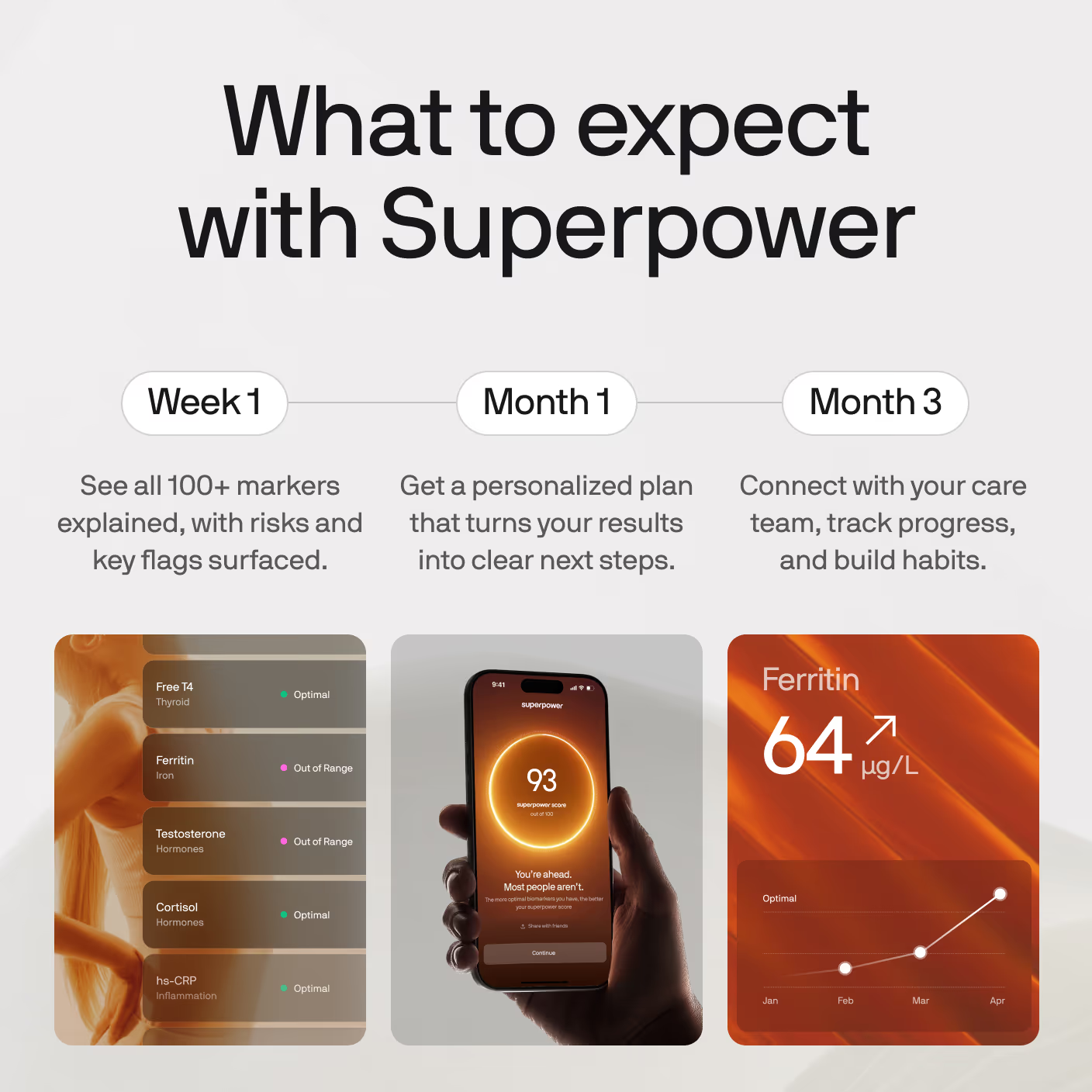
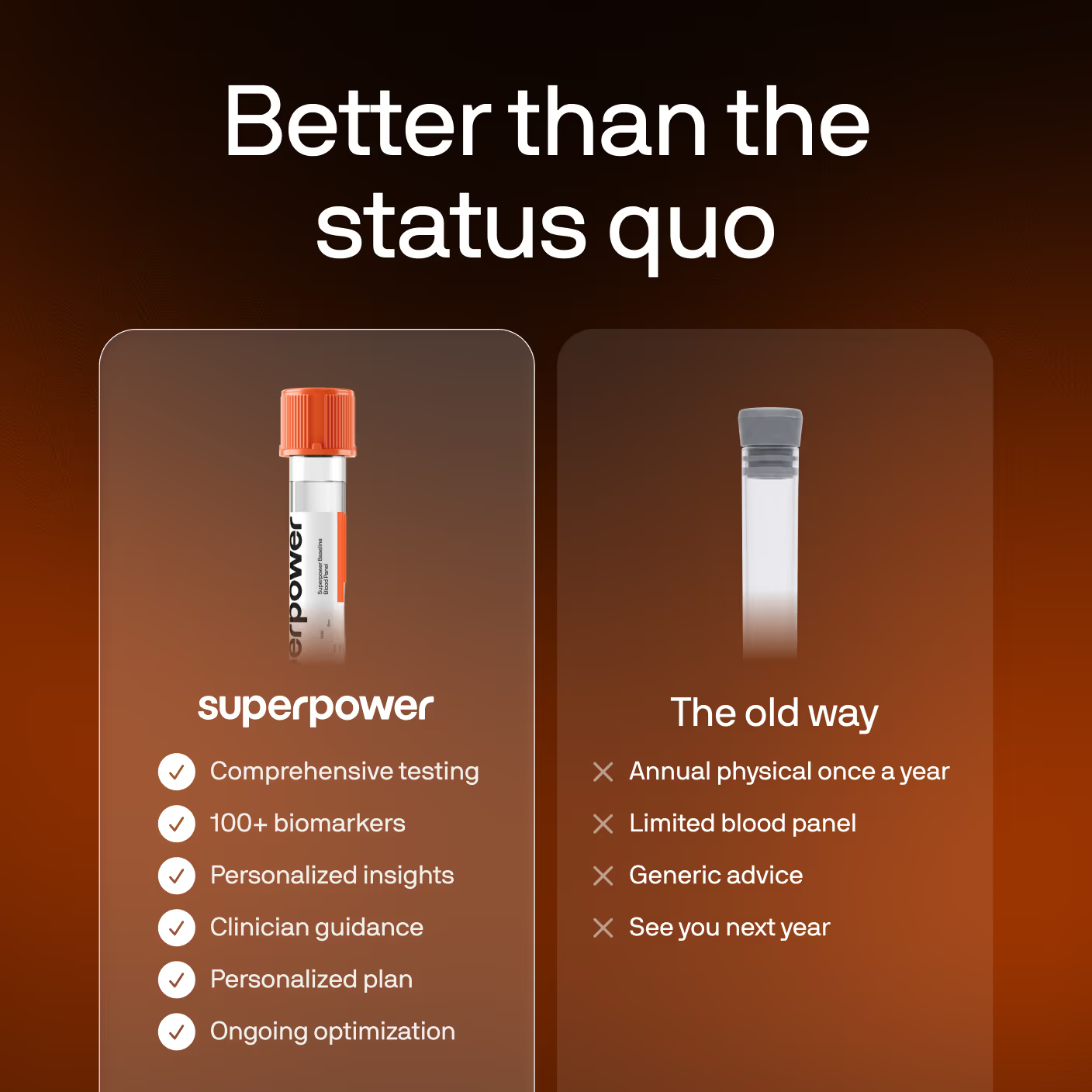
A Superpower membership includes 100+ biomarkers in a single draw, among them ferritin, hemoglobin, hematocrit, serum iron, TIBC, and hs-CRP, so you know where your ferritin starts before you change the dose, form, or timing. If your numbers point to a different form of iron, the marketplace carries supplements at up to 20% off.
Start your Superpower membership and get your baseline in one draw.
References
- Paganini D, Zimmermann MB (2017). The effects of iron fortification and supplementation on the gut microbiome and diarrhea in infants and children: a review. *Am J Clin Nutr*, *106*(Suppl 6), 1688S–1693S. https://doi.org/10.3945/ajcn.117.156067
- Baldi A, Braat S, Hasan MI, Bennett C, Barrios M, Jones N, Abdul Azeez I, Wilcox S, Roy PK, Bhuiyan MSA, Ataide R, Clucas D, Larson LM, Hamadani J, Zimmermann M, Bowden R, Jex A, Biggs BA, Pasricha SR (2024). Effects of iron supplements and iron-containing micronutrient powders on the gut microbiome in Bangladeshi infants: a randomized controlled trial. *Nature communications*, *15*(1), 8640. https://doi.org/10.1038/s41467-024-53013-x
- Tolkien Z, Stecher L, Mander AP, Pereira DI, Powell JJ (2015). Ferrous sulfate supplementation causes significant gastrointestinal side-effects in adults: a systematic review and meta-analysis. *PloS one*, *10*(2), e0117383. https://doi.org/10.1371/journal.pone.0117383
- Bayraktar UD, Bayraktar S (2010). Treatment of iron deficiency anemia associated with gastrointestinal tract diseases. *World journal of gastroenterology*, *16*(22), 2720-5. https://doi.org/10.3748/wjg.v16.i22.2720
- Haematologica. (2020). *Iron absorption from supplements is greater with alternate day than with consecutive day dosing in iron-deficient anemic women*. https://haematologica.org/article/view/9379
- The Lancet. (n.d.). *Eclinm*. https://thelancet.com/journals/eclinm/article/PIIS2589-5370(23)00463-7/fulltext
- Fischer JAJ, Cherian AM, Bone JN, Karakochuk CD (2023). The effects of oral ferrous bisglycinate supplementation on hemoglobin and ferritin concentrations in adults and children: a systematic review and meta-analysis of randomized controlled trials. *Nutrition reviews*, *81*(8), 904-920. https://doi.org/10.1093/nutrit/nuac106
- National Institutes of Health Office of Dietary Supplements. Iron: Fact Sheet for Health Professionals.
- The Lancet. (n.d.). https://thelancet.com/article/S2352-3026(17)30182-5/abstract
- von Siebenthal HK, Moretti D, Zimmermann MB, Stoffel NU (2023). Effect of dietary factors and time of day on iron absorption from oral iron supplements in iron deficient women. *American journal of hematology*, *98*(9), 1356-1363. https://doi.org/10.1002/ajh.26987
- Koker G, Sahinturk Y, Ozcelik Koker G, Coskuner MA, Eren Durmus M, Catli MM, Cekin AH (2024). Improved gastrointestinal tolerance and iron status via probiotic use in iron deficiency anaemia patients initiating oral iron replacement: a randomised controlled trial. *The British journal of nutrition*, *132*(10), 1308-1316. https://doi.org/10.1017/S0007114524002757
- Merck Manual Professional Version. Iron deficiency anemia.
- National Institutes of Health Office of Dietary Supplements. Vitamin C: Fact Sheet for Health Professionals.
- MedlinePlus Medical Encyclopedia. Taking iron supplements. National Library of Medicine.
- NHS. Side effects of ferrous sulfate.
- NHS. Common questions about ferrous sulfate.
- MedlinePlus Medical Encyclopedia. When you have diarrhea. National Library of Medicine.
- National Institute of Diabetes and Digestive and Kidney Diseases. Symptoms and causes of diarrhea.
- MedlinePlus Medical Encyclopedia. Black or tarry stools. National Library of Medicine.
- U.S. Food and Drug Administration. 21 CFR 101.17: Food labeling warning, notice, and safe handling statements. Electronic Code of Federal Regulations.
- MedlinePlus. Poisoning. National Library of Medicine.
- Pantopoulos K (2024). Oral iron supplementation: new formulations, old questions. *Haematologica*, *109*(9), 2790–2801. https://doi.org/10.3324/haematol.2024.284967
- Stoffel NU, von Siebenthal HK, Moretti D, Zimmermann MB (2020). Oral iron supplementation in iron-deficient women: How much and how often?. *Mol Aspects Med*, *75*, 100865. https://doi.org/10.1016/j.mam.2020.100865











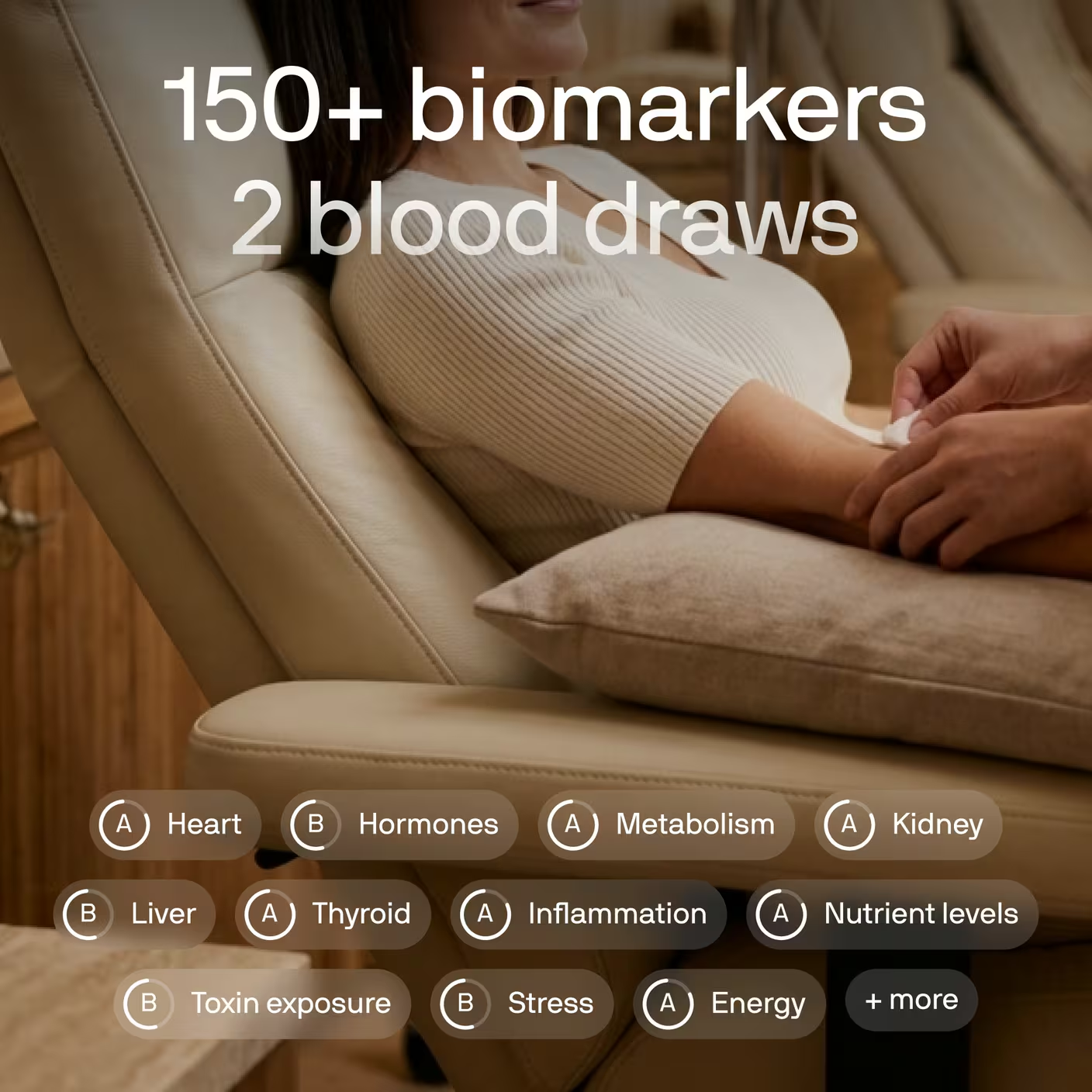









 Heart & Vascular Health
 Metabolic Health
 Energy
 Liver Health
 Kidney
 Sex Hormones
 Thyroid Health
 Nutrients
 Immune System
 Inflammation