
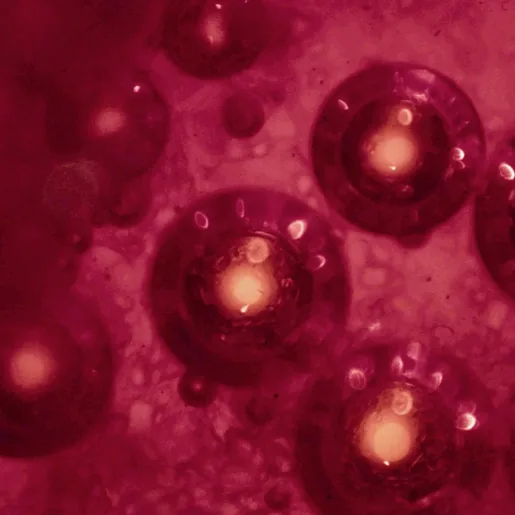

See your full blood count in one draw
Hemoglobin, hematocrit, white cells, and platelets, measured together
- CLIA-certified labs
- HIPAA compliant
- Personalized health protocol
How to get a CBC blood test at home
A complete blood count (CBC) can be done at home with a mail-in fingerstick kit or a venous draw by a mobile phlebotomist. Direct-to-consumer testing lets you request one without a physician order, with results sent straight to you.
A kit's sample is packaged and mailed to a lab. A clinical CBC normally uses blood drawn from a vein in your arm, though both routes report the same set of counts.
What a complete blood count measures
A complete blood count, also called a full blood count, measures the number and size of your blood cells:
- Red blood cell count: how many red cells you have
- Hemoglobin: the oxygen-carrying protein in red cells
- Hematocrit: the share of blood that is red cells
- Red cell indices: cell size (MCV), hemoglobin per red cell (MCH), and hemoglobin concentration (MCHC)
- White blood cell differential: a count of each white cell type
- Platelet count: the cell fragments that help blood clot
Each reading depends on intact cells, so collection matters.
At-home CBC collection options compared
An at-home CBC sample comes from your fingertip or a vein, and venous blood is the clinical standard. A single-drop home meter is not a lab CBC, since single capillary drops vary more than venous blood.
| Option | Sample | Who collects it | Doctor's order | Main trade-off |
|---|---|---|---|---|
| Mail-in fingerstick kit | Capillary blood | You, at home | Depends on state law | Small sample, sensitive to collection technique and shipping time |
| At-home venous draw | Venous blood | Mobile phlebotomist, at your home | Depends on state law | Needs a scheduled visit |
| Self-ordered lab-site draw | Venous blood | Lab phlebotomist | Depends on state law | Needs a trip to a lab |
Federal lab rules leave who may order a test to state law, so self-ordering depends on where you live. Where it is allowed, fingerstick accuracy becomes the deciding question.
How accurate is a fingerstick CBC?
Self-collected capillary blood shows strong agreement with venous blood for most lab values. One validated fingerstick device met federal lab acceptance limits for every CBC value tested.
Squeezing the finger dilutes the drop with tissue fluid, and tiny clots skew blood cell counts. Successive fingerprick drops also varied far more than venous blood, until collection reached 60 to 100 μL.
In lab-collected pairs, fingerstick hemoglobin and hematocrit ran 0.3 g/dL and two percentage points higher. Careful collection and fast shipping keep other errors from widening that gap.
How to prepare for an at-home CBC
Preparing for an at-home CBC mostly means protecting the sample, since a CBC alone usually needs no special preparation. A few habits help:
- Check whether another test on the order needs fasting.
- Drink water, since dehydration can shift results.
- Warm your hands, wipe away the first drop, and avoid squeezing.
- Ship the same day you collect, since platelet counts fall as samples sit.
- Keep the package cool, since most CBC values drifted after 24 hours at 86°F (30°C) in lab studies.
After that, only cost and timing remain.
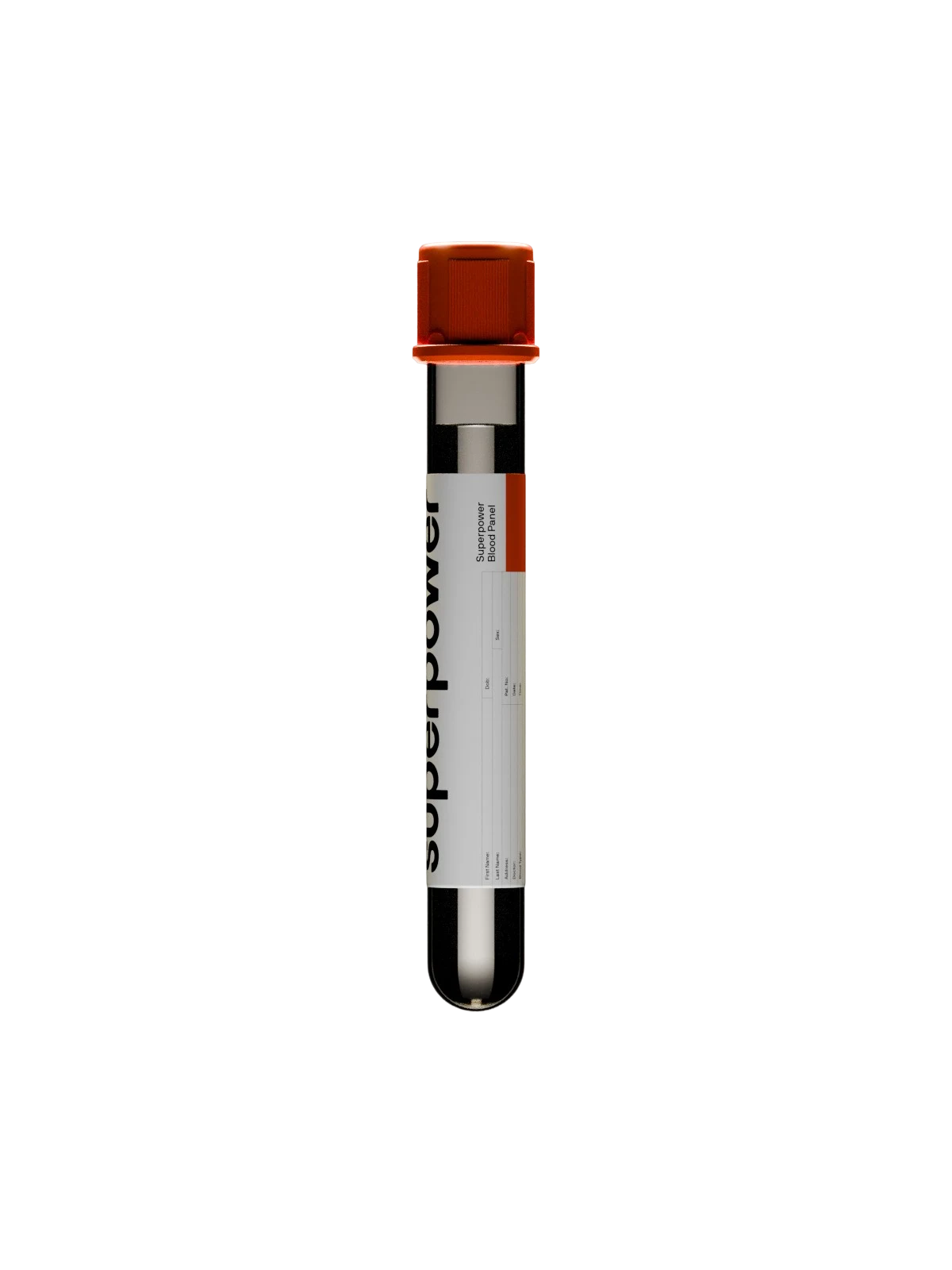
Get 100+ biomarkers tested in-lab or at home
One blood draw a year. A full picture of your health, explained in plain language.
Get 100+ biomarkers tested in-lab or at home
One blood draw a year. A full picture of your health, explained in plain language.
What an at-home CBC costs and when results arrive
An at-home CBC's cost depends on the collection route and the lab. Results come from your provider or an online portal with your own login, and the wait varies by test.
Lab fees that are part of medical care count as medical expenses, which health savings account (HSA) funds can generally pay. A flexible spending account (FSA) covers what its plan specifies.
Once results post, any flagged value needs a next step.
When CBC results need a doctor's follow-up
A self-ordered CBC flags values worth a closer look, but a CBC is only one tool a provider uses. Follow-up testing also falls to the medical system, so these situations call for a clinician:
- Out-of-range result: diet, medicines, your period, and hydration can all move a CBC
- Conflicting results: a value at odds with an earlier CBC
- Surprising fingerstick result: worth rechecking on a venous draw
- Symptoms: unusual bleeding, lightheadedness on standing, or breathlessness at rest
A single CBC is easier to interpret beside the rest of your blood work.
Understand your blood counts with Superpower
An at-home CBC blood test checks your blood counts, and a comprehensive blood test reads them alongside the rest of your health. A Superpower membership includes 100+ biomarkers in a single draw, among them hemoglobin, hematocrit, red cell indices, a white cell differential, and platelet count. Draws happen at 2,000+ lab partner locations or, for an additional fee, at home. Superpower is a home for your health, measuring these markers and supporting you in improving them with a personalized protocol, plus AI and care team support.
Know where your blood counts stand. Start your Superpower membership and get your baseline in one draw.
References
- Ayala-Lopez N, Nichols JH. Benefits and risks of direct-to-consumer testing. *Arch Pathol Lab Med*. 2020;144(10):1193-1198. https://doi.org/10.5858/arpa.2020-0078-RA
- MedlinePlus. At-home medical tests. National Library of Medicine. Updated September 10, 2024. Accessed October 16, 2026. https://medlineplus.gov/lab-tests/at-home-medical-tests/
- MedlinePlus. Complete blood count (CBC). National Library of Medicine. Updated October 15, 2024. Accessed October 16, 2026. https://medlineplus.gov/lab-tests/complete-blood-count-cbc/
- MedlinePlus. CBC blood test. National Library of Medicine. Reviewed October 14, 2024. Accessed October 16, 2026. https://medlineplus.gov/ency/article/003642.htm
- El Brihi J, & Pathak S (2024). *Normal and abnormal complete blood count with differential*. StatPearls Publishing.
- De la Cruz-Góngora V, Méndez-Gómez-Humarán I, Gaona-Pineda EB, Shamah-Levy T, Dary O. Drops of capillary blood are not appropriate for hemoglobin measurement with point-of-care devices: a comparative study using drop capillary, pooled capillary, and venous blood samples. *Nutrients*. 2022;14(24):5346. https://doi.org/10.3390/nu14245346
- Electronic Code of Federal Regulations. 42 CFR § 493.2 — Definitions. Accessed October 16, 2026. https://www.ecfr.gov/current/title-42/chapter-IV/subchapter-G/part-493/subpart-A/section-493.2
- Schröder D, Hafke A, Hummers E, et al. Comparison of laboratory results and pain perception in self-sampled capillary blood versus venous blood sampling: a systematic review and meta-analysis. *Clin Biochem*. 2025;138:110965. https://doi.org/10.1016/j.clinbiochem.2025.110965
- Sakai Y, Kato T, Saito M, et al. Analytical validation of a novel capillary finger-stick blood sampling device for clinical chemistry, complete blood count, and hemoglobin A1c testing. *Clin Chim Acta*. 2026;579:120664. https://doi.org/10.1016/j.cca.2025.120664
- Krleza JL, Dorotic A, Grzunov A, Maradin M; Croatian Society of Medical Biochemistry and Laboratory Medicine. Capillary blood sampling: national recommendations on behalf of the Croatian Society of Medical Biochemistry and Laboratory Medicine. *Biochem Med (Zagreb)*. 2015;25(3):335-358. https://doi.org/10.11613/BM.2015.034
- Bond MM, Richards-Kortum RR. Drop-to-drop variation in the cellular components of fingerprick blood: implications for point-of-care diagnostic development. *Am J Clin Pathol*. 2015;144(6):885-894. https://doi.org/10.1309/AJCP1L7DKMPCHPEH
- Schalk E, Heim MU, Koenigsmann M, Jentsch-Ullrich K. Use of capillary blood count parameters in adults. *Vox Sang*. 2007;93(4):348-353. https://doi.org/10.1111/j.1423-0410.2007.00978.x
- Gunawardena D, Jayaweera S, Madhubhashini G, Lokumarakkala DD, Senanayake SJ. Reliability of parameters of complete blood count with different storage conditions. *J Clin Lab Anal*. 2017;31(2):e22042. https://doi.org/10.1002/jcla.22042
- Doeleman MJH, Esseveld A, Huisman A, de Roock S, Tiel Groenestege WM. Stability and comparison of complete blood count parameters between capillary and venous blood samples. *Int J Lab Hematol*. 2023;45(5):659-667. https://doi.org/10.1111/ijlh.14080
- Internal Revenue Service. Publication 502 (2025), Medical and dental expenses. Accessed October 16, 2026. https://www.irs.gov/publications/p502
- Internal Revenue Service. Publication 969 (2025), Health savings accounts and other tax-favored health plans. Accessed October 16, 2026. https://www.irs.gov/publications/p969
- Holmes DT. Self-ordering laboratory testing: limitations when a physician is not part of the model. *Clin Lab Med*. 2020;40(1):37-49. https://doi.org/10.1016/j.cll.2019.11.002
- MedlinePlus. Anemia. National Library of Medicine. Reviewed January 29, 2026. Accessed October 16, 2026. https://medlineplus.gov/ency/article/000560.htm


























 Heart & Vascular Health
 Metabolic Health
 Energy
 Liver Health
 Kidney
 Sex Hormones
 Thyroid Health
 Nutrients
 Immune System
 Inflammation