


Find out what your whole-body baseline looks like
100+ biomarkers in a single draw, in plain language
- CLIA-certified labs
- HIPAA compliant
- Personalized health protocol
The symptoms of a food allergy
A food allergy is an adverse immune response to food proteins. Severity ranges from a mild itch to a reaction that threatens breathing, and allergy symptoms can surface far from the gut.
Food allergy is not rare. Roughly 10.8% of US adults have a food allergy consistent with IgE-mediated disease, more than 26 million adults. Skin and gastrointestinal symptoms are the most common way a reaction shows up, though they are not present every time. The absence of a rash does not rule out a severe reaction.
How soon food allergy symptoms start
Food allergy symptoms usually begin within 2 hours of eating the food, and onset is typically rapid, minutes to a few hours after eating. IgE-mediated reactions move that fast because mast cells and basophils release their mediators on contact with the food protein.
Two things break that pattern. Non-IgE-mediated reactions can instead be delayed or chronic, which is what makes them so hard to pin on a particular food. A reaction can also return after it appears to settle. Biphasic reactions occurred in 3.92% of anaphylaxis cases.
Food allergy symptoms by body system
Food allergy symptoms group by the part of the body the reaction reaches, and one reaction can involve several systems at once.
- Skin: hives, skin rash, itchy skin, and swelling of the face, lips, mouth, or tongue
- Mouth and throat: itchy mouth and throat, a hoarse voice, and difficulty swallowing
- Digestive: abdominal pain, vomiting, and diarrhea
- Respiratory: runny nose, sneezing, coughing, wheezing, and shortness of breath
- Cardiovascular: lightheadedness or fainting
Isolated respiratory symptoms are extremely unusual as a food allergy presentation. Chronic hives are not a manifestation of food allergy at all.
Mild vs severe: when a reaction crosses the line
Food allergy reactions run from mild to severe, and what happened last time sets no ceiling on what happens next. Symptoms can be severe even when earlier reactions were mild.
Test results do not settle it either. A specific IgE level or a skin test wheal size indicates how likely a reaction is, not how severe it will be.
| Body system | Mild sign | Severe sign that needs emergency care |
|---|---|---|
| Skin | Hives, itchy skin | Swelling of the face, mouth, or throat |
| Mouth and throat | Itchy mouth, hoarse voice | Difficulty swallowing |
| Digestive | Abdominal pain, vomiting | Vomiting alongside swelling, breathing trouble, or faintness |
| Respiratory | Runny nose, sneezing, coughing | Difficulty breathing |
| Cardiovascular | Lightheadedness | Faintness or collapse |
The same exposure does not always produce the same reaction. Alcohol, NSAIDs, antacids, exertion, raised body temperature, acute infection, and menstruation can all make one worse.
What anaphylaxis looks like
Anaphylaxis is an acute, potentially life-threatening systemic allergic reaction, and it presents in a wide range of ways. The signs to recognize are these:
- Swelling of the face, mouth, or throat
- Difficulty breathing
- Difficulty swallowing
- A severe drop in blood pressure
- Faintness or collapse
Anaphylaxis can also happen with no skin involvement at all.
Any of those signs means epinephrine and emergency services immediately, never a wait to see whether it settles. Epinephrine is the first-line pharmacotherapy for both uniphasic and biphasic anaphylaxis. Antihistamines and glucocorticoids do not reliably lower the likelihood of a biphasic reaction.
Food allergy vs food intolerance
The difference is mechanical, not a matter of degree. A food allergy is an immune response to food proteins, in IgE-mediated and non-IgE-mediated forms. A food intolerance is a non-immunological reaction in which the body cannot properly digest a food or one of its components.
Intolerance tends to arrive as gastrointestinal discomfort and other non-immune symptoms. The two conditions differ in their characteristics, symptoms, complications, and management.
Only the immune route can escalate to anaphylaxis. That is what the distinction decides.
Symptoms in babies, children, and adults
The same condition presents differently depending on who is reacting, and the usual trigger foods shift with age.
- Babies: cow's milk is the most common infant allergy, and infant reactions often show up as chronic gastrointestinal symptoms rather than a sudden rash.
- Children: about 7.6% of US children have a food allergy, and peanut leads the list at 2.2%.
- Adults: shellfish is the most commonly reported adult allergen at 2.9%, and 48% developed at least one allergy as an adult.
Many childhood food allergies are outgrown by adulthood, and adults can develop new IgE-mediated allergies.
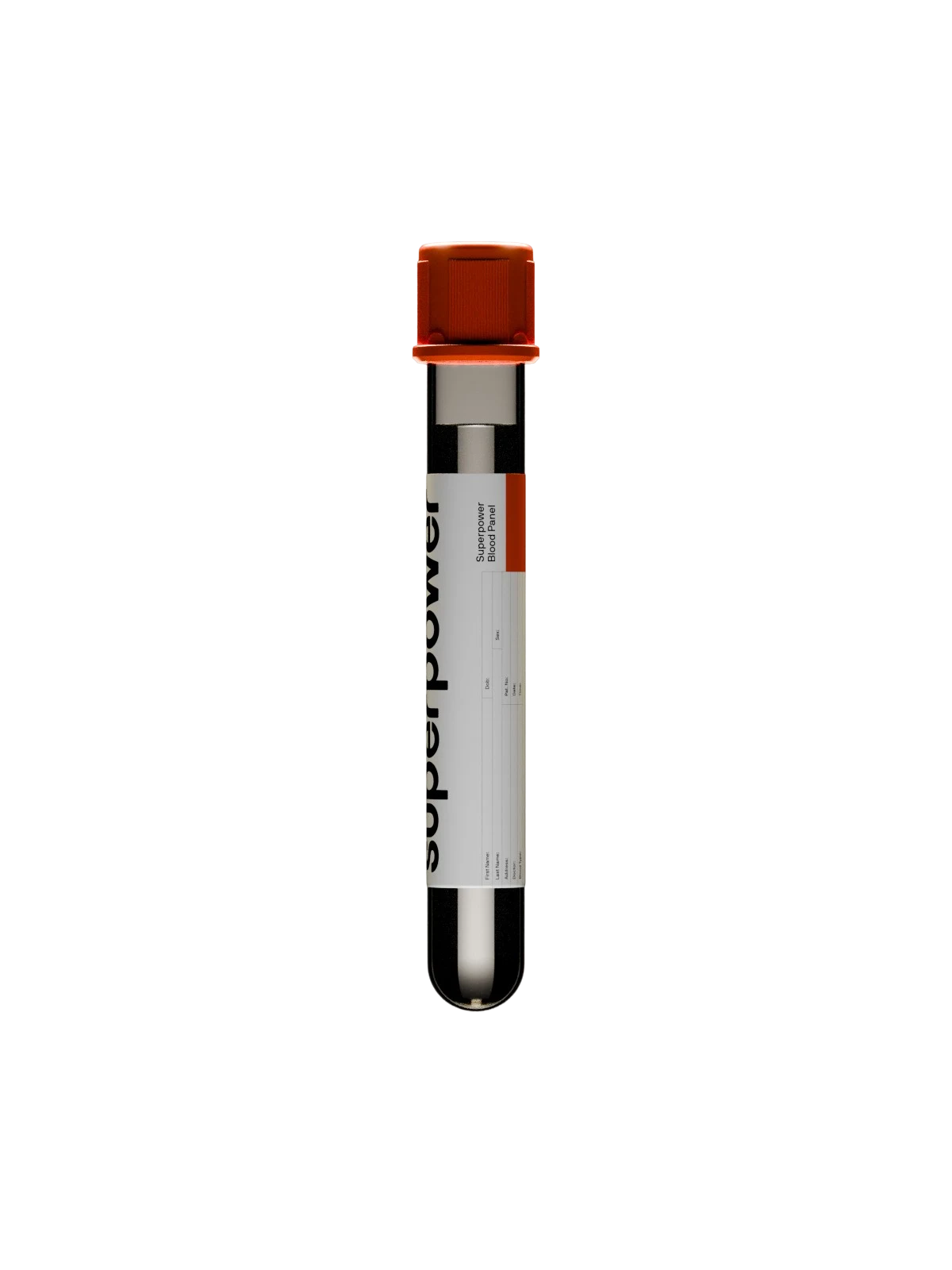
Get 100+ biomarkers tested in-lab or at home
One blood draw a year. A full picture of your health, explained in plain language.
Get 100+ biomarkers tested in-lab or at home
One blood draw a year. A full picture of your health, explained in plain language.
The foods that trigger symptoms most often
A small group of foods accounts for most reactions. US law identifies nine major food allergens, and the FASTER Act added sesame as the ninth in 2021, effective from 2023.
- Milk and eggs
- Peanuts and tree nuts
- Fish and crustacean shellfish
- Wheat, soybeans, and sesame
- Raw fruits and vegetables, in pollen-food allergy syndrome: itching in the mouth and throat, usually limited to that area, from cross-reactivity with an inhaled pollen allergen
Pollen-food allergy syndrome is not automatically harmless. Anaphylactic shock has been documented in up to 1.7% of these reactions.
When to see a doctor, and how food allergy is diagnosed
Believing you have a food allergy and having one are different things. About 19% of US adults believe they have a food allergy, well above the 10.8% whose history is consistent with IgE-mediated disease.
Symptoms that recur after a particular food deserve a clinician's evaluation. So does any reaction involving the airway or blood pressure.
An allergy-focused clinical history comes first, then testing for IgE sensitization by serum allergen-specific IgE or a skin prick test. A supervised oral food challenge is the reference standard where the picture is equivocal. Diagnosis needs symptoms plus food-specific IgE, so a positive test alone is not a food allergy.
Food-specific IgG or IgG4 panels, electrodermal testing, applied kinesiology, and hair analysis are not supported by evidence. Self-managed elimination diets are not a substitute for that workup, and some of these unproven approaches carry a risk of severe reactions.
Know your whole-body baseline with Superpower
Food allergy symptoms tell you that one system reacted to one thing. A Superpower membership includes 100+ biomarkers in a single draw, read together, with the support to act on what they show.
Your health deserves a clearer picture than one reaction can give. Start your Superpower membership and turn a single set of results into ongoing, on-demand support.
Frequently Asked Questions
References
- Anvari S, Miller J, Yeh CY, Davis CM (2019). IgE-mediated food allergy. *Clinical Reviews in Allergy & Immunology*, *57*(2), 244–260. https://doi.org/10.1007/s12016-018-8710-3
- Gupta RS, Warren CM, Smith BM, Jiang J, Blumenstock JA, Davis MM, Schleimer RP, Nadeau KC (2019). Prevalence and severity of food allergies among US adults. *JAMA Network Open*, *2*(1), e185630. https://doi.org/10.1001/jamanetworkopen.2018.5630
- Varshney P, Pongracic JA (2020). Clinical manifestations of immunoglobulin E-mediated food allergy, including pollen-food allergy syndrome. *Journal of Food Allergy*, *2*(1), 22–25. https://doi.org/10.2500/jfa.2020.2.200002
- Cleveland Clinic (2024). *Food allergies*. Cleveland Clinic. https://my.clevelandclinic.org/health/diseases/9196-food-allergies
- Al-Iede M, Sarhan L, Alshrouf MA, Said Y (2023). Perspectives on non-IgE-mediated gastrointestinal food allergy in pediatrics: a review of current evidence and guidelines. *Journal of Asthma and Allergy*, *16*, 279–291. https://doi.org/10.2147/JAA.S284825
- Miles LM, Ratnarajah K, Gabrielli S, Abrams EM, Protudjer JLP, Bégin P, Chan ES, Upton J, Waserman S, Watson W, Gerdts J, Ben-Shoshan M (2021). Community use of epinephrine for the treatment of anaphylaxis: a review and meta-analysis. *The Journal of Allergy and Clinical Immunology: In Practice*, *9*(6), 2321–2333. https://doi.org/10.1016/j.jaip.2021.01.038
- Shaker MS, Wallace DV, Golden DBK, Oppenheimer J, Bernstein JA, Campbell RL, Dinakar C, Ellis A, Greenhawt M, Khan DA, Lang DM, Lang ES, Lieberman JA, Portnoy J, Rank MA, Stukus DR, Wang J (2020). Anaphylaxis—a 2020 practice parameter update, systematic review, and Grading of Recommendations, Assessment, Development and Evaluation (GRADE) analysis. *The Journal of Allergy and Clinical Immunology*, *145*(4), 1082–1123. https://doi.org/10.1016/j.jaci.2020.01.017
- Hage G, Sacre Y, Haddad J, Hajj M, Sayegh LN, Fakhoury-Sayegh N (2025). Food hypersensitivity: distinguishing allergy from intolerance, main characteristics, and symptoms—a narrative review. *Nutrients*, *17*(8), 1359. https://doi.org/10.3390/nu17081359
- Kuźniar J, Kozubek P, Gomułka K (2024). Differences in the course, diagnosis, and treatment of food allergies depending on age—comparison of children and adults. *Nutrients*, *16*(9), 1317. https://doi.org/10.3390/nu16091317
- Gupta RS, Warren CM, Smith BM, Blumenstock JA, Jiang J, Davis MM, Nadeau KC (2018). The public health impact of parent-reported childhood food allergies in the United States. *Pediatrics*, *142*(6), e20181235. https://doi.org/10.1542/peds.2018-1235
- U.S. Food and Drug Administration (2026). *Food allergies*. U.S. Department of Health and Human Services. https://www.fda.gov/food/food-labeling-nutrition/food-allergies
- Carlson G, Coop C (2019). Pollen food allergy syndrome (PFAS): a review of current available literature. *Annals of Allergy, Asthma & Immunology*, *123*(4), 359–365. https://doi.org/10.1016/j.anai.2019.07.022
- Santos AF, Riggioni C, Agache I, Akdis CA, Akdis M, Alvarez-Perea A, Alvaro-Lozano M, Ballmer-Weber B, Barni S, Beyer K, Bindslev-Jensen C, Brough HA, et al. (2023). EAACI guidelines on the diagnosis of IgE-mediated food allergy. *Allergy*, *78*(12), 3057–3076. https://doi.org/10.1111/all.15902
- Patterson MF, Dorris SL (2020). Food allergy: unproven diagnostics and therapeutics. *Journal of Food Allergy*, *2*(1), 91–94. https://doi.org/10.2500/jfa.2020.2.200013
- Riggioni C, Ricci C, Moya B, Wong D, van Goor E, Bartha I, et al. (2024). Systematic review and meta-analyses on the accuracy of diagnostic tests for IgE-mediated food allergy. *Allergy*, *79*(2), 324–352. https://doi.org/10.1111/all.15939




























 Heart & Vascular Health
 Metabolic Health
 Energy
 Liver Health
 Kidney
 Sex Hormones
 Thyroid Health
 Nutrients
 Immune System
 Inflammation