


Find out what your symptoms are reacting to
Allergen-specific IgE to pollens, molds, pet dander, and dust mites, from your first draw
- CLIA-certified labs
- HIPAA compliant
- Personalized health protocol
The symptoms of an allergy
An allergy is the immune system reacting to something that does not bother most other people. Allergy symptoms show up wherever that contact happens: sneezing, a runny or stuffy nose, itchy or watery eyes, itching, rashes, swelling, or asthma. Severity runs from minor to severe.
Allergies are common enough that a symptom which feels unexplained is often shared by a third of the room. In 2024, 31.7% of US adults had a diagnosed seasonal allergy, eczema, or food allergy, and a handful of symptoms account for most of what they notice.
The most common allergy symptoms
Allergy symptoms cluster by the part of the body the allergen reaches, which is why two people reacting to the same pollen can describe different complaints. Timing separates them further, since some appear shortly after contact and others develop later.
| Body system | Common symptoms | Typical setting |
|---|---|---|
| Nasal | Sneezing, runny nose, congestion | Pollen, dust, or animal exposure |
| Eyes | Watery or itchy eyes, dark circles, puffiness | Airborne allergens indoors and out |
| Skin | Rashes, swelling, itching, hives | Contact, food, or sting reactions |
| Digestive | Stomach pain, nausea, vomiting, diarrhea | Food allergy, in 10.8% of US adults |
| Respiratory | Cough, wheezing, asthma | Pollen, mold, dust mite, or pet dander exposure |
| Whole-body | Fatigue, headache, sore throat, clogged ears, reduced smell | Weeks of ongoing seasonal exposure |
Fatigue, headache, and clogged ears are the symptoms people rarely connect to allergy. Allergic rhinitis (commonly called hay fever) is associated with worse sleep quality, daytime sleepiness, and morning headache. Scattered as these symptoms look, they all come out of the same reaction.
Why allergies cause these symptoms
The allergen is not doing the damage. Your own defenses are, misreading something harmless as a threat. In a sensitized person, an inhaled allergen meets IgE on mast cells in the nasal lining, and those cells release histamine and other mediators that produce the symptoms.
That shared mechanism is why nose and eye symptoms tend to show up together. Allergic rhinitis is an IgE-mediated reaction to an inhaled allergen, and it frequently occurs alongside conjunctivitis and asthma.
Plenty of runny noses have nothing to do with allergy. Across studies, median prevalence is 18.1% for allergic rhinitis and 29.4% for rhinitis of any cause, so what you were exposed to matters as much as what you feel.
The triggers behind allergy symptoms
Triggers are the substances that set the reaction off, and people with allergies are often sensitive to more than one of them.
- Airborne: pollen, dust mites, mold spores, and pet dander, with symptoms following exposure.
- Food: shellfish leads US adults at 2.9%, ahead of milk at 1.9% and peanut at 1.8%.
- Insect stings, which can escalate from local swelling to a severe, life-threatening reaction.
- Medicines, where the response ranges from minor to severe.
A trigger can also show up for the first time well into adulthood: 48% of food-allergic adults developed the allergy after childhood, and a first reaction can be a severe one.
The signs of a severe allergic reaction
Anaphylaxis is the most severe presentation of an allergic reaction, and its signs can develop within seconds or minutes of exposure. Six body systems carry the warning signs.
- Breathing: difficulty breathing, coughing, wheezing, or high-pitched breathing sounds
- Swelling: swelling of the face, eyes, or tongue, and difficulty swallowing
- Circulation: dizziness, lightheadedness, or palpitations
- Skin: hives, itchiness, or skin redness
- Digestive: abdominal pain, nausea, vomiting, or diarrhea
- Neurological: slurred speech or loss of consciousness
These can appear in any combination, and waiting to see whether more of them arrive costs time that matters.
When to call 911, and when to see a doctor
Call 911 immediately for trouble breathing, swelling, or difficulty swallowing, or for dizziness and faintness. Use an epinephrine injector right away if one is available. Anaphylaxis is identified on clinical criteria, not confirmed by a test in the moment, and intramuscular epinephrine is the first-line emergency medication. Afterward, a specialist referral establishes the cause.
Short of an emergency, how long symptoms stick around is what decides it. Symptoms that keep returning, or that no longer improve with usual medications, are worth a clinician's assessment, and that is usually where allergy testing starts. Part of what gets sorted out there is whether an allergy is behind the symptoms at all.
Allergy symptoms vs a cold or sinus infection
No single symptom settles this question. Pattern and duration do the work instead. Allergy symptoms begin shortly after contact with an allergen, while a cold begins a few days after infection with one of more than 200 viruses.
| Feature | Allergies | Cold | Sinus infection |
|---|---|---|---|
| Onset | Shortly after allergen contact | A few days after infection | Often after a cold sets in |
| How long it lasts | As long as exposure continues | Some symptoms 10-14 days | Acute up to 4 weeks |
| Fever | - | - | Can be present |
| Itching | Itchy nose, eyes, or throat | - | - |
| Pattern over the year | Intermittent or persistent | 2-3 colds a year in adults | Subacute 4-12 weeks, chronic beyond 12 |
Clinicians find this genuinely hard too. Among people with suspected acute rhinosinusitis, imaging confirms it in 51% and bacterial infection in 31%. No single sign separates them reliably. Allergies can also lead to sinusitis rather than only being mistaken for it. How long the symptoms run on usually separates them better than any single sign.
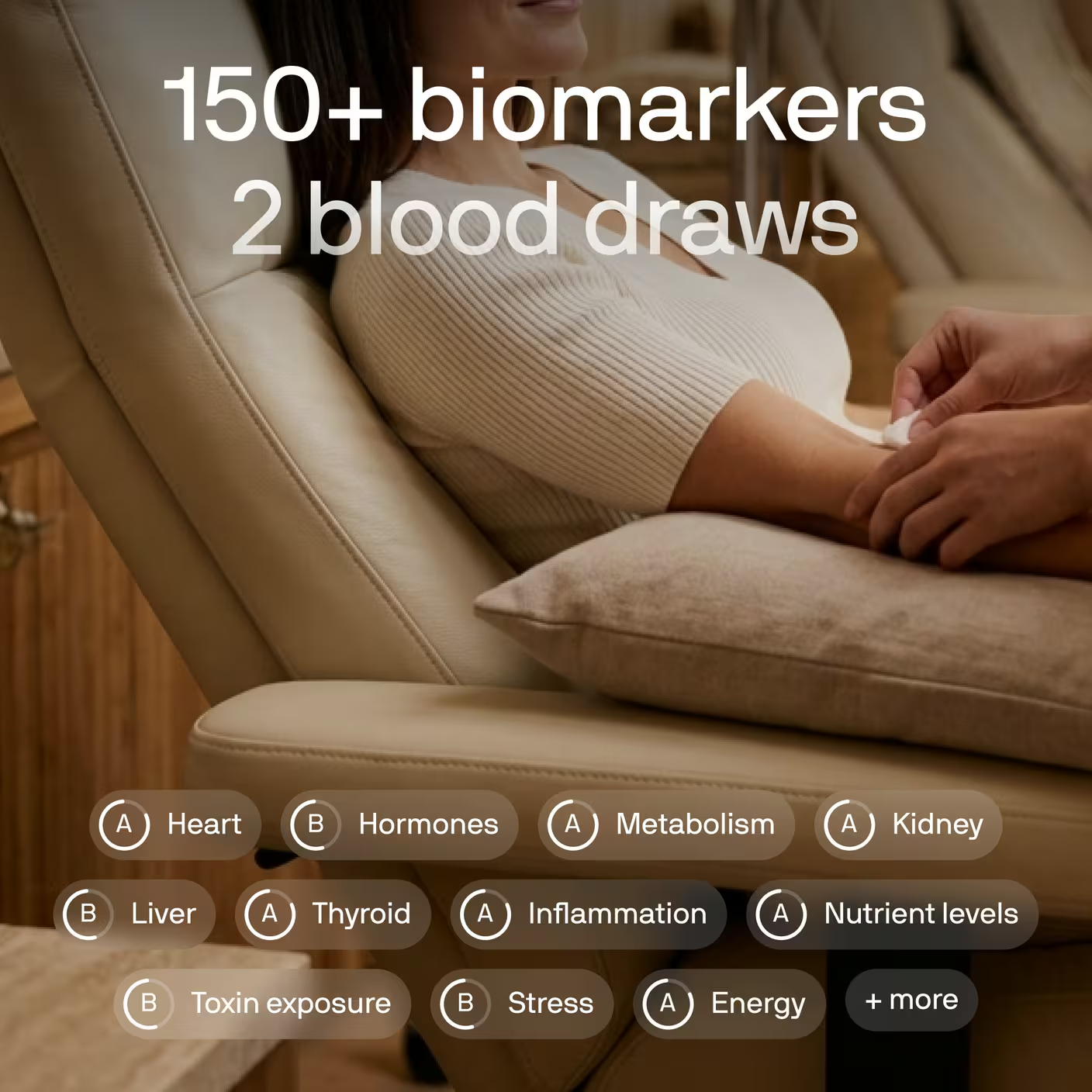
Get 150+ lab tests from home
Two blood draws a year. A full picture of your health, explained in plain language.
Get 150+ lab tests from home
Two blood draws a year. A full picture of your health, explained in plain language.
How long allergy symptoms last
Allergy symptoms last as long as contact with the allergen lasts, so there is no set number of days to expect. Allergic rhinitis is classified as intermittent or persistent, and as mild or moderate to severe, rather than given a single expected length.
A single episode does follow a rough order. Itchy nose, eyes, or throat, sneezing, runny nose, and watery eyes come first, while congestion, cough, clogged ears, reduced smell, sore throat, fatigue, and headache tend to develop later. Knowing that pattern still does not name the allergen behind it.
How allergies are tested and confirmed
Suspecting an allergy and confirming one are different things. Food allergy is reported by 19% of US adults, while 10.8% meet convincing criteria.
- Clinical history first, with skin tests or serum specific IgE for uncontrolled or long-lasting symptoms
- Skin prick testing, the first-line approach in most instances
- Blood testing for allergen-specific IgE, which adds value alongside skin testing
- A supervised oral food test, the reference standard where results are equivocal
A positive result shows sensitization. Allergy also requires clinically relevant symptoms from that allergen. The Respiratory Allergy Panel measures allergen-specific IgE to pollens, molds, pet dander, and dust mites.
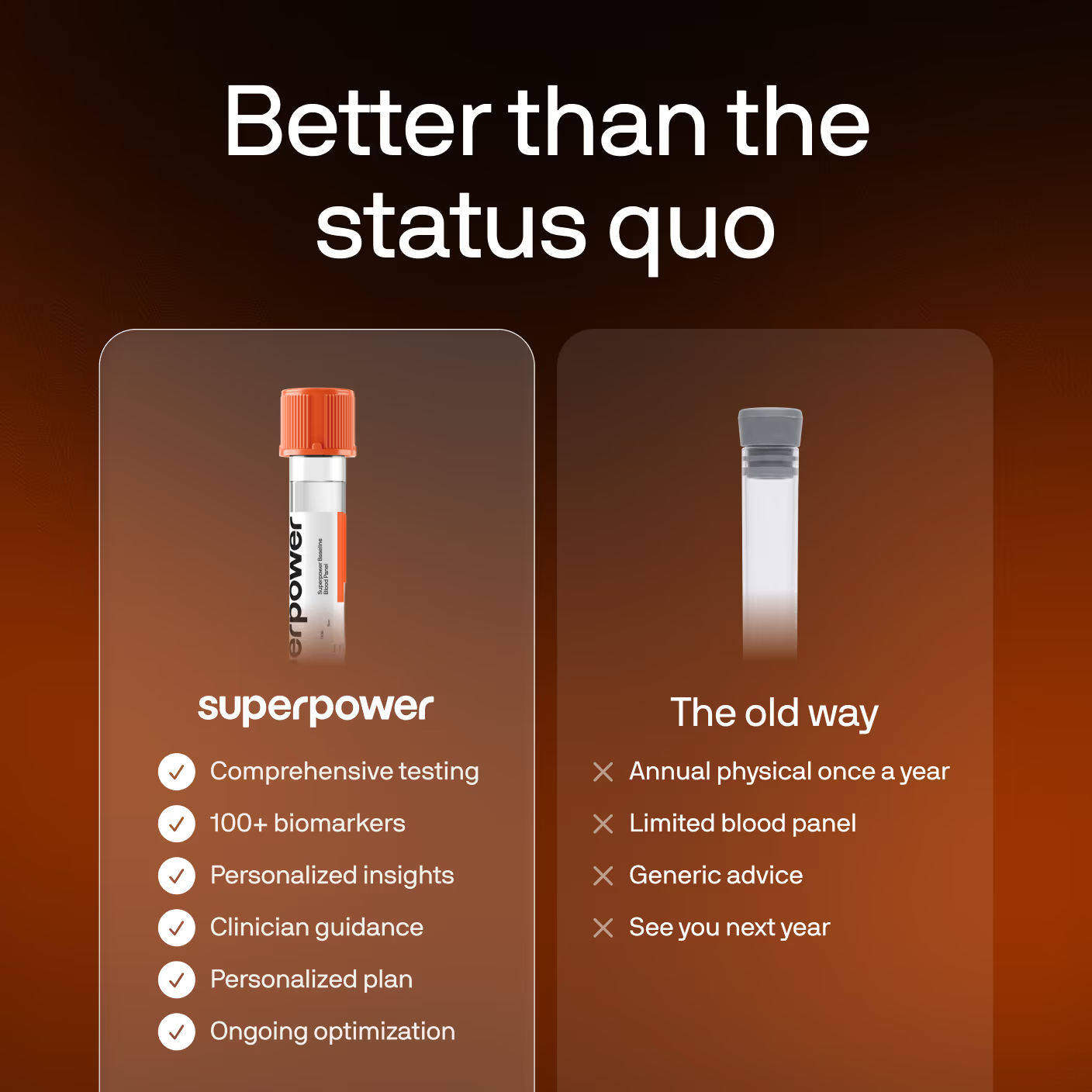
Understand what's driving your symptoms with Superpower
Allergy symptoms tell you your immune system is reacting. A wider read of your biology turns that signal into something you can act on. A Superpower membership includes two blood draws, an initial baseline plus a partial re-draw of your most critical markers, for 150+ lab tests across immune, metabolic, and hormonal health. Your results sit in one place, tracked over time, with a personalized action plan.
Your immune system is one part of a bigger picture, and the rest of it is measurable too. Start your Superpower membership and turn a single set of results into ongoing, on-demand support.
Frequently Asked Questions
References
- MedlinePlus (2025). *Allergy*. National Library of Medicine.
- Bottoms-McClain L, Giri A, Ng AE (2026). Diagnosed allergic conditions in adults: United States, 2024. *NCHS Data Brief*, (545). https://doi.org/10.15620/cdc/174634
- A.D.A.M. Medical Encyclopedia (2026). *Allergic rhinitis*. MedlinePlus, National Library of Medicine.
- Gupta RS, Warren CM, Smith BM, Jiang J, Blumenstock JA, Davis MM, Schleimer RP, Nadeau KC (2019). Prevalence and severity of food allergies among US adults. *JAMA Network Open*, *2*(1), e185630. https://doi.org/10.1001/jamanetworkopen.2018.5630
- Liu J, Zhang X, Zhao Y, Wang Y (2020). The association between allergic rhinitis and sleep: A systematic review and meta-analysis of observational studies. *PLoS ONE*, *15*(2), e0228533. https://doi.org/10.1371/journal.pone.0228533
- Zoabi Y, Levi-Schaffer F, Eliashar R (2022). Allergic rhinitis: Pathophysiology and treatment focusing on mast cells. *Biomedicines*, *10*(10), 2486. https://doi.org/10.3390/biomedicines10102486
- Bousquet J, Anto JM, Bachert C, Baiardini I, Bosnic-Anticevich S, Walter Canonica G, Melén E, Palomares O, Scadding GK, Togias A, Toppila-Salmi S (2020). Allergic rhinitis. *Nature Reviews Disease Primers*, *6*(1), 95. https://doi.org/10.1038/s41572-020-00227-0
- Savouré M, Bousquet J, Jaakkola JJK, Jaakkola MS, Jacquemin B, Nadif R (2022). Worldwide prevalence of rhinitis in adults: A review of definitions and temporal evolution. *Clinical and Translational Allergy*, *12*(3), e12130. https://doi.org/10.1002/clt2.12130
- Cardona V, Ansotegui IJ, Ebisawa M, El-Gamal Y, Fernandez Rivas M, Fineman S, Geller M, Gonzalez-Estrada A, Greenberger PA, Sanchez Borges M, Senna G, Sheikh A, Tanno LK, Thong BY, Turner PJ, Worm M (2020). World Allergy Organization anaphylaxis guidance 2020. *World Allergy Organization Journal*, *13*(10), 100472. https://doi.org/10.1016/j.waojou.2020.100472
- A.D.A.M. Medical Encyclopedia (2026). *Anaphylaxis*. MedlinePlus, National Library of Medicine.
- Muraro A, Worm M, Alviani C, Cardona V, DunnGalvin A, Garvey LH, Riggioni C, de Silva D, Angier E, Arasi S, Bellou A, Beyer K, et al. (2022). EAACI guidelines: Anaphylaxis (2021 update). *Allergy*, *77*(2), 357–377. https://doi.org/10.1111/all.15032
- MedlinePlus (2022). *Common cold*. National Library of Medicine.
- MedlinePlus (2025). *Sinusitis*. National Library of Medicine.
- Ebell MH, McKay B, Dale A, Guilbault R, Ermias Y (2019). Accuracy of signs and symptoms for the diagnosis of acute rhinosinusitis and acute bacterial rhinosinusitis. *Annals of Family Medicine*, *17*(2), 164–172. https://doi.org/10.1370/afm.2354
- Ansotegui IJ, Melioli G, Canonica GW, Caraballo L, Villa E, Ebisawa M, Passalacqua G, Savi E, Ebo D, Gómez RM, Luengo Sánchez O, Oppenheimer JJ, Jensen-Jarolim E, Fischer DA, Haahtela T, Antila M, et al. (2020). IgE allergy diagnostics and other relevant tests in allergy, a World Allergy Organization position paper. *World Allergy Organization Journal*, *13*(2), 100080. https://doi.org/10.1016/j.waojou.2019.100080
- Santos AF, Riggioni C, Agache I, Akdis CA, Akdis M, Alvarez-Perea A, Alvaro-Lozano M, Ballmer-Weber B, Barni S, Beyer K, Bindslev-Jensen C, Brough HA, et al. (2023). EAACI guidelines on the diagnosis of IgE-mediated food allergy. *Allergy*, *78*(12), 3057–3076. https://doi.org/10.1111/all.15902























 Heart & Vascular Health
 Metabolic Health
 Energy
 Liver Health
 Kidney
 Sex Hormones
 Thyroid Health
 Nutrients
 Immune System
 Inflammation