


Understand what your hormones belly fat results really mean
See your biomarkers in context with a comprehensive panel.
- CLIA-certified labs
- HIPAA compliant
- Personalized health protocol
You've been hitting the gym consistently, eating cleaner than you used to, maybe even cutting back on beer. But that stubborn belly fat refuses to budge. The scale might move a little, but your waistline stays frustratingly the same. What most men don't realize is that hormonal belly fat operates differently than the weight you can lose through willpower alone. When cortisol, testosterone, and insulin fall out of balance, your body actively defends that midsection storage, making fat loss feel like pushing a boulder uphill.
What hormonal belly means specifically for men
Hormonal belly in men refers to abdominal fat accumulation driven primarily by imbalances in cortisol, testosterone, and insulin. This isn't just about eating too much or moving too little. When these hormones shift out of their optimal ranges, your body preferentially stores fat in the midsection, particularly as visceral fat that wraps around internal organs like the liver, pancreas, and intestines.
Visceral fat behaves differently than subcutaneous fat (the pinchable layer under your skin). It's metabolically active, releasing inflammatory molecules and hormones that interfere with normal metabolic function. This creates a self-reinforcing cycle: hormonal imbalances promote visceral fat storage, and that visceral fat then produces substances that worsen hormonal imbalances. The result is a belly that resists conventional diet and exercise approaches because the underlying hormonal environment actively works against fat loss.
How hormonal imbalances drive abdominal fat storage
Cortisol and stress-driven fat accumulation
Cortisol is released by your adrenal glands in response to stress, whether that's a work deadline, poor sleep, intense exercise, or chronic inflammation. In the short term, cortisol mobilizes energy by raising blood sugar. But when stress becomes chronic, cortisol stays elevated, creating metabolic problems. High cortisol increases appetite, particularly for high-calorie, high-sugar foods. It also promotes the breakdown of muscle tissue to provide amino acids for glucose production, which lowers your metabolic rate over time.
Visceral fat cells have more cortisol receptors than subcutaneous fat cells, making them especially responsive to stress hormones. When cortisol binds to these receptors, it triggers fat storage in the midsection. This is why men under chronic stress often develop a characteristic belly even when their arms and legs remain relatively lean.
Testosterone deficiency and metabolic slowdown
Testosterone plays a critical role in maintaining muscle mass, bone density, and metabolic rate in men. When testosterone levels decline, whether due to aging, obesity, chronic stress, or medical conditions, several metabolic changes occur. Muscle mass decreases, which lowers the number of calories your body burns at rest. Fat mass increases, particularly in the abdominal region. And because fat tissue contains the enzyme aromatase, which converts testosterone into estrogen, low testosterone creates a vicious cycle: more belly fat leads to even lower testosterone.
Men with low testosterone often experience fatigue, reduced motivation to exercise, and difficulty building or maintaining muscle despite training. The metabolic slowdown from reduced muscle mass means fewer calories burned throughout the day, and the hormonal environment favors fat storage over fat burning.
Insulin resistance and fat storage signaling
Insulin resistance develops when cells stop responding effectively to insulin, the hormone that shuttles glucose from the bloodstream into cells for energy. When cells become resistant, the pancreas compensates by producing more insulin to achieve the same effect. Chronically elevated insulin levels have a powerful effect on fat storage. Insulin is an anabolic hormone that promotes energy storage. When insulin is high, your body is in storage mode, not burning mode.
Excess abdominal fat releases inflammatory molecules that interfere with insulin signaling, making cells more resistant. At the same time, high insulin levels promote further fat storage, particularly in the abdomen, while blocking fat breakdown. This creates a metabolic trap where losing belly fat becomes increasingly difficult because the hormonal environment is locked in a fat-storage pattern.
What drives hormonal belly in men
Chronic stress and sleep deprivation
Chronic stress keeps cortisol elevated throughout the day and disrupts the natural cortisol rhythm, which should peak in the morning and decline by evening. When this rhythm is disrupted, cortisol remains high at night, interfering with sleep quality. Poor sleep, in turn, raises cortisol further and disrupts other hormones like leptin and ghrelin that regulate appetite. Men who consistently sleep fewer than seven hours per night show higher cortisol levels, increased appetite, and greater abdominal fat accumulation compared to those who get adequate sleep.
Sedentary lifestyle and muscle loss
Physical inactivity contributes to hormonal belly through multiple pathways. Lack of movement reduces insulin sensitivity, meaning cells become less responsive to insulin even without weight gain. Sedentary behavior also accelerates age-related muscle loss, which lowers metabolic rate and testosterone production. Muscle tissue helps regulate blood sugar by taking up glucose without requiring insulin during contraction. When muscle mass declines, this glucose disposal mechanism weakens, contributing to insulin resistance and fat gain.
Diet composition and meal timing
Diets high in refined carbohydrates and added sugars cause repeated insulin spikes throughout the day. Each spike signals the body to store energy as fat, and over time, this pattern promotes insulin resistance. Processed foods high in trans fats and inflammatory seed oils worsen metabolic health by promoting inflammation and interfering with hormone signaling. Excessive alcohol consumption is particularly problematic because alcohol is metabolized in the liver, where it interferes with fat oxidation and promotes fat storage. Alcohol also raises cortisol and lowers testosterone, creating a hormonal environment that favors belly fat accumulation.
Age-related hormonal decline
Testosterone levels naturally decline by about 1% per year after age 30. This gradual decline accelerates muscle loss and slows metabolism, making it easier to gain fat and harder to lose it. At the same time, stress responsiveness changes with age. Older men often show prolonged cortisol elevation after stressful events compared to younger men, meaning the stress belly effect becomes more pronounced over time.
Why some men accumulate more belly fat than others
Genetic factors and fat distribution patterns
Genetics influence where your body preferentially stores fat. Some men are genetically predisposed to store more fat in the abdominal region, while others store it more evenly throughout the body. Genetic variations also affect how sensitive your fat cells are to cortisol and insulin, meaning some men develop hormonal belly more readily in response to stress or poor diet. Family history of diabetes, metabolic syndrome, or cardiovascular disease often indicates genetic susceptibility to visceral fat accumulation.
Prior dieting history and metabolic adaptation
Men who have repeatedly lost and regained weight often experience metabolic adaptation, where the body becomes more efficient at storing fat and more resistant to losing it. This happens because repeated caloric restriction lowers metabolic rate, reduces thyroid hormone production, and increases hunger hormones. Each diet-regain cycle can worsen insulin sensitivity and make subsequent fat loss attempts more difficult.
Baseline muscle mass and body composition
Men who start with higher muscle mass have a metabolic advantage. Muscle tissue burns more calories at rest than fat tissue, and it improves insulin sensitivity by providing a large glucose disposal site. Men with lower baseline muscle mass are more susceptible to insulin resistance and fat gain because they have less metabolically active tissue to buffer blood sugar fluctuations.
Stress response and cortisol sensitivity
Individual variation in stress response affects how much cortisol is released in response to stressors and how long it remains elevated. Some men are high cortisol responders, meaning they produce more cortisol and take longer to return to baseline after stress. This trait is partly genetic and partly shaped by early life experiences. High cortisol responders are more prone to developing stress belly because their bodies spend more time in a fat-storage hormonal state.
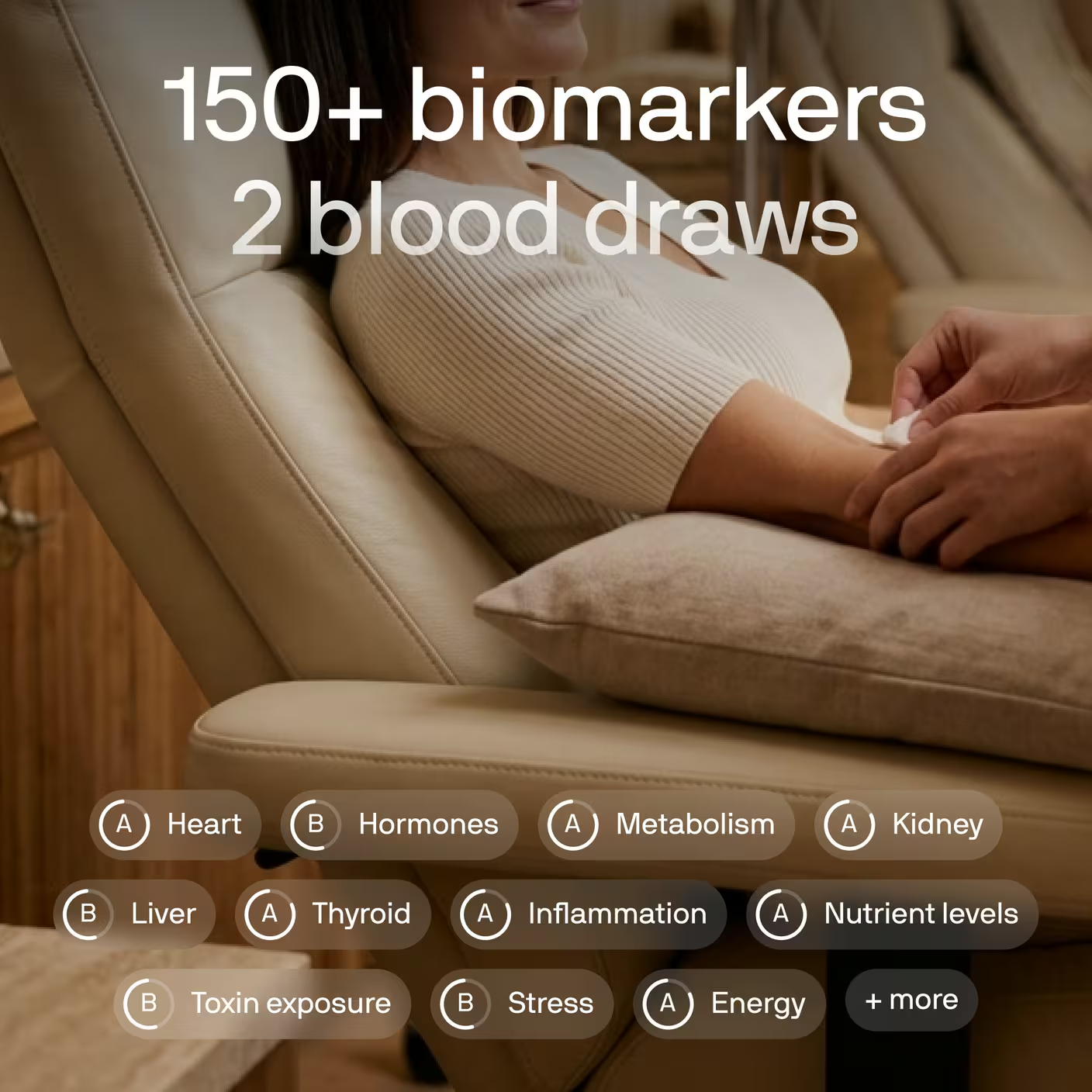
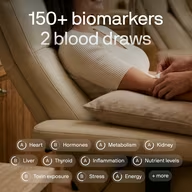
Test 150+ biomarkers
Two blood draws. A full picture of your health, explained in plain language.
Test 150+ biomarkers
Two blood draws. A full picture of your health, explained in plain language.
Turning hormonal insight into action
Reducing hormonal belly requires addressing the underlying hormonal imbalances, not just cutting calories. The most effective approach combines targeted lifestyle changes with biomarker tracking to monitor progress. Weight loss of even 5-10% of body weight can significantly improve insulin sensitivity, lower cortisol, and increase testosterone, breaking the vicious cycle that maintains belly fat.
Resistance training builds muscle and improves insulin sensitivity
Resistance training is particularly effective because it builds muscle mass, which improves insulin sensitivity and boosts testosterone. Muscle contraction during exercise shuttles glucose into cells without requiring insulin, directly addressing insulin resistance. Strength training also creates an anabolic hormonal environment that favors fat loss over muscle loss, unlike pure caloric restriction, which often leads to muscle loss alongside fat loss.
Sleep and stress management normalize cortisol patterns
Managing stress through sleep optimization, stress reduction practices, and avoiding overtraining helps normalize cortisol patterns. Prioritizing 7-9 hours of quality sleep per night is essential because sleep deprivation raises cortisol, lowers testosterone, and disrupts appetite regulation.
Dietary changes stabilize blood sugar and reduce insulin
Prioritizing protein, fiber, and healthy fats while minimizing refined carbohydrates and added sugars improves insulin sensitivity and reduces the insulin-driven fat storage signal. This approach stabilizes blood sugar throughout the day, preventing the repeated insulin spikes that promote fat accumulation.
Biomarker tracking provides objective feedback
Tracking biomarkers provides objective feedback on whether your interventions are working. Key markers include fasting insulin, hemoglobin A1c, free testosterone, cortisol, and inflammatory markers like hs-CRP. Monitoring these over time shows whether your hormonal environment is shifting in a direction that supports fat loss. Waist circumference is a practical measure of visceral fat that correlates well with metabolic health, often more reliably than scale weight.
How Superpower helps men fix hormonal belly
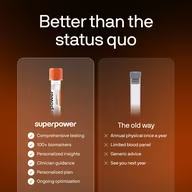
If you're dealing with stubborn belly fat that won't respond to diet and exercise alone, Superpower's 150+ biomarker panel can show you exactly what's happening hormonally. You'll see your testosterone, cortisol, insulin, and HbA1c levels, along with inflammatory markers and metabolic health indicators that reveal whether hormonal imbalances are driving your fat storage. Tracking these biomarkers over time lets you see whether your interventions are actually working at the hormonal level, not just whether the scale is moving.
Frequently Asked Questions
References
- Drapeau V, Therrien F, Richard D, Tremblay A (2003). Is visceral obesity a physiological adaptation to stress?. *Panminerva medica*, *45*(3), 189-95. https://pubmed.ncbi.nlm.nih.gov/14618117/
- Fui MN, Dupuis P, Grossmann M (2014). Lowered testosterone in male obesity: mechanisms, morbidity and management. *Asian journal of andrology*, *16*(2), 223-31. https://doi.org/10.4103/1008-682X.122365
- Travison TG, Araujo AB, O'Donnell AB, Kupelian V, McKinlay JB (2007). A population-level decline in serum testosterone levels in American men. *The Journal of clinical endocrinology and metabolism*, *92*(1), 196-202. https://doi.org/10.1210/jc.2006-1375
- Dhindsa S, Ghanim H, Batra M, Kuhadiya ND, Abuaysheh S, Sandhu S, Green K, Makdissi A, Hejna J, Chaudhuri A, Punyanitya M, Dandona P (2016). Insulin resistance and inflammation in hypogonadotropic hypogonadism and their reduction after testosterone replacement in men with type 2 diabetes. *Diabetes Care*, *39*(1), 82-91. https://doi.org/10.2337/dc15-1518
- Croymans DM, Paparisto E, Lee MM, Brandt N, Le BK, Lohan D, Lee CC, Roberts CK (2013). Resistance training improves indices of muscle insulin sensitivity and β-cell function in overweight/obese, sedentary young men. *Journal of Applied Physiology*, *115*(9), 1245-1253. https://doi.org/10.1152/japplphysiol.00485.2013






















 Heart & Vascular Health
 Metabolic Health
 Energy
 Liver Health
 Kidney
 Sex Hormones
 Thyroid Health
 Nutrients
 Immune System
 Inflammation