Uranium Exposure: Sources, Health Effects, and Testing
REVIEWED BY
William Maish, MD MBA MPH
Clinical Product Lead
Published
Last updated
Key takeaway:
This test measures your personal uranium level only to detect elevated exposure; identifying high levels early can prompt medical follow-up to help avoid kidney damage and other long-term health risks.
The uranium toxin test measures uranium in a human sample, most commonly urine. Uranium is a heavy metal that is chemically toxic at sufficient doses and also weakly radioactive. In clinical testing, levels are reported as micrograms per liter (μg/L) or normalized to urine creatinine (μg/g creatinine) to account for hydration. Laboratories typically use high-sensitivity mass spectrometry, such as inductively coupled plasma–mass spectrometry (ICP‑MS), to accurately detect very low concentrations. Results are compared with population-based reference ranges to determine whether your level is typical or elevated for your age and sex.
Why uranium matters for kidney health
Why this matters: uranium primarily affects the kidneys, where it can stress the proximal tubules that help balance minerals, acid–base status, and fluid. It also deposits in bone, where it can slowly release back into circulation. Measuring your body burden provides objective data about exposure and how effectively your body is eliminating the metal. For many people, this is about uncovering hidden risks from well water or past work environments. For others, it helps explain nonspecific symptoms and directs smarter monitoring of kidney health and overall resilience.
Uranium exposure connects directly to core body systems: filtration in the kidneys, mineral balance in bone, and cellular stress responses. At higher levels, the chemical toxicity of uranium is the main concern, not the radiation. Testing can reveal early strain on your detox and excretion pathways long before any overt problem shows up on routine labs. It’s especially relevant if you drink from a private well, live near uranium-rich geology, have worked with metal machining, mining, or munitions, or have unexplained signs that point your clinician toward environmental factors. Spotting a higher urinary uranium level gives you and your care team a concrete signal to investigate sources in your environment or routines.
Thanks for signing up!
Check your inbox — your first issue is on the way. We send clinically reviewed health science, never spam.
Who has reason to test for uranium
Zooming out, measurement is the foundation of prevention. A one-time test establishes a baseline. Follow-up testing shows whether levels decline after addressing a suspected source, much like watching your resting heart rate improve with consistent training. This isn’t about “passing” or “failing” a toxin screen. It’s about seeing where your body stands today, catching early warning signs, and tracking how real-world changes influence kidney load, bone turnover, and elimination over time. Evidence from occupational and environmental studies supports this approach, though individual thresholds for effect vary and clinical interpretation should always be clinical and contextual.
Reading a uranium result
Your report displays urine uranium as a concentration and often as a creatinine-corrected value to adjust for how diluted your urine is. Results are compared to established reference ranges drawn from large population surveys. “Normal” simply means typical for the general population. “Optimal,” when provided, reflects zones associated with lower long-term risk and efficient elimination. Context matters: a mild elevation in a highly hydrated sample may mean something different than the same value in a concentrated sample.
Higher values can indicate recent exposure from sources like private well water, dust or soil, certain occupational settings, or supplements containing contaminated minerals. Because uranium is filtered by the kidneys, elevated levels can coincide with subtle tubular stress. That does not equal disease, but it can guide a closer look at kidney markers (e.g., serum creatinine, eGFR, urinalysis). If exposure is reduced, follow-up testing often shows a downward trend as body burden decreases, with bone stores clearing more slowly.
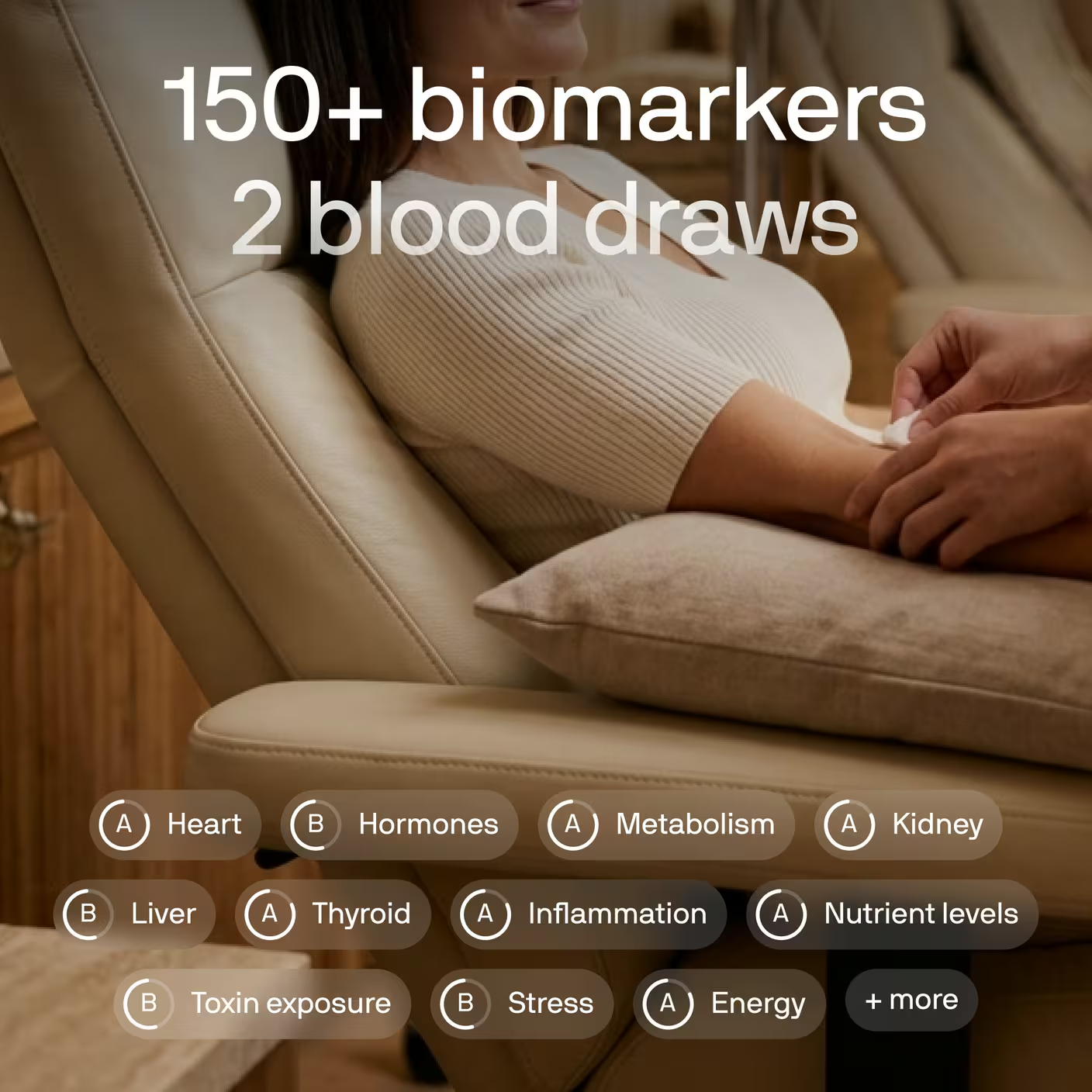
Test 150+ biomarkers
Two blood draws. A full picture of your health, explained in plain language.
When values fall in a lower, expected range, that generally suggests minimal recent exposure and efficient renal handling. Day-to-day variability is normal and can reflect genetics, mineral intake, hydration, and short-term changes such as exercise or sauna that temporarily shift fluid balance. In children and during pregnancy, clinicians often interpret more conservatively because developing kidneys and fetal growth are uniquely sensitive to heavy metals.
What a uranium test can and can't tell you
The real value is pattern recognition over time. When interpreted by a clinician alongside your history and related labs, results help separate a one-off spike from a sustained exposure pattern. This supports preventive care, detection of potential kidney strain, and personalized strategies to protect long-term health, even when you feel well.
Frequently Asked Questions
A uranium toxin test measures the amount of uranium in a person’s biological sample—most commonly urine, sometimes blood or hair—by quantifying the chemical concentration of uranium present to assess individual internal exposure levels.
Results indicate recent or ongoing exposure and help evaluate potential chemical toxicity (particularly to the kidneys); they do not directly measure radiological dose. These tests are intended for understanding personal levels and should be interpreted by a healthcare or occupational specialist.
Uranium is measured from a urine specimen. We provide a sterile collection container and instructions; depending on the test ordered you may provide a single (spot or first‑morning) urine sample or a 24‑hour urine collection for more accurate exposure assessment.
For a 24‑hour collection you typically discard the first morning void, collect all urine for the next 24 hours including the first void the following morning, keep the container refrigerated during collection, label the sample, and return it to the lab per the kit instructions. Follow the written instructions included with your kit for timing, handling, and transport to ensure accurate results.
A uranium toxin test shows whether uranium is present in your body and at what concentration; a non-detect or low value generally indicates background or minimal exposure, while elevated levels indicate recent or ongoing exposure. Urine is the most common specimen and mainly reflects recent intake (hours–days), whereas hair or nail testing can suggest longer‑term exposure. Test results do not by themselves diagnose disease but are used to document exposure and estimate potential chemical (primarily kidney) risk rather than significant radiological harm at typical environmental levels.
Interpreting results requires comparison with laboratory reference ranges and often correction for urine creatinine; clinicians will consider the measured level, timing of sampling, symptoms, kidney function tests (e.g., serum creatinine, urinalysis), and exposure history to decide if repeat testing, removal from the source, further medical evaluation, or specialist treatment is needed. A single result must be assessed in context—normal tests don’t guarantee past exposure didn’t occur, and elevated tests warrant follow‑up by a healthcare professional experienced with toxic exposures.
Modern laboratory methods (most commonly ICP‑MS or mass‑spectrometry techniques, sometimes alpha spectrometry) are highly sensitive and precise when performed by accredited laboratories; when samples are collected and handled correctly these tests reliably detect elevated uranium in biological matrices. Urine testing is the most common and useful indicator of recent or ongoing exposure, blood is useful for acute high exposures, and hair or nails can indicate longer‑term exposure but are prone to external contamination and require careful interpretation.
If you have no known exposure to contaminated water, dust, mines or never worked with uranium, routine testing isn’t usually necessary; consider a single baseline urine test only if you’re concerned and otherwise only repeat testing infrequently for reassurance. For people with possible or known exposure (occupational work with uranium, living near a contamination site, or using private well water with suspected contamination), clinicians or local public‑health authorities typically recommend an initial baseline measurement followed by periodic monitoring—frequency is individualized but commonly ranges from every few months to once a year depending on how ongoing or intense the exposure is.
After a suspected acute exposure, testing should be done promptly (urine is the usual test for personal uranium levels) and then repeated during follow‑up; after remediation of a water or home contamination source it’s common to retest soon after the fix and again months later to confirm levels remain low. Pregnant people, young children and anyone with reduced kidney function generally warrant earlier and/or more frequent testing. Work with your healthcare provider or occupational/public‑health program to set the exact schedule and to choose spot versus 24‑hour urine testing or blood testing when clinically indicated.
Yes. Measured uranium in urine primarily reflects recent exposure, so levels can rise quickly after an acute inhalation or ingestion and then fall as the body excretes the metal. How fast it changes depends on the chemical form (solubility), exposure route and dose, and the person’s kidney function.
Because of this variability, a single urine result indicates recent uptake but may not represent long‑term body burden; serial urine tests or additional clinical assessment (and treatments such as chelation when indicated) are used to monitor and reduce uranium levels over time.
No — uranium toxin test results are not diagnostic on their own; they indicate patterns of exposure, body burden, or physiologic imbalance versus resilience rather than a definitive medical diagnosis.
Those results must be interpreted alongside symptoms, clinical history, physical exam and other laboratory or biomarker data, and reviewed by a qualified clinician who can determine whether further diagnostic testing, treatment, or exposure mitigation is needed.
If testing shows elevated uranium, promptly review the results with a licensed clinician (occupational medicine specialist, toxicologist or nephrologist). They will assess the magnitude of exposure, check kidney function, confirm with repeat testing if needed, and help identify and eliminate ongoing sources (for example stop using contaminated well water for drinking/cooking, improve workplace controls and PPE). In the meantime avoid further exposure and limit use of other nephrotoxins (certain NSAIDs, contrast agents) until directed by your provider.
Treatment and follow-up should be directed by a physician — for clinically significant exposures a specialist may recommend medical interventions (such as measures to enhance urinary elimination) and will arrange monitoring of kidney function and serial uranium measurements. Supportive measures (good hydration, a balanced diet and correction of nutritional deficiencies) can help overall recovery. If contamination is from a public or environmental source, notify local public health or your water utility so they can investigate and remediate.
Superpower member survey, 90 days post action plan (n=143).
How does the Superpower membership work?
+
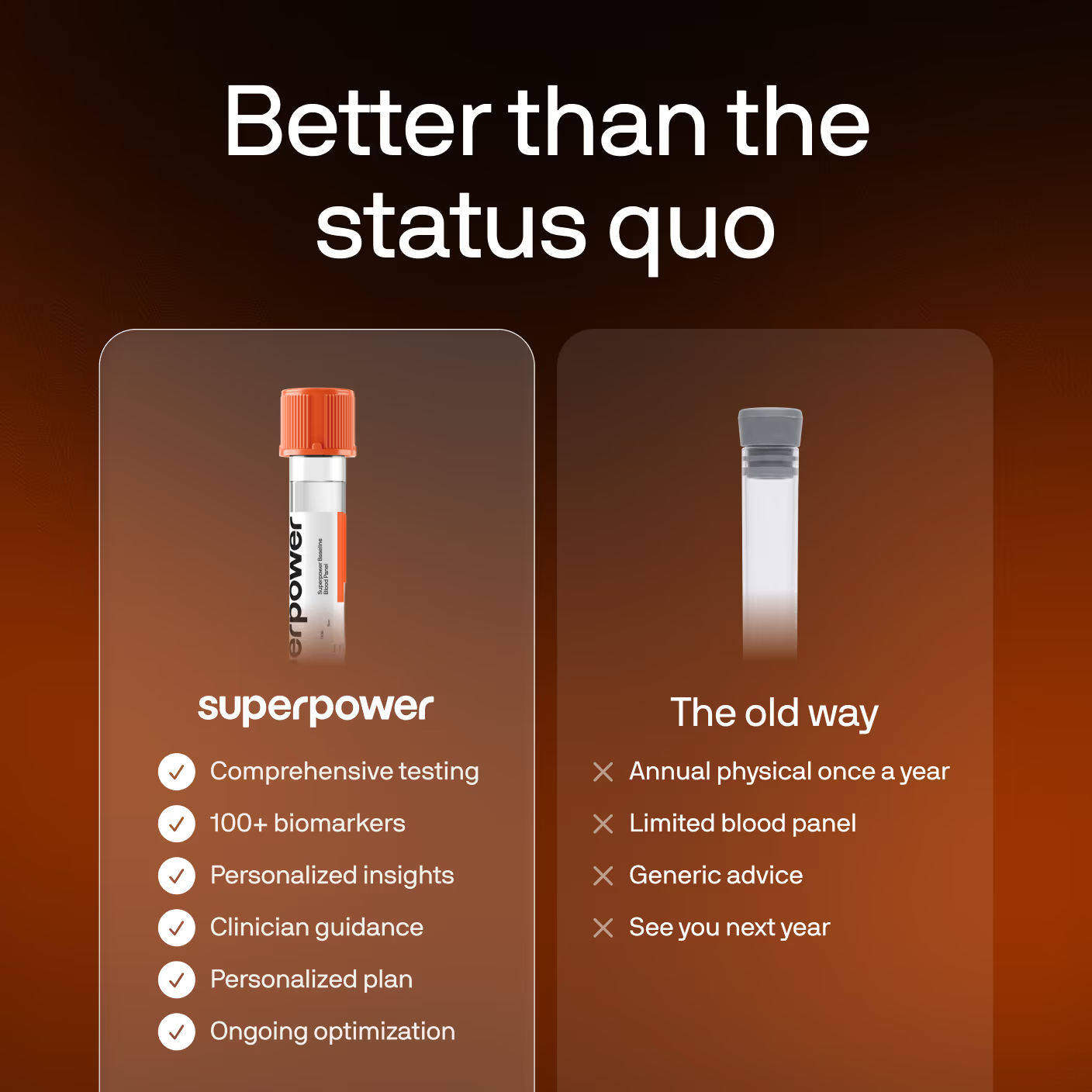
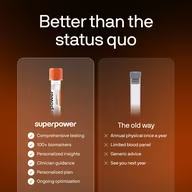
We test 150+ biomarkers annually across two blood draws. Your baseline test paints a comprehensive picture of your health, and your dashboard shows what’s working, what needs attention, and what to do next. Superpower AI and your care team help you take action across lifestyle, supplements, and treatments. Then we retest to track your progress and continue refining your plan.
Can I cancel anytime?
+
Yes. You can cancel anytime, no fees. Your membership stays active through the end of your paid year.
How often should I test?
+
Your membership includes two blood tests per year: one to establish your baseline, and one to see whether your plan improved biomarkers that were out of range or not yet optimized. You can add other diagnostics anytime through the app or with help from your care team.
When will I get my results?
+
Book your draw at any of 2,000+ partner labs or at-home. Results are typically ready in about a week and land in the Superpower app.
What the 100+ panel measures
All 101 markers in your annual baseline draw, organized by system. Nothing here is an upsell.
Heart & Vascular Health
26
Apolipoprotein B
Atherogenic Coefficient
Atherogenic Index of Plasma
Castelli Risk Index I
Castelli Risk Index II
HDL Cholesterol
LDL Cholesterol
LDL/HDL Ratio
Cholesterol, Total
Non-HDL Cholesterol
Cholesterol/HDL Ratio
Carbon Dioxide, Total
High-sensitivity CRP
hsCRP-to-Albumin Ratio (CAR)
GGT-to-HDL Cholesterol Ratio
LDL-C to Apolipoprotein B Ratio (LDL-C/ApoB)
LDL Cholesterol / Total Cholesterol (Mass Ratio)
Monocyte-to-HDL Ratio (MHR)
Neutrophil-to-HDL Cholesterol Ratio (NHR)
Non-HDL Cholesterol-to-Apolipoprotein B Ratio (Non-HDL-C/ApoB)


























 Heart & Vascular Health
 Metabolic Health
 Energy
 Liver Health
 Kidney
 Sex Hormones
 Thyroid Health
 Nutrients
 Immune System
 Inflammation