


Understand what your electrolytes minerals testing results really mean
See your biomarkers in context with a comprehensive panel.
- CLIA-certified labs
- HIPAA compliant
- Personalized health protocol
Hypocalcemia and the markers that reveal it
Hypocalcemia biomarkers are blood measurements that map the body’s calcium‑control system and show why biologically active calcium is in short supply. The anchor is the free, usable fraction of calcium (ionized calcium), with total calcium interpreted in the context of its main carrier protein (albumin). The key regulator comes from the parathyroid glands (parathyroid hormone, PTH), which directs bone, kidneys, and intestines to restore calcium availability. Your vitamin D status is captured by the stored form made in the liver or obtained from diet and sun (25‑hydroxyvitamin D) and the kidney‑made active hormone that drives absorption (1,25‑dihydroxyvitamin D). Partner minerals refine the picture: phosphate interacts closely with calcium in bone and blood (phosphate), and an essential cofactor can impair PTH secretion and action when depleted (magnesium). Kidney participation is reflected by standard kidney function markers, since kidneys activate vitamin D and reabsorb calcium. Together, these biomarkers reveal whether the issue is intake and absorption, hormonal signaling, mineral balance, or organ handling—enabling targeted, physiology‑based care.
Why a calcium workup matters
Calcium is the body’s electrical currency for nerves, muscles, and the heartbeat, and a key building block for bone. Blood testing for hypocalcemia looks at total calcium, corrected calcium, and albumin to show whether the active calcium signal is stable across brain, heart, muscle, and bone. Total calcium generally lives in a narrow range, with “feels-best” values tending toward the middle. Albumin typically sits in a mid-range as well; because much of calcium is bound to albumin, a low albumin can make total calcium look low even when the biologically active share is normal. Corrected calcium accounts for albumin and better reflects true status; ionized calcium directly measures the active fraction. In pregnancy, total calcium often appears lower due to hemodilution and lower albumin, so corrected or ionized values are most informative. When corrected or ionized calcium is genuinely low, the physiology points to impaired parathyroid hormone–vitamin D–kidney signaling, poor intestinal absorption, magnesium deficiency, or acute shifts (pancreatitis, massive transfusion). People may notice tingling in lips or fingers, muscle cramps, facial twitching, or hand/foot spasms; severe cases can bring laryngospasm or seizures. The heart may show a prolonged QT and arrhythmia risk. Children can present with irritability, seizures, or poor growth; newborns may be jittery. During pregnancy and lactation, true hypocalcemia raises risks of maternal tetany and neonatal hypocalcemia. Big picture: calcium status integrates bone stores, gut absorption, kidney regulation, albumin from the liver, and parathyroid function. Persistent hypocalcemia stresses neuromuscular function, destabilizes cardiac conduction, and, over time, can impair bone quality and life quality.
Test 150+ biomarkers
Two blood draws. A full picture of your health, explained in plain language.
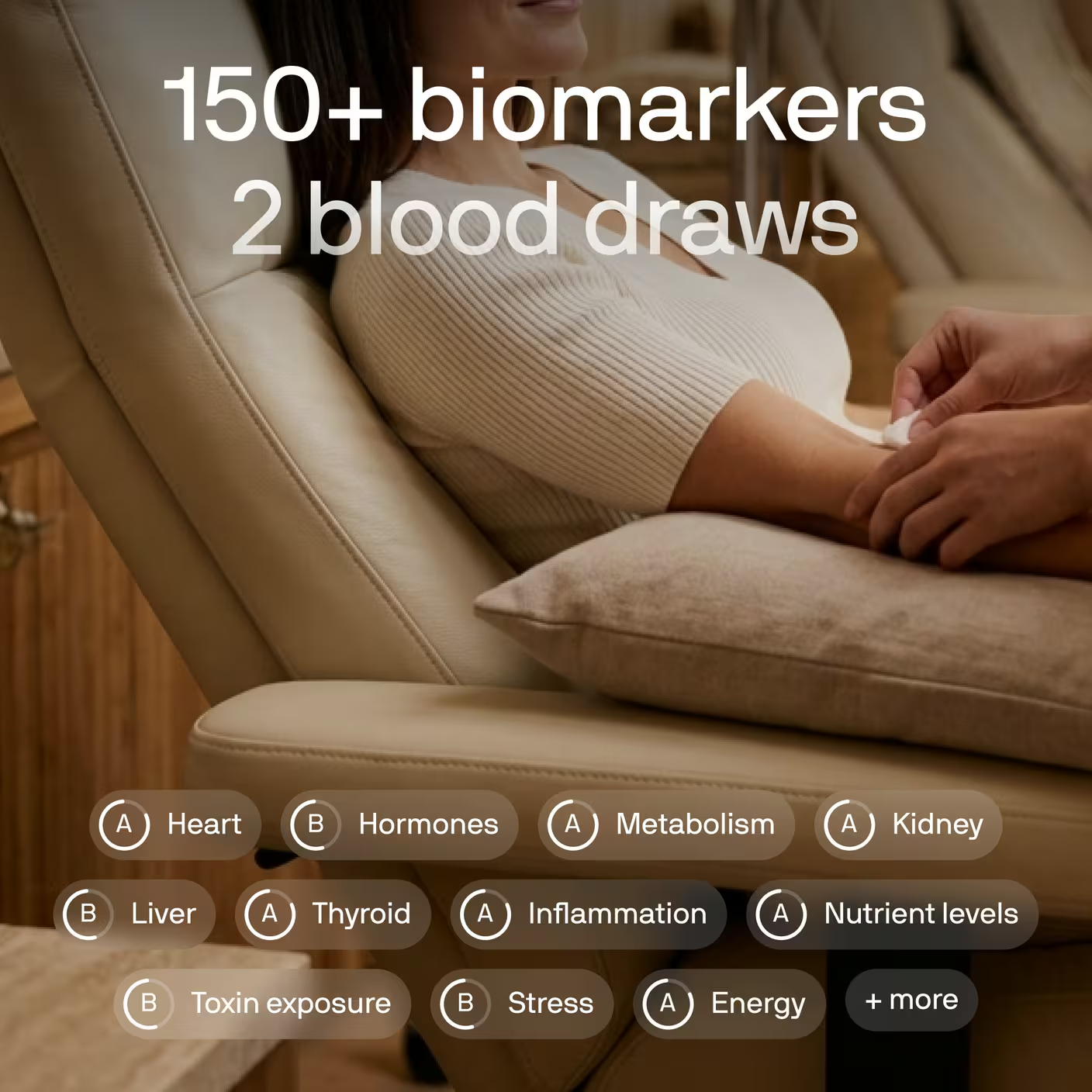
Test 150+ biomarkers
Two blood draws. A full picture of your health, explained in plain language.
What corrected calcium can and can't settle
Hypocalcemia blood testing is essential for understanding how your body maintains the balance of calcium, a mineral critical for nerve signaling, muscle contraction, heart rhythm, and bone strength. Calcium also plays a key role in hormone release, blood clotting, and cellular energy production. At Superpower, we assess your calcium status using three biomarkers: Calcium, corrected calcium, and albumin. Calcium is the main mineral measured in your blood, reflecting the amount available for immediate physiological needs. Albumin is a protein that binds and transports calcium in the bloodstream. Because a significant portion of calcium is attached to albumin, low albumin levels can make total calcium appear falsely low. Corrected calcium is a calculated value that adjusts for albumin levels, providing a more accurate picture of the biologically active, or “free,” calcium in your blood. Hypocalcemia refers to a state where these measures indicate lower-than-expected calcium availability. Stable calcium levels are vital for the healthy function of your nervous, muscular, and cardiovascular systems. When calcium drops too low, nerve and muscle cells become more excitable, which can disrupt normal heart rhythms and muscle control. Corrected calcium helps clarify whether low total calcium is a true deficiency or simply reflects changes in albumin, ensuring a more precise assessment of your body’s calcium status. Interpretation of hypocalcemia testing can be influenced by factors such as age, pregnancy, acute illness, certain medications, and laboratory assay differences. These variables can affect calcium and albumin levels, so results are always considered in the context of your overall health and clinical situation.
Frequently Asked Questions
References
- Pepe J, Colangelo L, Biamonte F, Sonato C, Danese VC, Cecchetti V, Occhiuto M, Piazzolla V, De Martino V, Ferrone F, Minisola S, Cipriani C (2020). Diagnosis and management of hypocalcemia. *Endocrine*, *69*(3), 485-495. https://doi.org/10.1007/s12020-020-02324-2
- Cooper MS, Gittoes NJL (2008). Diagnosis and management of hypocalcaemia. *BMJ*, *336*(7656), 1298-1302. https://doi.org/10.1136/bmj.39582.589433.BE
- Cholst IN, Steinberg SF, Tropper PJ, Fox HE, Segre GV, Bilezikian JP (1984). The influence of hypermagnesemia on serum calcium and parathyroid hormone levels in human subjects. *The New England Journal of Medicine*, *310*(19), 1221-1225. https://doi.org/10.1056/NEJM198405103101904
- National Institutes of Health Office of Dietary Supplements. (2024). *Vitamin D: Fact sheet for health professionals*. https://ods.od.nih.gov/factsheets/VitaminD-HealthProfessional/
- National Institutes of Health Office of Dietary Supplements. (2024). *Calcium: Fact sheet for health professionals*. https://ods.od.nih.gov/factsheets/Calcium-HealthProfessional/






















 Heart & Vascular Health
 Metabolic Health
 Energy
 Liver Health
 Kidney
 Sex Hormones
 Thyroid Health
 Nutrients
 Immune System
 Inflammation