


Understand what your methylation markers mean for NAC
See homocysteine, vitamin B12, and RBC folate in context.
- CLIA-certified labs
- HIPAA compliant
- Personalized health protocol
NAC has been tested as an add-on for OCD at 2,000 to 4,000 mg a day, with mixed results. Evidence for addiction, schizophrenia negative symptoms, depression, and bipolar disorder is also limited or inconsistent.
What NAC is and how it differs from standard psychiatric drugs
N-acetylcysteine is a modified form of the amino acid cysteine. It's been used in emergency medicine for decades as an antidote to acetaminophen overdose because it replenishes glutathione, the body's master antioxidant. But its psychiatric applications stem from a different property: its ability to modulate glutamate signaling in the brain.
Most psychiatric medications target monoamine neurotransmitters like serotonin, dopamine, or norepinephrine. NAC doesn't. It acts on glutamate signaling instead, through glutathione and the cystine-glutamate antiporter, a pathway covered in detail below.
Glutamate dysregulation isn't just a biochemical curiosity. It's implicated in the repetitive, intrusive thought patterns that define OCD, the craving and relapse cycles in addiction, and the cognitive rigidity seen in autism spectrum disorders. Standard SSRIs or dopamine antagonists don't directly address this pathway, which is why NAC has drawn attention as an adjunctive or alternative strategy.
What the clinical trials actually show on NAC and mental health
| Condition | Evidence strength | Trial dose |
|---|---|---|
| OCD | Mixed: borderline benefit when added to SSRIs for five to eight weeks; trials of 16 and 20 weeks found none | 2,000 to 4,000 mg daily (2022 RCT) |
| Cocaine and cannabis use | Early: less craving and longer abstinence with cocaine; less extensive data for cannabis | Moderate to high daily doses |
| Nicotine dependence | Mixed: some trials show fewer cigarettes, others no benefit | Moderate to high daily doses |
| Schizophrenia | Modest: improvement in negative symptoms when added to antipsychotics | 1,000 to 2,000 mg daily (2022 meta-analysis) |
| Depression and bipolar disorder | Weak: inconsistent results as an add-on to antidepressants | Not specified |
| Anxiety | Weak: anxiety eased in a small OCD trial, measured only as a secondary outcome | 3,000 mg daily (2017 RCT) |
| Autism spectrum disorder | Mixed: less irritability and repetitive behavior in some studies of children | Not specified |
In OCD, randomized trials added NAC to standard SSRI treatment and measured change on the Yale-Brown Obsessive Compulsive Scale. Pooled across six trials, NAC helped only at five to eight weeks, and that benefit was borderline. In a 16-week trial of 3,000 mg daily in treatment-resistant OCD, NAC did no better than placebo on OCD severity, though anxiety eased more. A 20-week trial of 2,000 to 4,000 mg daily also found no benefit over placebo.
In schizophrenia, the benefit falls on negative symptoms such as flat affect, social withdrawal, and reduced motivation. Positive symptoms like hallucinations and delusions show less consistent improvement. The mechanism likely involves both glutathione restoration and glutamate modulation, as oxidative stress is elevated in schizophrenia.
Results vary across conditions and studies, likely reflecting differences in baseline glutamate dysregulation and oxidative stress across individuals.
How NAC modulates glutamate and oxidative stress in the brain
Glutathione synthesis and cellular redox balance
NAC's psychiatric effects trace back to two interconnected pathways: glutathione synthesis and glutamate regulation. After oral ingestion, NAC is absorbed in the gut and crosses into systemic circulation. Once inside cells, it's deacetylated to cysteine, the rate-limiting substrate for glutathione production. Glutathione is a tripeptide antioxidant that neutralizes reactive oxygen species and maintains cellular redox balance.
The cystine-glutamate antiporter and feedback inhibition
In the brain, glutathione levels influence the activity of the cystine-glutamate antiporter, also called system xc-. This transporter sits on glial cells and exchanges intracellular glutamate for extracellular cystine. When system xc- is functioning, it releases glutamate into the extracellular space, where it activates metabotropic glutamate receptors on presynaptic neurons. These receptors then inhibit further glutamate release from synapses, creating a negative feedback loop that prevents excessive excitatory signaling.
In conditions like addiction and OCD, chronic stress or drug exposure downregulates system xc-, leading to reduced extracellular glutamate and loss of this inhibitory tone. Synaptic glutamate release becomes dysregulated, contributing to compulsive behaviors, craving, and cognitive inflexibility. NAC restores system xc- activity by increasing cystine availability, which normalizes extracellular glutamate and reestablishes the feedback inhibition.
Oxidative stress and neuroprotection
Elevated reactive oxygen species damage cellular proteins, lipids, and DNA, and this damage is particularly pronounced in psychiatric disorders like schizophrenia and bipolar disorder. By replenishing glutathione, NAC reduces oxidative damage and may protect neurons from inflammation-driven degeneration. This antioxidant effect is distinct from its glutamate-modulating action but likely contributes to its overall psychiatric benefit.
Dose, form, and timing: What the research uses
Dose
Psychiatric NAC research has explored a range of daily doses, typically divided across multiple administrations. Lower doses, around 600 to 1,200 mg, are sometimes used for milder symptoms or as a starting point to assess tolerance. The therapeutic window appears to be relatively narrow, and individual response varies based on baseline glutamate dysregulation and oxidative stress burden.
Form
NAC is available as a standard oral capsule or tablet, and this is the form used in nearly all psychiatric research. There's no evidence that sustained-release or liposomal formulations offer advantages for mental health applications. Effervescent NAC, sometimes marketed for respiratory health, hasn't been studied in psychiatric populations and may not deliver consistent dosing.
Timing
Most studies administer NAC in divided doses, typically morning and evening, to maintain stable plasma levels throughout the day. Taking NAC with food may reduce gastrointestinal discomfort, though absorption isn't significantly affected by food intake. For addiction-related applications, some protocols use NAC before anticipated high-risk situations for craving, though this hasn't been rigorously tested.
Duration
Psychiatric trials typically run 12 to 24 weeks, and most patients who respond show improvement by 8 to 12 weeks. NAC doesn't produce immediate effects like benzodiazepines or stimulants. The lag reflects the time required to restore glutathione levels, upregulate system xc-, and normalize glutamate signaling. Stopping NAC abruptly doesn't cause withdrawal, but symptoms may gradually return if the underlying dysregulation persists.
Test your methylation markers
Homocysteine, vitamin B12, and RBC folate in one draw, explained in plain language.
Test your methylation markers
Homocysteine, vitamin B12, and RBC folate in one draw, explained in plain language.
Who responds best to NAC and who should exercise caution
Response to NAC isn't uniform. Individuals with higher baseline oxidative stress or more severe glutamate dysregulation tend to see greater benefit. In OCD, patients with prominent compulsive behaviors and intrusive thoughts respond better than those with primarily obsessional symptoms. In addiction, those with active cravings and recent relapse history show more consistent improvement than individuals in long-term stable recovery.
Schizophrenia patients with prominent negative symptoms and elevated inflammatory markers are more likely to respond to NAC than those with primarily positive symptoms. This aligns with the hypothesis that NAC's antioxidant and anti-inflammatory effects are central to its mechanism in this population. Autism spectrum disorder trials suggest that children with higher irritability and repetitive behavior scores may benefit more, though the evidence is limited.
Baseline nutritional status matters. Individuals deficient in vitamin B12, folate, or other methylation cofactors may have impaired cysteine metabolism, which could blunt NAC's effects. Similarly, those with low selenium or vitamin E may have compromised glutathione peroxidase activity, limiting NAC's antioxidant capacity.
NAC is generally well tolerated, though gastrointestinal side effects such as nausea and abdominal discomfort may occur, particularly at higher doses. These effects are usually mild and resolve with continued use or dose reduction. Rare cases of allergic reactions, including rash and bronchospasm, have been reported.
Individuals with asthma should use NAC cautiously, as it can occasionally trigger bronchospasm, though this is more common with inhaled NAC than oral forms. Those taking nitroglycerin or other nitrate medications should avoid NAC, as the combination can cause severe hypotension and headache. NAC may also potentiate the effects of certain chemotherapy agents and immunosuppressants, so oncology and transplant patients should consult their physicians before use. Pregnant and breastfeeding women should avoid NAC unless specifically recommended by a physician, as safety data in these populations are limited.
Testing oxidative stress and glutamate-related markers
There's no direct blood test for brain glutamate levels, but several biomarkers can help assess whether NAC is likely to be beneficial and whether it's working:
- Homocysteine is a marker of methylation capacity and oxidative stress, and elevated levels suggest impaired cysteine metabolism.
- High-sensitivity C-reactive protein (hs-CRP) reflects systemic inflammation, which often correlates with brain inflammation and oxidative stress in psychiatric disorders.
- Ferritin, when elevated in the absence of iron deficiency, can indicate inflammation and oxidative stress.
- Vitamin B12 and RBC folate are essential for methylation and cysteine synthesis.
Tracking symptom severity using validated scales like the Yale-Brown Obsessive Compulsive Scale for OCD or craving questionnaires for addiction provides a functional measure of response. Improvements typically emerge gradually over 8 to 12 weeks, so patience is required. If no benefit is seen by 12 weeks at an adequate dose, NAC is unlikely to be effective for that individual.
Getting a clear picture of your oxidative and inflammatory status
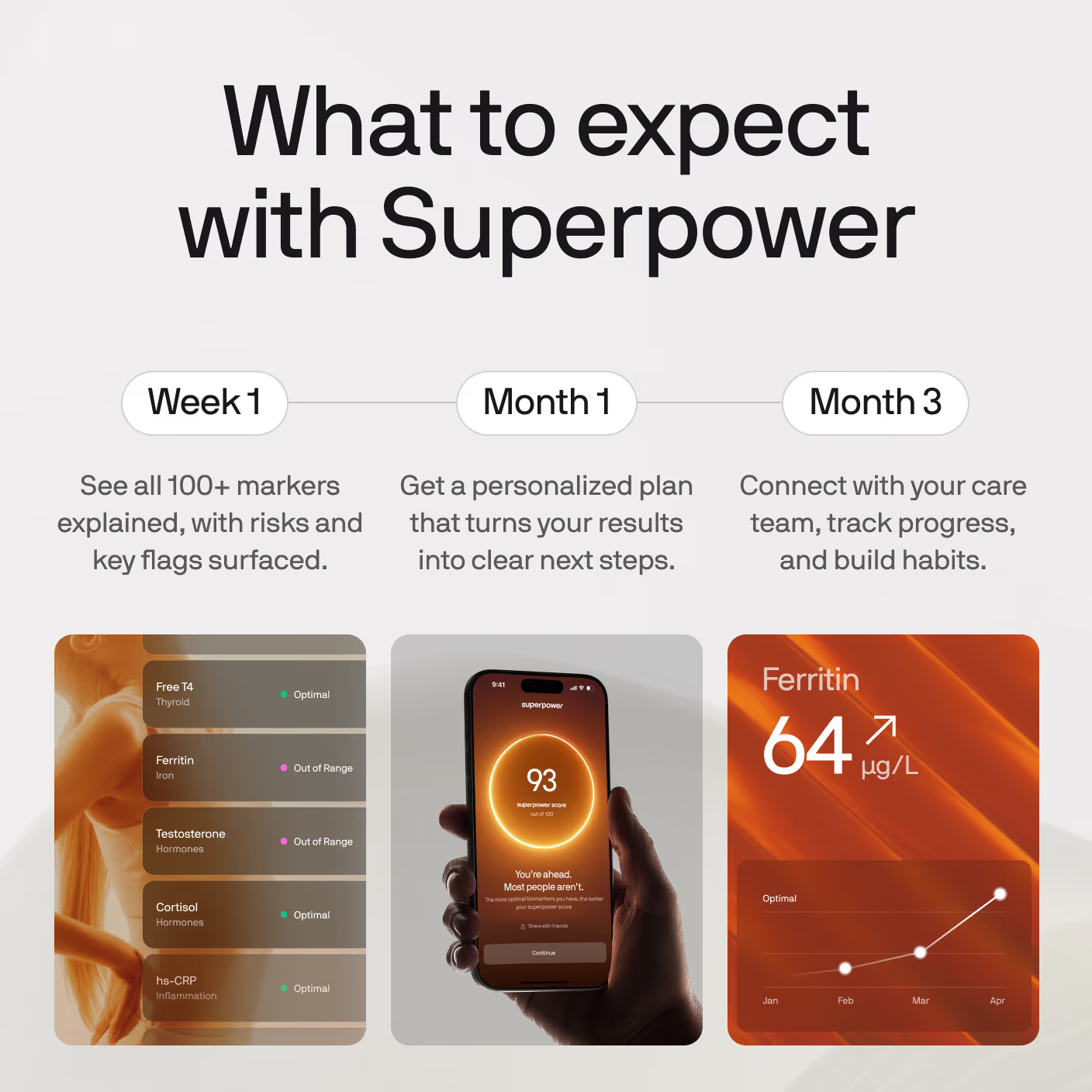
NAC's effects on mental health depend on the biological context it's entering. If oxidative stress is low and glutamate signaling is relatively balanced, NAC may offer little benefit. If inflammation is high, methylation is impaired, or nutrient cofactors are depleted, NAC's potential is either amplified or limited depending on what's missing. Superpower's 100+ biomarker panel includes hs-CRP and ferritin, two markers of inflammation and iron status that help show the biological context the supplement is entering. The Methylation Panel add-on includes homocysteine, vitamin B12, and RBC folate, the cofactors that show whether methylation and cysteine synthesis are supported. Testing before supplementation turns a speculative intervention into a targeted one, and retesting after 12 weeks shows whether the intervention is actually shifting the markers that matter.
Frequently Asked Questions
References
- Sarris J, Byrne G, Castle D, Bousman C, Oliver G, Cribb L, Blair-West S, Brakoulias V, Camfield D, Ee C, Chamoli S, Boschen M, Dean OM, Dowling N, Menon R, Murphy J, Metri NJ, Nguyen TP, Wong A, ... Ng CH (2022). N-acetyl cysteine (NAC) augmentation in the treatment of obsessive-compulsive disorder: A phase III, 20-week, double-blind, randomized, placebo-controlled trial. *Progress in neuro-psychopharmacology & biological psychiatry*, *117*, 110550. https://doi.org/10.1016/j.pnpbp.2022.110550
- Ooi SL, Green R, Pak SC (2018). N-Acetylcysteine for the Treatment of Psychiatric Disorders: A Review of Current Evidence. *BioMed research international*, *2018*, 2469486. https://doi.org/10.1155/2018/2469486
- Eghdami S, Eissazade N, Heidari Mokarar M, Boroon M, Orsolini L, Shalbafan M (2024). The safety and efficacy of N-acetylcysteine as an augmentation in the treatment of obsessive-compulsive disorder in adults: a systematic review and meta-analysis of randomized clinical trials. *Frontiers in psychiatry*, *15*, 1421150. https://doi.org/10.3389/fpsyt.2024.1421150
- Costa DLC, Diniz JB, Requena G, Joaquim MA, Pittenger C, Bloch MH, Miguel EC, Shavitt RG (2017). Randomized, Double-Blind, Placebo-Controlled Trial of N-Acetylcysteine Augmentation for Treatment-Resistant Obsessive-Compulsive Disorder. *The Journal of clinical psychiatry*, *78*(7), e766-e773. https://doi.org/10.4088/JCP.16m11101
- Andrade C (2022). Antipsychotic Augmentation With N-Acetylcysteine for Patients With Schizophrenia. *The Journal of clinical psychiatry*, *83*(5). https://doi.org/10.4088/JCP.22f14664





















 Heart & Vascular Health
 Metabolic Health
 Energy
 Liver Health
 Kidney
 Sex Hormones
 Thyroid Health
 Nutrients
 Immune System
 Inflammation