Biomarkers
/
Thyroid Health
/
Thyroglobulin Antibodies

Thyroglobulin Antibodies

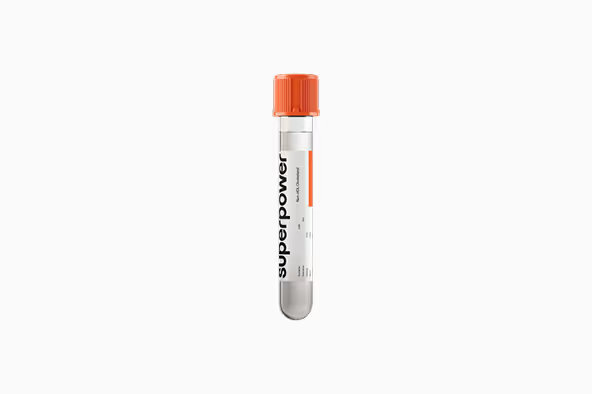
Thyroglobulin antibodies (TgAb) are autoantibodies produced by the immune system that mistakenly target thyroglobulin, a large sugar-linked protein made by the thyroid gland.
Subscribe for updates
By clicking “Subscribe” you agree to our Terms and Privacy Policy.
Your content is on its way!
By clicking “Subscribe” you agree to our TOS and Privacy Policy.
Oops! Something went wrong while submitting the form.
Book your test now
Book a Thyroglobulin Antibodies Test
With Superpower, you have access to a comprehensive range of biomarker tests
Physician reviewed
CLIA-certified labs
HIPAA compliant

Key benefits of Thyroglobulin Antibodies testing

  • Detects autoimmune thyroid disease that may interfere with standard thyroid monitoring.
  • Flags Hashimoto's thyroiditis, a common cause of underactive thyroid and fatigue.
  • Explains persistent symptoms like weight changes or brain fog despite normal TSH.
  • Guides treatment decisions when thyroid nodules or goiter are present.
  • Tracks disease activity in thyroid cancer survivors after thyroidectomy.
  • Clarifies falsely low thyroglobulin results that could mask cancer recurrence.
  • Protects fertility by identifying autoimmune factors linked to miscarriage and infertility.
  • Best interpreted with TSH, Free T4, and thyroid peroxidase antibodies for full picture.

What is Thyroglobulin Antibodies?

Thyroglobulin antibodies are immune proteins produced by your body that mistakenly target thyroglobulin, a large protein made exclusively by your thyroid gland. Thyroglobulin itself is the building block your thyroid uses to manufacture thyroid hormones. When your immune system produces antibodies against it, this signals an autoimmune reaction.

Your immune system turning on your thyroid

These antibodies appear when the immune system identifies thyroglobulin as foreign rather than self. This autoimmune response is most commonly seen in conditions like Hashimoto's thyroiditis and Graves' disease. The presence of thyroglobulin antibodies indicates that your body is mounting an immune attack against thyroid tissue.

A marker of autoimmune thyroid activity

Detecting these antibodies helps identify autoimmune thyroid disease, even before significant symptoms appear. They also play an important role in monitoring certain thyroid cancers, where they can interfere with thyroglobulin measurements used for surveillance. Their presence reflects ongoing immune activity directed at the thyroid gland.

Why is Thyroglobulin Antibodies important?

Thyroglobulin antibodies (TgAb) are immune proteins that mistakenly target thyroglobulin, a protein made exclusively by thyroid cells. Their presence signals that the immune system is attacking the thyroid gland itself. This matters because it reveals autoimmune thyroid disease, which can quietly disrupt metabolism, energy, mood, and reproductive health over time.

When your immune system turns on your thyroid

In most healthy people, thyroglobulin antibodies are absent or undetectable. That's optimal. The thyroid operates without immune interference, producing hormones smoothly. When levels rise above the reference threshold, it typically indicates Hashimoto's thyroiditis or, less commonly, Graves' disease. Women are affected far more often than men, especially during reproductive years and after pregnancy.

What elevated antibodies reveal about your body

High thyroglobulin antibodies don't cause symptoms directly, but they mark ongoing thyroid inflammation. Over months to years, this can lead to hypothyroidism with fatigue, weight gain, cold intolerance, brain fog, and irregular periods in women. In pregnancy, elevated TgAb increases risks of miscarriage and postpartum thyroiditis. The thyroid may enlarge into a goiter, and some people experience throat discomfort or difficulty swallowing.

The long view on thyroid autoimmunity

Thyroglobulin antibodies connect thyroid health to broader immune and metabolic networks. Autoimmune thyroid disease often clusters with other conditions like type 1 diabetes and celiac disease. Monitoring TgAb helps track disease activity and, in thyroid cancer survivors, ensures accurate tumor marker surveillance. Early detection allows for timely hormone support and reduces long-term cardiovascular and bone risks.

What do my Thyroglobulin Antibodies results mean?

Low thyroglobulin antibody values

Low values usually reflect the absence of an autoimmune response targeting thyroglobulin, the protein scaffold used by the thyroid gland to manufacture thyroid hormones. This is the expected physiologic state in most healthy individuals and indicates that the immune system is not mistakenly attacking thyroid tissue.

Optimal thyroglobulin antibody levels

Being in range suggests no detectable autoimmune activity against the thyroid gland. For thyroglobulin antibodies, optimal is typically at the very low end or undetectable, as any elevation may signal early immune dysregulation even before clinical thyroid disease appears. Most reference ranges define normal as below a specific threshold, often around 4 to 40 IU/mL depending on the assay.

High thyroglobulin antibody values

High values usually reflect an autoimmune process in which the immune system produces antibodies against thyroglobulin. This is most commonly seen in Hashimoto thyroiditis, an autoimmune condition that gradually damages thyroid tissue and can lead to underactive thyroid function over time. Elevated antibodies may also appear in Graves disease or other autoimmune thyroid disorders, and occasionally in thyroid cancer surveillance, where they can interfere with thyroglobulin tumor marker measurement.

Factors that influence thyroglobulin antibody interpretation

Antibody levels can fluctuate over months to years and may rise during periods of immune activation or thyroid inflammation. Pregnancy and postpartum periods are times of heightened autoimmune shifts. Different laboratory assays vary in sensitivity and reference ranges, so trends within the same lab are more informative than single values.

Gain early insight into thyroid autoimmunity and strengthen thyroid cancer monitoring by identifying antibody interference that can obscure tumor-marker results.

Do I need a Thyroglobulin Antibodies test?

Struggling with unexplained fatigue, weight changes, or thyroid symptoms that won't improve despite treatment?

Thyroglobulin antibodies reveal whether your immune system is attacking your thyroid tissue. Elevated levels often indicate autoimmune thyroid disease, which can interfere with thyroid function and explain why you're not feeling better.

Testing your thyroglobulin antibodies gives you a vital snapshot of your immune activity against your thyroid, helping pinpoint the root cause of persistent symptoms so you can get tested and finally personalize your treatment approach to address what's really happening in your body.

Get tested with Superpower

If you’ve been postponing blood testing for years or feel frustrated by doctor appointments and limited lab panels, you are not alone. Standard healthcare is often reactive, focusing on testing only after symptoms appear or leaving patients in the dark.

Superpower flips that approach. We give you full insight into your body with over 100 biomarkers, personalized action plans, long-term tracking, and answers to your questions, so you can stay ahead of any health issues.

With on-demand access to a care team, CLIA-certified labs, and the option for at-home blood draws, Superpower is designed for people who want clarity, convenience, and real accountability - all in one place.

Subscribe for updates
By clicking “Subscribe” you agree to our Terms and Privacy Policy.
Your content is on its way!
By clicking “Subscribe” you agree to our TOS and Privacy Policy.
Oops! Something went wrong while submitting the form.

Similar biomarker tests from Superpower

See more biomarkers

FAQs about Thyroglobulin Antibodies

Thyroglobulin antibodies (TgAb) are immune proteins that mistakenly target thyroglobulin, a large protein made only by the thyroid gland and used to produce thyroid hormones. When TgAb are present, it signals autoimmune activity against thyroid tissue. This is most commonly associated with Hashimoto’s thyroiditis and can also appear in Graves’ disease. TgAb can also interfere with thyroid cancer monitoring tests that rely on thyroglobulin as a tumor marker.


A thyroglobulin antibodies test helps detect autoimmune thyroid disease that may not be obvious on standard thyroid labs alone. It can explain persistent symptoms - fatigue, brain fog, or weight changes - even when TSH appears normal. TgAb testing is also important when evaluating goiter or thyroid nodules and is often used in thyroid cancer follow-up because antibodies can distort thyroglobulin tumor marker results after thyroidectomy.

Elevated thyroglobulin antibodies often reflect Hashimoto’s thyroiditis, where immune attack gradually damages thyroid tissue over time. This can lead to subclinical or overt hypothyroidism, with symptoms like cold intolerance, fatigue, weight changes, and cognitive fog. TgAb may become detectable before hormone levels shift significantly, making them useful for early identification and trend monitoring. Tracking TgAb alongside thyroid function tests helps assess ongoing autoimmune thyroid activity.

Yes. High thyroglobulin antibodies indicate immune activity against the thyroid, and symptoms may appear before standard thyroid hormones or TSH become abnormal. People can experience fatigue, brain fog, mood changes, or weight shifts despite a “normal” TSH. Antibody levels can rise or fluctuate independently of thyroid function at a single point in time, so interpreting symptoms often requires looking at TgAb trends plus TSH and Free T4.

Optimal thyroglobulin antibodies are typically undetectable or negative - ideally near zero. Many labs report “negative” as less than about 1 to 4 IU/mL, depending on the assay and reference range. Even low measurable TgAb may warrant monitoring over time, especially if symptoms exist or other autoimmune markers are present. Results should be interpreted with thyroid function tests and other thyroid antibodies for context.

Low or undetectable thyroglobulin antibodies usually mean there is no active autoimmune response targeting thyroglobulin. This is the expected finding in most healthy individuals and suggests the immune system is not attacking thyroid tissue via this pathway. However, thyroid symptoms can still have other causes, and autoimmune thyroid disease can also involve other antibodies. For a fuller picture, results are commonly reviewed alongside TSH, Free T4, and thyroid peroxidase antibodies.

In thyroid cancer surveillance, thyroglobulin (Tg) is often used as a tumor marker after thyroidectomy. High thyroglobulin antibodies can bind to thyroglobulin in the bloodstream and make Tg test results unreliable, sometimes appearing falsely low and potentially masking recurrence. In these cases, clinicians may track TgAb levels themselves over time and rely more on imaging or additional monitoring approaches to evaluate recurrence risk.

Thyroglobulin antibodies are best interpreted with TSH and Free T4 to assess thyroid function, plus thyroid peroxidase antibodies (TPOAb) to evaluate autoimmune thyroiditis more fully. Combining these tests helps distinguish autoimmune activity from hormone-level changes and clarifies why symptoms may persist. This “panel” approach is also useful for monitoring trends, since antibody levels can fluctuate over months to years and vary by lab method.

Thyroglobulin antibody levels can rise or fall over months to years and don’t always match thyroid function at a single point in time. Differences in laboratory methods and assay reference ranges can also change how results are reported. Hormonal transitions may influence levels; fluctuations are noted during pregnancy and postpartum periods. Because of this variability, trend tracking over time - using the same lab when possible - plus TSH/Free T4 context is important.

Thyroglobulin antibodies can signal thyroid autoimmunity, which is linked in the context to protecting fertility by identifying autoimmune factors associated with infertility and miscarriage risk. TgAb positivity may also cluster with other autoimmune conditions such as type 1 diabetes or celiac disease, reflecting broader immune dysregulation. Monitoring TgAb trends can help assess autoimmune activity and future thyroid dysfunction risk, especially in women and during pregnancy or postpartum transitions.