


Understand what your heart cardiovascular testing results really mean
See your biomarkers in context with a comprehensive panel.
- CLIA-certified labs
- HIPAA compliant
- Personalized health protocol
What troponin test means
Think of troponin as your heart's security system. Two main types exist: troponin I and troponin T. Both proteins help regulate muscle contraction in healthy heart cells.
When heart muscle cells die or get severely stressed, their cell walls break down. Troponin proteins escape into your bloodstream, where blood tests can detect them. This process happens remarkably fast during a heart attack, often within 3-4 hours of the initial damage.
Modern high-sensitivity troponin tests can detect incredibly small amounts of this protein. These tests are so precise they may help identify heart muscle damage before you experience chest pain or other classic heart attack symptoms. Emergency rooms rely heavily on troponin testing because it provides objective evidence of cardiac injury when symptoms might be unclear.
The test measures troponin concentration in nanograms per milliliter (ng/mL) or picograms per milliliter (pg/mL), depending on the specific assay used. Different laboratories use different reference ranges, but the principle remains consistent: higher levels indicate more heart muscle damage.
How to interpret troponin test results
Troponin interpretation depends on your specific test type and clinical context. Most healthy people have undetectable or very low troponin levels, typically below 0.04 ng/mL for standard tests.
Normal ranges vary by laboratory and test manufacturer. High-sensitivity tests can detect much lower concentrations, with upper reference limits often around 14-30 ng/L for men and 9-15 ng/L for women. Your lab report will show your specific reference range.
Elevated levels require immediate medical attention. Levels above the 99th percentile of healthy individuals suggest possible heart muscle damage. However, healthcare providers don't make diagnoses based on troponin alone. They consider your symptoms, EKG changes, and how troponin levels change over time.
Rising patterns matter more than single measurements. Troponin levels that increase significantly over 6-12 hours strongly suggest acute heart muscle damage. Stable elevated levels might indicate chronic heart conditions or other causes of cardiac stress.
What can influence troponin test results
Several conditions beyond heart attacks can elevate troponin levels. Chronic kidney disease is the most common non-cardiac cause, as damaged kidneys can't clear troponin efficiently from your bloodstream.
Intense physical exercise can temporarily raise troponin, especially in endurance athletes. Marathon running, ultramarathons, or extremely intense workouts sometimes cause mild troponin elevations that resolve within 24-48 hours.
Heart conditions other than heart attacks also release troponin. These include heart failure, irregular heart rhythms, heart muscle inflammation (myocarditis), and pulmonary embolism. Each condition creates different patterns of troponin elevation.
Medical procedures can influence results too. Cardiac catheterization, heart surgery, or even some cancer treatments may cause troponin to rise. Age also matters, as older adults sometimes have slightly higher baseline troponin levels due to age-related heart changes.
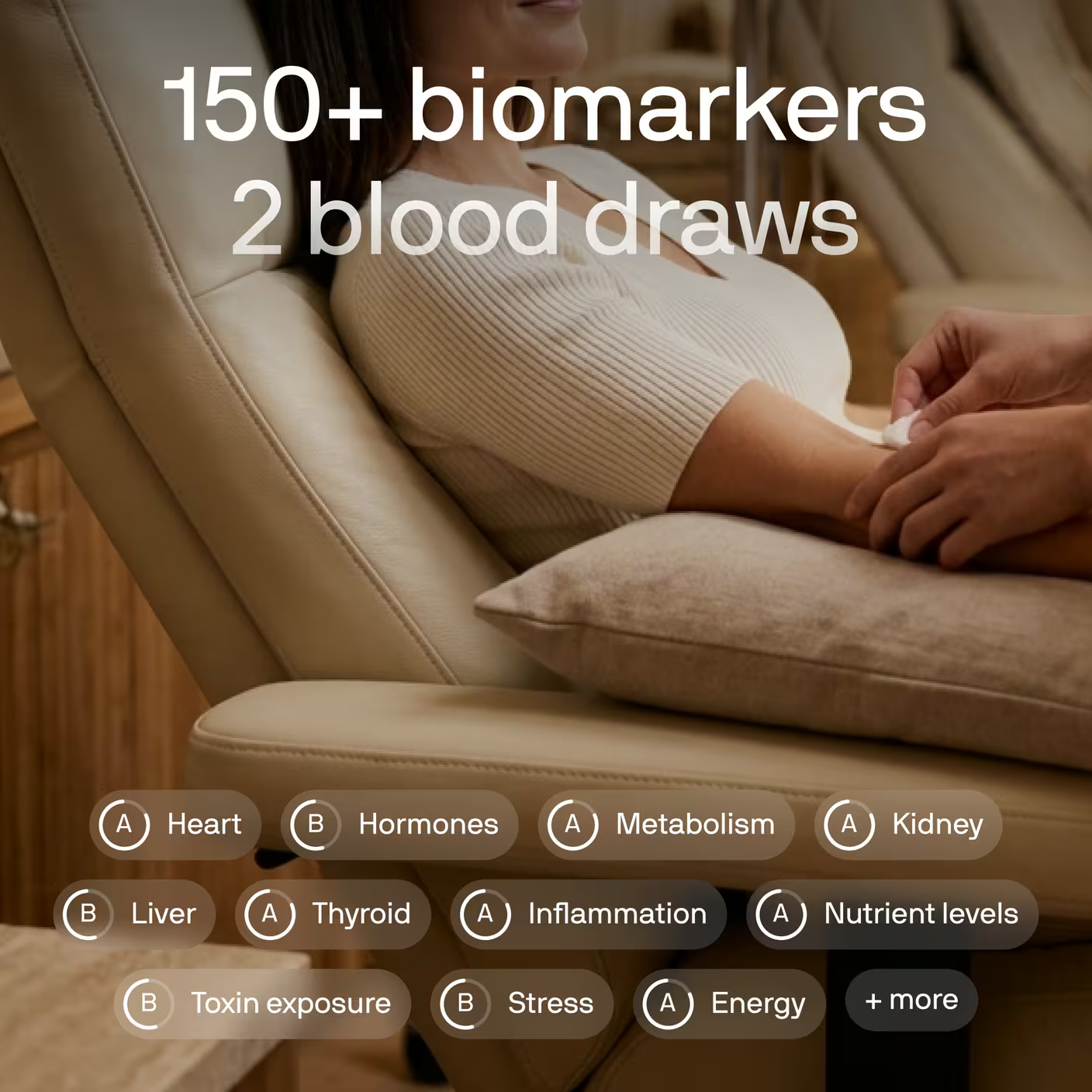
Test 150+ biomarkers
Two blood draws. A full picture of your health, explained in plain language.
Test 150+ biomarkers
Two blood draws. A full picture of your health, explained in plain language.
Related context that changes the picture
Troponin works most effectively when evaluated alongside other cardiovascular markers. Creatine kinase-MB (CK-MB) was the previous gold standard for heart attack diagnosis, but troponin has largely replaced it due to superior sensitivity and specificity.
B-type natriuretic peptide (BNP) or NT-proBNP complement troponin testing by revealing heart failure or cardiac stress. Elevated BNP with normal troponin might suggest chronic heart failure rather than acute muscle damage.
Inflammatory markers like C-reactive protein (CRP) add important context. High CRP with elevated troponin could indicate heart muscle inflammation rather than blocked arteries. This distinction changes treatment approaches significantly.
Lipid panels and lipoprotein subfractions help assess your underlying cardiovascular risk. Someone with optimal cholesterol levels and unexpected troponin elevation requires different evaluation than someone with known coronary artery disease. Advanced lipid testing can reveal hidden cardiovascular risks that standard cholesterol panels miss.
Take action on your heart health
Understanding your troponin test results provides crucial insight, but it's incomplete without comprehensive cardiovascular assessment. Your heart's health depends on multiple interconnected factors that single biomarkers can't capture alone. For comprehensive heart health monitoring, discuss with your care team to determine what additional testing may be appropriate for your individual situation.
Superpower's Cardiovascular Panel measures troponin alongside advanced heart health markers including lipoprotein fractionation, Lp(a), and other cardiovascular risk indicators. This comprehensive approach reveals your complete cardiac risk profile and helps you make informed decisions about your heart health.
Order your Cardiovascular Panel today and get the complete picture of your heart health with easy-to-understand results and actionable insights.
Frequently Asked Questions
References
- Chauin A (2021). The Main Causes and Mechanisms of Increase in Cardiac Troponin Concentrations Other Than Acute Myocardial Infarction (Part 1): Physical Exertion, Inflammatory Heart Disease, Pulmonary Embolism, Renal Failure, Sepsis. *Vascular health and risk management*, *17*, 601-617. https://doi.org/10.2147/VHRM.S327661
- Tiwari RP, Jain A, Khan Z, Kohli V, Bharmal RN, Kartikeyan S, Bisen PS (2012). Cardiac troponins I and T: molecular markers for early diagnosis, prognosis, and accurate triaging of patients with acute myocardial infarction. *Molecular diagnosis & therapy*, *16*(6), 371-81. https://doi.org/10.1007/s40291-012-0011-6
- Apple FS, Wu AHB, Sandoval Y, Sexter A, Love SA, Myers G, Schulz K, Duh SH, Christenson RH (2020). Sex-Specific 99th Percentile Upper Reference Limits for High Sensitivity Cardiac Troponin Assays Derived Using a Universal Sample Bank. *Clinical chemistry*, *66*(3), 434-444. https://doi.org/10.1093/clinchem/hvz029
- Long B, Belcher CN, Koyfman A, Bronner JM (2020). Interpreting troponin in renal disease: A narrative review for emergency clinicians. *The American journal of emergency medicine*, *38*(5), 990-997. https://doi.org/10.1016/j.ajem.2019.11.041
- Shave R, Baggish A, George K, Wood M, Scharhag J, Whyte G, Gaze D, Thompson PD (2010). Exercise-induced cardiac troponin elevation: evidence, mechanisms, and implications. *Journal of the American College of Cardiology*, *56*(3), 169-76. https://doi.org/10.1016/j.jacc.2010.03.037
- Thygesen K, Alpert JS, Jaffe AS, Chaitman BR, Bax JJ, Morrow DA, White HD, Executive Group on behalf of the Joint European Society of Cardiology (ESC)/American College of Cardiology (ACC)/American Heart Association (AHA)/World Heart Federation (WHF) Task Force for the Universal Definition of Myocardial Infarction (2018). Fourth Universal Definition of Myocardial Infarction (2018). *Circulation*, *138*(20), e618-e651. https://doi.org/10.1161/CIR.0000000000000617
- Katrukha IA (2013). Human cardiac troponin complex. Structure and functions. *Biochemistry. Biokhimiia*, *78*(13), 1447-65. https://doi.org/10.1134/S0006297913130063
- Puelacher C, Lurati Buse G, Seeberger D, Sazgary L, Marbot S, Lampart A, Espinola J, Kindler C, Hammerer A, Seeberger E, Strebel I, Wildi K, Twerenbold R, du Fay de Lavallaz J, Steiner L, Gurke L, Breidthardt T, Rentsch K, Buser A, ... BASEL-PMI Investigators (2018). Perioperative Myocardial Injury After Noncardiac Surgery: Incidence, Mortality, and Characterization. *Circulation*, *137*(12), 1221-1232. https://doi.org/10.1161/CIRCULATIONAHA.117.030114
- Reichlin T, Hochholzer W, Bassetti S, Steuer S, Stelzig C, Hartwiger S, Biedert S, Schaub N, Buerge C, Potocki M, Noveanu M, Breidthardt T, Twerenbold R, Winkler K, Bingisser R, Mueller C (2009). Early diagnosis of myocardial infarction with sensitive cardiac troponin assays. *The New England journal of medicine*, *361*(9), 858-67. https://doi.org/10.1056/NEJMoa0900428
- Bagai A, Huang Z, Lokhnygina Y, Harrington RA, Armstrong PW, Strony J, White HD, Leonardi S, Held C, Van de Werf F, Wallentin L, Tricoci P, Mahaffey KW (2015). Magnitude of troponin elevation and long-term clinical outcomes in acute coronary syndrome patients treated with and without revascularization. *Circulation. Cardiovascular interventions*, *8*(6), e002314. https://doi.org/10.1161/CIRCINTERVENTIONS.115.002314
- Henriksen PA, Hall P, MacPherson IR, Joshi SS, Singh T, Maclean M, Lewis S, Rodriguez A, Fletcher A, Everett RJ, Stavert H, Broom A, Eddie L, Primrose L, McVicars H, McKay P, Borley A, Rowntree C, Lord S, ... Lang NN (2023). Multicenter, Prospective, Randomized Controlled Trial of High-Sensitivity Cardiac Troponin I-Guided Combination Angiotensin Receptor Blockade and Beta-Blocker Therapy to Prevent Anthracycline Cardiotoxicity: The Cardiac CARE Trial. *Circulation*, *148*(21), 1680-1690. https://doi.org/10.1161/CIRCULATIONAHA.123.064274
- Ivandic BT, Spanuth E, Kleber M, Grammer TB, März W (2011). High-sensitivity troponin T improves the prognostic value of N-terminal pro-B-type natriuretic peptide in patients with stable coronary artery disease: results from the LURIC Study. *Clinical chemistry and laboratory medicine*, *49*(6), 1053-8. https://doi.org/10.1515/CCLM.2011.176
- Mueller C, McDonald K, de Boer RA, Maisel A, Cleland JGF, Kozhuharov N, Coats AJS, Metra M, Mebazaa A, Ruschitzka F, Lainscak M, Filippatos G, Seferovic PM, Meijers WC, Bayes-Genis A, Mueller T, Richards M, Januzzi JL, Heart Failure Association of the European Society of Cardiology (2019). Heart Failure Association of the European Society of Cardiology practical guidance on the use of natriuretic peptide concentrations. *European journal of heart failure*, *21*(6), 715-731. https://doi.org/10.1002/ejhf.1494
- Caforio AL, Pankuweit S, Arbustini E, Basso C, Gimeno-Blanes J, Felix SB, Fu M, Heliö T, Heymans S, Jahns R, Klingel K, Linhart A, Maisch B, McKenna W, Mogensen J, Pinto YM, Ristic A, Schultheiss HP, Seggewiss H, ... European Society of Cardiology Working Group on Myocardial and Pericardial Diseases (2013). Current state of knowledge on aetiology, diagnosis, management, and therapy of myocarditis: a position statement of the European Society of Cardiology Working Group on Myocardial and Pericardial Diseases. *European heart journal*, *34*(33), 2636-48, 2648a-2648d. https://doi.org/10.1093/eurheartj/eht210
- Bucci M, Tana C, Giamberardino MA, Cipollone F (2016). Lp(a) and cardiovascular risk: Investigating the hidden side of the moon. *Nutrition, metabolism, and cardiovascular diseases : NMCD*, *26*(11), 980-986. https://doi.org/10.1016/j.numecd.2016.07.004























 Heart & Vascular Health
 Metabolic Health
 Energy
 Liver Health
 Kidney
 Sex Hormones
 Thyroid Health
 Nutrients
 Immune System
 Inflammation