Test details
- Sample type:
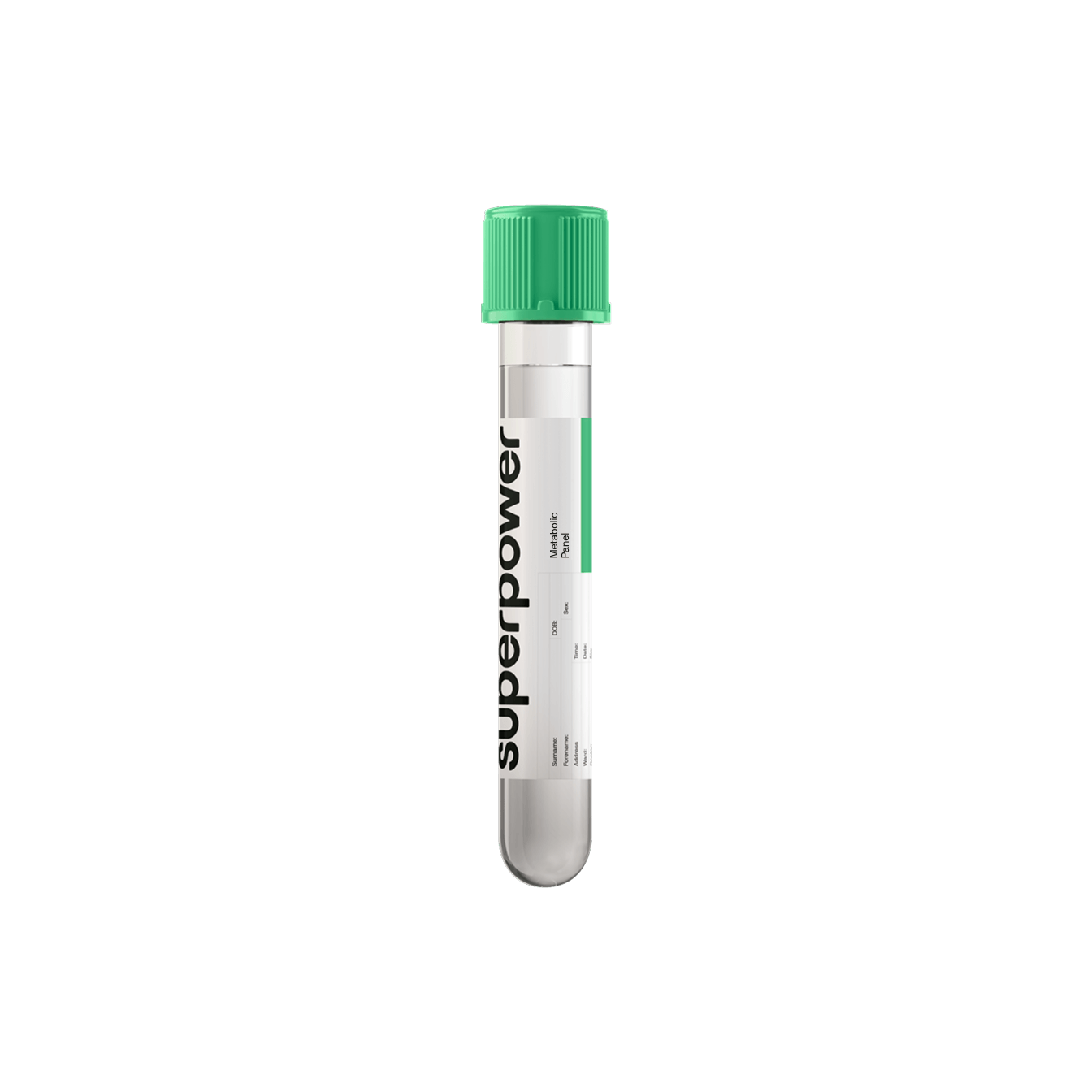
- Single blood draw (blood only)
- Location:
- In-person at local lab / At-home phlebotomist visit (+$119)
- Availability:
- Available in 39 states and Washington, D.C.
- Turnaround:
- Results typically available within 10 days
About the Weight and Appetite Hormones Panel
Leptin is produced by fat cells. It signals your brain that you have eaten enough and can stop.
When this system works correctly, your body regulates weight naturally. When it does not, the consequences are real: persistent hunger, difficulty losing weight, and metabolic inefficiency that does not respond to simple caloric restriction. These hormonal patterns are associated with difficulty losing weight and may help explain why caloric restriction alone does not always work. The problem is not willpower. It is biology.
This panel measures leptin from a single blood draw, giving you a clearer picture of your metabolic hormone environment than a standard blood panel provides.
Why high leptin can still be a problem
The intuitive assumption is that people who struggle with weight have low leptin. The biology often works the opposite way.
Most people with excess body fat have elevated leptin. The problem is that prolonged high leptin levels can cause the brain to reduce its sensitivity to the signal, a state called leptin resistance. When this happens, the brain stops hearing the "full" signal, so hunger persists even when the body has plenty of stored energy. The result is continued hunger and reduced metabolic drive, despite what the blood level appears to show.
A leptin measurement in context helps clarify which pattern applies: low leptin, high leptin, or high leptin with patterns consistent with reduced responsiveness.
A blood leptin level alone cannot diagnose leptin resistance. Interpretation requires a provider to consider your result alongside your BMI, symptom history, and other metabolic markers.
Appetite hormones and GLP-1 medications
GLP-1 medications amplify satiety signals. For people on or considering GLP-1 medications, understanding your baseline appetite hormone levels provides useful context about your metabolic hormone environment before and during treatment.
This panel does not tell you how you will respond to a GLP-1 medication. It gives you and your provider a clearer picture of your starting point: a baseline for your appetite hormone biology that can be tracked over time.
Who benefits from testing
- People who have difficulty losing weight despite consistent dietary changes and exercise.
- Anyone who has hit a weight loss plateau that does not respond to further caloric restriction or activity increases.
- Anyone experiencing persistent hunger or difficulty feeling full after meals.
- People with a history of significant weight regain after initial weight loss.
- Those on or considering GLP-1 medications who want a baseline of their appetite hormone status.
- Anyone with a diagnosis or suspected pattern of metabolic syndrome, insulin resistance, or pre-diabetes.
- People who want to understand the hormonal factors contributing to their weight regulation, independent of any treatment plan.
Symptoms that may indicate appetite hormone dysregulation
- Persistent hunger, including shortly after eating
- Difficulty feeling satisfied after meals, regardless of portion size
- Cravings for high-calorie or high-carbohydrate foods, particularly in the evening
- Weight regain following periods of successful weight loss
- Unexplained fatigue, particularly in the mid-afternoon
- Difficulty sustaining caloric reduction without intense hunger
What your results reveal
Leptin is interpreted in context, not in isolation.
Elevated leptin alongside persistent hunger points to a pattern consistent with leptin resistance, which may require a different approach than calorie restriction alone. Low leptin in someone with significant body fat is less common and may indicate a different underlying driver.
Reference ranges for leptin differ by sex: women typically have significantly higher circulating leptin than men at equivalent body fat percentages. Your results will be interpreted against sex-appropriate reference ranges.
Your Superpower care team and your provider will interpret these results in the context of your complete metabolic picture.
How it works
- Add the panel to your Superpower order.
- Schedule a blood draw at a local clinic or book an optional at-home visit from a trained phlebotomist (+$119). Your sample is processed in a CLIA-certified lab.
- Review results with your Superpower care team or share your results with your provider for interpretation in context. Results are typically available within 10 days.
Frequently asked questions
Biomarkers tested
Adiponectin is a protein hormone (also called an adipokine) that is mainly secreted by fat cells, but it is also produced in smaller amounts by muscle and the lining of blood vessels.
Learn moreMethod: Laboratory-developed test (LDT) validated under CLIA; not cleared or approved by the FDA. Results are interpreted by clinicians in context and are not a stand-alone diagnosis.


























 Heart & Vascular Health
 Metabolic Health
 Energy
 Liver Health
 Kidney
 Sex Hormones
 Thyroid Health
 Nutrients
 Immune System
 Inflammation