Test details
- Sample type:
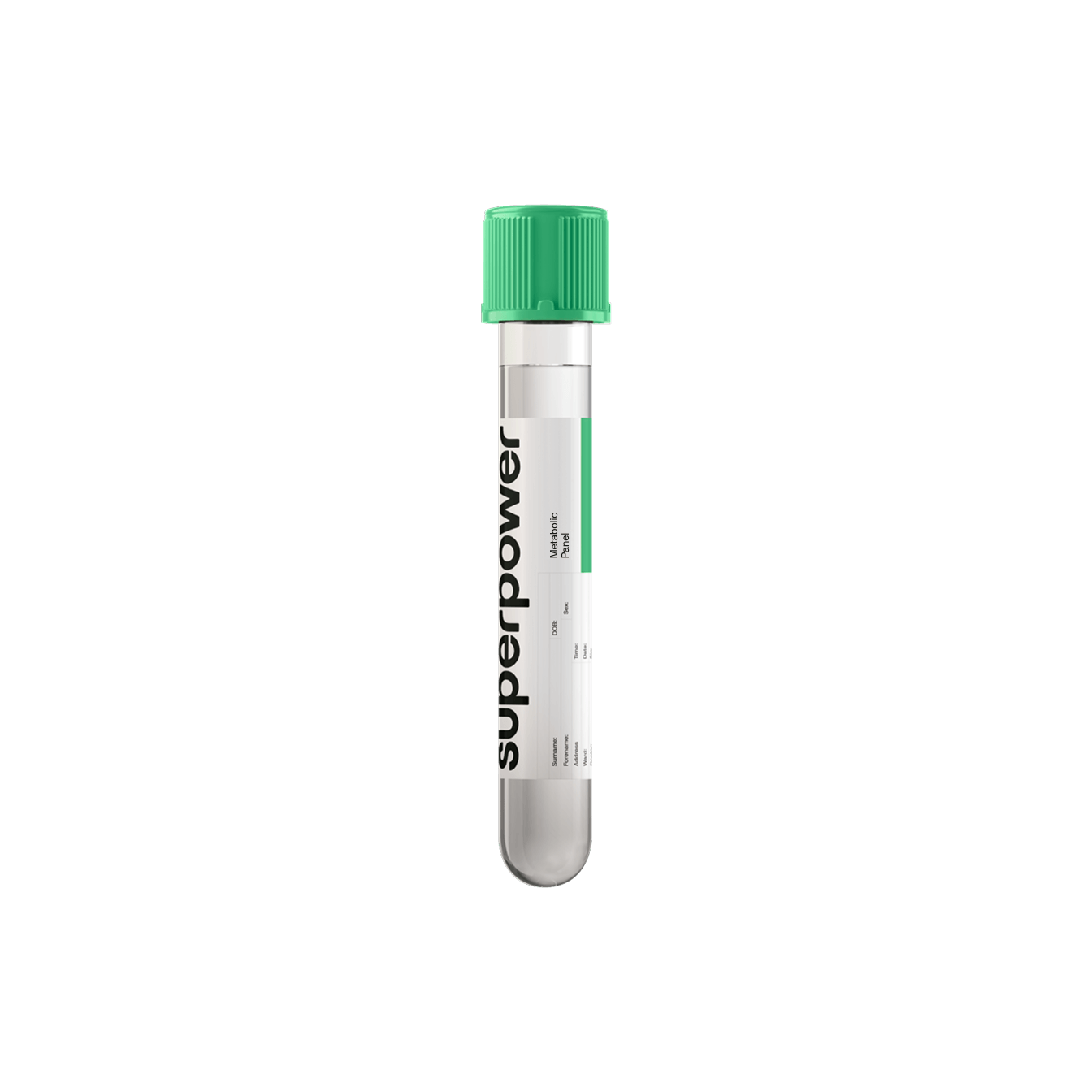
- Single blood draw (2 vials)
- Location:
- In-person at local lab / At-home phlebotomist visit (+$119)
- Availability:
- Available in 39 states and Washington, D.C.
- Lab:
- Quest Diagnostics
About the Organ Age Panel
OrganAge measures how your body is functioning, not only how many years you have lived. Research shows that organ aging is uneven: different systems can age at meaningfully different rates, a pattern that is invisible on a standard physical or basic blood panel. The Organ Age Panel uses a single blood draw to compute nine organ-level age scores built from dozens of clinically validated biomarkers across key systems including metabolism, inflammation, liver function, and kidney health. This is a standard blood draw, not an epigenetic saliva test and not a finger prick. The result is a precise map of your biological aging, the kind of information a routine checkup does not surface.
Your organs do not all age at the same rate
A 40-year-old can have the heart of a 35-year-old and the liver of a 55-year-old. That pattern is invisible on a standard physical, but it can surface where your biology may be diverging from your age, information that is useful for prioritizing what to focus on. Standard "in range / out of range" reporting misses this entirely: you can sit within reference ranges on every individual marker while your biological aging is uneven across systems. OrganAge surfaces that unevenness from the same blood draw, applying validated mathematical models to your existing markers.
What makes this different from a standard blood panel
A standard blood panel tells you whether each individual marker is within its reference range today. It does not tell you whether your cardiovascular, metabolic, or kidney systems are aging faster or slower than expected. The Organ Age Panel applies validated algorithms to the same clinical blood markers (CBC, lipid panel, metabolic panel, inflammatory markers, kidney function) to produce an aging-trajectory estimate for each organ system. Tracking those estimates over time also shows whether what you are doing is moving in the right direction. It is the same blood draw with a deeper layer of interpretation.
What this panel measures
One blood draw produces nine organ-level age scores, built from dozens of clinically validated biomarkers.
| Organ-age score | What the score reflects | Example markers |
|---|---|---|
| Circulatory | How your heart and blood vessels are aging | LDL, HDL, triglycerides, non-HDL cholesterol, hsCRP |
| Metabolic | How metabolism and blood-sugar regulation are aging | Glucose, triglycerides, metabolic ratios |
| Digestive | How your liver and protein/metabolic-clearance function are aging | ALT, AST, ALP, bilirubin, albumin |
| Genitourinary | How your kidneys and urinary system are aging | Cystatin C, creatinine, BUN |
| Infectious | How your immune system is aging | White blood cells, neutrophils, lymphocytes, hsCRP |
| Respiratory | Estimated aging of oxygen-carrying capacity | Hemoglobin, hematocrit, red blood cells |
| Musculoskeletal | Estimated muscle and skeletal aging, from shared markers | Albumin, total protein, calcium, creatinine |
| Cognitive | Estimated aging of brain-supporting systems, from vascular, metabolic, and inflammatory markers | Glucose, lipids, hsCRP |
| Nervous | Estimated peripheral-nervous-system aging, from shared markers | Glucose, metabolic and inflammatory markers |
How OrganAge estimates biological age from your blood
Standard labs report one marker at a time against a population range. OrganAge does something different: it combines a defined subset of your clinical blood markers for each organ system and runs them through validated algorithms to produce a single estimated age for that system. The output is a per-organ biological-age signal (for example, a circulatory score that reads younger or older than your calendar age), not a diagnosis and not a prediction. Some scores draw on markers shared across systems, since a single circulatory marker can inform more than one estimate; the model weighs them accordingly. These are wellness metrics, and a Superpower care team member or your provider can help you interpret what a given score means for you.
How this compares to epigenetic age testing
Epigenetic biological-age tests measure DNA methylation patterns, how your genes are being expressed at the molecular level, typically from a finger prick or blood spot. The Organ Age Panel takes a different approach: it runs standard clinical blood markers through validated algorithms to estimate aging trajectories for each organ system, going beyond a single epigenetic age number. The two measure different aspects of aging and can complement each other, but the Organ Age Panel gives you organ-level resolution from a standard blood draw, with no specialized collection. The practical difference is accessibility: the Organ Age Panel uses a standard clinical blood draw, while epigenetic age tests typically run closer to several hundred dollars and require a specialized collection.
Who benefits from testing
This panel is designed for people who want more than a "normal" or "abnormal" result:
- You want to know where your body is aging fastest, not only whether your labs are "normal"
- You're focused on longevity and want a biological baseline that goes beyond a single epigenetic age number
- You feel "off" in a way that standard bloodwork hasn't explained, and you want to see which system is actually under strain
- You want to establish a baseline you can track over time to measure whether your interventions are working
- You have a family history of cardiovascular, metabolic, or cognitive decline and want to understand your own aging trajectory
- You have made lifestyle changes (diet, exercise, sleep) and want to see whether they are reflected in your biological-aging markers
- You are a quantified-self or longevity practitioner who wants organ-level resolution, not a single age number
What you will learn
You will see which of your organ systems are aging on pace, slower than expected, or faster than your chronological age. The systems aging fastest are often the ones that respond most to targeted attention. If your metabolic score is elevated, the focus shifts to insulin sensitivity and body composition. If your liver is tracking older, the question becomes detox strain or metabolic dysfunction. If your cognitive score is elevated, sleep, cardiovascular fitness, and inflammation become the priority areas to examine. These are signals, not a verdict. What to do with them is a conversation for your Superpower care team or provider. Retesting over time shows whether the changes you make may be moving your trajectories in the right direction.
A more sensitive view of kidney aging
The Genitourinary organ-age score uses Cystatin C alongside creatinine and BUN. Cystatin C is a protein produced by all cells at a relatively constant rate and filtered almost exclusively by the kidneys, which makes it a more sensitive early indicator of kidney-function changes than creatinine alone, particularly for people with higher or lower than average muscle mass, where creatinine-based estimates can be misleading.
How it works
- Order your Organ Age Panel online — No doctor's visit required.
- Schedule a blood draw at a location near you.
- Get your sample drawn (2 vials).
- Your sample is processed in a CLIA-certified lab, and your results are prepared.
- Receive your nine OrganAge scores plus the underlying blood-marker data through Superpower. Text your Superpower care team or AI-powered concierge with any questions.
Frequently asked questions
Biomarkers tested
Albumin is a transport protein produced by the liver. Globulins are a type of protein that is made by the liver and the immune system. The amount of albumin and globulins can be affected by a number of things, including infections, kidney or liver disease, or even dietary protein intake.
Learn moreMethod: Derived from FDA-cleared laboratory results. This ratio/index is not an FDA-cleared test. It aids clinician-directed risk assessment and monitoring and is not a stand-alone diagnosis. Inputs: albumin, globulin.


























 Heart & Vascular Health
 Metabolic Health
 Energy
 Liver Health
 Kidney
 Sex Hormones
 Thyroid Health
 Nutrients
 Immune System
 Inflammation