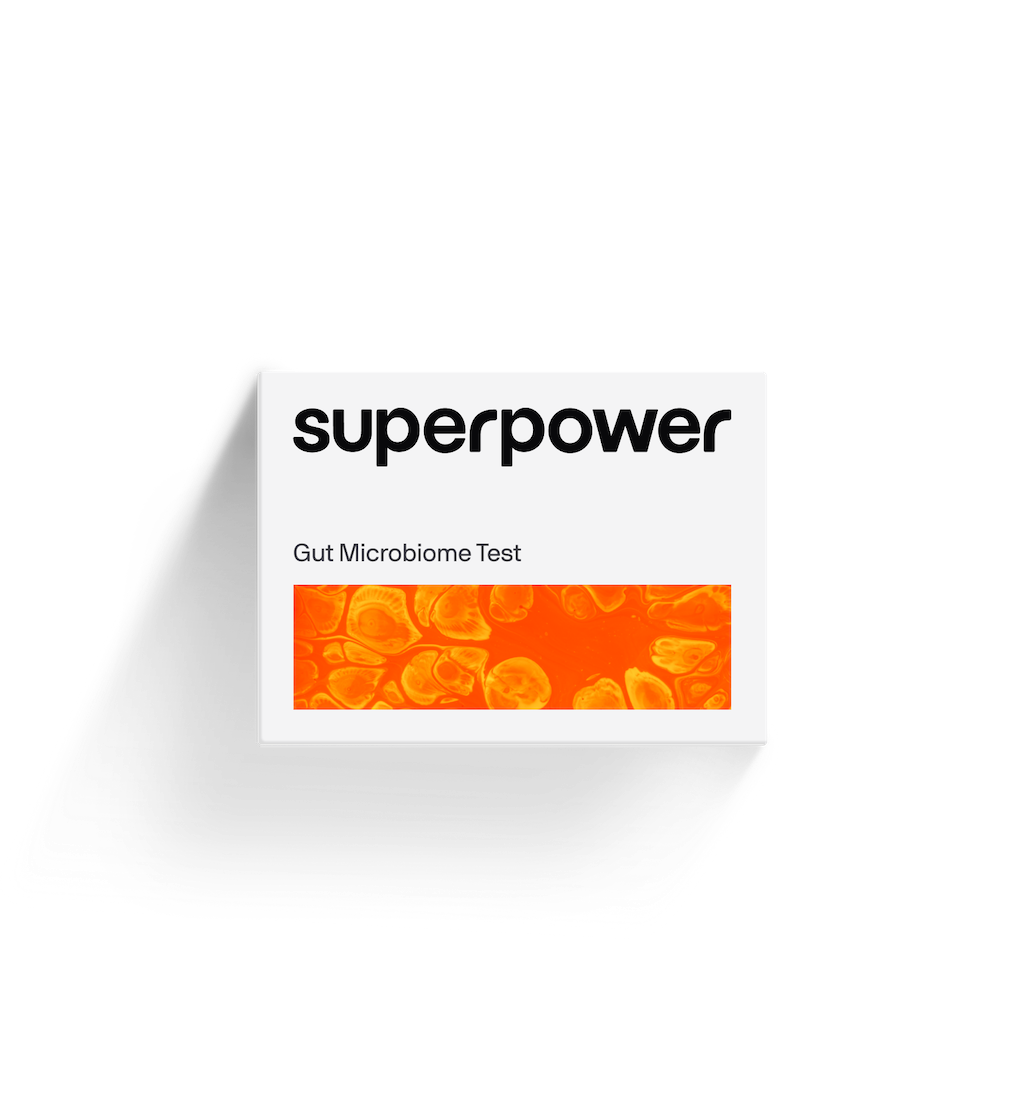
Test details
- Sample type:
- At-home stool sample
- Location:
- At-home collection kit, mailed
- Availability:
- Available in all 50 states and Washington, D.C.
- Turnaround:
- Results delivered to your dashboard
- Preparation:
- Diet and medication can influence results
About the Gut Microbiome Analysis
Your gut contains trillions of microbial cells (bacteria, fungi, parasites, and other organisms) that influence digestion, immune function, mood regulation, and metabolic health. The composition of this microbial community is as individual as your fingerprint. And for most people, it has never been mapped.
The Gut Microbiome Analysis screens for over 120,000 different microbes in a single stool sample, including bacteria, parasites, and fungi. The result is a detailed view of your gut's microbial landscape: diversity and balance, beneficial and potentially harmful organisms, short-chain fatty acids, and stool markers of inflammation and digestion, all from a non-invasive at-home collection.
Why gut health touches more than digestion
Digestive health
The microbiome breaks down food, produces short-chain fatty acids, and maintains the intestinal lining. Imbalances in bacterial composition (what researchers call dysbiosis) are associated with symptoms including bloating, food intolerances, irregular bowel habits, and digestive discomfort.
Immune function
Approximately 70% of the immune system is located in the gut. Microbial diversity supports immune regulation. Overgrowth of opportunistic organisms or disruptions to the bacterial community may be associated with increased immune reactivity, inflammatory patterns, and autoimmune flare-ups.
Mood and cognition
The gut-brain axis is a bidirectional communication network between the enteric nervous system and the central nervous system. Research supports a connection between gut microbiome composition and mood stability, cognitive clarity, and stress response. Certain bacteria produce serotonin precursors and other neurotransmitter-related compounds in the gut.
Metabolic health
Gut microbial composition has been associated with energy extraction from food, blood sugar regulation, and weight management patterns. Specific bacterial profiles are associated with metabolic health markers including inflammation levels and recovery capacity.
What this analysis screens for
The Gut Microbiome Analysis covers over 120,000 microbial types and reports 135 markers, listed in full at the bottom of this page. They fall into five groups:
- Diversity and balance — Shannon diversity, species richness, and ratios such as Firmicutes to Bacteroidota. Higher diversity is linked to stronger immunity and resilience, and these scores give you summary metrics to track if you retest over time.
- Beneficial bacteria — Species that support metabolism and the gut lining, including Akkermansia, Bifidobacterium, Faecalibacterium, and Roseburia.
- Potentially harmful organisms — Opportunistic bacteria, parasites, and fungi, including Clostridioides difficile, Helicobacter pylori, Giardia, Blastocystis, and Candida.
- Short-chain fatty acids — Acetate, butyrate, and propionate, the compounds gut bacteria produce when they ferment dietary fiber.
- Stool markers and functional indices — Calprotectin, lactoferrin, secretory IgA, and pancreatic elastase, plus indices that estimate microbial activity such as histamine production, mucus degradation, and methane production capacity.
What you will learn from your results
Your results include:
Diversity and balance scores: summary metrics reflecting the overall richness and balance of your gut microbial community. Higher diversity is generally associated with better gut health outcomes.
Marker-by-marker breakdown: each organism, short-chain fatty acid, and stool marker shows its level and how your profile compares to reference ranges.
Organism-level flagging: organisms that are elevated, absent, or present at levels associated with specific health patterns, including opportunistic organisms, beneficial strains, and known parasites or fungi.
Care team interpretation: your results are reviewed alongside your Superpower care team, who can help you understand what the findings mean in the context of your symptoms, diet, and health history.
Who benefits from testing
- People with ongoing GI symptoms (bloating, gas, irregular digestion, or bowel changes that have not resolved with dietary changes) who want to understand the microbial picture
- Those with immune concerns (frequent infections, skin reactions, or elevated inflammatory markers on blood tests) where gut dysbiosis may be a contributing variable
- Anyone experiencing brain fog, mood instability, or unexplained fatigue who wants to explore the gut-brain connection with objective data
- People tracking metabolic health who want to understand whether gut composition may be influencing blood sugar patterns, weight, or inflammatory markers
- Those who have recently completed a course of antibiotics and want to assess the impact on their microbial community before making recovery choices
- Health optimizers with no specific symptoms who want a comprehensive baseline of their gut microbiome as part of an annual health program
How sample collection works
This is a non-invasive test. A testing kit will be sent to you. A mess-free sample is collected from soiled tissue paper in the comfort of your own home. The sample is then shipped to the lab for analysis using the prepaid return label included in your kit.
The collection takes approximately one to two minutes. No clinic visit is required.
Note: Diet and medication can influence results. If you are currently taking antibiotics or have made significant recent dietary changes, discuss timing with your care team.
How it works
- Order — Add the Gut Microbiome Analysis to your Superpower account or order as a standalone
- Receive your kit — Arrives by mail with everything needed for collection, including a prepaid return label
- Collect and ship — Collect your sample at home from soiled tissue paper and return it to the lab using the prepaid label
- Analysis — Your sample is processed at the laboratory
- Results and support — Receive your personalized gut health report and connect with your Superpower care team to review findings
Frequently asked questions
Biomarkers tested
The abundance index is a tool Tiny Health uses to compare the levels of unfriendly, antibiotic-resistant bacteria to key beneficial bacteria in your gut.
Learn more


























 Heart & Vascular Health
 Metabolic Health
 Energy
 Liver Health
 Kidney
 Sex Hormones
 Thyroid Health
 Nutrients
 Immune System
 Inflammation