
Test details
- Sample type:
- Cheek swab (no blood draw)
- Location:
- Mail-in collection kit
- Availability:
- Available in all 50 states and Washington, D.C.
- Turnaround:
- Results typically available about three weeks after the lab receives your sample
- Preparation:
- Wait at least one hour after food, tobacco, or any drink other than waterRinse with plain water just before swabbingNo brushing or mouthwash beforehand
About Whole Genome Sequencing
Genome sequencing determines the order of the DNA building blocks that make up your complete genetic code. Whole Genome Sequencing is an at-home cheek-swab kit that turns that code into 115 wellness and educational insights. It is not a clinical diagnostic test.
The kit uses low-pass sequencing with imputation. It compares your sample against reference genomes to infer variants rather than reading every base. That design makes a broad DNA sequencing kit practical. It is also the limit of what the report can claim. Processing in a certified laboratory does not turn a wellness output into a diagnostic one.
What this panel measures
Your report covers 115 result fields. They group into medication processing, inherited risk scores, selected inherited variants, nutrition, fitness, recovery, and everyday traits. Polygenic risk scores are the single largest group, and every field comes from one swab.
| Insight group | What it reflects |
|---|---|
| Medication processing | Inherited differences in how genes affect drug response, across CYP2C19, CYP2C9, SLCO1B1, DPYD, and TPMT/NUDT15. |
| Polygenic risk scores for common conditions | An inherited tendency relative to a reference population, covering coronary artery disease, atrial fibrillation, type 2 diabetes, high cholesterol, chronic kidney disease, inflammatory bowel disease, and breast, prostate, and colorectal cancer scores. |
| Polygenic trait scores | Inherited tendencies in everyday traits: height, hair color, hand grip strength, usual walking pace, sleep duration, basal metabolic rate, and resting pulse rate. |
| Selected inherited variants | Named variants with established associations, including APOE, factor V Leiden, prothrombin, hereditary hemochromatosis, lipoprotein(a), and alpha-1 antitrypsin deficiency. |
| Nutrition and micronutrient handling | How your body handles folate (MTHFR), B12 delivery (TCN2), vitamin D, vitamin A conversion, omega-3 synthesis, iron transport and absorption, lactose, caffeine, alcohol, uric acid, and thyroid hormone conversion. |
| Fitness and performance tendencies | Power and endurance tendencies across ACTN3, PPARGC1A, AMPD1, SLC16A1, NOS3, HIF1A, adrenergic response, body-composition tendency, and salt sensitivity. |
| Recovery and connective tissue | Collagen structure, tendon flexibility, soft-tissue recovery, muscle soreness, inflammatory recovery, antioxidant capacity, and pain sensitivity. |
| Chronotype and stress response | Sleep timing through CLOCK, and dopamine clearance under stress through COMT. |
Every insight describes a tendency rather than a fixed outcome. Training, diet, environment, and chance still shape what happens.
What a polygenic risk score can and cannot tell you
A polygenic risk score adds up many common variants. The estimate says how your inherited risk for a condition compares with other people's. That comparison is also the boundary: a score explains relative risk only, measured against people with a different genetic makeup.
These scores show correlation rather than causation. They carry no baseline and no timeframe, so two people with an identical score can hold very different lifetime risk. A low score is not protection either. Nothing in it captures diet, environment, or chance.
Most studies behind these scores examined people of European ancestry. A score may therefore be less accurate for people of other ancestries. Clinically calibrated scores are reported in bands. Research-grade scores appear as a value and a percentile. They never carry a band.
How this differs from clinical genetic testing
This is a consumer wellness and educational service. Low-pass sequencing with imputation is not built to find the rare, high-impact variants clinical testing looks for. It does not replace clinical genetic testing, routine screening, prescribing decisions, or genetic counseling. Full-coverage genome sequencing can identify variation in any part of the genome. Exome sequencing reads only the protein-coding portion, about 1 percent of the genome.
| What this test is designed for | What it is not designed for |
|---|---|
| A broad first look at inherited tendencies | Diagnosing any condition |
| Context for a conversation with your prescriber | A substitute for clinical variant testing in inherited cancer, familial cholesterol, or cardiomyopathy workups |
| Nutrition, fitness, and recovery context | A basis for starting, stopping, or changing any medicine |
| A one-time genetic baseline kept for later reference | A replacement for routine screening |
Because not every risk variant is known, a result that finds nothing does not mean you carry no risk. Talk through any concerning result with your provider or a board-certified genetic counselor. Genetic counseling is not included with this test.
How your genetic data is handled
You own your genetic data. The consent notice you complete before a kit ships sets out how it is stored and deleted.
- Required consents — Genetic testing, plus sample and data storage and transfer.
- Optional consents — Named third-party transfer, research, and marketing, all changeable later.
- Sensitive findings — High-risk results such as your APOE result are shown only after you opt in.
- Sample destruction — Physical samples are normally destroyed after approximately 180 days.
- Deletion — You can request data deletion or sample destruction through the privacy team, and deletion is permanent.
- Legal protections — Federal law bars genetic discrimination in health insurance and employment, though those protections do not extend to long-term care, life, or disability insurance.
State-specific terms live in the consent notice itself.
Who benefits from testing
This test suits an adult who wants inherited context to read alongside bloodwork, not someone looking for a diagnosis. Common reasons:
- A family history of heart disease, high cholesterol, diabetes, or cancer.
- An upcoming conversation with a prescriber about inherited differences in drug response, such as clopidogrel resistance, warfarin sensitivity, or thiopurine methyltransferase deficiency.
- An unexplained reaction to caffeine, alcohol, dairy, or a common supplement.
- Training and recovery planning, where soft-tissue, fatigue, and chronotype tendencies add context.
- Wanting a one-time genetic baseline you can revisit as research advances.
Adults 18 and older order for themselves and submit their own sample. Anyone else orders through their own account.
What your results reveal
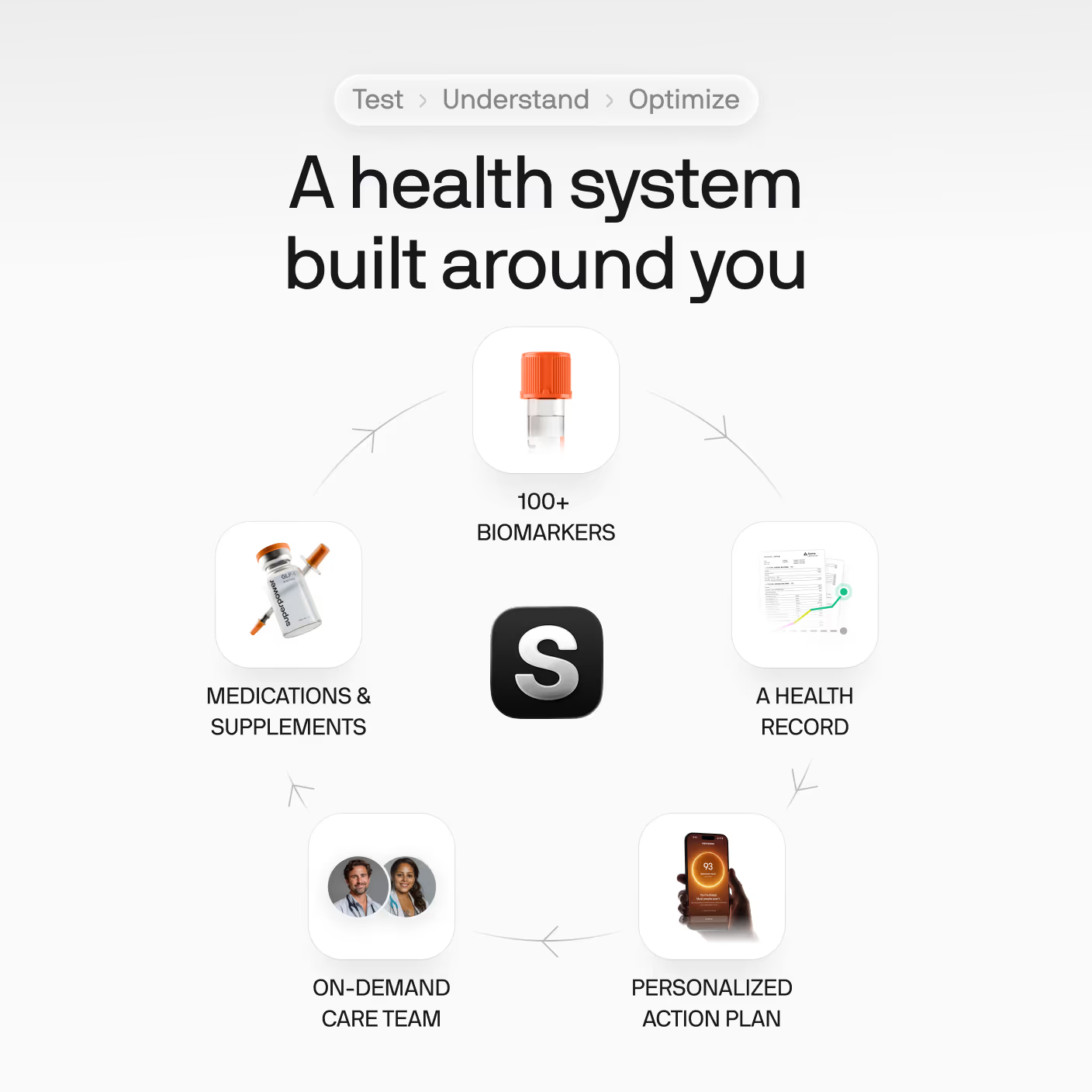
Every insight follows the same three-part shape. What was found, what it may mean for you, and what to consider next. Your genetics are read alongside the biomarkers from your Superpower Blood Panel. Never in isolation.
A result in the high range is a reason to discuss it with a physician or genetic counselor. It is not a sign a condition is coming. A variant associated with an inherited condition is not a diagnosis of it.
Your genome is a lasting reference, so repeat sequencing is not required simply because time passes. New analyses may draw on retained data without a new sample, though interpretations shift as methods do.
Interpretation varies with the reference population and method. Your Superpower care team and your provider can help interpret your specific results in context.
How to prepare
Collection is a cheek swab, and a clean mouth is what makes the sample usable.
- Wait at least one hour after food, tobacco, or any drink other than water.
- Rinse with plain water immediately before collecting.
- Do not brush or use mouthwash beforehand.
- Remove dentures or partials, clean them with plain water, and skip denture adhesive, oral analgesics, and clove oil.
- Contact support first if you are undergoing chemotherapy or head or mouth radiation, and coordinate timing with your clinician.
- Contact support before testing after a donor bone-marrow or stem-cell transplant, since the sample can reflect donor DNA.
How it works
- Order online — Your order creates a credit, and the kit ships once you redeem it and complete the one-time informed consent notice.
- Swab and return — Swab each inner cheek firmly for about 45 seconds, seal each swab in its vial, and post the kit back in the prepaid mailer.
- Review your results — Results appear in your secure Superpower account about three weeks after the laboratory receives your sample, with raw genetic data available to download.
A low-quality sample can take longer, and a replacement kit is provided at no charge if collection fails.
Frequently asked questions
Biomarkers tested
The ACTN3 gene helps build a protein found in fast-twitch muscle fibers, the ones responsible for quick, powerful movements like sprinting and jumping.
Learn moreMethod: Whole genome sequencing, performed by Gencove. Results are provided for informational and wellness purposes only and are not intended for use in clinical diagnosis, medical treatment, or healthcare decision-making.








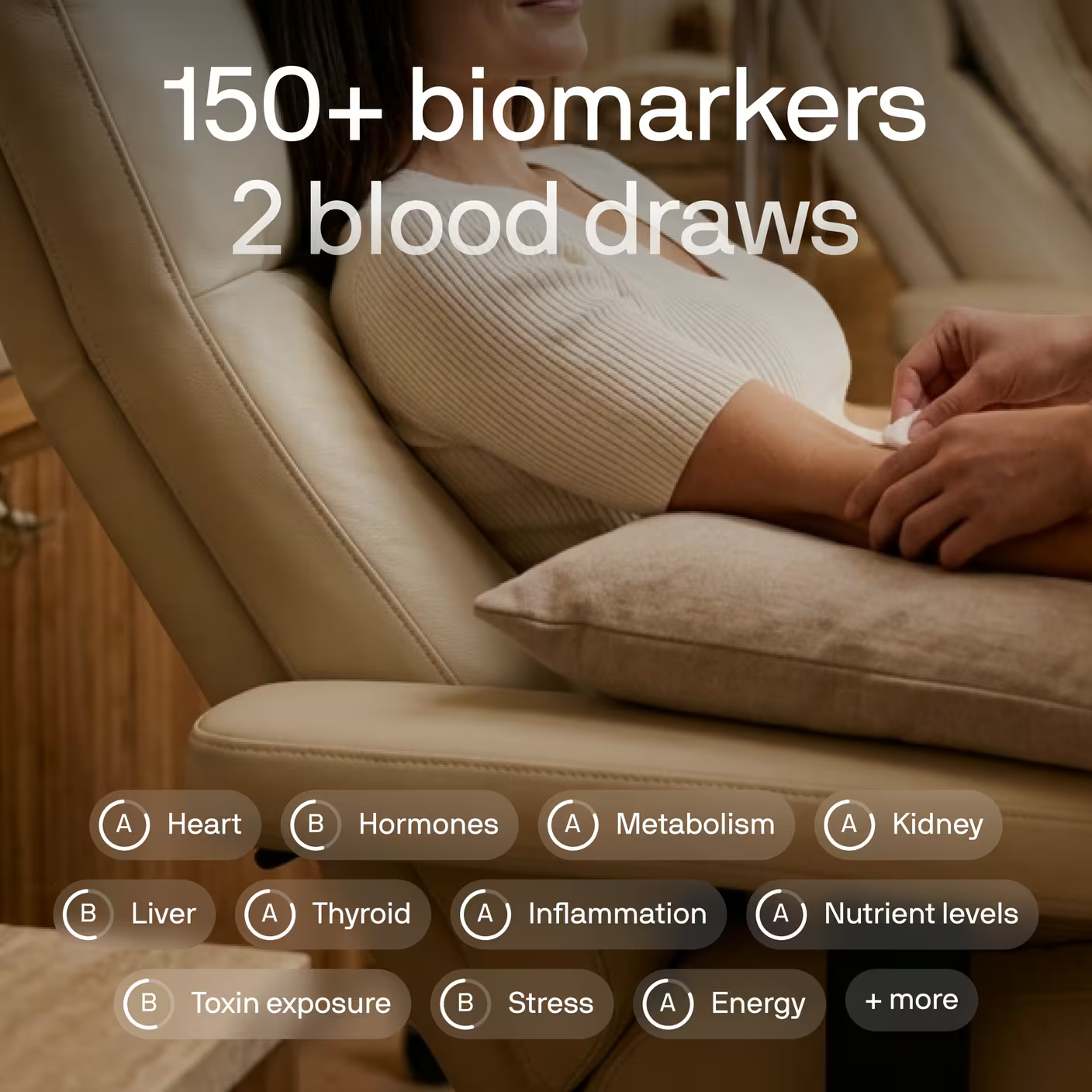




 Heart & Vascular Health
 Metabolic Health
 Energy
 Liver Health
 Kidney
 Sex Hormones
 Thyroid Health
 Nutrients
 Immune System
 Inflammation