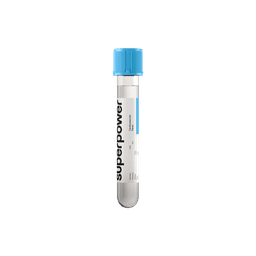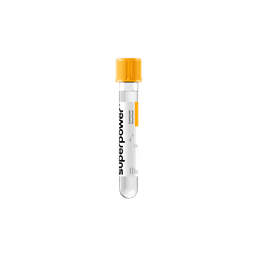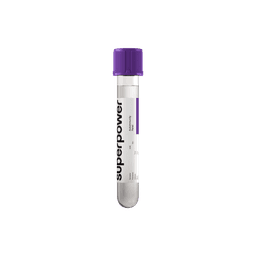
Test details
- Sample type:
- Single morning urine sample (no blood draw)
- Location:
- Mail-in collection kit
- Availability:
- Available in 40 states (not offered in NY or NJ)
- Turnaround:
- Results typically available within 10 days
- Preparation:
- No fasting required
About the Environmental Toxins test
The Environmental Toxins test measures markers of environmental chemical exposure from a single urine sample. It covers five classes of synthetic compounds that most people encounter daily: phthalates, bisphenols, parabens, pesticides and herbicides, and volatile organic compounds (VOCs).
Testing uses LC-MS/MS (liquid chromatography-tandem mass spectrometry), the same analytical method used in clinical research settings. This technology identifies specific metabolites of each compound at very low concentrations, giving a more precise read than general wellness screens and distinguishing between chemically similar compounds.
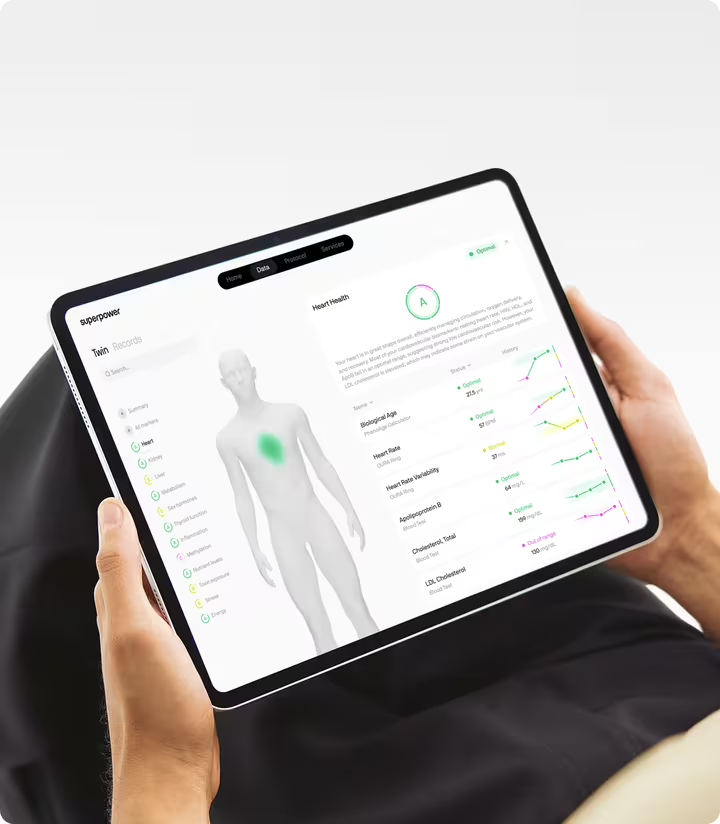
Most standard blood panels do not measure environmental toxicant exposure. This add-on fills that gap by providing a quantified baseline of the synthetic chemicals your body has been processing. Your results arrive in your Superpower dashboard alongside an updated Action Plan from your care team.
Toxins this test screens for
Coverage spans five chemical classes responsible for the majority of measurable environmental toxicant exposure in the general population.
Phthalates
Phthalates are plasticizers added to flexible plastics, personal care products, and food packaging. They are measured as urinary metabolites, which reflect recent exposure.
Common sources:
- Plastic food containers and packaging
- Fragranced personal care products
- Vinyl flooring and building materials
Markers: monoethyl phthalate (MEP), monobutyl phthalate (MBP), mono-2-ethylhexyl phthalate (MEHP), MEOHP, and monoisobutyl phthalate (MiBP).
Bisphenols
Bisphenols are industrial chemicals used in polycarbonate plastics and epoxy resins. BPA is the most widely studied; BPS is a common substitute with similar properties.
Common sources:
- Canned food linings
- Water bottles and reusable containers
- Thermal receipt paper
Markers: bisphenol A (BPA) and bisphenol S (BPS).
Parabens
Parabens are preservatives used in cosmetics, pharmaceuticals, and processed foods. They absorb readily through skin and the gut.
Common sources:
- Shampoo, lotion, and makeup
- Packaged and processed foods
- Pharmaceutical products
Markers: methylparaben, ethylparaben, propylparaben, and butylparaben.
Pesticides and herbicides
This class covers the herbicides glyphosate and 2,4-D, pyrethroid insecticides, and other agricultural compounds. Exposure occurs primarily through food and proximity to agricultural areas.
Common sources:
- Conventionally grown produce
- Lawn and garden products
- Drinking water in agricultural regions
Markers: glyphosate, 2,4-dichlorophenoxyacetic acid (2,4-D), atrazine mercapturate (a urinary metabolite of the herbicide atrazine), and 3-phenoxybenzoic acid (3-PBA, a pyrethroid metabolite).
Volatile organic compounds and other markers
VOCs are organic chemicals that evaporate at room temperature. Additional markers in this group cover oxybenzone (a UV filter used in sunscreen), perchlorate (found in water and produce), and other industrial compounds.
Common sources:
- Gasoline, solvents, and cleaning products
- Sunscreen and cosmetics
- Drinking water
Markers: methylhippuric acid (a xylene metabolite), phenylglyoxylic acid (a styrene metabolite), diphenyl phosphate, oxybenzone, perchlorate, HEMA, NACE, NADB, NAE, NAP, and NAPR.
Why environmental toxicant testing matters
Most people carry measurable levels of synthetic chemicals in their bodies. This is not a lifestyle failure. It reflects how embedded these compounds are in modern food, packaging, and consumer products.
The National Health and Nutrition Examination Survey (NHANES), a program of the CDC, has detected phthalates and bisphenols in the urine of a large majority of Americans tested, including children. Parabens appear at measurable levels in most adults who use personal care products regularly.
Several of these compounds are classified as endocrine disruptors, meaning they interact with hormone receptor pathways at low concentrations. Research has associated chronic low-level exposure with shifts in estrogen, testosterone, and thyroid signaling. The degree to which any individual is affected depends on their exposure load, genetics, and overall health.
Existing bloodwork can sometimes point to a toxicant burden worth investigating. Elevated or low liver enzymes (ALT, AST, GGT, bilirubin), abnormal kidney markers (creatinine, BUN), or signs of chronic inflammation (elevated CRP) are among the signals noted in clinical practice. Testing gives you a quantified baseline. Without measurement, there is no way to know whether your current exposure level is high, low, or typical.
Who benefits from testing
- You use personal care products daily (skincare, shampoo, deodorant, fragrance) and want to understand your paraben and phthalate load
- You eat conventionally grown produce regularly and are curious about your pesticide and herbicide metabolite levels
- You are planning a pregnancy or are currently pregnant and want a baseline of toxicant exposure
- You have ongoing fatigue, headaches, brain fog, skin irritation, or unexplained allergies and want to understand whether toxicant exposure may be a contributing factor.
- You have unexplained hormone changes or fertility concerns and want to understand your environmental chemical exposure
- You have frequent chemical exposure through work, hobbies, or your home environment (for example, solvents, pesticides, or a recent renovation)
- You already optimize your diet and lifestyle and want data on whether your exposures align with your efforts
Proactive measurement establishes a personal baseline. Retesting after reducing exposures shows whether your changes have shifted your numbers.
What your results reveal
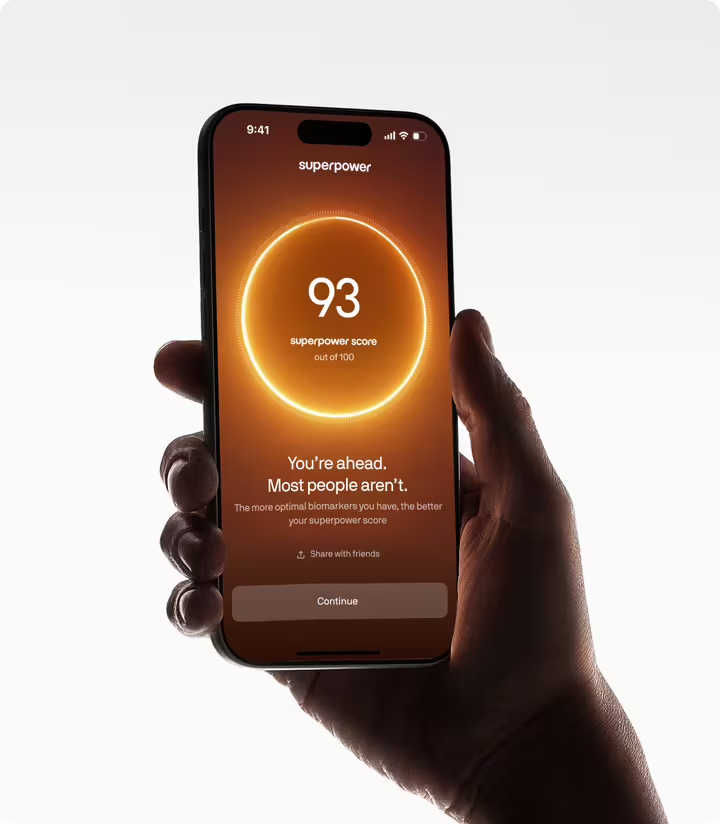
Your results show a measured level for each marker, compared against established reference ranges. You can see at a glance which markers are within range and which are higher than typical population levels.
For each elevated marker, your results include the likely source category (for example, a high phthalate level pointing to personal care products or food packaging) and the chemical class it belongs to.
Your results arrive alongside an updated Action Plan from your Superpower care team. AI-powered concierge translates the data into plain language and next steps you can act on, and your care team can help you interpret results in the context of your full health picture, including how toxicant exposure may interact with hormonal or inflammatory markers from your blood panel.
This test establishes a baseline. It tells you where you stand today, not what caused your exposure or what will happen in the future.
Reference ranges vary by lab and individual. Your Superpower care team and your provider will interpret your specific results in context.
How it works
- Add to your Superpower order. The Environmental Toxins test ships as part of your kit.
- Collect your urine sample at home. A single morning urine sample is all that's required. No blood draw, no fasting, no clinic visit.
- Mail your sample. Use the prepaid shipping materials included in your kit, following the instructions for proper collection and sealing.
- Receive your results. Your results are typically available within 10 days and appear in your Superpower dashboard alongside your other test results.
- Review with your care team. Your results include an updated Action Plan. Message your Superpower care team or AI-powered concierge with any questions.
Related tests
Environmental toxicant exposure rarely occurs in isolation. Two other add-ons test for compounds that are often co-present, and both use a urine sample.
Heavy Metals Toxin Test: measures 20 heavy metals in urine, including lead, mercury, arsenic, and cadmium.
Mold Toxins Test (Mycotoxins): measures 11 mycotoxins from mold exposure, also via urine.
Frequently asked questions
Biomarkers tested
2,4-Dichlorophenoxyacetic acid (2,4-D) is one of the most widely used herbicides, applied in agriculture and residential lawn treatments.
Learn more