Test details
- Sample type:
- Single blood draw (blood only)
- Location:
- In-person at local lab / At-home phlebotomist visit (+$119)
- Availability:
- Available in 24 states and Washington, D.C. (not offered in NY or NJ)
- Turnaround:
- Results typically available within 10 days
- Preparation:
- 10-hour fast, water onlyNo caffeine before your draw
About the Tau Protein Screening
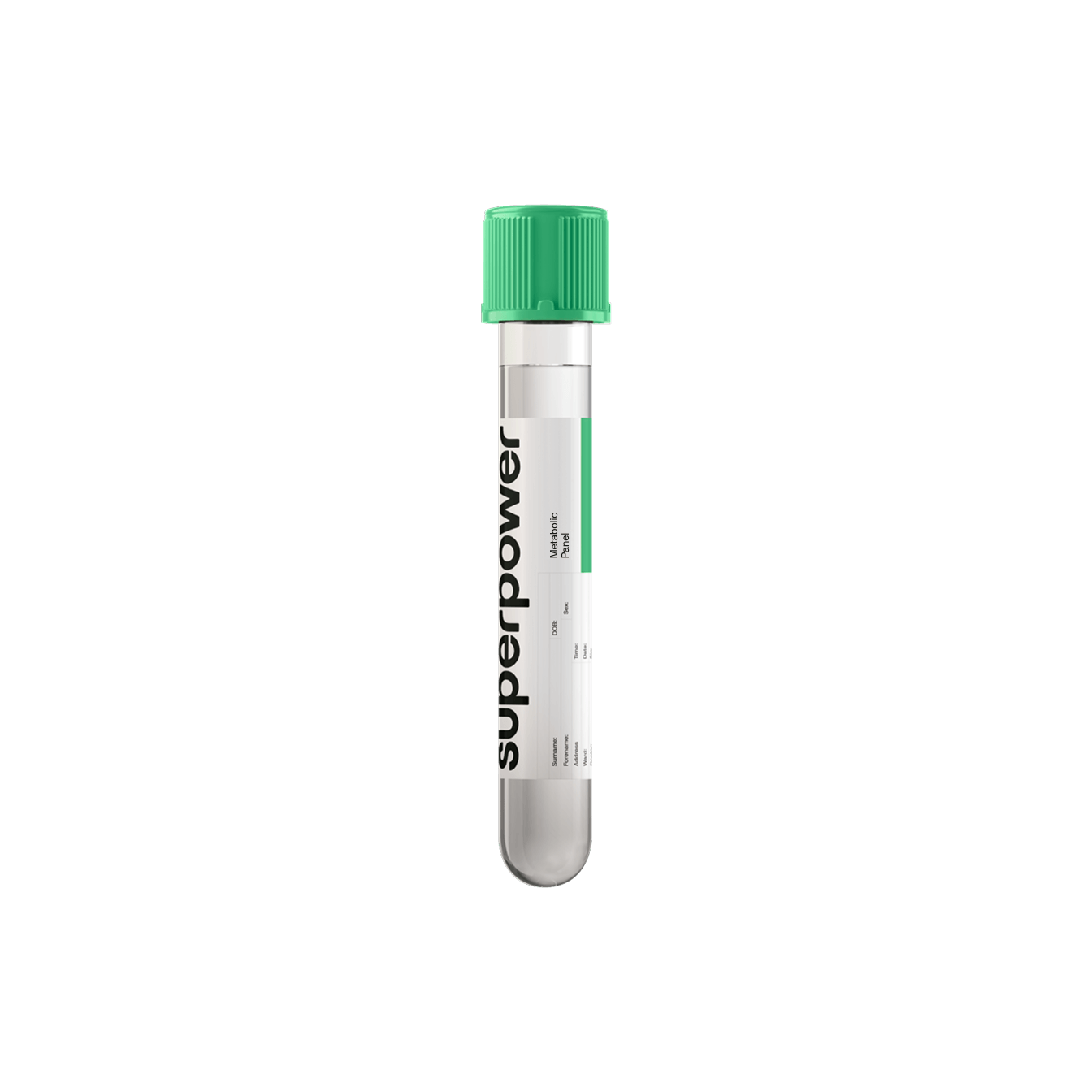
Tau Protein Screening is a single-biomarker blood test that measures phosphorylated tau at position 217 in plasma. The same marker is written several ways. You may have searched for it as pTau-217, p-tau217, or phosphorylated tau 217. One standard blood draw is all the test takes, in a lab or at home.
A blood test for a brain protein sounds improbable, and it is genuinely recent. Sensitive assays can now measure brain-derived proteins in blood. Phosphorylated tau is one of the proteins that make up tau tangles. A pTau-217 result contributes to a clinician's assessment of Alzheimer's pathology rather than answering the question on its own.
What this panel measures
This panel carries one biomarker, phosphorylated tau217, measured from a single plasma sample.
Tau is a structural protein that lives inside neurons. In a healthy cell, tau binds to and stabilizes microtubules. Those are the internal tracks that move nutrients and molecules around a neuron. Doing that quietly, year after year, is tau's normal job.
In Alzheimer's disease, abnormal chemical changes cause tau to detach and stick to other tau. Those tangles block the neuron's transport system. Abnormal tau accumulates in memory regions of the brain. Phosphorylation is the chemical change that loads tau with phosphate groups. This test reads one specific phosphorylated form of tau circulating in blood, not every form of tau in the brain.
Why pTau-217 rather than another tau marker
Tau can be phosphorylated at several positions, and those forms do not perform alike as blood markers. Pooled across published research, position 217 is the highest-performing blood phosphorylated-tau biomarker for identifying biologically defined Alzheimer's disease. It ranks ahead of p-tau181, p-tau205, p-tau212, and p-tau231.
Measured in plasma, pTau-217 has separated Alzheimer's from other neurodegenerative diseases more accurately than other blood markers and MRI measures. It has also correlated with tau tangles in people who carry beta-amyloid plaques. That is a statement about the marker, not about every product built on it. Diagnostic accuracy varies between commercially available tests.
How a blood marker compares with imaging and spinal fluid testing
The same underlying pathology can be assessed by several routes. They differ in what the appointment involves and in what the result describes.
| Approach | What it involves | What it shows |
|---|---|---|
| Blood biomarker (pTau-217) | A standard blood draw, in-lab or at-home | A plasma level of one phosphorylated tau form, with published performance sitting close to spinal fluid and tau-PET measures |
| Amyloid or tau PET imaging | A scan using a small amount of a radioactive tracer | Amyloid PET measures beta-amyloid deposits, and tau PET detects abnormal tau accumulation |
| Cerebrospinal fluid testing | A lumbar puncture, also called a spinal tap | Beta-amyloid and phospho-tau levels measured in spinal fluid |
Which route fits a given person is a clinical decision, made as part of a full diagnostic workup.
What this test cannot tell you
A pTau-217 result is one input into a larger picture. The honest way to read it starts with its edges.
- It is not a stand-alone diagnosis, because blood biomarker results are not a substitute for comprehensive clinical evaluation.
- A normal result is meaningful information, and it does not establish that every cause of cognitive symptoms or neurodegeneration is absent.
- It is not an equivalent of brain imaging, and no result here replaces a scan your clinician judges you need.
- It is not a number to interpret yourself, since thresholds differ between tests and most published studies have not used predefined or externally derived thresholds.
- Whether the test suits you, and what your result means, are decisions made with your provider or your Superpower care team.
Who benefits from testing
Tau testing is not a general wellness check. The guideline scope for blood-based biomarker testing is people with objective cognitive impairment. They are evaluated by clinicians experienced in memory disorders. Whether it fits your situation is your clinician's assessment, not a purchase decision made alone.
- People who want a direct blood-based measure of tau pathology currently available to them.
- People with a family history of Alzheimer's asking whether the disease process has started, a question plasma pTau-217 speaks to early: in one genetic-risk kindred, levels differed from non-carriers two decades before onset.
- People already pursuing amyloid or genetic-risk testing, where tau is a separate question answered by a separate test.
What your results reveal
Your report shows a measured pTau-217 value against the lab's reference range. An elevated phosphorylated tau level in blood is associated with the tau tangle pathology of Alzheimer's disease. It contributes to a clinician's assessment rather than establishing a diagnosis by itself.
A result inside the reference range is genuine information, and it is worth holding lightly. It does not establish that every cause of cognitive symptoms is absent. Symptoms deserve a clinical evaluation whatever this one marker reads.
A flagged result is routed to the Superpower care team. Where appropriate you are offered a specialist referral pathway, with your lab report going along. Nothing about that pathway is automatic or self-serve. Your own provider or your care team discusses the result with you and decides what, if anything, comes next.
Reference ranges vary by lab and individual. Your Superpower care team and your provider will interpret your specific results in context.
How to prepare
Follow the instructions attached to your appointment first. Unless your clinician tells you otherwise, standard draw preparation applies.
- Fast for 10 hours, water only.
- Skip caffeine before the draw.
- Stay well hydrated.
- No alcohol, and no heavy or fatty meals, the day before.
- Pause supplements for 72 hours.
- No strenuous exercise for 48 hours.
Continue any prescribed medication unless the prescribing clinician advises otherwise, and send preparation questions to your care team.
How it works
- Order online — Complete the consent step that precedes purchase, so you know how the result is interpreted and where it can lead.
- Give a blood sample — Book a local lab visit, or choose an at-home phlebotomist visit for the same single draw.
- Review your results — Results post to your Superpower dashboard, typically about 10 days after the draw. Your provider or your Superpower care team is available to walk through what your result means.
Frequently asked questions
Biomarkers tested
Phosphorylated tau 217 (pTau-217) is a modified form of tau — a structural protein that normally stabilizes the internal scaffolding of brain cells.
Learn moreMethod: Immunoassay (IA) on plasma. Laboratory-developed test validated under CLIA; not cleared or approved by the FDA. Results are interpreted by clinicians in context and are not a stand-alone diagnosis.










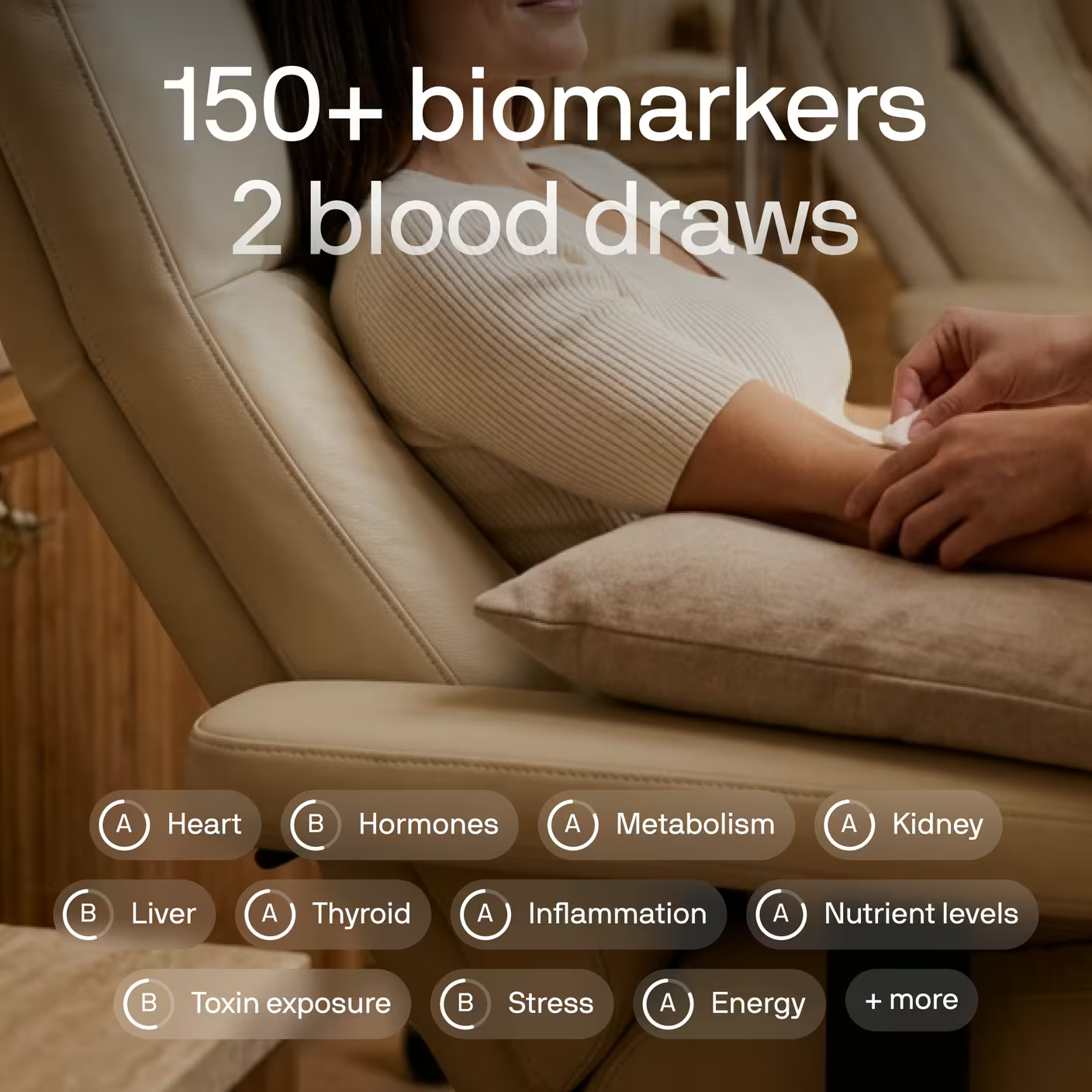












 Heart & Vascular Health
 Metabolic Health
 Energy
 Liver Health
 Kidney
 Sex Hormones
 Thyroid Health
 Nutrients
 Immune System
 Inflammation