


Understand what your sleep health results really mean
See your biomarkers in context with a comprehensive panel.
- CLIA-certified labs
- HIPAA compliant
- Personalized health protocol
What is biphasic sleep?
Two patterns, one concept
Biphasic sleep takes two main forms. The first is a shorter night of sleep (around six hours) paired with a daytime nap of 20 to 90 minutes. This is the pattern most commonly practiced in Mediterranean and Latin American cultures, where afternoon siestas remain part of daily life.
The second form is segmented sleep: two blocks of roughly equal length at night, separated by one to two hours of quiet wakefulness. Historical accounts describe people waking naturally around midnight, reading, praying, or talking before drifting back to sleep for a "second sleep."
How it differs from polyphasic sleep
Polyphasic sleep breaks rest into three or more segments across 24 hours, often drastically reducing total sleep time. Biphasic sleep is far less extreme. It preserves most of the total sleep duration you'd get in a single block, just distributed differently. The health implications of the two approaches are very different, and conflating them leads to confusion.
The history behind two-phase sleep
First sleep and second sleep
Historian Roger Ekirch documented hundreds of references to "first sleep" and "second sleep" in court records, diaries, and medical texts spanning centuries. Before gas lamps and electric lighting, people commonly went to bed shortly after dark, slept for three to four hours, woke for a period of quiet activity, then returned to sleep until dawn. This wasn't insomnia. It was the expected pattern.
What changed
Artificial lighting, industrialization, and structured work schedules compressed sleep into a single consolidated block. By the early 20th century, monophasic sleep had become the cultural norm in most Western societies. The eight-hour ideal emerged not from biology but from labor movements advocating for "eight hours of work, eight hours of rest, eight hours of what we will."
That historical context matters. It suggests the rigid monophasic pattern we treat as natural is actually a modern invention. But it doesn't prove that reverting to biphasic sleep would improve health outcomes for people living in today's world.
Is biphasic sleep healthy for modern adults?
What the research supports
Short daytime naps added to a normal sleep schedule have well-documented benefits. A NASA study found that a 26-minute nap improved pilot alertness by 54% and performance by 34%. Research in Archives of Internal Medicine linked regular midday napping to a 37% lower risk of coronary heart disease mortality in a large Greek cohort.
These findings support the siesta-style version of biphasic sleep: a slightly shorter night paired with a brief afternoon nap. The key ingredient is that total sleep time stays in the healthy range of seven to nine hours.
Where evidence gets thin
Segmented nighttime sleep (two blocks with a waking interval) has almost no modern clinical research behind it. The historical record tells us people did it, but we don't have controlled studies comparing segmented sleep to monophasic sleep for health outcomes like cardiovascular risk, immune function, or cognitive decline. Claiming that segmented sleep is healthier based on history alone is a leap the data doesn't support.
Total sleep time is what matters most
Every major sleep study that has examined health outcomes points to the same conclusion: total sleep duration and consistency matter more than how sleep is distributed. Whether you sleep seven hours straight or in two blocks, hitting that minimum threshold of quality sleep is the critical variable. Is biphasic sleep healthy? It can be, as long as it doesn't cut your total rest short.
Benefits of biphasic sleep
Afternoon performance boost
The post-lunch dip in alertness is a well-documented circadian phenomenon. Your body naturally pushes toward drowsiness in the early afternoon, regardless of what you ate. A short nap during this window capitalizes on a biological tendency rather than fighting it. Many people find that a 20-minute nap restores focus more effectively than caffeine.
May reduce sleep pressure
If you struggle to get a full seven to eight hours at night due to schedule constraints, a nap can partially compensate. Sleep researchers call this "sleep banking." While it doesn't fully replace lost nighttime sleep, strategic napping reduces accumulated sleep debt and can improve mood, reaction time, and REM sleep quality in the subsequent night.
Flexibility for non-traditional schedules
Shift workers, parents of newborns, and people with early-morning commitments often can't achieve monophasic sleep even when they try. Biphasic sleep gives these groups a structured framework that legitimizes splitting rest instead of treating it as a failure. The pattern works especially well when the nap window aligns with the early-afternoon circadian trough.
Risks and drawbacks of biphasic sleep
Sleep inertia after longer naps
Naps exceeding 30 minutes allow you to enter deeper sleep stages. Waking from deep sleep mid-cycle produces sleep inertia: grogginess, confusion, and impaired performance that can last 30 minutes or more. If you use biphasic sleep with a long afternoon nap, timing it to 90 minutes (a full sleep cycle) or keeping it under 30 minutes avoids this effect.
Circadian rhythm disruption
Splitting nighttime sleep into two blocks can confuse your circadian clock, especially if the waking interval involves bright light or stimulating activity. Your suprachiasmatic nucleus (the brain's master clock) expects consolidated darkness during sleep hours. Introducing a wakeful period with light exposure can suppress melatonin and shift your circadian phase, making it harder to fall back asleep for the second block.
Social and practical barriers
Modern work schedules, school pickups, and social obligations rarely accommodate a midday nap. The health benefits of biphasic sleep evaporate if you spend your nap window stressed about the time or if the nap shortens your available nighttime sleep without compensating. A pattern that works biologically can still fail practically.
Risk of reduced total sleep
The biggest danger of biphasic sleep is using it as an excuse to sleep less overall. Cutting nighttime sleep to six hours with the intention of napping but then skipping the nap due to a busy schedule creates a chronic sleep deficit. Sleep debt accumulates, and the cognitive and metabolic consequences compound over weeks.
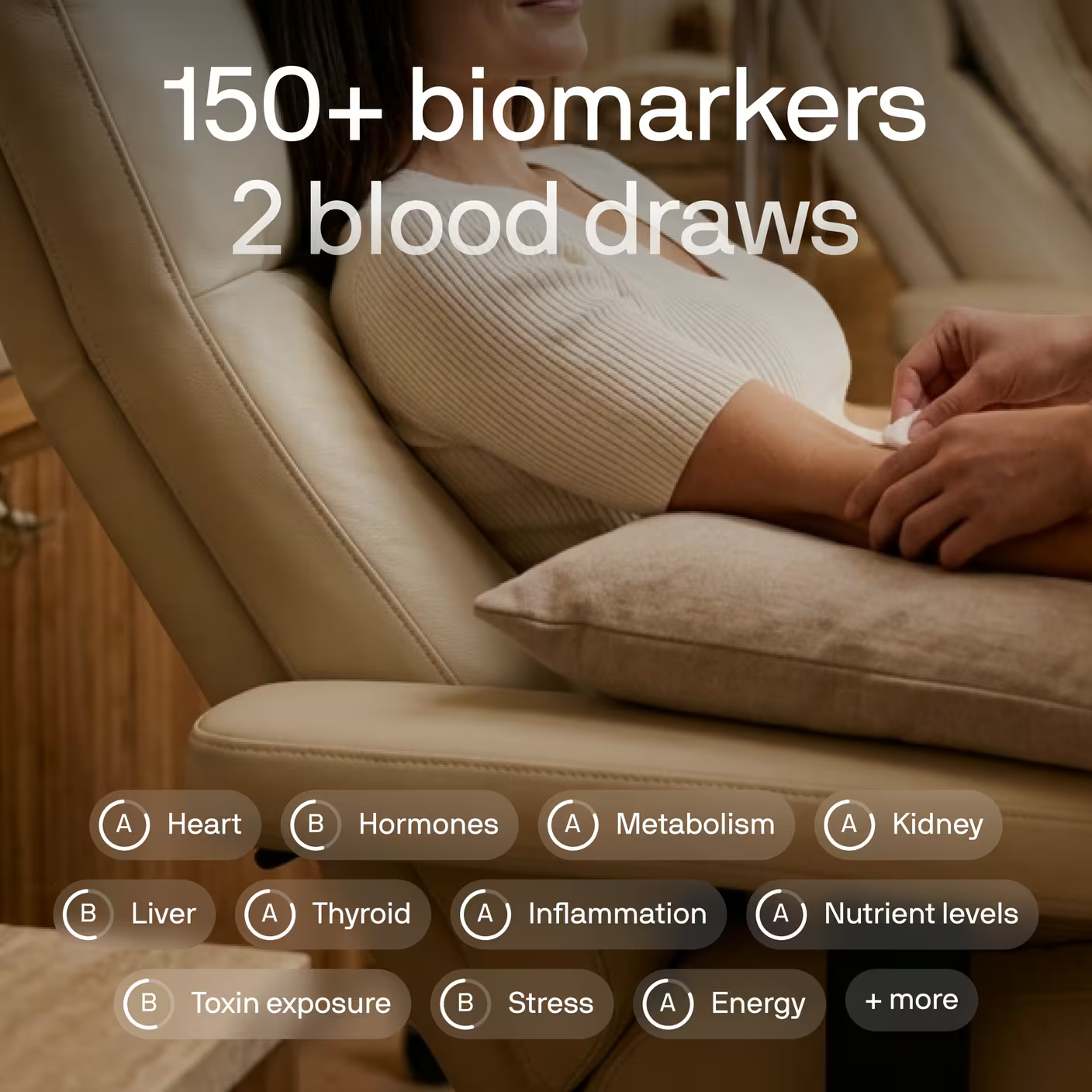
Test 150+ biomarkers
Two blood draws. A full picture of your health, explained in plain language.
Test 150+ biomarkers
Two blood draws. A full picture of your health, explained in plain language.
Biphasic sleep vs. monophasic sleep
Head-to-head comparison
No large-scale randomized trial has directly compared biphasic and monophasic sleep for long-term health outcomes. What we know comes from observational studies and sleep physiology:
- Monophasic sleep provides the most consolidated opportunity for core sleep cycles, including deep sleep and REM
- Biphasic sleep (siesta style) may offer better afternoon alertness without sacrificing nighttime sleep quality
- Segmented nighttime sleep lacks modern evidence for or against health effects
- Both patterns can deliver adequate total sleep if managed consistently
Which pattern suits you?
If you sleep seven to eight hours straight and wake feeling refreshed, monophasic sleep is working. There's no reason to fix what isn't broken. If you consistently feel tired despite adequate time in bed, or if your schedule makes consolidated sleep impossible, experimenting with a siesta-style biphasic pattern may help.
Your chronotype matters too. Night owls who can't fall asleep before midnight but must wake at 6 AM may benefit from a short afternoon nap to bridge the gap. Early risers who fade by 2 PM may find a brief nap resets their second half of the day.
How to try biphasic sleep safely
Start with the siesta model
The safest entry point is adding a 20 to 30-minute nap between 1 PM and 3 PM while keeping your nighttime sleep at six to seven hours. This aligns with your circadian dip and avoids interfering with evening sleep onset. Set an alarm so you don't oversleep into deeper stages.
Protect your total sleep time
Track your combined sleep across both periods. If your nap plus nighttime sleep consistently falls below seven hours, you're not doing biphasic sleep. You're doing sleep deprivation with a nap. Use a sleep tracker or simple sleep diary to monitor your total hours for the first few weeks.
Keep your environment consistent
Nap in a dark, cool, quiet space. Bright light during your nap window suppresses melatonin and can make the nap feel unrefreshing. If darkness isn't possible, use an eye mask. Avoid screens for at least 10 minutes before lying down.
Give it two to three weeks
Your body needs time to adjust to a new sleep pattern. Initial grogginess or difficulty napping is normal. If after three weeks you feel worse, more tired, less focused, or struggling to fall asleep at night, biphasic sleep may not suit your biology. Return to monophasic sleep without guilt. Consistent timing matters more than the pattern itself.
Understand how your sleep pattern affects your health
Whether you sleep in one block or two, your body produces measurable signals about how well it's recovering. Cortisol rhythms, inflammatory markers, blood sugar regulation, and iron levels all shift based on sleep quality and duration.
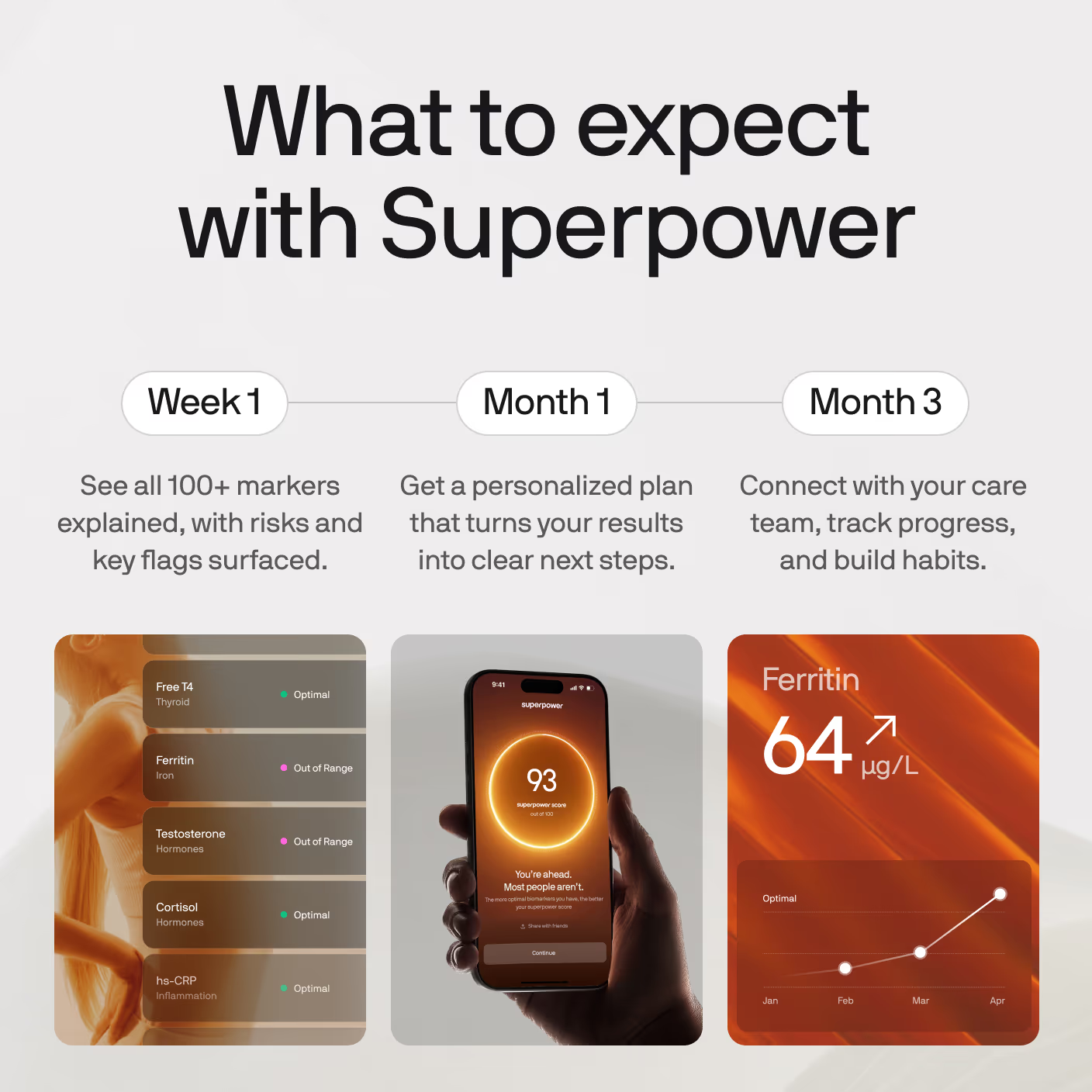
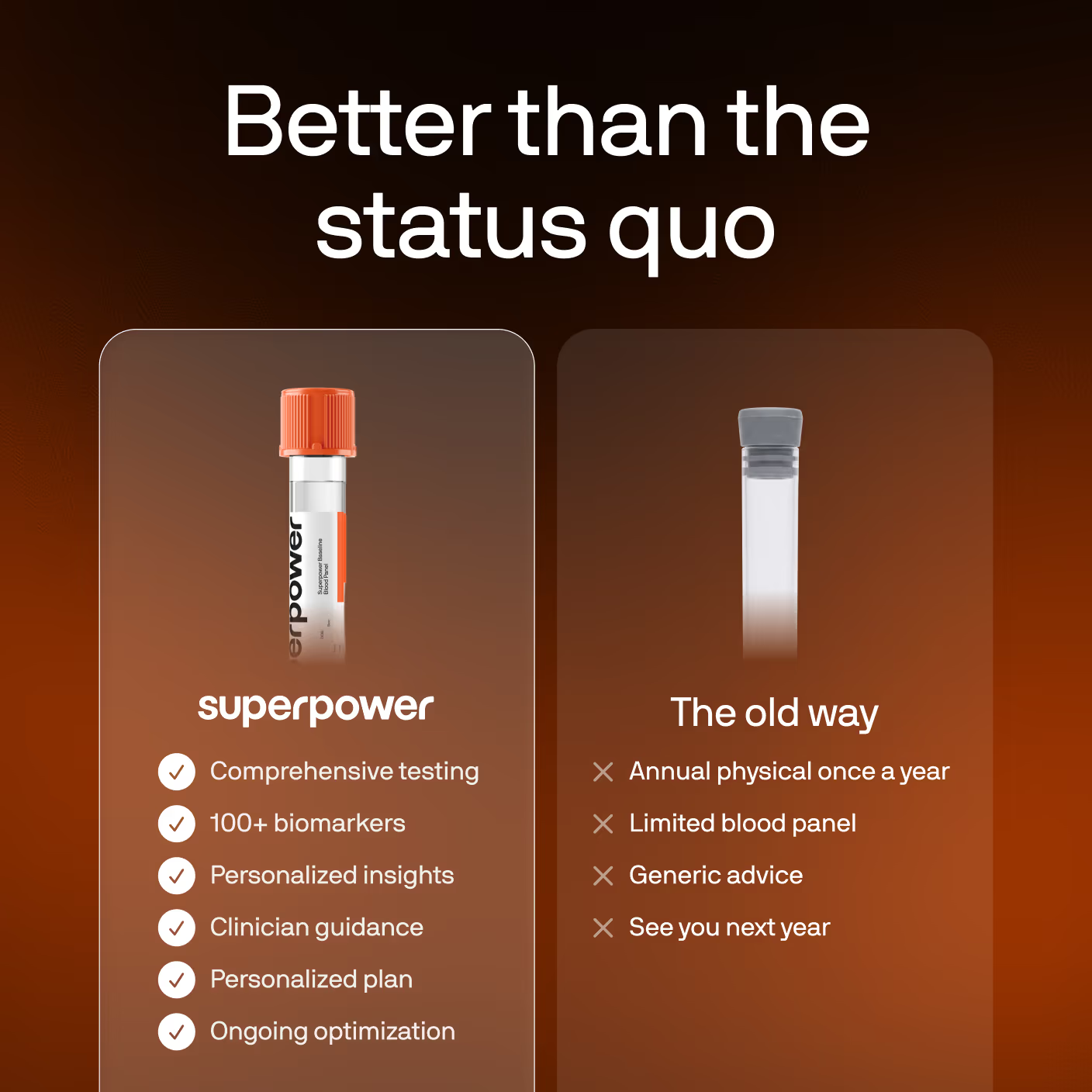
Superpower's at-home blood panel tracks over 150 biomarkers connected to sleep, stress, and metabolic health. Pair your results with personalized protocols to see whether your sleep pattern is supporting or undermining your body's recovery.
Start your Superpower membership and let your blood tell you what your sleep schedule can't.
Frequently Asked Questions
References
- Milner CE, Cote KA (2009). Benefits of napping in healthy adults: impact of nap length, time of day, age, and experience with napping. *Journal of sleep research*, *18*(2), 272-81. https://doi.org/10.1111/j.1365-2869.2008.00718.x
- Dhand R, Sohal H (2006). Good sleep, bad sleep! The role of daytime naps in healthy adults. *Current opinion in pulmonary medicine*, *12*(6), 379-82. https://doi.org/10.1097/01.mcp.0000245703.92311.d0
- Naska A, Oikonomou E, Trichopoulou A, Psaltopoulou T, Trichopoulos D (2007). Siesta in healthy adults and coronary mortality in the general population. *Archives of internal medicine*, *167*(3), 296-301. https://doi.org/10.1001/archinte.167.3.296
- Dutheil F, Danini B, Bagheri R, Fantini ML, Pereira B, Moustafa F, Trousselard M, Navel V (2021). Effects of a short daytime nap on the cognitive performance: A systematic review and meta-analysis. *International journal of environmental research and public health*, *18*(19), 10212. https://doi.org/10.3390/ijerph181910212
- Bes F, Jobert M, Schulz H (2009). Modeling napping, post-lunch dip, and other variations in human sleep propensity. *Sleep*, *32*(3), 392-398. https://doi.org/10.1093/sleep/32.3.392






















 Heart & Vascular Health
 Metabolic Health
 Energy
 Liver Health
 Kidney
 Sex Hormones
 Thyroid Health
 Nutrients
 Immune System
 Inflammation