

Understand what your sleep health results really mean
See your biomarkers in context with a comprehensive panel.
- CLIA-certified labs
- HIPAA compliant
- Personalized health protocol
Why gallbladder pain strikes at night
Post-dinner gallbladder contractions
When you eat, especially foods containing fat, your small intestine releases cholecystokinin (CCK), a hormone that signals the gallbladder to contract and release bile. This contraction cycle peaks one to two hours after a meal and can continue for several hours. If you eat dinner at 7 p.m. and go to bed at 10 p.m., your gallbladder may still be actively contracting when you lie down.
If gallstones are present, these contractions can push a stone against the opening of the cystic duct, creating the intense, colicky pain that characterizes a gallbladder attack. The pain typically builds over 15 to 30 minutes and can last several hours.
Lying down changes biliary pressure
Standing or sitting allows gravity to assist bile drainage. When you lie flat, the angle of the biliary system changes, and bile can pool in the gallbladder rather than flowing smoothly into the small intestine. This pooling increases pressure inside the organ. For a gallbladder that is already inflamed or contains stones, this added pressure can trigger or worsen pain.
The fatty dinner connection
A high-fat meal triggers stronger gallbladder contractions than a lean one. Research published in Radiology confirms that fat content is the primary dietary trigger for gallbladder contraction intensity. That rich pasta, fried food, or creamy dessert at dinner may taste wonderful, but it is loading the biliary system right before you ask it to operate at rest.
Best sleeping positions for gallbladder pain
Left-side sleeping
Sleeping on your left side positions the gallbladder (located under the right ribcage) above the rest of the digestive system. This allows gravity to assist bile drainage away from the organ rather than pooling inside it. Many people with gallbladder issues report less pain on their left side compared to their right or back.
Place a pillow between your knees to keep your spine aligned. A second pillow hugged to your chest can prevent you from unconsciously rolling onto your right side during the night.
Elevated upper body
If left-side sleeping is not comfortable, try sleeping on your back with your upper body elevated at a 20 to 30 degree angle. A wedge pillow or adjustable bed frame works well for this. Elevation uses gravity to encourage bile flow downward through the ducts, reducing the pooling that contributes to nighttime pain. This position also helps if you experience acid reflux alongside gallbladder issues, which is a common combination.
Positions to avoid
Sleeping on your right side compresses the gallbladder between your ribcage and the mattress. Stomach sleeping creates abdominal pressure that pushes against the organ. Both positions can increase pain during an active flare. If you naturally default to your right side, place a body pillow behind your back to keep yourself positioned on the left.
Dietary timing to prevent nighttime attacks
Finish eating three hours before bed
Give your gallbladder time to complete its contraction cycle before you lie down. Eating your last meal at least three hours before bedtime allows the most active phase of bile secretion to pass while you are still upright. This reduces the likelihood that strong contractions will coincide with the pressure changes of lying flat.
Keep dinner low in fat
Your evening meal should be your lightest and lowest in fat. Choose lean proteins, vegetables, and moderate portions of whole grains. Save richer foods for earlier in the day when you have hours of upright activity ahead. This is not about permanent restriction. It is about strategic timing that lets your gallbladder work when conditions are most favorable.
Avoid specific trigger foods at night
Common gallbladder trigger foods include:
- Fried and deep-fried foods
- Full-fat dairy (cream, cheese, butter in large amounts)
- Red meat and processed meats
- Creamy sauces and dressings
- Chocolate and pastries with high butter content
Keep a food diary for two weeks and note which foods precede nighttime attacks. Eating patterns vary, and your personal triggers may differ from the general list.
Pain management strategies for nighttime flares
Heat therapy for muscle spasms
A heating pad applied to the right upper abdomen can relax the smooth muscle around the gallbladder and ease the cramping sensation of biliary colic. Use a low to medium setting with a cloth barrier to prevent burns. The warmth also helps with the referred pain that radiates to the right shoulder blade and upper back, a distinctive pattern of gallbladder referred pain.
NSAIDs during an attack
Ibuprofen or naproxen can reduce gallbladder inflammation and ease the pain of an acute attack. Evidence from emergency medicine research supports NSAIDs as a first-line treatment for biliary colic. Take them with a small amount of food or water to protect your stomach lining. Acetaminophen is an alternative if you cannot take NSAIDs.
Peppermint tea with caution
Peppermint may help relax smooth muscle in the digestive tract, potentially easing mild gallbladder spasms. However, peppermint can worsen acid reflux by relaxing the lower esophageal sphincter. If you have both gallbladder issues and reflux, this remedy may trade one problem for another. Chamomile tea is a gentler alternative that supports relaxation without the reflux risk.
Positioning during an active attack
During an acute gallbladder attack at night, sitting up slightly or leaning forward can reduce the pressure inside the biliary system. Some people find relief by sitting on the edge of the bed and bending forward slightly at the waist. Once the sharp pain subsides to a dull ache, transition carefully to the left-side sleeping position with elevation.
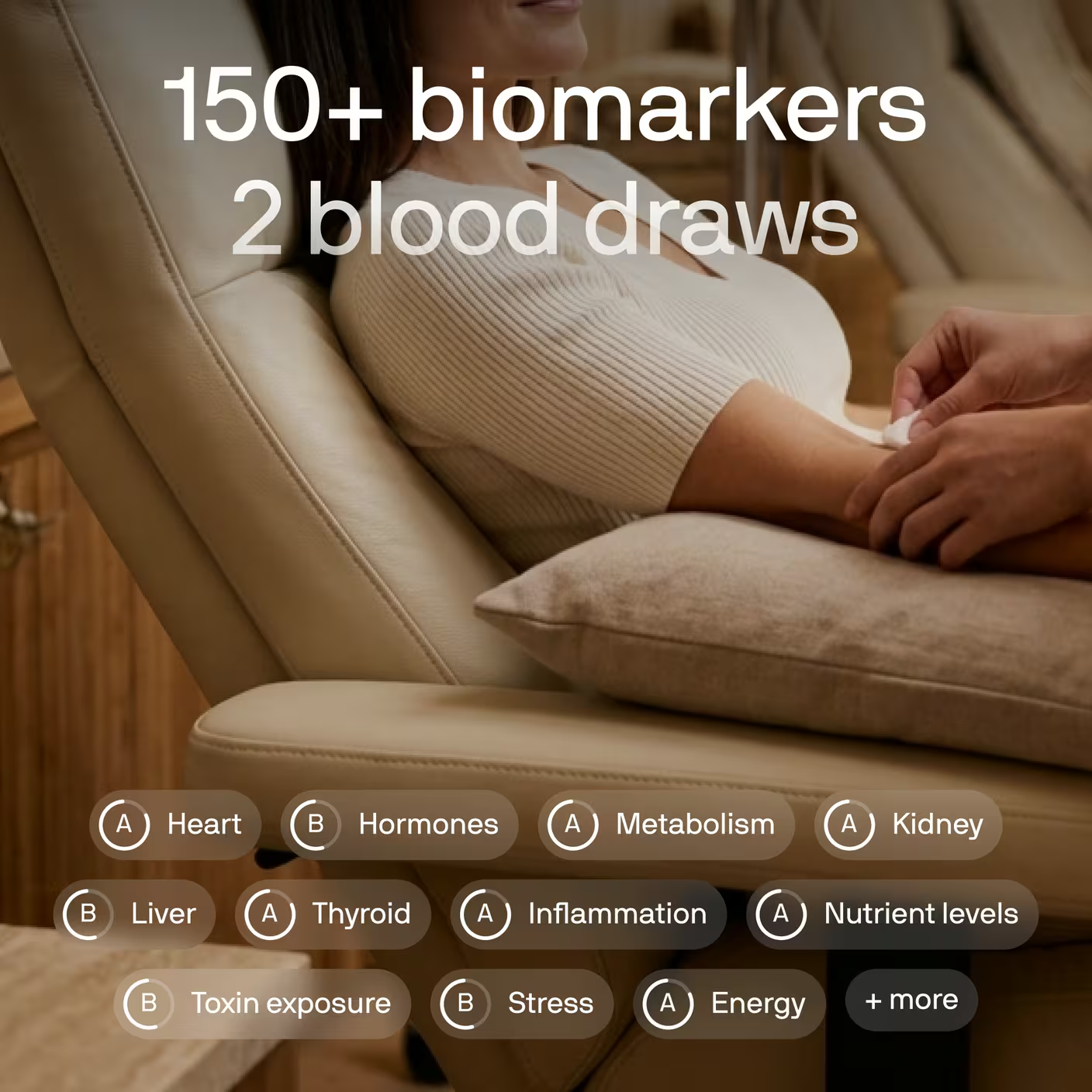
Test 150+ biomarkers
Two blood draws. A full picture of your health, explained in plain language.
Test 150+ biomarkers
Two blood draws. A full picture of your health, explained in plain language.
Understanding your gallbladder triggers
Hormonal influences
Estrogen increases cholesterol secretion into bile, which is why women develop gallstones at roughly twice the rate of men. Pregnancy, hormone replacement therapy, and oral contraceptives all increase gallstone risk. If your gallbladder attacks correlate with hormonal changes, this connection is worth discussing with your clinician.
Weight and metabolic factors
Both obesity and rapid weight loss increase gallstone formation. Excess body fat increases cholesterol in bile, while rapid weight loss causes the gallbladder to empty incompletely, allowing cholesterol crystals to form. If you are managing your weight, aim for a gradual rate of one to two pounds per week rather than extreme calorie restriction.
The role of blood work
Liver function tests (ALT, AST, bilirubin, alkaline phosphatase) reveal how well bile is flowing through the biliary system. Elevated bilirubin or alkaline phosphatase can indicate bile duct obstruction. Lipid panels show cholesterol levels that influence stone formation. These markers provide essential context that symptom assessment alone cannot give you.
When gallbladder pain is an emergency
Signs of complications
Not every gallbladder attack warrants an ER visit, but some do. Seek emergency care if you experience:
- Pain lasting more than six hours without improvement
- Fever or chills alongside abdominal pain
- Yellowing of your skin or the whites of your eyes (jaundice)
- Persistent nausea and vomiting that prevents keeping fluids down
- Severe tenderness when pressing the right upper abdomen
Acute cholecystitis vs. biliary colic
Biliary colic (a gallstone temporarily blocking the cystic duct) typically resolves within one to five hours as the stone shifts. Acute cholecystitis (gallbladder wall inflammation, often from a lodged stone) produces pain that persists, worsens, and comes with fever. This distinction matters because cholecystitis often requires hospitalization and potentially surgery.
Do not delay evaluation
Gallbladder complications like pancreatitis, bile duct infection (cholangitis), and gallbladder perforation are rare but serious. If your nighttime pain pattern changes, if attacks become more frequent, or if new symptoms like nausea, clay-colored stools, or dark urine appear, get medical evaluation promptly.
Track your biliary health with real numbers
Gallbladder pain management is partly about positioning and diet, but the underlying biliary chemistry matters just as much. Cholesterol levels, liver enzymes, and inflammatory markers all influence whether stones form and how symptomatic they become.
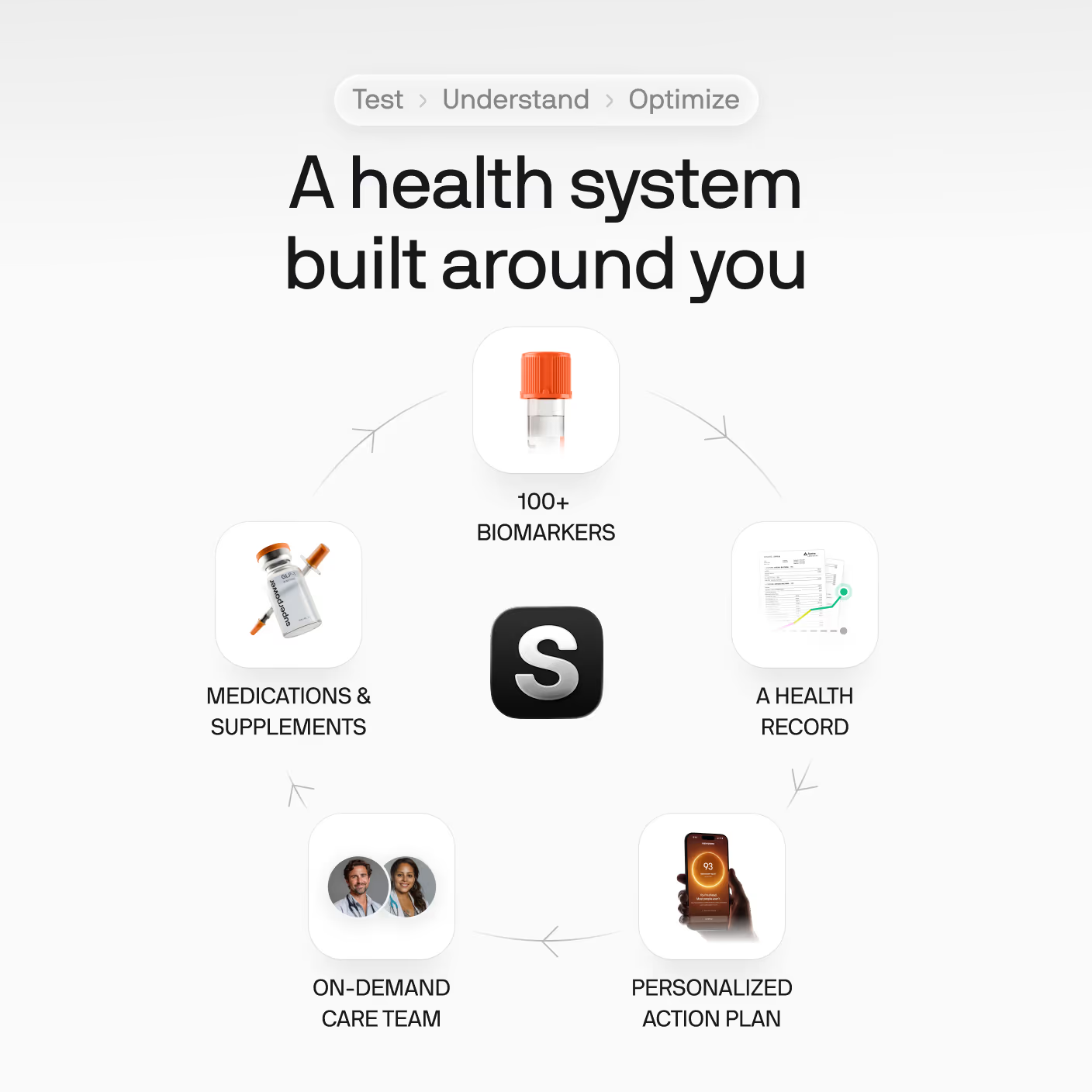
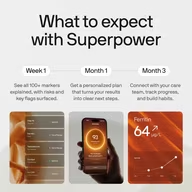
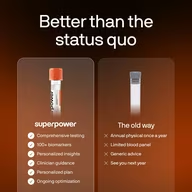
Superpower's at-home blood panel measures over 150 biomarkers, including a full liver function panel, lipid profile, CRP, and metabolic markers. Your results come with clear, actionable guidance you can share with your gastroenterologist or primary care provider.
Order your Superpower panel today and see the full picture of your biliary health.
Frequently Asked Questions
References
- Hopman WP, Rosenbusch G, Jansen JB, de Jong AJ, Lamers CB (1985). Gallbladder contraction: effects of fatty meals and cholecystokinin. *Radiology*, *157*(1), 37-9. https://doi.org/10.1148/radiology.157.1.3898222
- Fraquelli M, Casazza G, Conte D, Colli A (2016). Non-steroid anti-inflammatory drugs for biliary colic. *The Cochrane database of systematic reviews*, *9*(9), CD006390. https://doi.org/10.1002/14651858.CD006390.pub2
- Gallaher JR, Charles A (2022). Acute Cholecystitis: A Review. *JAMA*, *327*(10), 965-975. https://doi.org/10.1001/jama.2022.2350
- Bonfrate L, Wang DQ, Garruti G, Portincasa P (2014). Obesity and the risk and prognosis of gallstone disease and pancreatitis. *Best Practice & Research Clinical Gastroenterology*, *28*(4), 623-635. https://doi.org/10.1016/j.bpg.2014.07.013
- Yang H, Petersen GM, Roth MP, Schoenfield LJ, Marks JW (1992). Risk factors for gallstone formation during rapid loss of weight. *Digestive Diseases and Sciences*, *37*(6), 912-918. https://doi.org/10.1007/BF01300390


















 Heart & Vascular Health
 Metabolic Health
 Energy
 Liver Health
 Kidney
 Sex Hormones
 Thyroid Health
 Nutrients
 Immune System
 Inflammation